Summary
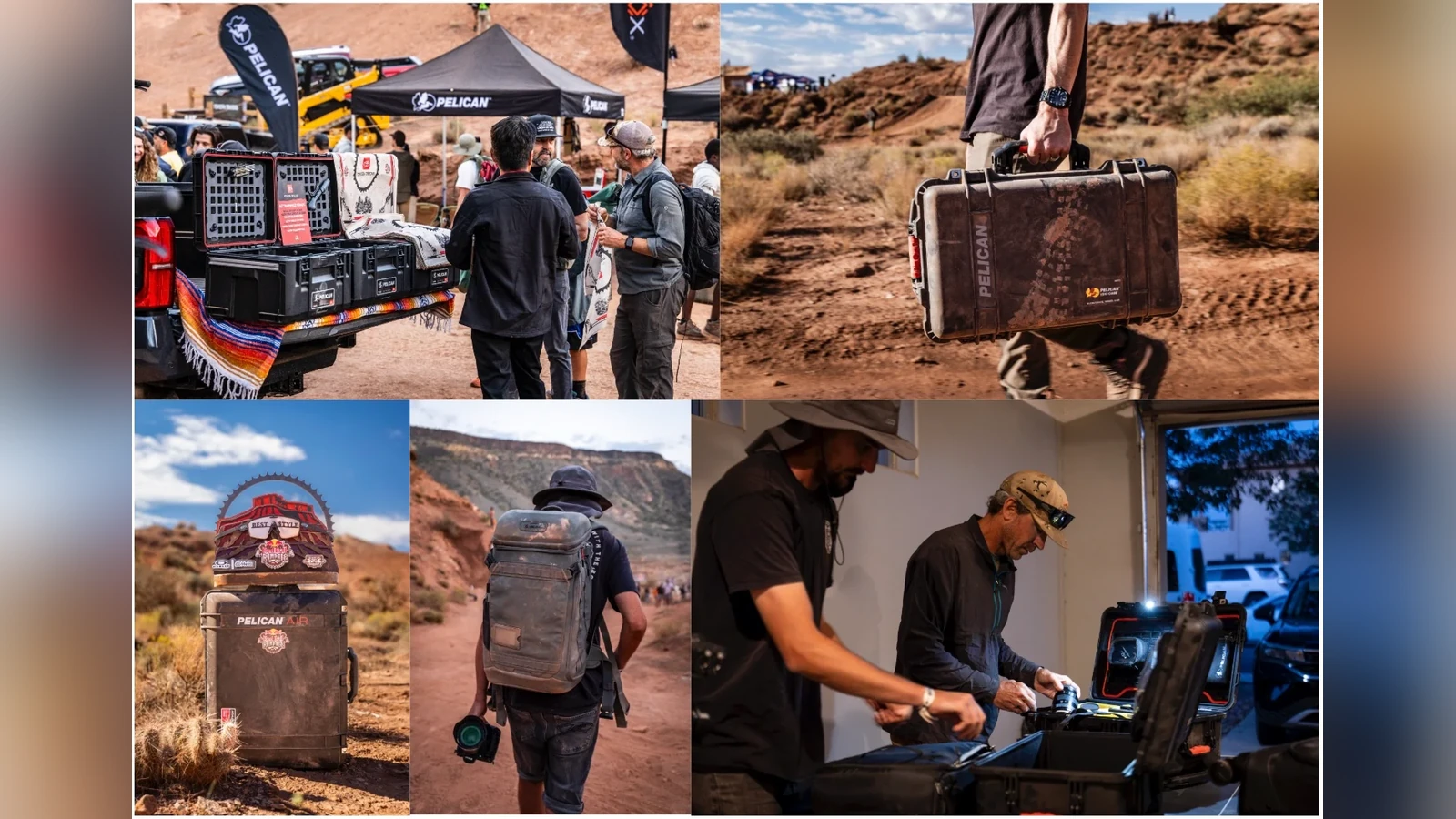
How hard is it to photograph a jump that may happen only once while standing on a steep hillside with heavy camera equipment? A new Pelican documentary short follows three photographers at Red Bull Rampage and reveals the work behind the finished images.
Released as part of Pelican’s 50th anniversary, the film focuses on Christian Pondella, Paris Gore and Bartek Wolinski. They explain how course knowledge, light, endurance and anticipation come together when covering one of mountain biking’s most demanding events.
Three photographers with decades of experience
Christian Pondella has photographed every Red Bull Rampage since the inaugural event in 2001. The event’s return to its original Utah location for its 25th anniversary in 2026 gives him an opportunity to reflect on how riders, bicycles and photography itself have changed.
Paris Gore has covered Rampage 13 times and describes the assignment as physically demanding. During the finals, he may have to cross from one side of a ridgeline to the other, in terrain where losing his footing could have serious consequences.
Polish photographer Bartek Wolinski, with 12 Rampage appearances, starts by looking for the light. He chooses his position based on the scene’s illumination but knows that any plan must remain flexible when conditions or the action change.
Action photography starts long before the jump
Early starts, long treks across rocky slopes, heavy packs and carefully chosen safe vantage points determine whether a photographer will be in the right place at the decisive moment. The documentary also shows that the assignment continues after the riding stops, with image selection and editing.
An effective image must show more than a rider suspended in the air: it should convey the scale of the hillside, the distance to the ground and the surrounding environment. A similar reliance on planning and precise timing can be seen in a carefully planned eclipse photograph featuring a mountain biker.
A 25-year visual record
Pondella is documenting more than a competition: his archive traces the evolution of freeride mountain biking. For a commemorative Red Bull Rampage photo book, he selected material from more than 50,000 photographs spanning 2001 through 2025.
The relationship between extreme sports and image-making is also clear in the 2026 Red Bull Illume Bike category winning photograph, where lighting and collaboration with athletes are essential to the shoot.
What we think
Anyone who has photographed sport knows that the spectacular moment is only a fraction of the assignment. The harder work is predicting what will happen, choosing the frame and being ready before the athlete appears. At a place like Rampage, that also means taking personal safety seriously.
Wolinski’s instinct to follow the light first is particularly instructive. Even a breathtaking trick cannot carry an image by itself. Position, composition and timing determine whether the photograph actually communicates what it felt like to be there.
There is another lesson in the careers of these three photographers: returning to the same event over many years builds an understanding that is difficult to replicate. It allows them to document the evolution of a sport rather than simply chasing the next dramatic frame.