Summary
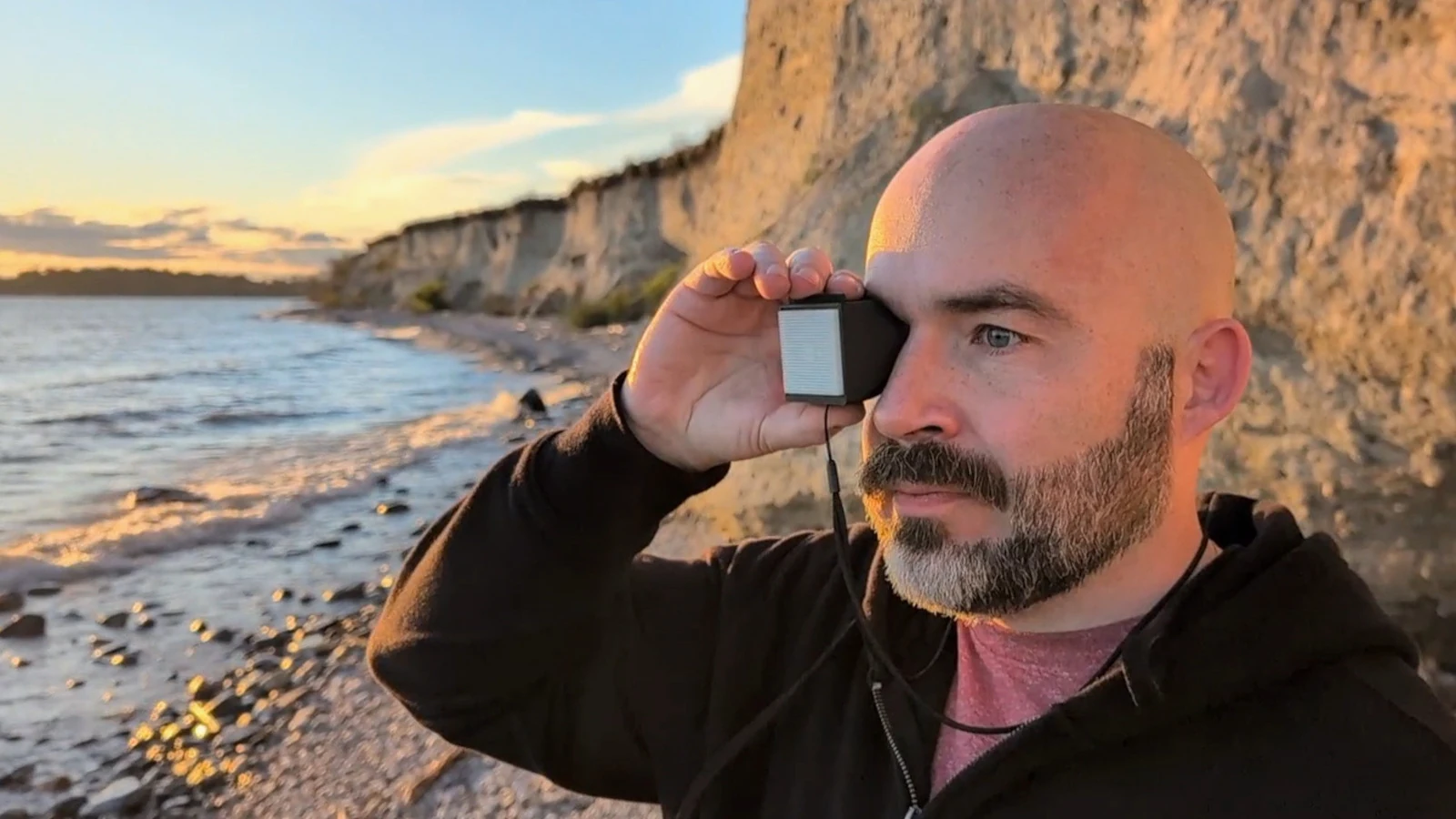
- Forma is a wearable optical viewfinder weighing 30 grams. Interchangeable cards support different lenses and formats.
- It helps photographers find compositions before setting up a camera.
- Kickstarter early-bird backing starts at CA$55.
Could a 30-gram viewfinder help you find a photograph before you even take your camera out of the bag? That is the idea behind Forma, with interchangeable frames for different lenses and formats.
Canadian photographer Peter Modzelewski developed Forma through his independent project Oramod after more than a year of design and testing. Its Kickstarter campaign launched on November 10, 2026.
How to see the frame without looking through the camera
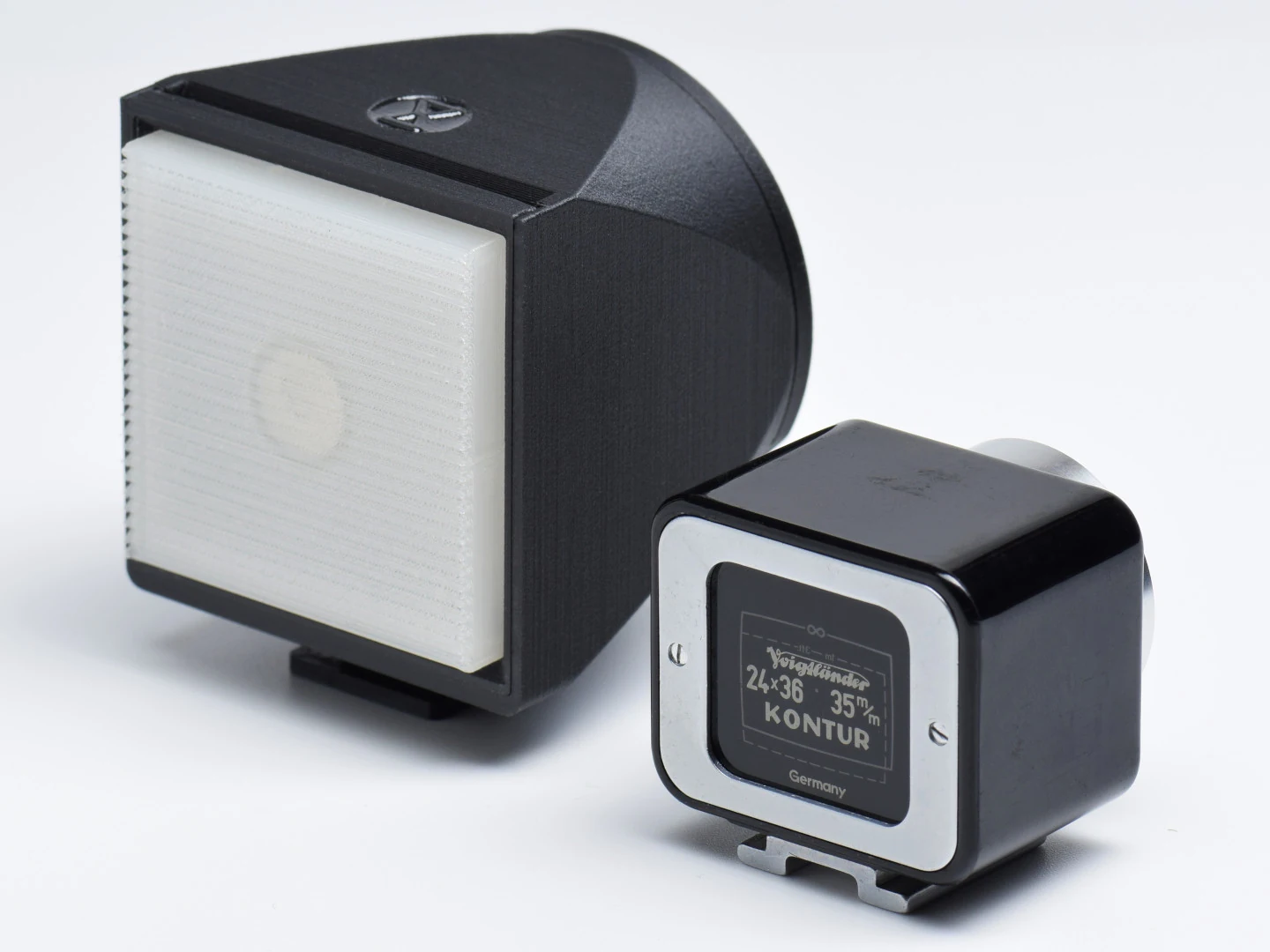
Forma relies on binocular fusion: one eye looks directly at the scene while the other sees illuminated framelines against a dark background. The brain combines both views, making the lines appear to float over the real world. This is neither electronic augmented reality nor a live preview from the camera sensor.
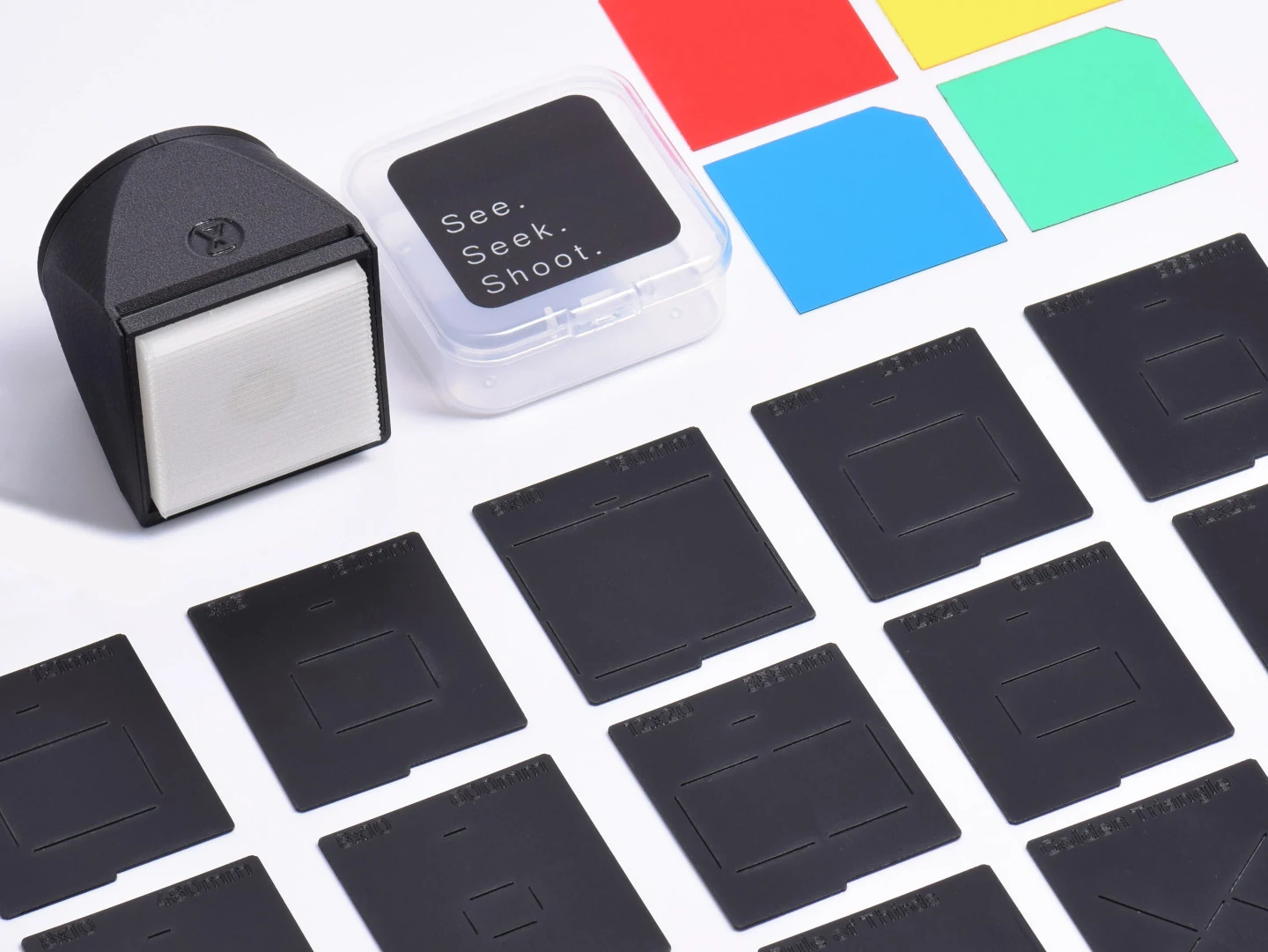
The concept comes from the 1951 Voigtländer Kontur. Forma differs through interchangeable laser-cut framing cards tailored to the chosen lens and format, from 35mm film to medium, large and panoramic formats. Its optical system accommodates fields of view as wide as a 24mm lens on 35mm film.
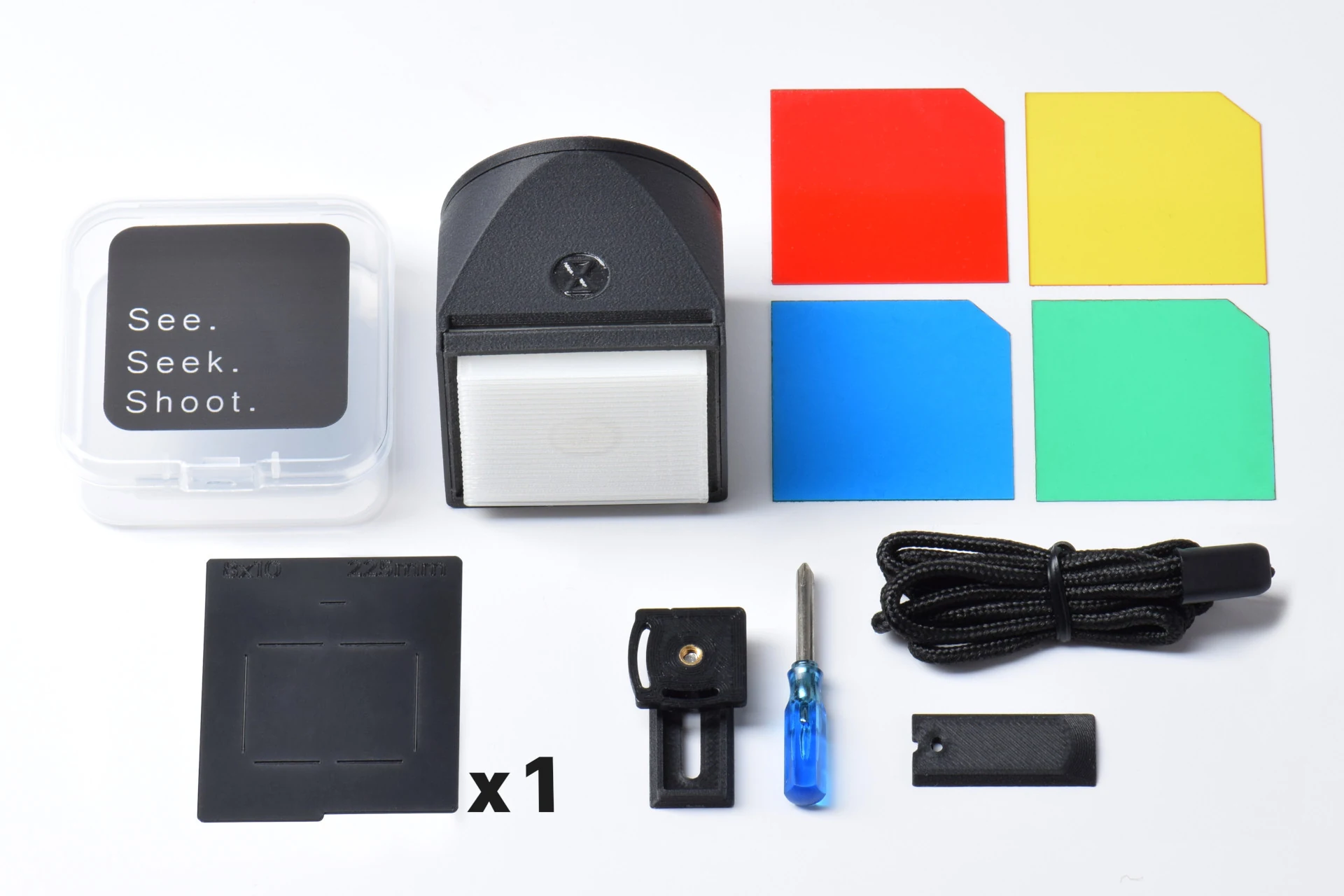
Framing cards, illumination and camera mounting
Swappable cards let photographers compare compositions and angles of view without changing lenses on the camera. Framelines can be illuminated in low light, and optional coloured gels change their tint for better visibility against different backgrounds. The body is 3D-printed from a carbon-fibre-infused composite and weighs about 30 grams.
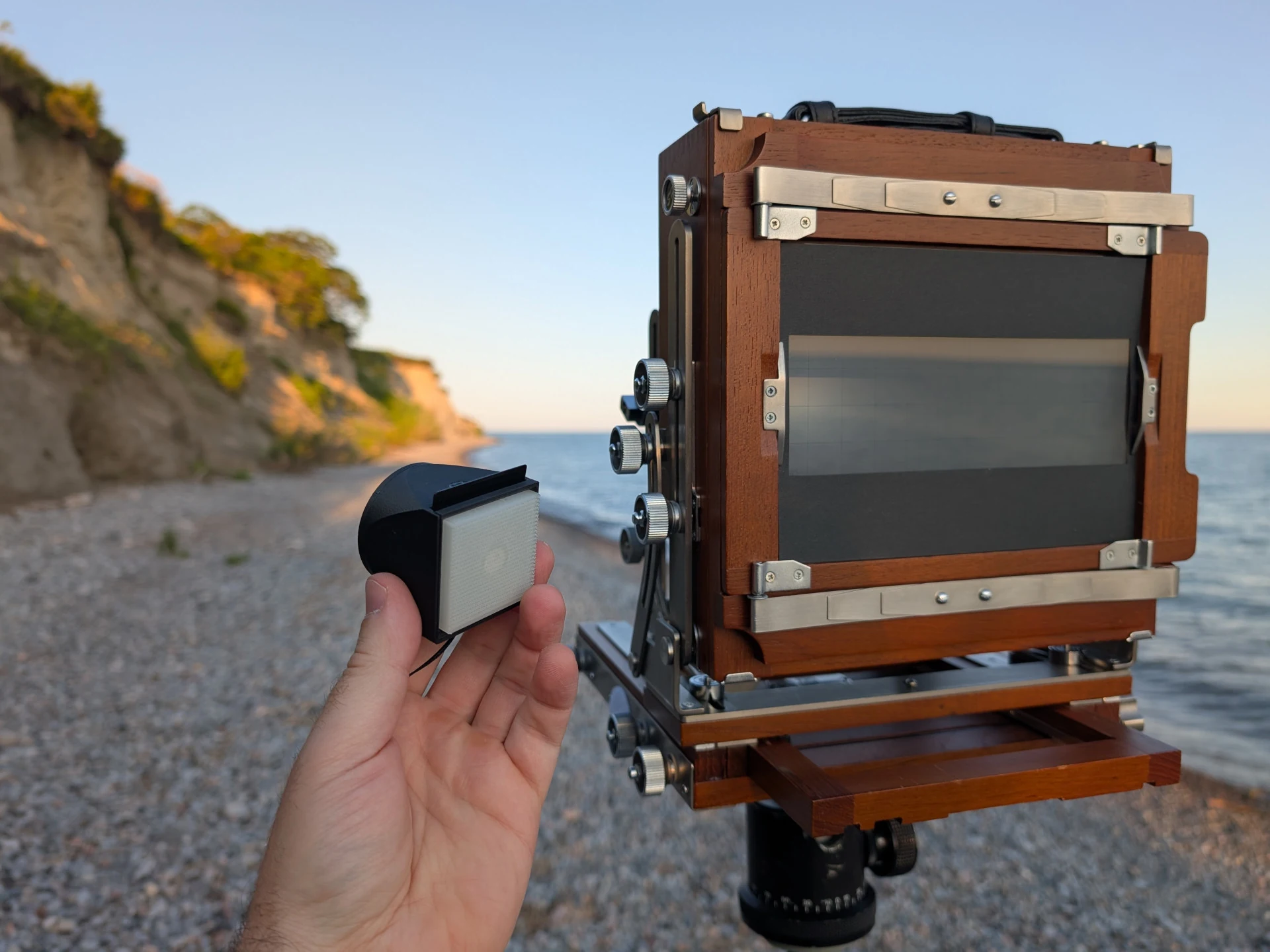
Forma can hang from a neck strap for scouting or attach to a camera shoe using a quick-release system. In the latter position it provides a composition reference, even on cameras without a built-in finder. It does not replace focus or exposure confirmation.
Why large-format photographers may benefit most
Anyone working with a 4×5, 5×7 or panoramic camera knows that setting it up on a tripod and repositioning it takes time. A separate pocket viewfinder can help decide where to stand and whether a scene merits a full setup. The creator pursued the idea in earnest when working with a 5×7 camera made this need particularly clear.
It also has potential for street photography and compact cameras without an optical finder, such as the Ricoh GR series. Its approach differs from the SmallRig 28mm waist-level optical viewfinder: Forma is designed to explore framing across formats, while the SmallRig finder offers a particular field of view and focal-length guides.
From a wooden prototype to crowdfunding
The first prototype was a wooden frame with markings indicating how far to hold it from the eye. It proved impractical because keeping the frame and the scene sharp at once was difficult. Modzelewski moved on to CAD design, 3D printing and repeated optical experiments before arriving at the finished system.
The creator sent pre-production units to photographers in several countries, including Kazutoshi Yoshimura and Lee Pengelly. Their reported early impressions have been positive, although these are not independent comparative tests of every lens and format combination.
More information here.
Price and availability
The Kickstarter campaign launched on November 10, 2026, and has reached its initial funding goal. Early-bird pledges start at CA$55 for a kit with one custom framing card. Shipping to backers is expected to begin in December 2026. This is a crowdfunding pledge, not a confirmed standard retail price. No official European price was found.
What we think
There is something appealing about searching for a composition without constantly raising a camera to your eye. In large-format photography in particular, moving the camera costs time and effort. Forma could let you walk around, test viewpoints and decide where setting up the tripod is worthwhile.
We also like its potential as a way to train your photographic eye. If you tend to shoot with one focal length, seeing the corresponding frame can help you recognise more quickly what will fit. You do not need to take a photograph every time you want to practise composing one.
The area to watch is accuracy at close distances and selecting the correct card for each camera-and-lens combination. The offset between finder and lens can affect framing, so we would not treat it as an absolute guarantee of the final image. As a scouting tool, though, its approach makes considerable sense.