

Summary
- The Nikon Z5IIC combines a 24.5 MP full-frame sensor, EXPEED 7 and 7.5-stop IBIS in a simpler screen-first body.
- The C officially stands for Casual, while the Z5II and rivals become strong alternatives when an EVF, dual cards or different handling matter.
- What the Nikon Z5IIC really is
- The big advantage: the imaging core has not been stripped back
- The decision-changing compromise: body and handling
- Its video specification is more serious than the body suggests
- Why you might choose the Nikon Z5IIC
- Why you might not choose it
- The main alternatives to the Z5IIC
- Z5IIC or Z5II? This is where the buying decision is made
- Price and availability
- What we think
- Frequently asked questions
The Nikon Z5IIC puts much of the Z5II’s imaging power into a simpler, screen-first body, but the current pricing picture makes the buying decision more complicated than it first appears.
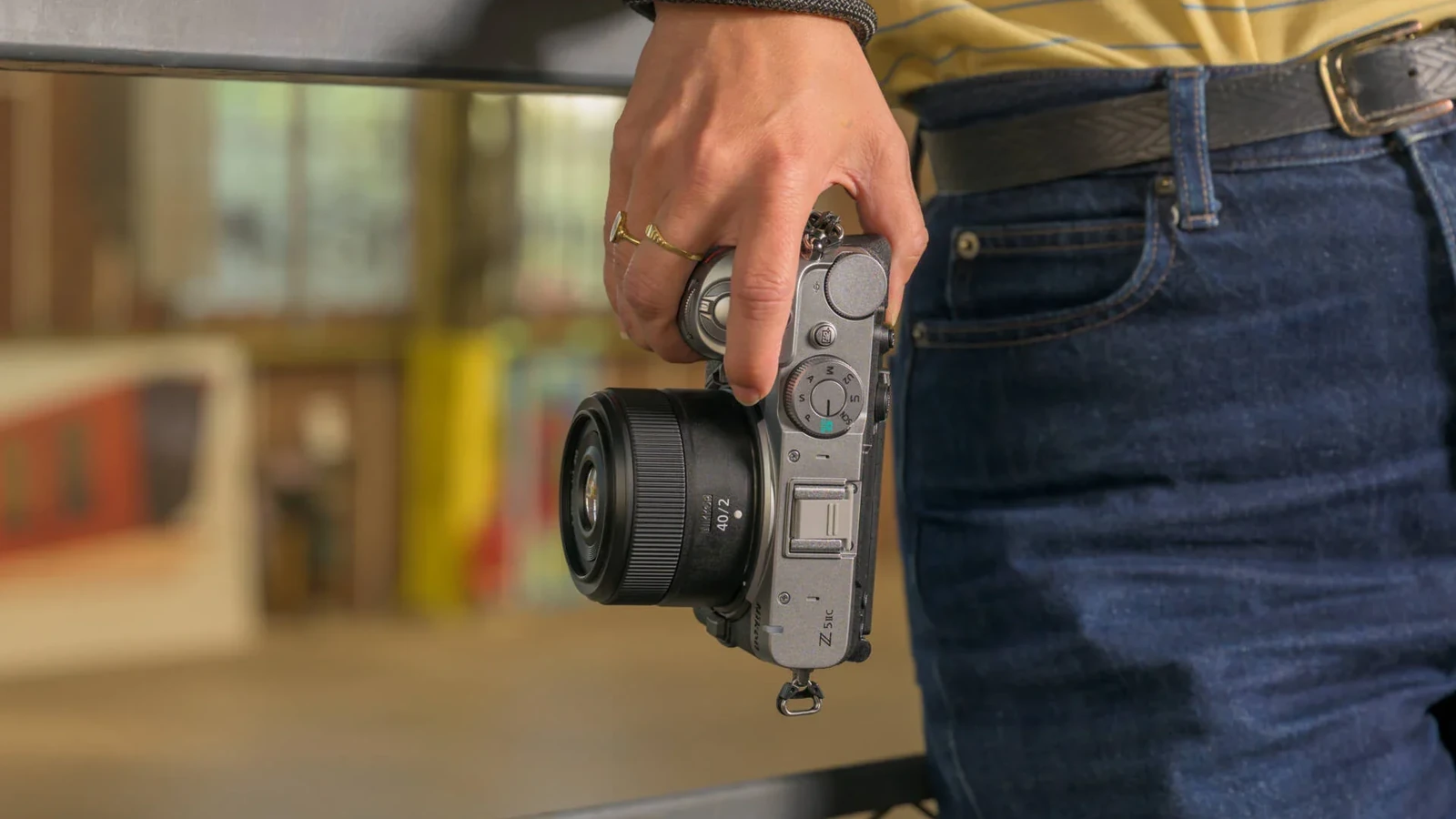
Nikon announced the Z5IIC on 24 September 2026 as a more approachable entry point into full frame. It uses a 24.5 MP FX sensor and EXPEED 7 processor, adds strong in-body stabilisation, advanced autofocus and serious video tools, but changes the handling philosophy: it focuses on the rear screen, Scene modes and Imaging Recipes rather than the more traditional experience of a camera with an EVF.
What the Nikon Z5IIC really is
At its core is a 35.9 × 23.9 mm full-frame CMOS sensor with 24.5 million effective pixels and Nikon’s EXPEED 7 processor. Standard stills sensitivity runs from ISO 100 to 64,000, 14-bit NEF RAW is supported, and Nikon rates in-body stabilisation at up to 7.5 stops in the centre of the frame and 6 stops at the periphery under its stated test conditions.
The autofocus system includes 3D-tracking and detection for 10 subject types, while conventional high-speed continuous shooting reaches about 14 fps. High-Speed Frame Capture+ can reach 30 fps, subject to Nikon’s stated format and electronic-shutter restrictions.
One detail that can easily be confusing is the letter “C” in the name. In the camera world, C is often associated with Cinema or Cinematic, but Nikon has explicitly clarified that here it stands for Casual. That choice fits the Z5IIC’s intent: simpler operation, an emphasis on the rear screen and features designed to make the move into full frame less complicated.
The big advantage: the imaging core has not been stripped back
Nikon itself says the Z5IIC delivers a level of performance comparable to the Z5II. That matters because this is not an entry-level full-frame model that drops the processor, IBIS or core autofocus capabilities just to lower the price. For street photography, travel, portraits, family use and everyday shooting, the combination of 24.5 MP, EXPEED 7, full frame and in-body stabilisation is a very complete package.
The 15 Scene modes — a first for a Nikon full-frame mirrorless camera — and direct access to Imaging Recipes also make the target audience clear: users moving up from a smartphone or simpler camera who want full-frame quality without having to master fully manual control from day one.
The decision-changing compromise: body and handling
The Z5IIC uses a flat-top design and revolves around a 3.2-inch fully articulating touchscreen with roughly 1.04 million dots. It does not have an electronic viewfinder, which will be the single biggest limitation for many photographers. Shooting in bright sunlight, following fast action and composing with the camera braced to your eye is a different experience when everything is done on the rear screen.
There is also only one UHS-II SD card slot. That may be irrelevant for personal use, but for weddings, events or other paid assignments the Z5II’s dual-card setup provides immediate redundancy that many professionals consider essential.
Despite the compact concept, the Z5IIC is not a featherweight: the body is about 538 g, or roughly 620 g with battery and memory card. Its advantage is therefore more about the clean flat shape and simplified operation than a dramatic reduction in weight.
Its video specification is more serious than the body suggests
The Z5IIC records 4K UHD up to 60p, with 50/60p using a DX crop, and Full HD up to 120p. It supports internal 12-bit N-RAW recording to SD, 10-bit H.265/HEVC and N-Log, plus a REC lamp, red recording frame, Product Review Mode and UVC/UAC webcam operation over USB.
That makes it interesting for hybrid creators who want a gentler learning curve without giving up advanced codecs and a Log workflow. The main limitation remains the DX crop at 4K/60p, especially if you need a genuinely wide field of view.
Why you might choose the Nikon Z5IIC
- You want a full-frame Nikon Z body with a strong imaging core, IBIS and modern autofocus without the more traditional Z5II body.
- You are moving up from a smartphone or entry-level camera and benefit from Scene modes, touch control and Imaging Recipes.
- You shoot video too and want N-RAW, N-Log and 10-bit recording without moving to a more expensive body.
- You do not consider an EVF or a second memory-card slot essential.
Why you might not choose it
- If you mainly shoot through a viewfinder, the lack of an EVF is a fundamental difference rather than a minor omission.
- If you do paid assignments where simultaneous backup to two cards matters, the Z5II is more complete.
- If you need 4K/60p without a DX crop, competing bodies can fit that specific workflow better.
- In our 25 September 2026 price check, the Z5II was listed on Skroutz from €1,499, while Nikon Germany’s official body price for the Z5IIC is €1,549. Until a Greek retail price is established for the Z5IIC, there is no clear price advantage for the new model.
The main alternatives to the Z5IIC
| Camera | Reference price | What it offers / changes | Who it suits better |
|---|---|---|---|
| Nikon Z5IIC | €1,549 — official Nikon Germany price | The comparison baseline: 24.5 MP full frame, EXPEED 7, up to 7.5-stop IBIS, no EVF and one SD card slot. | Screen-first users who want a simpler entry into Nikon Z full frame. |
| Nikon Z5II | from €1,499 — Skroutz | The same core 24.5 MP / EXPEED 7 / 7.5-stop IBIS package, but with a bright EVF and two SD card slots. | Photographers who want traditional handling, a viewfinder and more confidence for paid work. |
| Panasonic Lumix S9 | from €1,419 — Skroutz | 24.2 MP full frame, Phase Hybrid AF, Active I.S., 6K/4K video, Real Time LUT and a weight of about 486 g with battery and card. | Creators with a stronger focus on video, social workflow and quickly producing different looks. |
| Sony α7C II | from €1,789.34 — Skroutz | A 33 MP full-frame sensor in a compact body, giving it a clear resolution advantage for stills. | Users who prioritise still-image resolution and want a compact full-frame body in the E-mount system. |
| Canon EOS R8 | from €1,269 — Skroutz | 24.2 MP, a 2.36-million-dot EVF, about 461 g with battery/card, up to 40 fps electronically and uncropped 4K/60p generated from 6K oversampling. | Users who want a very light full-frame body with an EVF and place particular importance on 4K/60p. |
The Z5II, Lumix S9, α7C II and EOS R8 figures are the lowest body-only prices displayed on Skroutz during our 25 September 2026 check and can change at any time. For the Z5IIC we use Nikon Germany’s official price because Nikon’s Greek product page did not yet show a price, so this is not a perfectly like-for-like market comparison.
Z5IIC or Z5II? This is where the buying decision is made
For a photographer who wants one Nikon body to keep for years, the Z5II is the Z5IIC’s hardest rival precisely because it sits in the same system and keeps the same basic imaging character. It adds an EVF and a dual-card workflow without forcing you to change lenses, menus or ecosystem.
The Z5IIC wins when simplicity is genuinely the priority: a cleaner body, screen-led operation, Scene modes and a workflow that feels closer to the smartphone mindset. In the pricing snapshot we recorded, however, the Z5II was listed on Skroutz from €1,499 — €50 below the Z5IIC’s official German price of €1,549. Until a Greek street price appears for the Z5IIC, that strengthens the Z5II case for photographers who want an EVF and two card slots.
Price and availability
Nikon’s Greek Z5IIC product page is already live but did not display a price at the time of checking. Nikon Germany lists the body at €1,549 including VAT, on pre-order, with shipping from 15 October 2026. During our 25 September 2026 Skroutz check, the Nikon Z5II was listed from €1,499, the Panasonic Lumix S9 from €1,419, the Sony α7C II from €1,789.34 and the Canon EOS R8 from €1,269. Skroutz prices are dynamic and refer to the lowest displayed body-only prices at the time of checking.
For consolidated specifications, compatibility information and an updated price reference, see the Nikon Z5IIC product page on PTTL.
More information here.
What we think
The Z5IIC is technically far more capable than its simplified design suggests, and it is one of the few approachable full-frame bodies that does not give up IBIS, N-RAW or modern autofocus. With the Z5II currently appearing on Skroutz from €1,499 and the Z5IIC carrying an official German price of €1,549, the new model does not yet have a clear price advantage; the picture could change once a Greek retail price is established. The Z5IIC remains more convincing when a screen-first experience and simplicity matter more than an EVF and a second card slot.
Frequently asked questions
Does the Nikon Z5IIC use the same sensor as the Z5II?
Both use a 24.5 MP full-frame sensor and EXPEED 7, while Nikon says the Z5IIC delivers a comparable level of performance to the Z5II. The major differences are mainly in the body, handling and storage.
Does the Z5IIC have an electronic viewfinder?
No. The Z5IIC is built around its rear vari-angle touchscreen and flat-top body, unlike the Z5II, which includes an EVF.
What does the “C” in Nikon Z5IIC mean?
Nikon says the “C” stands for Casual. The naming can be confusing because C is often associated with Cinema/Cinematic in the camera world, but Nikon is not using it with that meaning on the Z5IIC.
Is 4K/60p uncropped?
No. On the Z5IIC, 4K at 50p/60p uses the DX image area.
Which makes more sense, the Z5IIC or Z5II?
The Z5IIC better suits screen-first users who want a simpler move into full frame. In our price snapshot, the Z5II was actually listed from €1,499 on Skroutz, below the Z5IIC’s official German price of €1,549, so photographers who want an EVF and dual-card workflow currently have a strong practical reason to look at the Z5II.