

Summary
- Photometria marks 18 years and enters a new phase.
- Achilleas Tziakos discusses its beginnings in 2009, the difficulties and the people who kept the festival alive.
- He explains his view of AI, today’s photography scene and the role of the Photometria Photography Center.
- The central challenge is continuity, stronger international collaborations and a deeper connection between Ioannina and photography.
Eighteen years after the first edition, Photometria co-founder Achilleas Tziakos talks to PTTL about the journey of a festival that began with a simple idea and now faces the challenge of continuity.
On the occasion of the 18th edition, “Coming of Age (18+)”, he discusses the beginning in 2009, financial difficulties, volunteering, the relationship with Ioannina, international collaborations, changes in the photography scene, artificial intelligence and the role of the Photometria Photography Center in the institution’s next chapter.
The interview
How was the idea for Photometria born in 2009, and what do you remember most vividly from that first period?
The birth of Photometria in 2009 was the result of a fortunate professional coincidence. At the time, I was running a free-press publication, while Panagiotis Papoutsis had taken on the organization of the Music Festival. Through our professional collaboration, we discovered our shared love of photography. The initial idea was simple: to hold a photography competition with music as its theme.
What I remember most vividly from that first period is that the response was not huge, because people at the time were not used to going to exhibitions, much less photography exhibitions. But the idea captivated us. We liked it so much that, from the very next year, we made sure to give the festival its own independent identity. That is how Photometria was born.
When you started, did you imagine that 18 years later Photometria would have its current form and international presence?
If someone had told me then, I might not have been able to imagine its international presence today, but one thing is certain: we never set limits. We always worked with the logic of ‘one step further every year’. Although our journey coincided with the difficult years of the financial crisis, our enthusiasm never ran dry. What has always rewarded us is the contact with the public, which embraces the festival, and meeting photographers from every corner of the planet. This community that has formed around Photometria is our greatest success.
What was the biggest difficulty in the early years, and what moment made you believe the festival could really last?
Naturally, the lack of funding was the biggest headache in our first steps. Starting something from zero, without resources, we had to find ways to turn our ideas into reality relying exclusively on our own strengths. The fact that the festival is organized outside the major metropolitan centres made finding financial support even more difficult, while 18 years ago there was not the necessary know-how about how such an institution is set up and operates. We had to learn everything ourselves, in practice.
The moment that made me believe the festival would last was not a specific event, but a realization: I was seeing people become captivated by our effort, believe in our passion and join the team. The fact that Photometria relies entirely on volunteering and that so many young people offer their work without pay simply because they love the festival was the greatest confirmation. The selfless contribution of all these people who became one with us was what proved to me that the festival would not stop easily.
If you had to single out the most important milestones from 2009 until today, what would they be?
Every year has its own weight because we never rested on what we had achieved; we always added a new activity, a new competition. For me, every year is a separate milestone, because each year we started something new. Looking at our course, however, I feel that every five years Photometria transforms and makes a major leap forward. Certainly, organizing the festival during lockdown was a milestone that tested our limits and made us even more determined. On the other hand, the fact that leading names in world photography trust us and come to Ioannina for us is the greatest moral vindication.
If I have to name one tangible, material milestone, however, it is the Photometria Photography Center (PPC). Creating this space allowed us to be more than an annual festival and become a living cultural hub with an everyday presence.
Was there a particular edition or collaboration that you feel took Photometria to another level?
Photometria moved to another level through a combination of people and collaborations. Artistically, the sixth and seventh years were decisive: that was the period when the festival began attracting very major names in international photography, something that radically changed our reach and put us on the global map. I remember, for example, important presences and works such as ‘The Greek Portfolio’ by Constantine Manos, as well as collaborations that allowed us to present in Ioannina works of particular historical and artistic weight. Among them were works by Nelly’s, Herbert List, Kostas Balafas and other important Greek and international photographers. The culmination of that development, however, was our collaborations with the Benaki Museum and MOMus. Working with these major cultural institutions gave Photometria a different weight and confirmed that we can bring to the regions exhibitions and works of a level comparable to those presented in the country’s major cultural centres.
How decisive has Ioannina been for the festival’s identity, and how has Photometria’s relationship with the city and its audience changed over these 18 years?
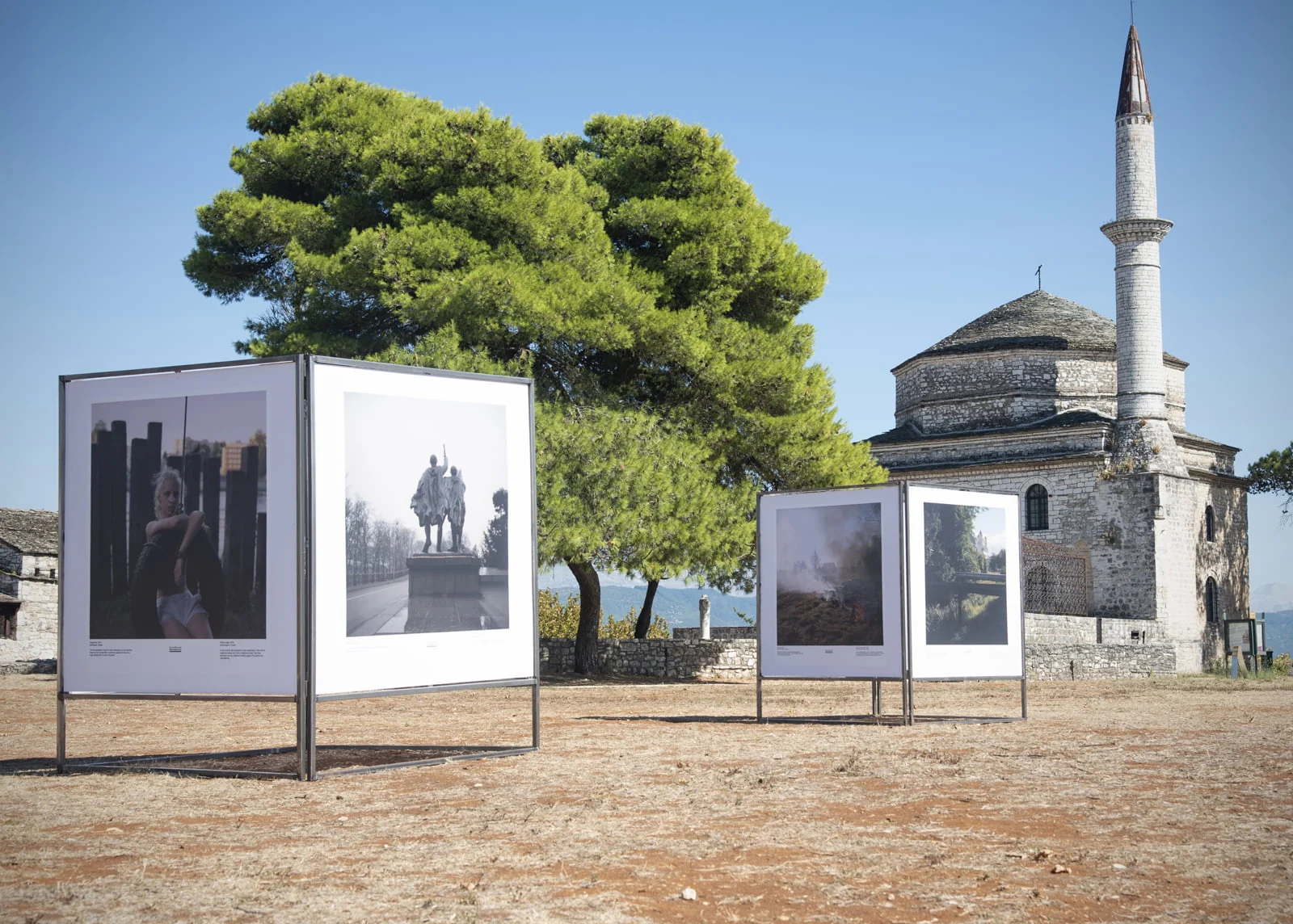
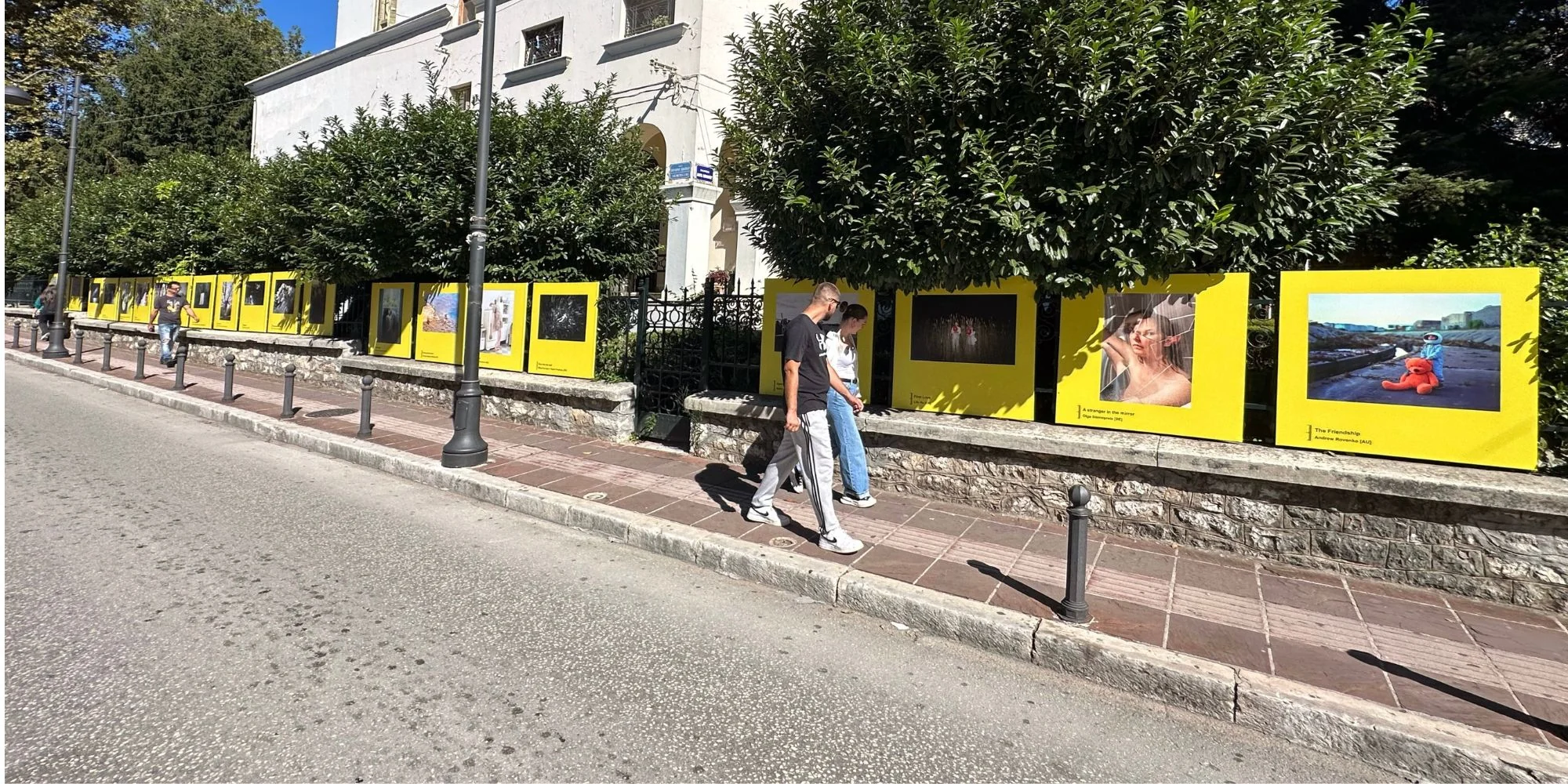
Ioannina is in Photometria’s DNA. From the very beginning, we chose not simply to create a photography festival that happens inside the city, but a festival that is in dialogue with the city itself. We looked for buildings, courtyards, squares and corners that people might not know or had never seen as exhibition spaces. In this way, the city gradually became part of the festival’s identity. This relationship has changed significantly over 18 years. Photometria has developed its own audience and has become part of the city’s cultural life. The duration of the festival, which stretches over roughly two months, helps a great deal because it creates an extended period during which photography remains constantly in the public space and in the conversation.
There is another dimension that I consider important. Every photographer we host, Greek or international, leaves having experienced Ioannina. Many share their experience on social media and, essentially, become small ambassadors for the city to an international photography audience, even when that is not something we deliberately seek. At the same time, we insist that a large part of exhibition production takes place here, so that the festival is also connected with the local economy and the people of the city.
There is now an audience that waits for Photometria, follows the exhibitions and takes part in its activities. On the other hand, there are still important opportunities we have not managed to make use of.
The next step, therefore, does not depend only on Photometria itself. It also depends on the extent to which the city, its institutions and each municipal administration genuinely believe in this vision. Fortunately, in recent years we have seen greater understanding of the importance of the institution and more substantial support from the Municipality. That gives us the momentum to continue.
For me, the goal now is not simply for Photometria to continue to exist. It is to reach a point where, when someone hears ‘Ioannina’, they also think ‘photography’, and vice versa.
Photometria has hosted important Greek and international creators over the years. Which exhibitions, collaborations or appearances have stayed most vividly in your memory?
It is genuinely difficult to single out moments across 18 years, because Photometria is, above all, the people who have passed through it and the relationships that were created. If I had to keep a few, I would start with the people who helped the festival evolve. I remember very vividly our collaboration with artistic directors Andre Bakker and Iasonas Dimou, as well as the journey of our current artistic director, Panagiotis Pappas, who started at Photometria as a volunteer and today is a key member of the team with artistic responsibility for the festival. For me, that is perhaps one of the most beautiful stories of these 18 years: people who initially came to help as volunteers and ultimately grew together with the institution and took on important roles.
As for creative anxiety, that reached its peak with the Constantine Manos exhibition, in collaboration with the Benaki Museum. It was the first major exhibition we presented on that scale, and I remember very clearly all the production anxiety: from how an exhibition of that size would be installed to how a photographic world could be properly rendered in a different exhibition space.
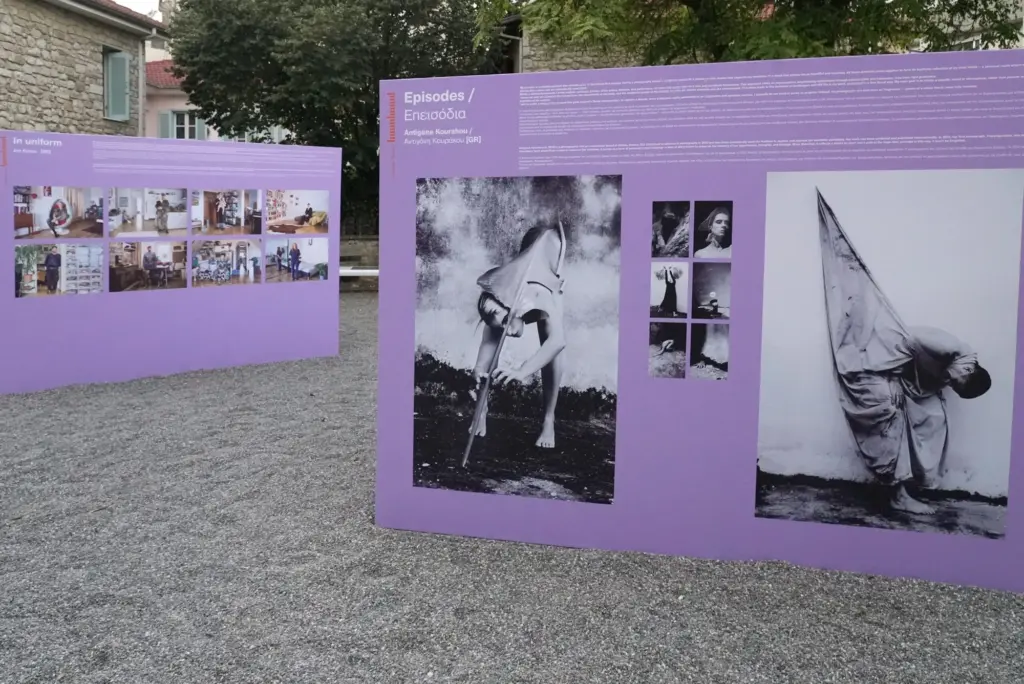
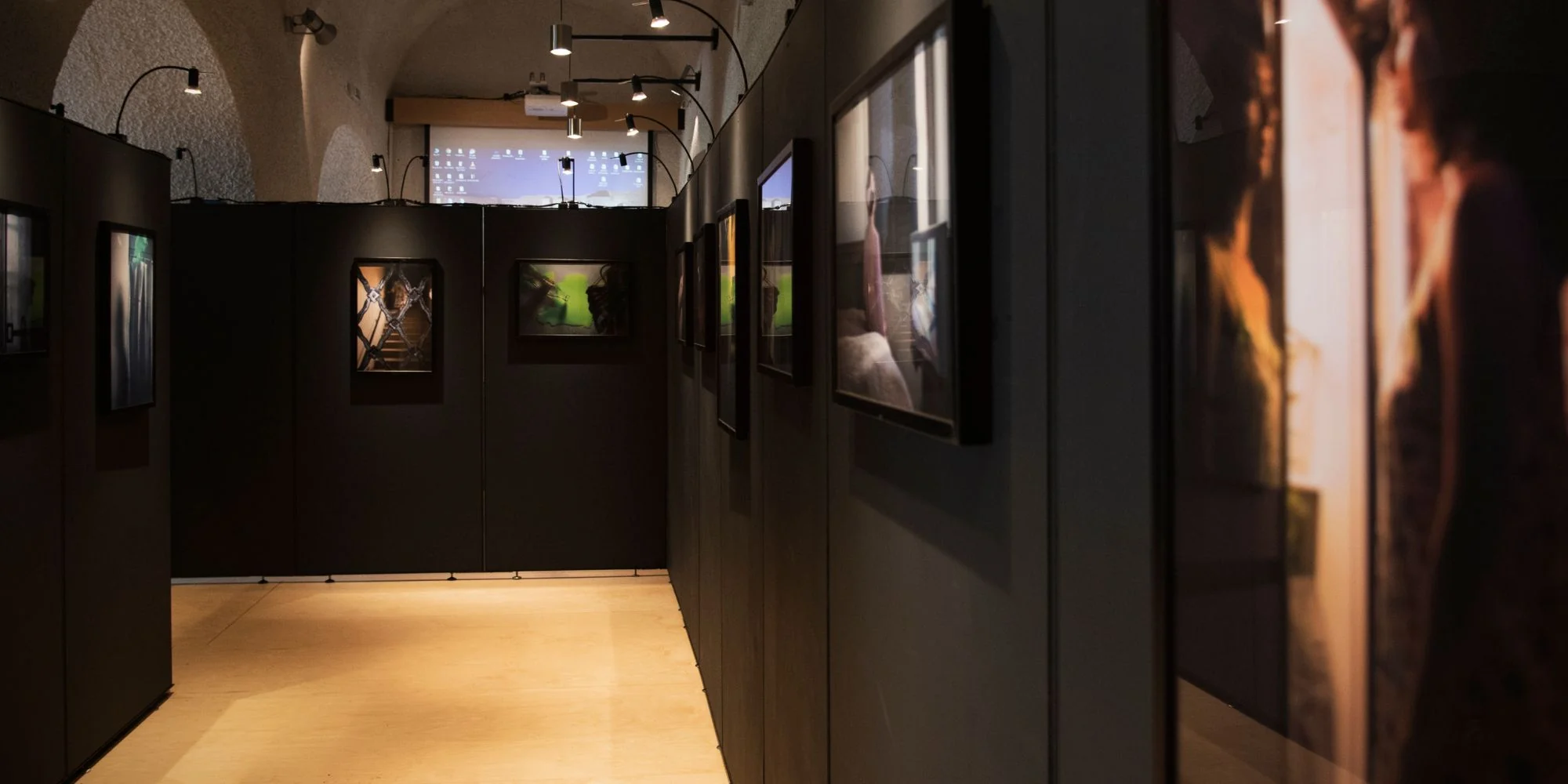
Of course, I cannot fail to mention our first outdoor exhibitions. That was where we really understood what it means to take photography out of the gallery and place it in public space. There was enormous anxiety about how the images would be installed, how they would withstand the environment, how passers-by would see them and, above all, how we could present the photographer’s work without it being lost in the surroundings of the city.
Looking back, what stays with me most is not only the exhibitions or the names. It is the people, the friendships, the collaborations and all the small and large anxieties behind every exhibition.
Because Photometria may now have 18 years of history, but every exhibition still begins with the same anxiety: ‘Will we manage to do it the way we imagined it?’
Is there a backstage story, a difficult or unexpected moment, that best describes what it really means to organize Photometria?
Organizing Photometria means that until the very last moment you have the illusion that you have everything under control. Setting up 13 exhibitions at the same time, together with seminars, screenings, talks and all the parallel activities, is in itself a major production. There are years when the programmes arrive from the printer literally at the last moment, while you are simultaneously communicating with artists about prints, coordinating transport, installations and dozens of small details that visitors never see. And because a large part of the production happens here in Ioannina, there is almost always something unexpected.
One year, we were expecting an artist from Asia. We had gone to the airport, we were looking for him, calling him, nothing. He had disappeared. In the end, he appeared a day later. He had missed his flight and, of course, had never informed us. And then there are the outdoor exhibitions, which are a category of their own: the weather, the wind, the space, how a photograph will be installed in public space, how it will be lit and how it will be protected. Many things that are taken for granted inside a gallery stop being obvious outdoors.
This constant readiness for the unexpected is exhausting, but in the end all that adrenaline makes us even more creative and binds us together as a team.
How has the Greek photography scene changed, in your view, from 2009 until today?
Through Photometria, we have the privilege of watching this evolution from the front row. The Greek photography scene has made important steps. Where interest once focused mainly on technique or on the classic depiction of reality, the landscape has now changed. Today we see a generation of creators working with entirely different criteria. I see it very clearly in the entries we receive every year. When I look at the work of young photographers, I see more and more research behind the image and an effort to go deeper into the subject they choose. I see photographers working more with personal stories, family, memory, identity, their place, but also with social issues. They are not necessarily interested only in creating a powerful image; they want to build a body of work, to have something to say and to develop it in depth. This is also very evident in photobooks, where photography now functions as part of a larger narrative.
The internet and social media have made it much easier to see what is happening abroad, discover creators, present your work and take part in international events. This has broadened horizons considerably, and I see the new generation of photographers as being less hurried to ‘show’ their work. They want to research it, process it and develop it. Perhaps this is the biggest change I have seen over all these years: from photography as a single image, we are moving more and more toward photography as a personal body of work and as narrative.
Smartphones, social media and now artificial intelligence have drastically changed how images are produced and consumed. How do you see these changes from your position at Photometria?
When Photometria started, the process of creating a photograph was different. Today, with a smartphone, within a few seconds you can create, edit and publish an image and have thousands of people see it. The image has become a huge, everyday part of our lives. Everyone can photograph, everyone can publish and everyone can build an audience. This is very positive, but at the same time it creates an enormous volume of images. Within this oversupply, it becomes increasingly difficult for something truly personal to stand out.
Artificial intelligence has an algorithm, but the photographer has eyes, heart and lived experience. The photographer has an inner need to express something, to narrate something they have lived or something that concerns them. That personal path is what makes a body of work truly interesting.
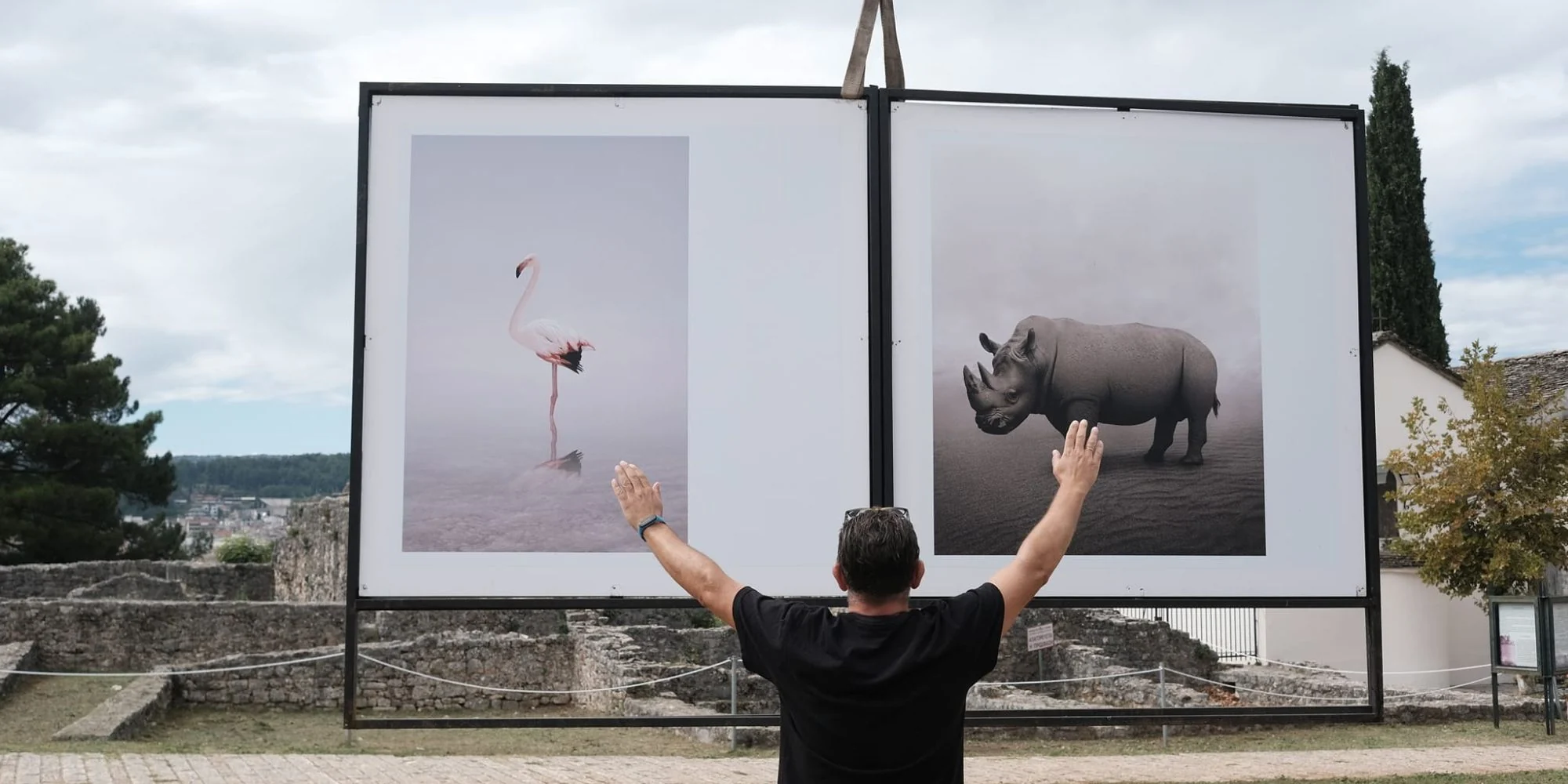
We are not technophobic. The easier it becomes to produce a ‘perfect’ image at the press of a button or with a prompt on a computer, the more the value of human intention, the idea and the concept rises. When the image becomes cheap and disposable within the endless scrolling of Instagram, we propose stopping, studying and being physically present in front of a printed photograph. That is what we look for and what we want to support through Photometria.
What do you look for today in a photographer or project when shaping the festival programme?
When we shape the programme, our basic aim is to offer as open and plural a picture of contemporary photography as possible. Photometria is a free celebration of photography, open to everyone, and we want visitors during the weeks of the festival to have the opportunity to discover different ways in which the photographic image can be used.
We look for projects that have something to say and a story to tell, without wanting to restrict photography to one specific aesthetic or direction. We are interested in different generations, approaches and ways of storytelling coexisting, so that viewers can discover something they may not have known they were interested in. Panagiotis Pappas holds the artistic direction, but the programme is shaped through collaboration and discussion within the team. I consider that important for Photometria: we are three people with different experiences and views, but with a shared desire to search for and discover new voices.
Ultimately, we do not want to decide for the viewer what they should like. We want to give them choices. To see, compare, think and discover for themselves what touches them. Photography has many languages, and for us the joy of a festival lies precisely in allowing everyone to find their own.
Supporting emerging Greek and international photographers is part of Photometria’s stated vision. How important is that to you, and are there creators you have seen develop through their relationship with the festival?
If you ask me, it is perhaps the most important part of our work. When you start out as a young photographer, the hardest thing is to find a wall on which to hang your photographs and an audience to see them. We wanted to become that wall and that bridge.
Over all these years, we have presented many emerging names, Greek and international, and it is very rewarding to see some of them develop afterwards, create new work, take part in other festivals and exhibitions, and build their own path. I would not say that Photometria is what ‘created’ them. But I do consider it important that at some point in their journey they were given a space and an opportunity to present their work.
Seeing a new talent evolve and knowing that you placed a small stone at the beginning of their path is an invaluable reward for our whole team.
Photometria has gradually developed international collaborations and a presence outside Greece. How important is this outward-looking approach and where would you like it to develop next?
From the beginning, our gaze was directed beyond the borders. The festival’s international presence was a basic goal because we always believed that art has no barriers. International collaborations helped us understand what is happening abroad, exchange views and experiences with people and festivals from other countries, and see how different photography institutions operate.
There were festivals and people who opened roads for us, gave us ideas and helped us evolve. In the same way, through our own collaborations, exhibitions and the photographers we have presented, relationships were created that continue to this day. For me, that is the essence of outward-looking work: it is not simply about bringing an international name to Ioannina or taking a Photometria exhibition abroad. It is about creating relationships, enabling exchange and learning from one another.
The next step I would like is to expand this network into new countries and continents, give Greek photographers even more opportunities to present their work abroad and, at the same time, bring new international collaborations and ideas to Ioannina. I would like Photometria to take part in co-shaping larger-scale international projects and for Ioannina to become a stable reference point in this exchange.
Our vision is for Photometria to be a reliable international partner that creates opportunities and builds bridges for artists, both from Greece to the world and from the world to Greece.
The creation of the Photometria Photography Center gave the festival a permanent presence throughout the year. What changed for you once Photometria gained this stable home?
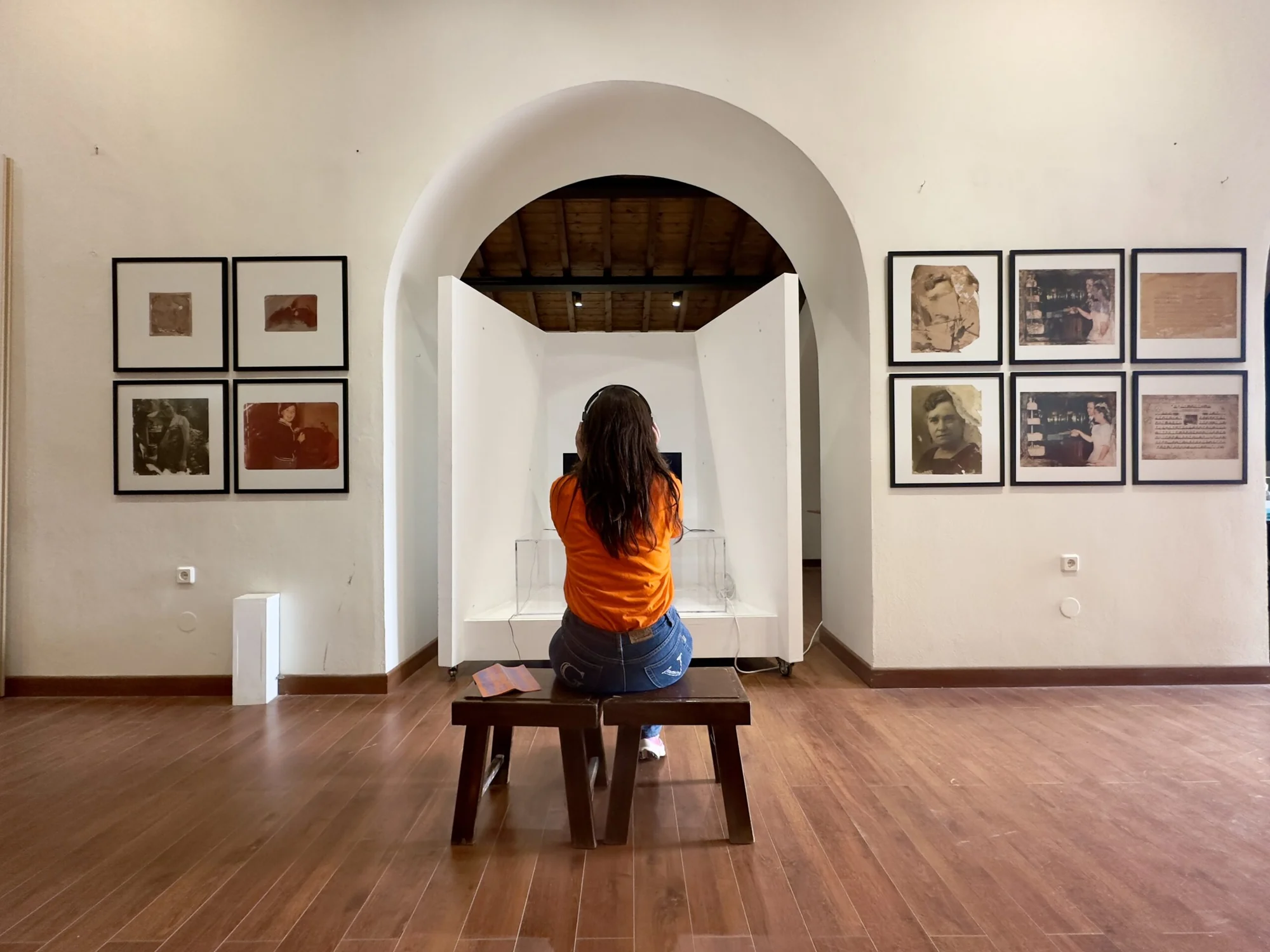
The creation of the Photometria Photography Center (PPC) was a pivotal step for us, because it gave us the ability to have a permanent presence in the city and operate throughout the year, beyond the months of the festival. For three years, in our first space, we hosted exhibitions, educational activities, book presentations and seminars, including darkroom classes. Now we are taking a new, decisive step by moving the PPC to a new space in the heart of Ioannina, at the junction of F. Tzavela 20 and M. Angelou.
This change is not simply spatial. We want the new venue to become a more open, accessible and stable base for photography in the city, a meeting point for photographers, the public and people who want to understand the photographic process in depth. Most importantly, the new space will permanently host an exhibition dedicated to Kostas Balafas. For us this has deep symbolic and substantive importance, because we want contemporary photographic creation to remain in constant dialogue with the history of Greek photography. Balafas represents a major chapter of that history, and we feel a responsibility to keep his work alive and accessible.
In addition, the same venue now hosts the festival’s central offices, as well as a relaxation area with our public photography library, which is open and available to everyone. Visitors will also find the physical version of our shop, Photobookstore.gr, where they can obtain photography books and festival souvenirs, and register for seminars, competitions and talks. Essentially, after 18 years of Photometria and three years of the Photo Center, we are entering a new era. The festival remains the major annual celebration, but the PPC becomes our stable base, a space for exhibitions, education and experimentation.
This year’s 18th edition is titled ‘Coming of Age (18+)’. How symbolic is that title for you, and what does it mean personally to see Photometria ‘come of age’?
Seeing something you started from nothing reach its 18th year brings deep emotion. I remember Photometria in its first steps, when everything was much smaller, more spontaneous and perhaps more romantic. Today, looking back, I see an institution that has acquired a life of its own, its own personality and its own voice.
For me, Photometria coming of age has a double meaning. On the one hand, it is the vindication of an 18-year journey. It is beautiful to see something that started almost from zero grow, evolve, develop international collaborations and create its own place on the photography map. On the other hand, coming of age also brings responsibility. Photometria is no longer our ‘child’. It now has its own personality and must continue to evolve even when, at some point, we are no longer here. And that may be the most important thing for me: to have managed to create something that can continue to exist and develop beyond the people who started it.
So ‘Coming of Age’ is not only a symbolic title for 18 years. It is also a reminder that Photometria is entering a new phase. And, as with a person at 18, perhaps the most interesting part is only just beginning.
What do you consider the biggest challenge today for an independent photography festival in Greece?
The challenges are many and multilayered, but the biggest remains financial sustainability and the difficulty of convincing a company that it is worth investing in culture. When you are outside the major metropolitan centres, things become even more difficult. Every year you have to explain why a business should allocate part of its budget to a cultural institution, especially when it is not in Athens or another large urban centre. Even major local companies do not always participate in such efforts as much as we would expect. A cultural institution is not only about the people who organize it. It concerns the city itself and its image outward.
On the other hand, you need to cultivate an audience that does not always have the habit of participating in cultural events. In the regions it is harder to mobilize a large audience for cultural activities, especially when these are not part of everyday life. It takes persistence and constant effort to create an audience that will come, see an exhibition, return and ultimately feel that this institution also belongs to them.
There is another side that may not be easy to see from the outside. To create an independent cultural institution in Greece, you have to give a great deal of your personal time. At Photometria, throughout all these years, we have all worked on a voluntary basis, with passion and belief in what we do, often putting family, rest and free time aside. You cannot make a living from a photography festival in Greece.
Nevertheless, perhaps this is also Photometria’s strength: after 18 years we continue because the willingness, passion and belief that what we do has value are still there.
Is there an idea, collaboration or dream for Photometria that has not yet been realized?
It would be a pity if we stopped dreaming; the festival would have faded away long ago. There are many plans in our minds, but because we like to pleasantly surprise our audience, we keep the details for the moment when they take shape.
What I can say is that we want Photometria to continue growing not only in size, but mainly in substance. To create new collaborations, give more opportunities to photographers, bring important people and works to Ioannina, and create things that remain in the city beyond the duration of a festival. I do not see these 18 years as a review of the past. I see them more as a good starting point for Photometria’s next phase. And as long as there are people on the team who continue to have ideas and enthusiasm, I think we still have a great deal to do.
As you approach 20 years, what is the festival’s next big challenge?
The next big challenge, as we approach 20 years, is one thing and it is clear: continuity. We want to ensure that the festival continues to exist and evolve, that it has now built foundations strong enough to move forward beyond the people who started it.
I want Photometria to gain even more stable foundations, to expand its year-round presence through the Photometria Photography Center, to strengthen our international collaborations and to create more opportunities for young photographers. Above all, I want us to keep leaving something behind in Ioannina. Just as when we say Drama our minds immediately go to the Short Film Festival, and when we say Kalamata to the Dance Festival, I would like the same to happen with Ioannina and photography. After 18 years of living presence, our big challenge is to connect the city even more strongly with photography, so that when someone thinks of Ioannina, they also think of Photometria, and vice versa. Photometria no longer belongs only to those of us who started it. It has become part of the city and its cultural life. The challenge of the next decade is for it to take even deeper root and evolve into an autonomous, stable and enduring institution.
And, of course, there is the most difficult challenge: to continue having the same appetite and passion we had when we started. Without those, no matter how many infrastructures and collaborations you gain, you cannot keep such an institution alive.
If you could speak to Achilleas in 2009, just before the first edition, what would you tell him?
If I could turn back time, I would look the Achilleas of 2009 in the eyes and tell him not to back down. To let himself follow the flow of things, but to keep a firm hand on the wheel.
I was 39 then, in a demanding period of my life, and I had a strong inner need to offer something meaningful to my place. I was not thinking that 18 years later we would be talking about an institution with international collaborations, a Photo Center and everything that has happened along the way. I would also tell him never to forget something he perhaps could not have known then: major efforts are not made by one person alone. They are made by teams, groups of friends, people who believe in one another and are sometimes willing to set aside their personal ambitions for something greater than each individual. I think that is one of the greatest lessons Photometria has given me. Perhaps I would tell him not to worry so much about where it will lead. To enjoy the journey more, the people he will meet, the friendships that will be created, even the difficulties. Because, looking back, you understand that it is not only the destination that matters. It is everything you lived through on the way there. That is something I also try to tell the young people who join the team today and our volunteers. You do not always need to do something huge to change things. If each of us places one small stone for the common good, in the end those small stones can build something much larger than ourselves. Perhaps that is how the world around us truly changes.
And above all, I would tell him: keep going. You may not know where it will lead you, but it is worth trying.
And if you had to choose just one image, one moment or one story to symbolize this entire 18-year journey, what would it be and why?
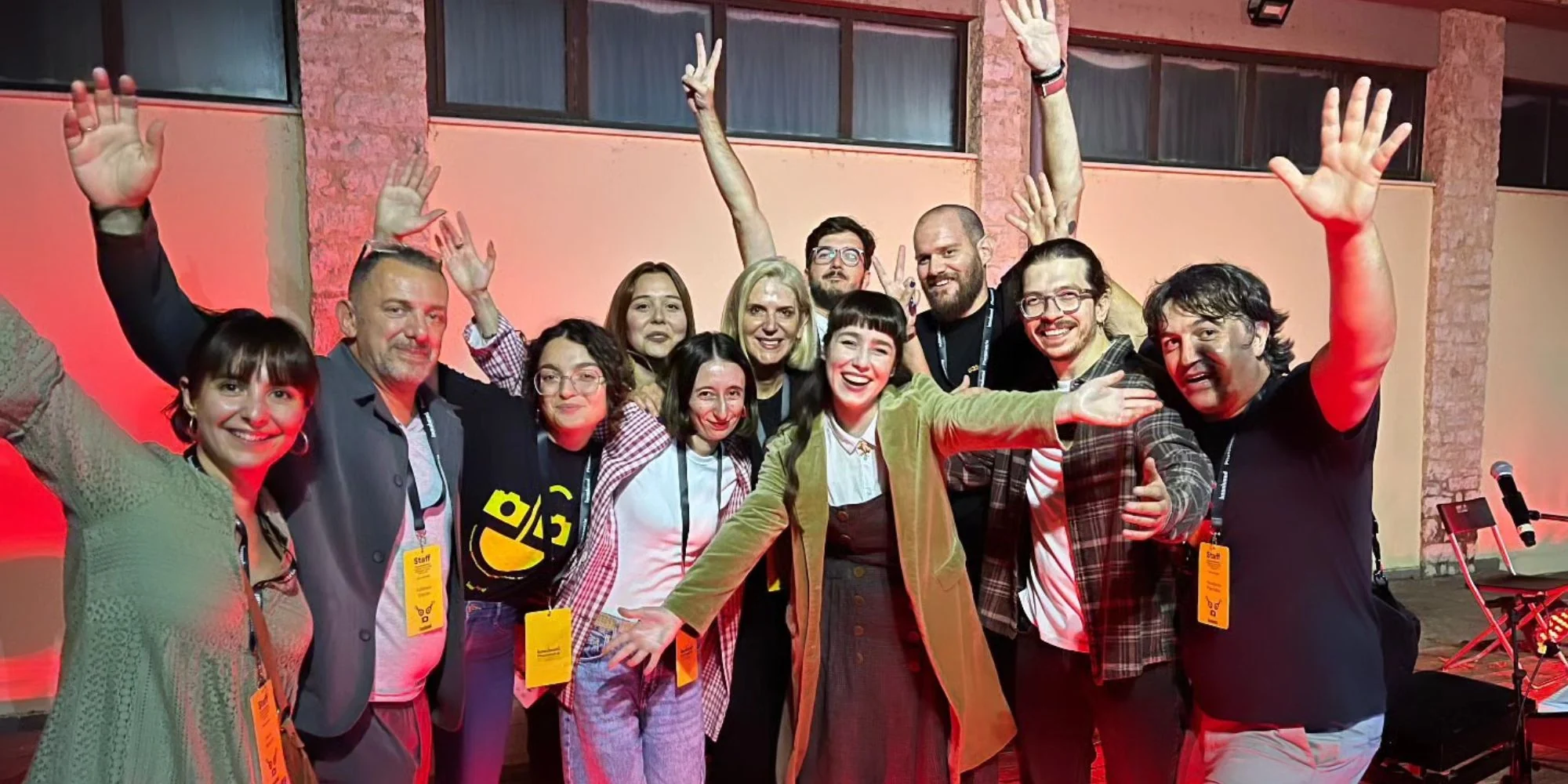
If you asked me about the present, I would tell you about the moment just before an exhibition opens: carrying photographs, frames and tools, running from one space to another and trying to get everything done until the last moment. A little chaos, a lot of stress, fatigue, laughter and, above all, collaboration. Then the doors open and the people arrive. That is the everyday adrenaline of Photometria.
If I have to choose one single image to symbolize the whole journey, though, it takes me back to 2009. It is a moment from our first edition. I remember Panagiotis Papoutsis and me sitting, one on the right and the other on the left of the entrance to the venue. There is no audience. No one was coming in. We were silent and looking at the lake. We did not need to say much. I think at that moment we had roughly the same thoughts, the same vision, but also the same anxiety. We had started something without knowing whether it would continue, whether people would embrace it, whether we could really do it.
For me, these two images are essentially Photometria. One is the starting point and the other is the journey that followed. From an almost empty space and two people looking silently at the lake, we have arrived today at an entire team of people who run, carry things, worry, laugh and eventually open the doors to welcome the public. And perhaps that is the most important thing Photometria gave me: a vision can start with two people silently looking at a lake, but in order to continue it has to become a shared dream. Others have to believe in it, each person has to add their own small stone, and at some point you realize that what started as an idea among a small group of friends has become something much larger than all of us.
What we think
The journey described by Achilleas Tziakos is one of an institution built gradually on volunteering, collaboration and the determination to add something new every year. The most significant point in the interview is that “coming of age” is not presented as an endpoint, but as a responsibility: for Photometria to develop structures and continuity that can outlast the people who started it.
Short biography
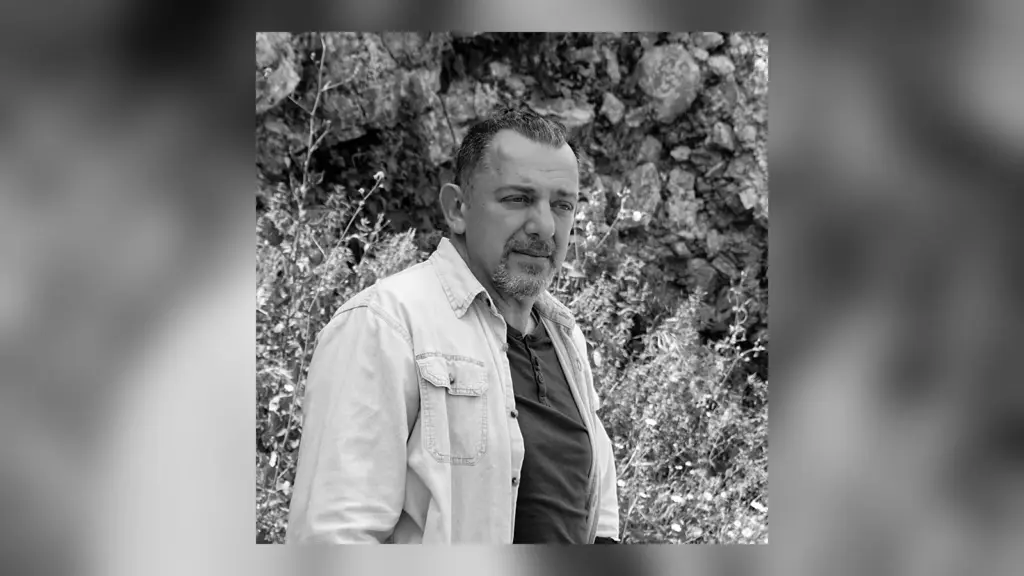
Achilleas Tziakos was born in Ioannina in 1969 and studied Computer Science. He became professionally active in media, communication and advertising, served as owner and director of Metro FM and publisher of Street Press Lift, and also worked in corporate communication, publishing and event organization. In 2012, he took part in the first TEDxIoanninaChange event. In 2009, together with Panagiotis Papoutsis, he co-founded the Photometria International Photography Festival. He remains an active member of the team and contributes to the development of the Photometria Photography Center. Today he works as a sales consultant while continuing his involvement with Photometria and its cultural activities.
Public links
Frequently asked questions
When did Photometria begin?
The first edition took place in 2009, when an initial idea for a photography competition themed around music evolved into an independent festival.
What does “Coming of Age (18+)” mean?
It is the title of the 18th edition and, for Achilleas Tziakos, symbolizes both the vindication of the journey so far and the responsibility that comes with the next phase.
What is Photometria’s next major challenge?
Continuity: more stable foundations, a stronger year-round presence through the PPC, more international collaborations and more opportunities for emerging photographers.
How does Achilleas Tziakos view artificial intelligence?
He does not approach it in a technophobic way. His view is that the easier it becomes to produce a “perfect” image, the more valuable human intention, ideas and lived experience become.