Summary
- Magnum presented The French Crate, a book about Philippe Halsman’s little-known Paris archive, on November 14.
- His grandson rediscovered hundreds of glass-plate negatives that had spent decades in a wooden crate.
- The images include early portraits and hairstyle studies that reveal how Halsman developed his lighting.
- The publication also underscores the importance of preserving physical photographic archives.
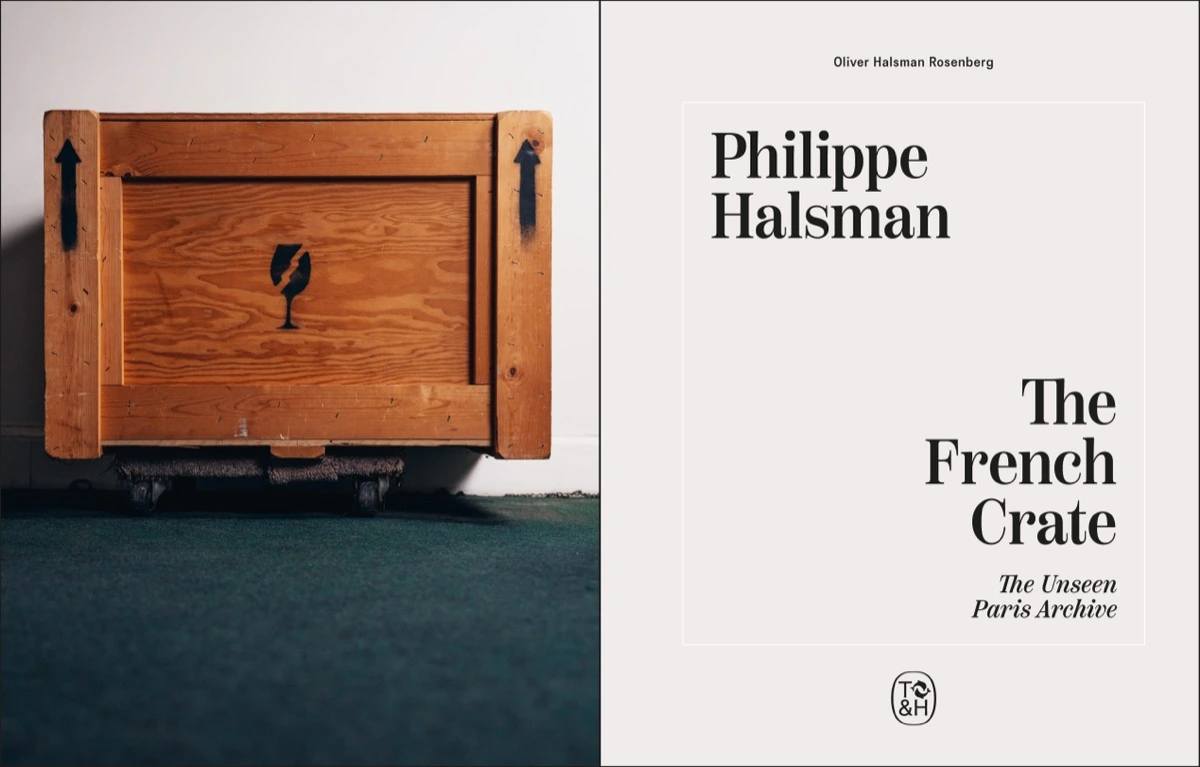
A forgotten wooden crate containing hundreds of glass-plate negatives introduces us to Philippe Halsman again—this time before the celebrated portraits, in the Paris of the 1930s.
The book Philippe Halsman: The French Crate — The Unseen Paris Archive was presented on November 14, 2026, at the Magnum Book Festival in Paris. Oliver Halsman Rosenberg, the photographer’s grandson and a custodian of the Philippe Halsman archive, discussed the publication with photography historian Clara Bouveresse. The 2 p.m. conversation took place at the Magnum Gallery & Bookstore as part of the events surrounding Paris Photo.
The crate that was forgotten
Halsman left Paris in 1940 as Nazi forces invaded France. According to publisher Thames & Hudson, he could take only his camera and twelve prints. With Albert Einstein’s help, he was able to settle in New York. After the war, a wooden crate of glass-plate negatives was returned to him, only to remain out of view for decades.
Many years later, Oliver Halsman Rosenberg came across the crate in a corner of the family photographic archive while organizing equipment, pictures and objects from the former studio. Inside were hundreds of negatives alongside the boxes used to store the glass plates. The discovery did not take place at the November 14 event; the festival presented a new book based on material recovered earlier.
Halsman before the iconic portraits
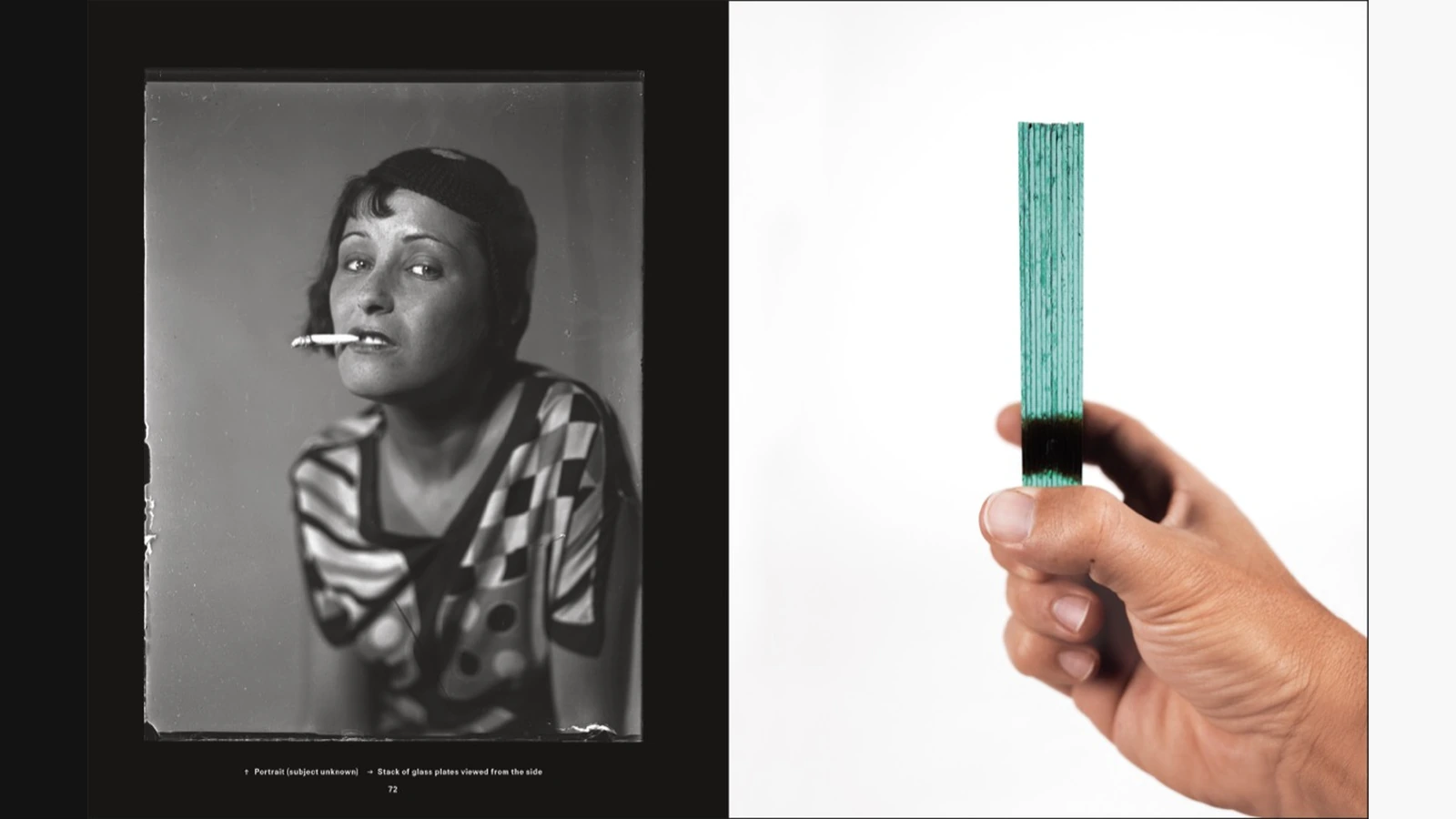
In 1931, Philippe Halsman left his engineering studies to pursue photography. In Paris he photographed friends, models and people from the city’s artistic circles, looking for expressions and gestures that revealed character. The glass negatives show the early form of the direct, psychologically attentive approach that later defined his portraits.
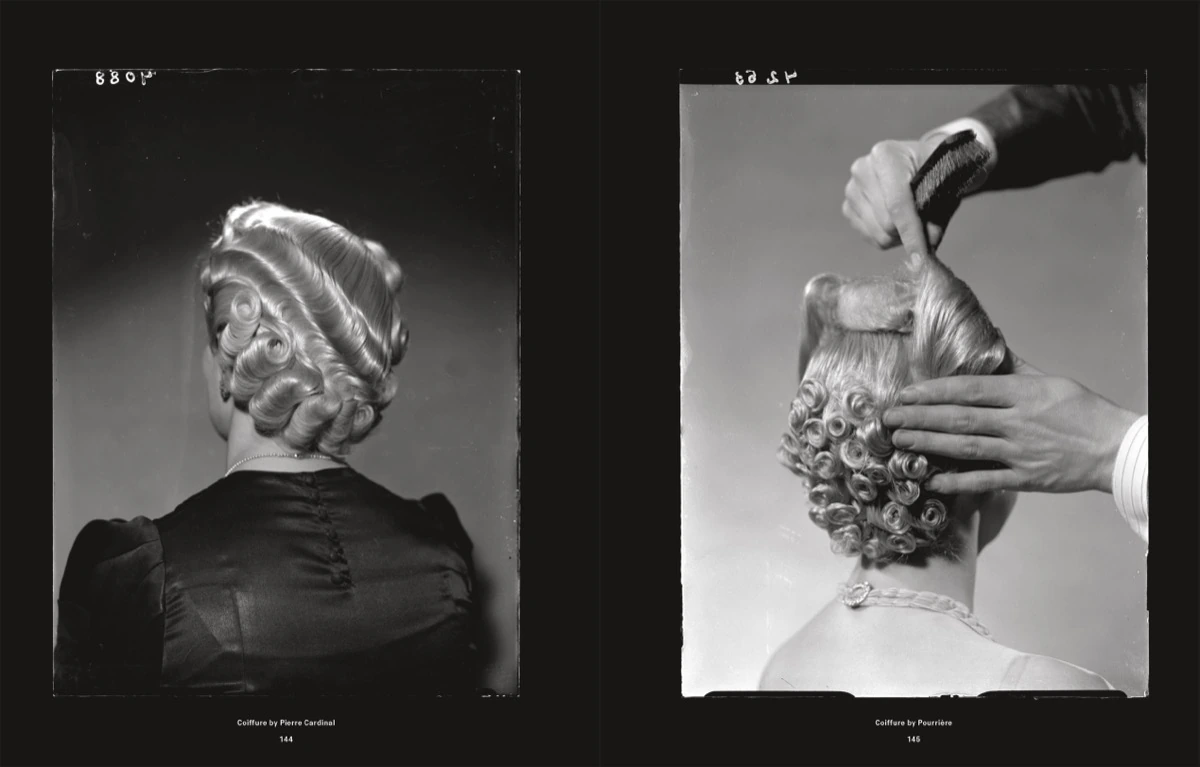
Other spreads include hairstyle studies: the positioning of the model, the movement of hands and the precise lighting show how deliberately Halsman worked even then. His grandson has said he recognized poses and lighting ideas that the photographer later used in celebrity sessions.
In the United States, Halsman became one of the most recognizable portrait photographers of the twentieth century. He photographed Marilyn Monroe and Einstein, collaborated with Salvador Dalí for 37 years, and made 101 covers for LIFE magazine. This new selection lets us trace the steps leading to that success rather than begin his story with the images everybody knows.
Photography as a physical object
Glass plates were fragile and had to be changed individually, making the photographic process slower and more deliberate. The French Crate presents not just the images but also their material context: glass surfaces, markings and storage boxes. The Thames & Hudson edition has 168 pages and, according to the publisher’s US catalogue, includes 126 illustrations, 25 of them in color.
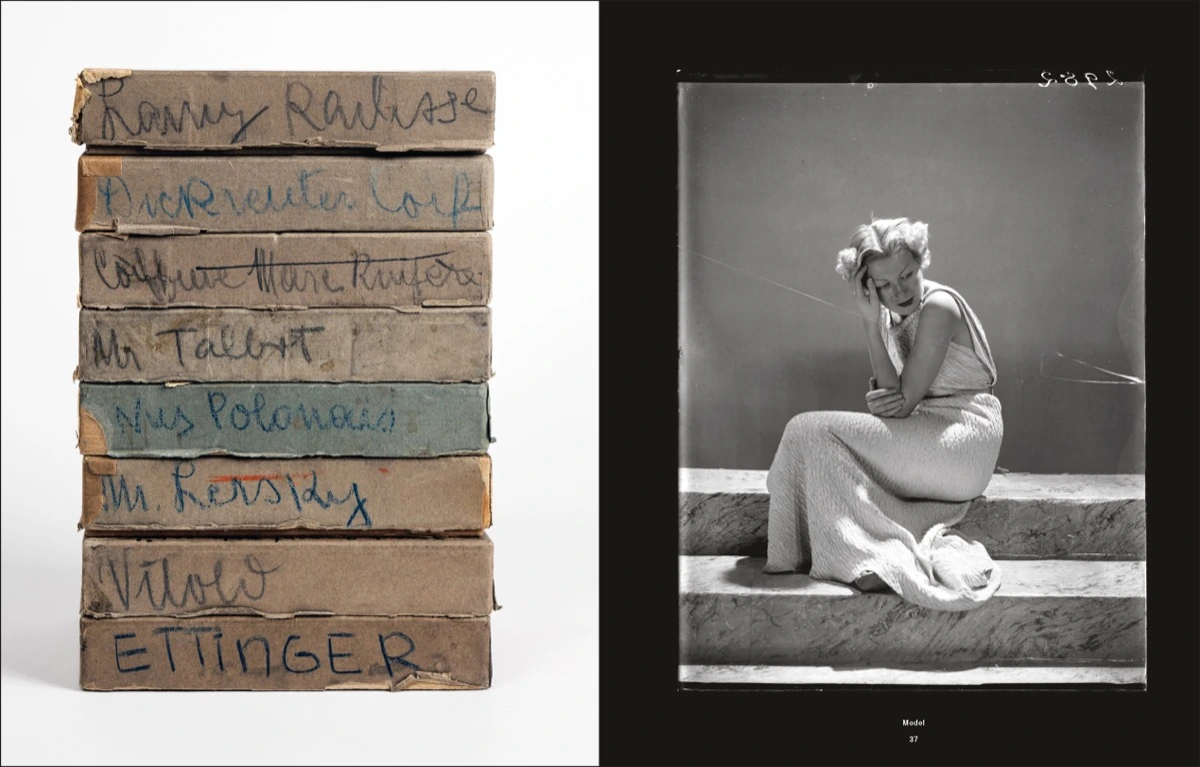
The importance of the archive extends beyond the finished portraits. Packaging, classification and physical marks reveal how images were made and preserved. A similar insight comes from the 90,052 negatives in Istanbul’s historic press photography archive, where original frames and interventions on negatives add context to what survived in print.
Preserving photographic collections takes time, space and careful documentation. One example in Greece is the archive of Giannis Kyriakidis in Kalamaria, which includes glass plates, negatives and personal objects recording both a photographer’s working life and the history of his city.
The book is published by Thames & Hudson. More information about the publication here.
What we think
What stands out is not simply that more photographs by a famous artist have surfaced. We can see how he worked before developing the visual approach for which he became known. The hairstyle studies, for instance, explain his later mastery of lighting more vividly than a conventional retrospective of his greatest hits.
For photographers, there is another useful lesson: an archive is more than the folder containing selected JPEGs or RAW files. It includes experiments, negatives, notes and the sequence of decisions. Lose those, and it becomes much harder for the next generation to understand what a creator actually did.
The image of an unidentified model beside the glass plates may be the clearest expression of this story: a face on one side and the fragile object that preserved it for almost a century on the other. Both deserve to survive.