Summary
- Agorastos Papatsanis won the Plants and Fungi category in Wildlife Photographer of the Year 2026.
- He describes ultraviolet mushroom fluorescence and the story behind Shedding Light.
- He discusses photographic technique and returning to familiar landscapes.
- He also talks about the books he is writing.
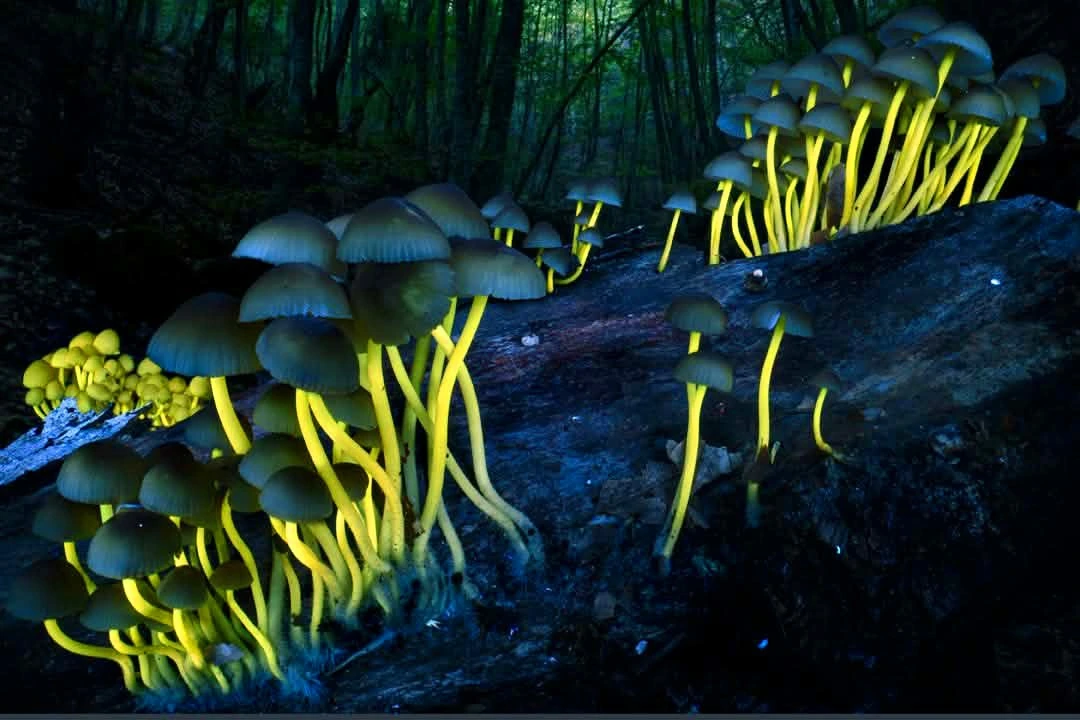
Agorastos Papatsanis speaks to PTTL about his award-winning photograph Shedding Light, the world of fungi and what decades of observing Greek nature have taught him.
His latest Wildlife Photographer of the Year distinction for an image made on Mount Olympus is the starting point for a conversation about ultraviolet light, photographic technique, patience and returning to familiar places.
At the 2026 Wildlife Photographer of the Year awards, Shedding Light won the Plants and Fungi category; his work had also been recognised in the 2023 competition.
The interview
This year’s Wildlife Photographer of the Year win adds to your previous awards. How did you experience it, and what does it mean at this stage of your career?
Recognition from Wildlife Photographer of the Year remains special, however many times you experience it. This year my daughter Zoe was with me, and that gave the experience a very personal dimension.
At this stage of my journey, what I feel most is gratitude. I understand better how many things had to come together for a photograph to reach that point.
What does it mean to me? I return to the forest, which owes me no next photograph just because the previous one won an award.
What is the story behind Shedding Light, from discovering the mushrooms on Mount Olympus to completing the photograph?
The story begins with a postponed trip. I was going to Vienna to give a lecture, but serious family reasons forced me to delay my departure by one day. I had never postponed a trip before. That change brought me that afternoon to a familiar beech forest on Mount Olympus.
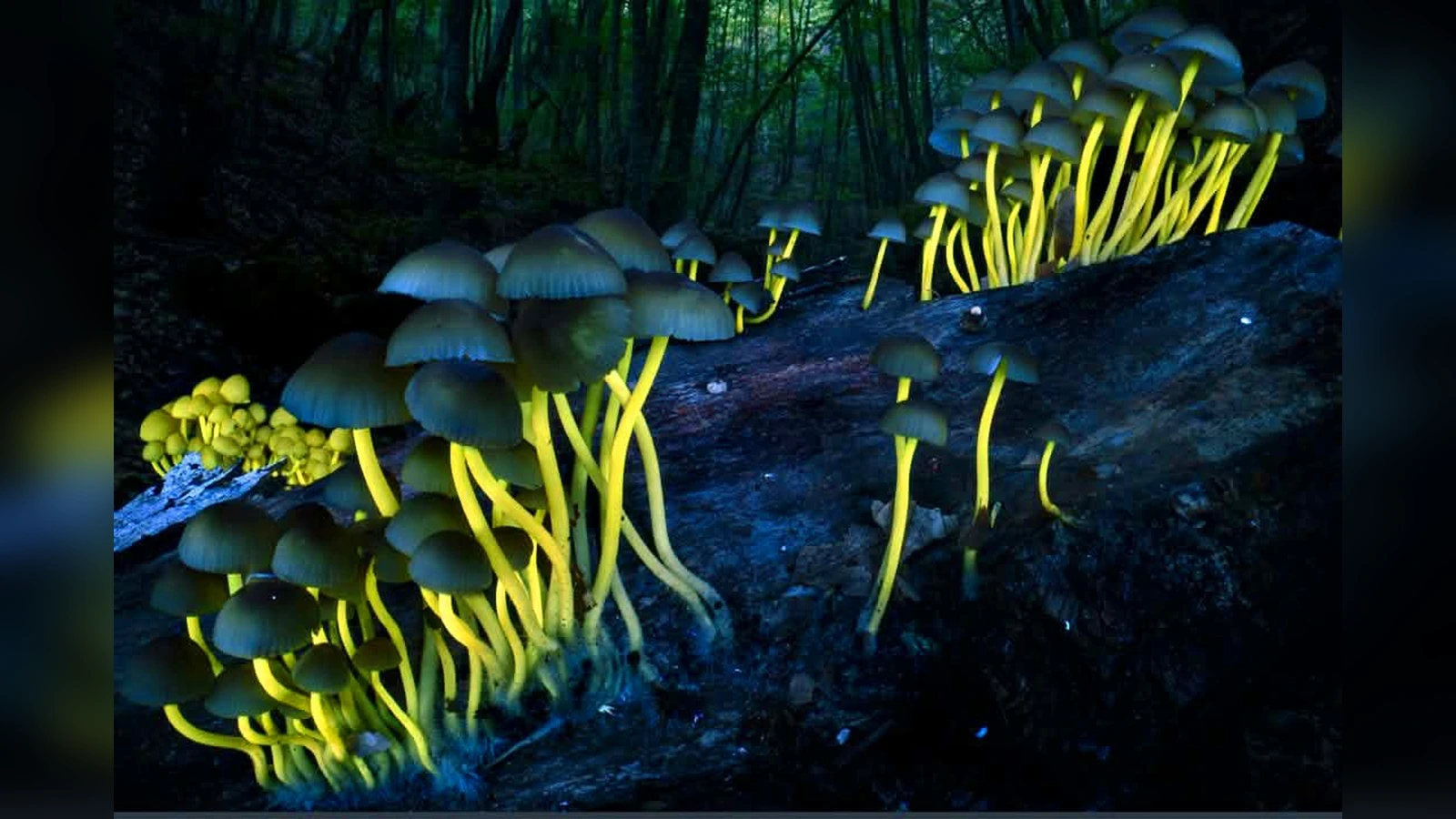
I decided to enter a small, dark ravine. There I came across dense clusters of Mycena renati on decaying beech logs. I had photographed this species for years. But when ultraviolet light fell on them, the reaction was immediate and intense. I wondered how something so familiar could conceal an aspect I had never seen.
The shoot was difficult. I was alone on steep, wet ground, with daylight almost gone, making even simple movements difficult. Composition, focus and camera stability demanded great care, but I also had to work quickly before complete darkness. I wanted to preserve the forest’s remaining natural light alongside the mushrooms’ fluorescence.
Looking at the image today, I think how easily I might never have been there. Had I not postponed my Vienna trip, the photograph would not exist.
How did you begin using ultraviolet light? What did you know about fungal fluorescence, and what have your experiments revealed?
Ultraviolet lighting is part of a project I have been working on for around a year and a half and am still pursuing. I had studied fluorescence before going into the forest, but apart from the known response of the common Hypholoma fasciculare, I had no idea which other species might react or how. This search develops through many outings and observations.
Of the species I have tried so far, very few display strong visible fluorescence. Each encounter therefore carries both uncertainty and the joy of discovery.
Ultraviolet light does not create this property; it reveals something already present in their chemistry. What I have experienced throughout this project has been magical. Sometimes it feels like a fairytale, yet what is before me belongs to reality: a part of it that human senses alone cannot see, unlike many insects and other forms of life.
For Shedding Light, you were asked about a 15mm lens and a six-image focus stack. How did you approach the composition and depth of field?
24mm probe! I wanted viewers to feel as though they could enter the scene, reach mushroom height and see the forest at their scale. The 24mm probe lens let me move very close while keeping the surrounding environment in the frame. Camera placement was decisive for the relationship between the mushrooms in the foreground and the forest behind them.
At such close range, depth of field was insufficient for everything I wanted to render sharply. I made six consecutive exposures, shifting focus while keeping the camera and framing fixed. Combining them gave me the depth of field I needed, allowing the eye to move through the image.
It was my first attempt with that technique and I have used it only once more since. I choose it only when I believe it adds something meaningful to the result.
What was most difficult in making the photograph? Did an unsuccessful attempt help you find the solution?
The steep, wet ground restricted my movements, and the little available light made composition and focusing especially demanding.
There was no failed attempt that led to the final solution that afternoon. I had time for only a handful of shots and, fortunately, everything worked. Behind them, however, were many years of experience, trials and failures that had taught me to make decisions in the field. I needed to trust that experience and work.
How did your interest in photographing mushrooms begin, and what continues to fascinate you after so many years?
My interest began in Deskati about 27 years ago, alongside mycologist Giorgos Konstantinidis, a teacher and good friend who introduced me to mushrooms. Studying, recording and photographing them gradually became part of my life.
What continues to fascinate me is that getting to know them never ends. The more I know about them, the more I realise how much I do not know.
I change too. I look at the same mushroom differently today than I did twenty years ago. It is a relationship that continues to evolve.
Looking at your award-winning photographs, what is the most important change in how you see and photograph nature?
The most important change is that I increasingly care about what a photograph has to say. Beauty, light and composition still matter, but I seek something in the image that makes someone look longer, raises a question or helps them notice something they previously passed by.
This also changes how I spend time in nature. I observe relationships more: how an organism connects with its surroundings, what happens around it and what story is unfolding. I try to understand what moves me in what I see and how to share it.
Your 2022 The magical morels and 2023 Last Breath of Autumn images were also recognised in Plants and Fungi. What work and persistence went into them?
In The magical morels, the background light and illumination of the mushrooms had to come together. The composition depended on that balance.
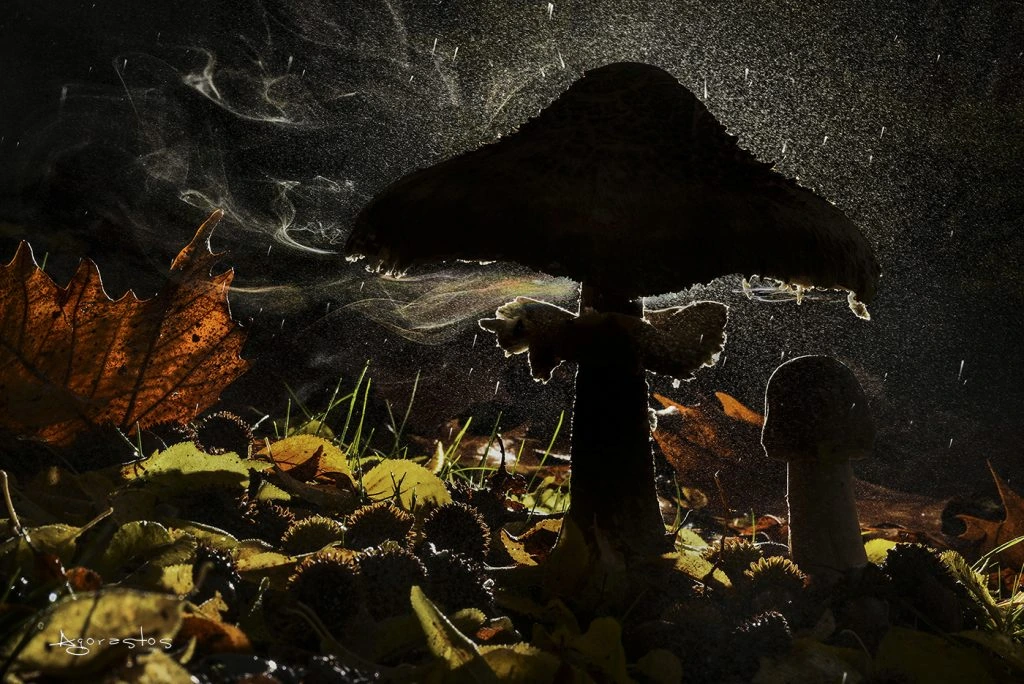
In Last Breath of Autumn, I worked in the rain. I protected the camera with my photography umbrella and the flash with a plastic bag. Precise placement of the light was crucial to reveal the spores released by the mushroom, a whole movement of life that would otherwise go almost unnoticed.
What the final image cannot show is how much observation precedes it and how many decisions you must make. Above all, patience, patience, patience. Nature operates by its own mechanisms and reveals them when it chooses, provided you are available and present.
You often return to Mount Olympus. What have repeated visits taught you that a single visit could not?
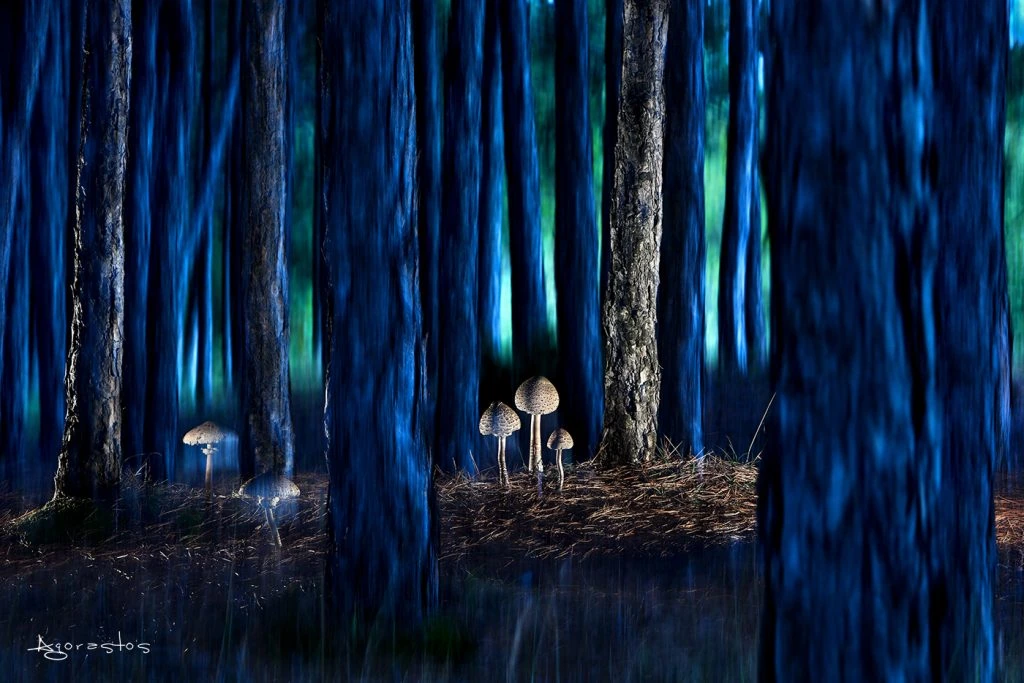
My forthcoming book Monologue for Two has a whole chapter called The Value of Here. This idea lies at the heart of my relationship with Greek nature. Having a place you know and can return to is among the most important things for a photographer.
A journey to a beautiful unfamiliar place has its own value, but it is harder to obtain a great photograph there. Much depends on conditions, a rare scene and luck. Returning somewhere familiar gives you time to observe, understand and discover.
And Greece has so many such places: Mount Olympus, Deskati in Grevena, Kaimaktsalan, Halkidiki, Agrafa and Epirus. They can offer exceptional moments and photographs. It brings me double or triple joy when photographs born in my wonderful country are recognised and travel the world. They carry its light and something of those who walked there before us.
How do you choose your Wildlife Photographer of the Year entries? Have the judges ever preferred a photograph different from your own favourite?
It is a difficult choice. I rarely submit pictures from previous years. First impressions matter, but so does finding myself returning repeatedly to certain images. If an image continues to draw me back, that means something to me.
My main criterion is that I must like it first. I do not choose by trying to anticipate the judges’ tastes. I know what I want to present and which images I would want recognised. It may sound odd, but I have absolutely no interest in an award for a picture that does not excite me first. I do not collect prizes or care about increasing their number. I care that work I believe in and that expresses me is recognised.
I realise, however, that my preference does not necessarily match the jury’s.
Shedding Light was made with a Nikon D810. What matters most about equipment, and where should newcomers invest first?
First invest in the best glass you possess: your eye. It communicates with the brain and emotion and, through the viewfinder, leads to the making of the image.
Without it, everything else feels somewhat set to Auto to me. Modern cameras can make technically excellent photographs. But meaning, identity and distinctiveness need our own vision. Equipment is useful, of course, but we have to have something to ask of it.
If I absolutely had to choose one piece of equipment, I would choose the lens. It determines perspective.
How do you minimise your impact on mushrooms and their environment while working in the field?
Respect is enough to make you careful.
You are a guest there and owe respect to the place hosting you.
Your images often feel like fairytales. How do you create that with light in the field, and what is the role of post-processing?
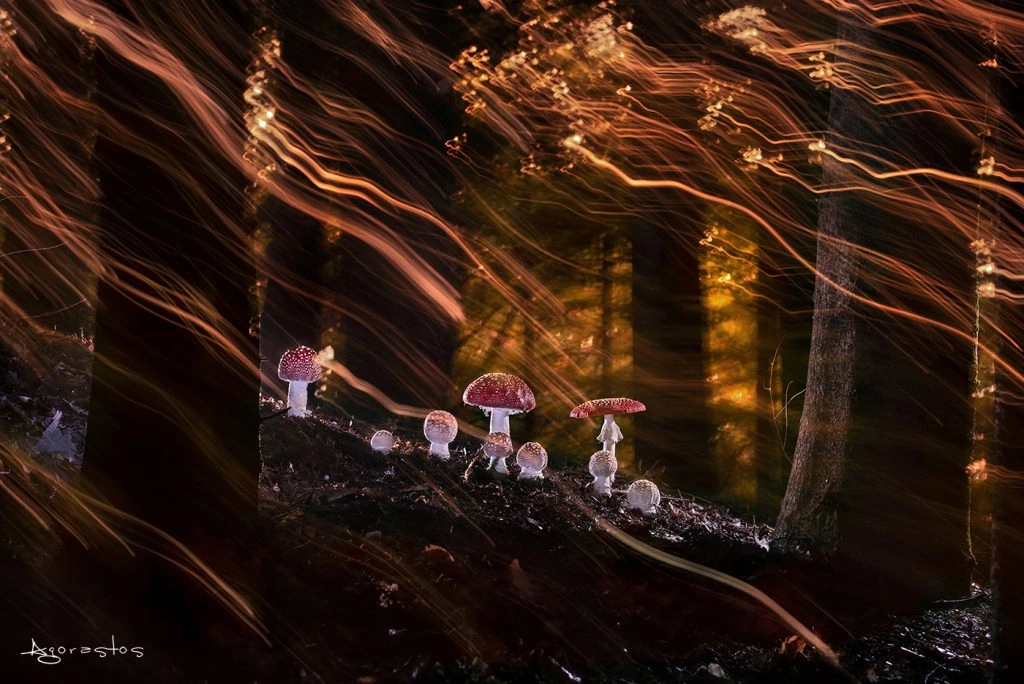
To me a mushroom has two coexisting dimensions: it is a real organism with its own place in nature, and it also carries a whole world of mystery, fairytales and symbolism. That second dimension fascinates me and I like to express it in my photographs. It is part of how I see them.
Photography means writing with light. Depending on the scene, I may use only natural light or as many as four flashes. The light’s position, direction and intensity can give a fairytale quality to something entirely real.
I try to achieve the result in the field through lighting and in-camera settings so that subsequent editing is minimal. This relates to the strict restrictions of the competitions I enter but mainly to my own approach. I am not interested in carelessly taking a frame with the thought that I will “fix it” later. I want to call myself a photographer. I accept and appreciate digital creation, but I believe it matters to distinguish the two practices.
What have your Wildlife Photographer of the Year distinctions changed in practice? What opportunities have followed?
The awards have enabled my work to travel much further. Collaborations arose with National Geographic, including an article and, in April 2024, its first mushroom cover. My images appeared in exhibitions around the globe, from Argentina to Japan and New Zealand, and in many magazines and newspapers. Invitations also came for talks and jury roles, and acquaintances developed into genuine friendships.
I have done less than I was offered. I am not someone easily motivated by publicity. I prefer to do a few things well and discreetly, consistent with how I want to live the rest of my life.
Greece has paid the least attention to this journey. If that sounds like a complaint, I want to clarify that it hurts me culturally, not personally. It saddens me how hard it is for us to notice things created in our own country, even when they resonate around the world, especially images that carry Greek nature so far.
Have you noticed changes in the forests you visit or in when mushrooms appear? How does this affect your photography?
Yes, of course. Some years I return to familiar spots at the time I would normally expect mushrooms and things look very different. Their appearance does not follow our calendar. It depends on humidity, rain, temperature and their combination. Long familiarity with a place makes you notice these differences, though you cannot always explain their causes.
Photographically, I might set off looking for something particular and encounter something entirely different. I try to stay open to what is before me.
What practical advice would you give a photographer exploring nature close to home and developing a personal eye?
I do not like giving advice. But I can ask a question: since when did life in a concrete city become normal? Since when did our separation from nature come to seem ordinary? Contact with nature is part of our nature.
As for a personal eye, perhaps we need to strip away what covers it: influences, trends and the need to resemble someone else. To see what remains when we stop wondering how someone else would have photographed it.
What would you like to explore next? Is there an image you are still searching for?
There is always an image I am searching for and, as soon as I capture it, another is born. It is a continuous journey. I cannot say for certain what I will pursue next. What I can say is that the ultraviolet-light project continues and still surprises me.
At the same time, for about two years I have been writing three books. The first is a journey into mushrooms, between reality and fairytale, in which everything is true. The second is a personal walk that becomes a confession. The third recounts my three journeys to South Korea in search of an unusual mushroom, where I ultimately found far more than the mushroom itself. When they are finished and have found a publisher, I will be able to say more.
The photographer Agorastos Papatsanis
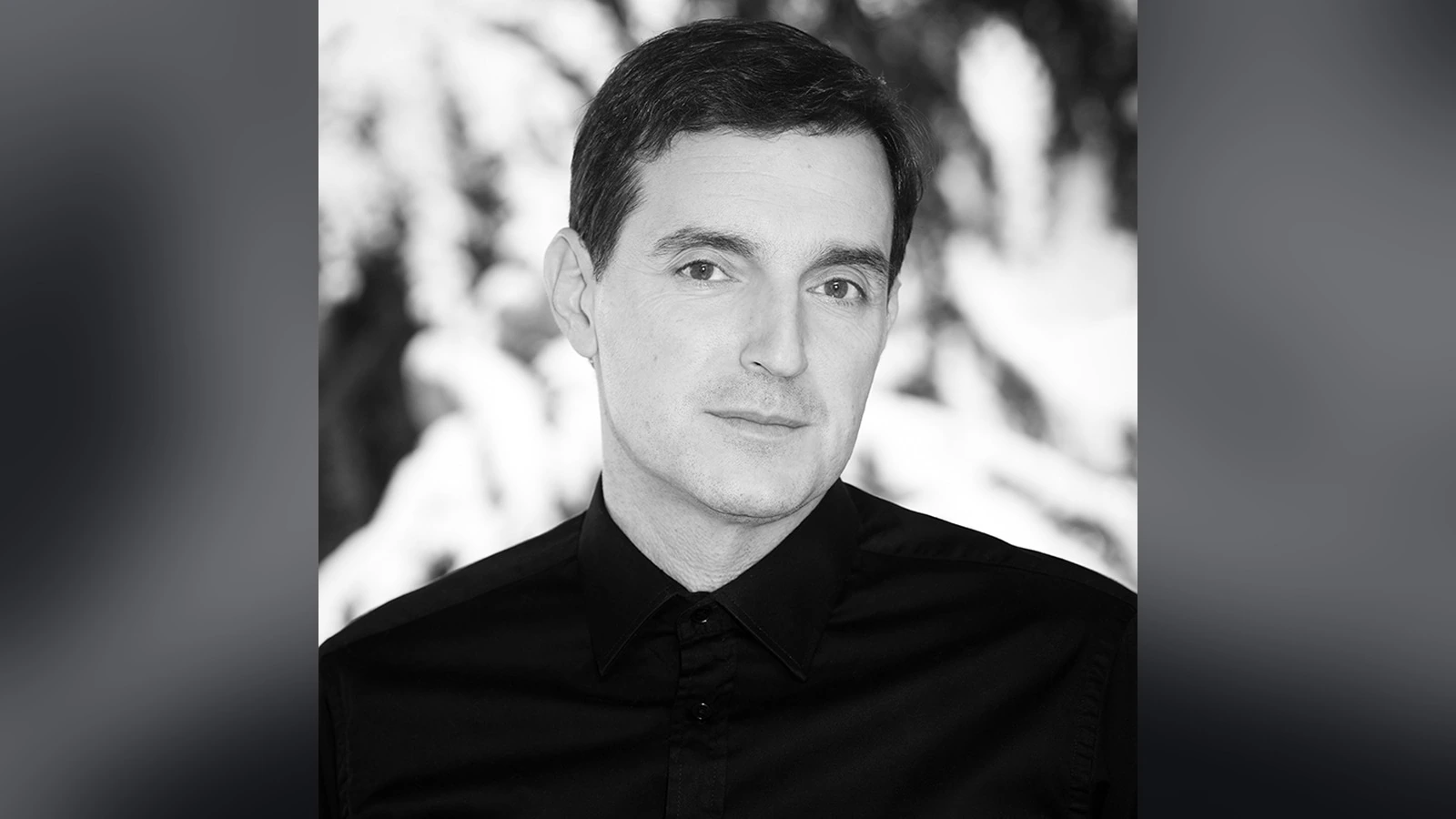
Agorastos Papatsanis has been studying and photographing mushrooms for approximately 27 years. His journey began in Deskati alongside mycologist Giorgos Konstantinidis and has led to repeated distinctions at Wildlife Photographer of the Year.
His photographs have been exhibited in countries around the world. His collaboration with National Geographic included a mushroom-themed cover in April 2024.
Alongside his ongoing photographic exploration of ultraviolet fluorescence in fungi, he is writing three books.
What we think
This conversation illustrates just how much a distinctive nature photograph depends on knowing the subject. Papatsanis has returned to the same places for years, knows the organisms he photographs and keeps discovering new aspects of them.
There is a practical lesson here for photographers: a remarkable image does not necessarily require a distant trip or the latest camera. It may come from returning to somewhere familiar and knowing what we want from light, lens and composition.