

Summary
- BBC Verify documented cases of videos copied with AI characters.
- Some copies outperform the originals in views.
- Creators are calling for more effective protection of their work.
Artificial intelligence now enables social media accounts to republish transformed versions of other creators’ videos. On November 22, 2026, BBC Verify documented cases in which a synthetic character replaces the original performer while their work remains recognisable. Known as reskinning, the practice has in some cases produced copies that outperform the originals in views.
BBC World Service discusses the trend and creators’ complaints in the following programme.
Sophie Lloyd’s case
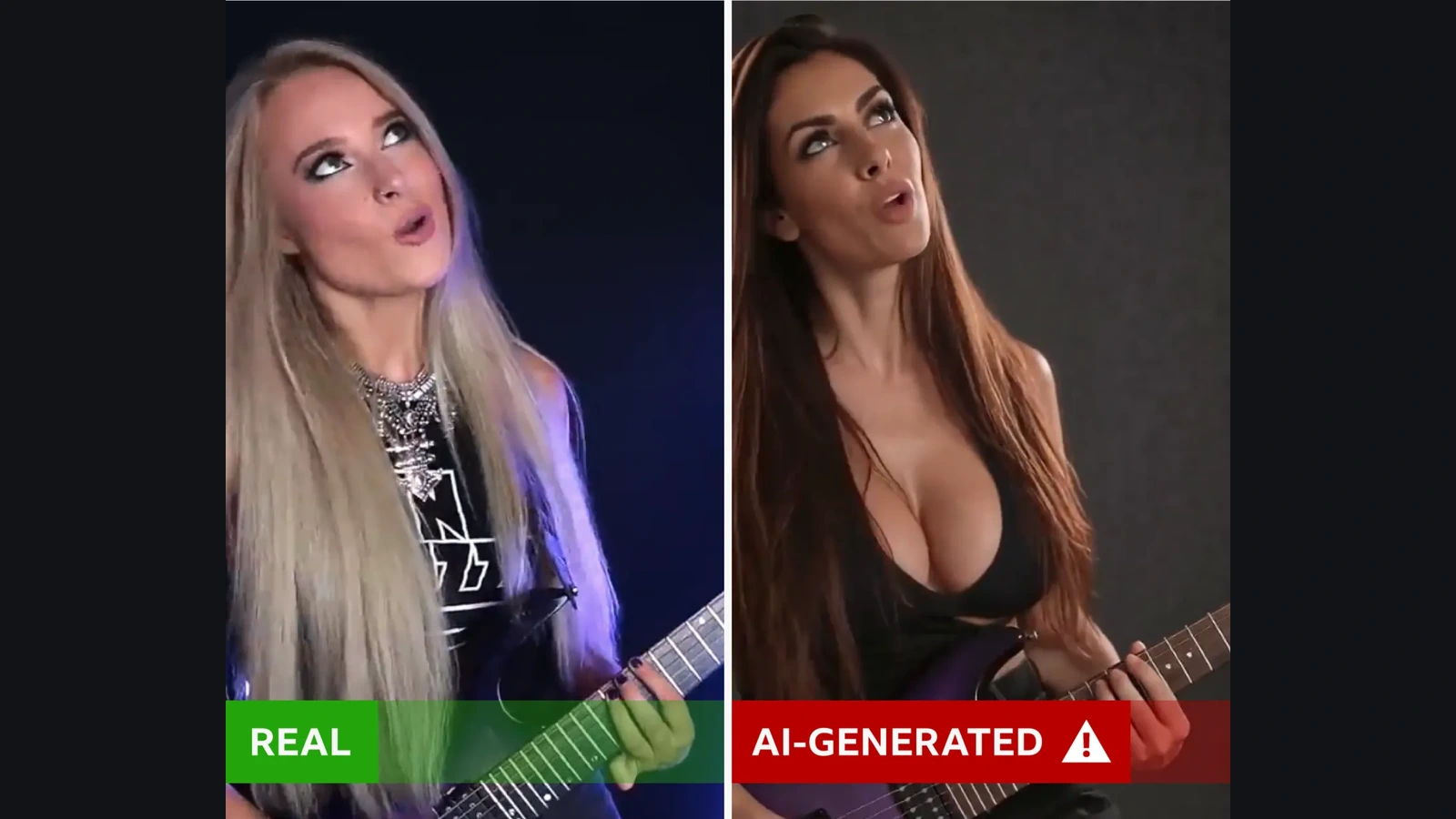
British guitarist Sophie Lloyd has reported repeated replacement of her image in performance videos with AI characters. The BBC identified at least three videos on the Facebook account of purported guitarist Mila Vasari that reproduce Lloyd’s music, movements and facial expressions.
The journalists found no evidence that Vasari was a real person. They also noticed unnatural fingers and strings that remained still during playing. The account linked to a page on subscription platform Fanvue and did not answer the BBC’s questions. Two other accounts featuring synthetic guitarists similarly used Lloyd’s material to promote adult content.
Beyond music
Norwegian creator Kjetil Krogstad saw one of his dance videos reappear featuring an AI-generated rabbit. The copy attracted millions of views, outperforming the original, before being deleted. British automotive creator Grace Roberts found a video of hers from a drag racing event in which she had been replaced by a blonde woman in a short dress.
The account that copied Krogstad promoted courses on earning money from AI content. Online culture researcher Tina Kendall explained to the BBC that exploiting an already successful idea can be a way to attract audiences and generate revenue, from subscriptions to platform monetisation.
How reskinning works
Higgsfield Genjutsu is one example of the technology available. According to its official description, it offers two modes: Motion Transfer, which preserves movement, timing and camera motion in a new scene, and Object Swap, which replaces selected elements of a shot while preserving the rest. The tool can be used legitimately with licensed material for advertising, alternative versions and creative editing. Its use in the specific cases has not been established.
Protection and its limits
British performers’ union Equity is calling for legal protection against unauthorised AI use of performers’ work. Meta told the BBC that it alerts users to unauthorised reposts and is exploring ways to limit the reach of repeat offenders.
Instagram Content Protection helps identify copies of Reels, but detecting copies with changed visuals and retained scripts is still being explored or tested. Creators should keep original footage, project files and publication dates, and record URLs and screenshots of copies before submitting a copyright report.
What we think
Changing a performer’s face does not erase the creative work that came before. A video contains performance, direction, lighting, camera work and editing. When someone uses these elements without permission to attract an audience and earn revenue, they exploit a production in which others have invested time and money.
Platforms should address repeated unauthorised reuse even when the face has changed. An AI label informs viewers about the production method, but cannot replace permission to use the original. We need rights enforcement processes that work for independent creators without forcing them to constantly chase new copies.