Summary
- Never Alone brings together 160 analogue photographs of the European rave scene.
- Both photographers were active members of the free-party community.
- The 2026 edition contains 196 pages.
Never Alone – Raving in Europe 1997–2004 by Cheyenne Clementi and Valentina Morandi brings together 160 analogue photographs of the European rave scene during those years. Published by Propaganda and Drago on 15 April 2026, it opens a window onto a world in which music shaped not just entertainment but an entire way of life.
A community on the move
The two photographers had known each other since their school days in Milan. As they explained to Huck, in 1997 they discovered raves and founded the Tekno Mobil Squad with friends. Their travels across Europe took them to parties in abandoned factories, forests and other spaces outside conventional nightlife.
Their trucks served as homes as well as transport for the sound systems. News of the next party spread through flyers and word of mouth. That daily routine explains why the book extends beyond the dance floor: travel and living together are part of the story.
Photography before social media
In their Huck interview, the photographers explained that they were photographing their own lives rather than deliberately building a historical archive. Analogue photography was their way of preserving memories. That personal motivation matters today: the material has historical value precisely because it records a community from the perspective of its own members.
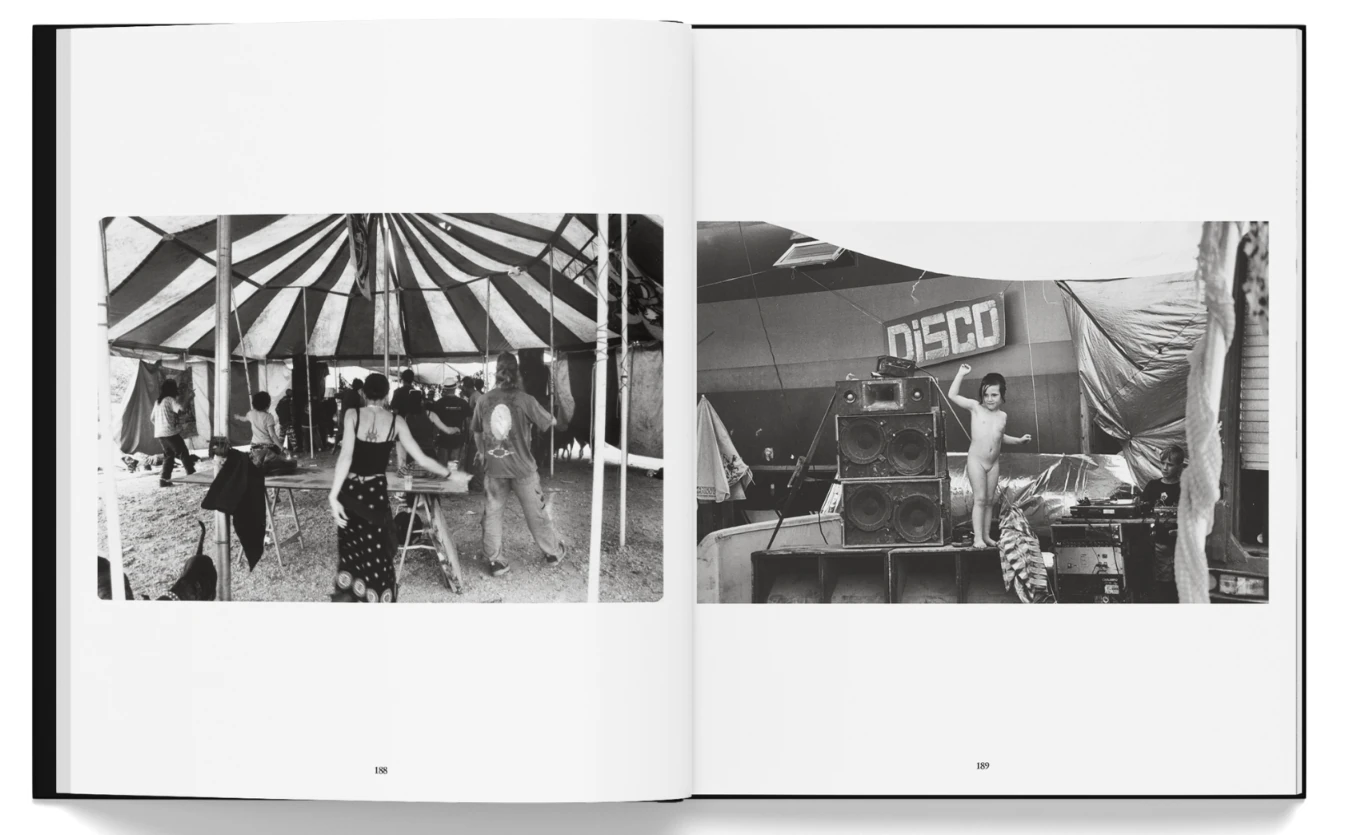
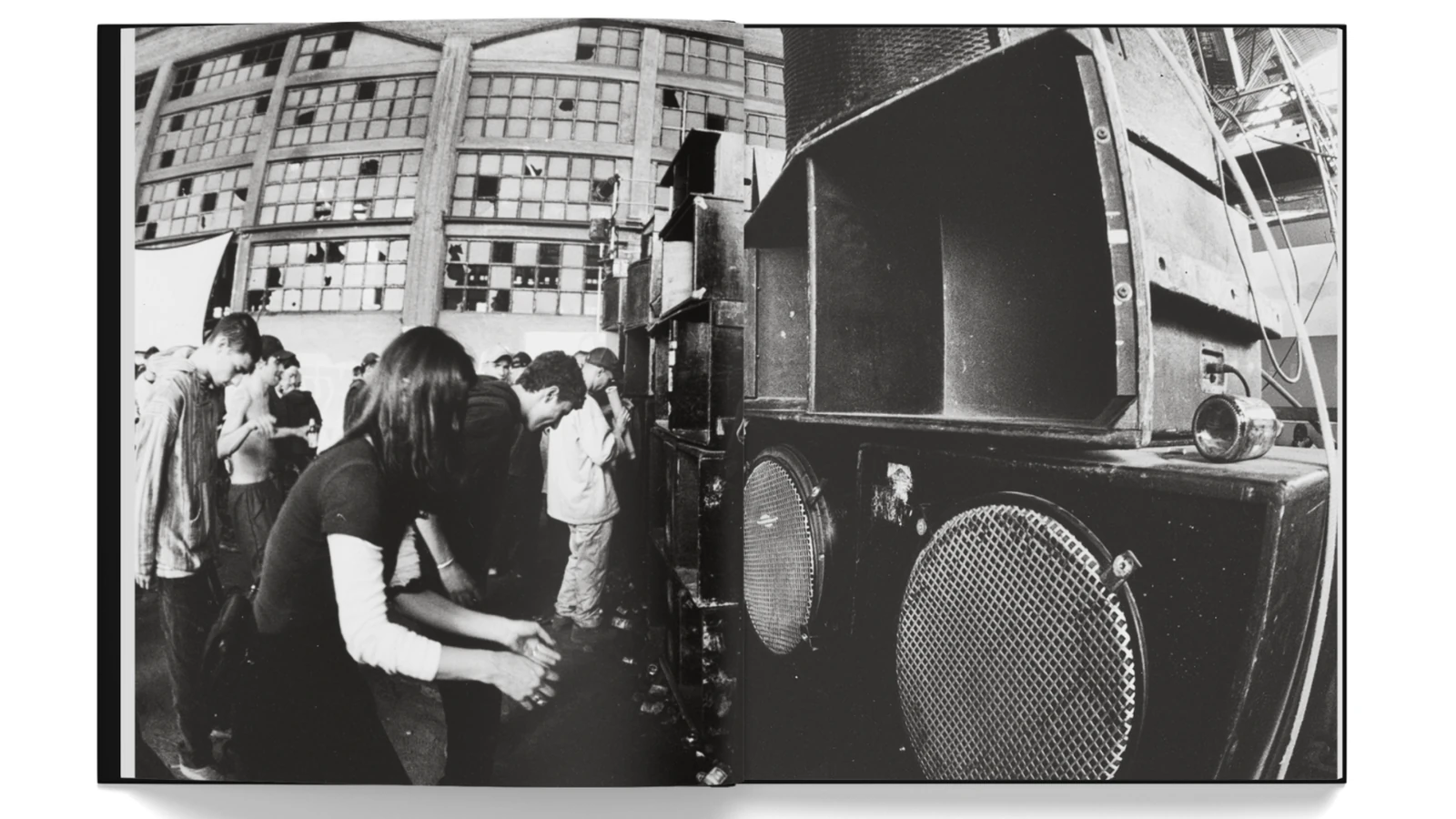
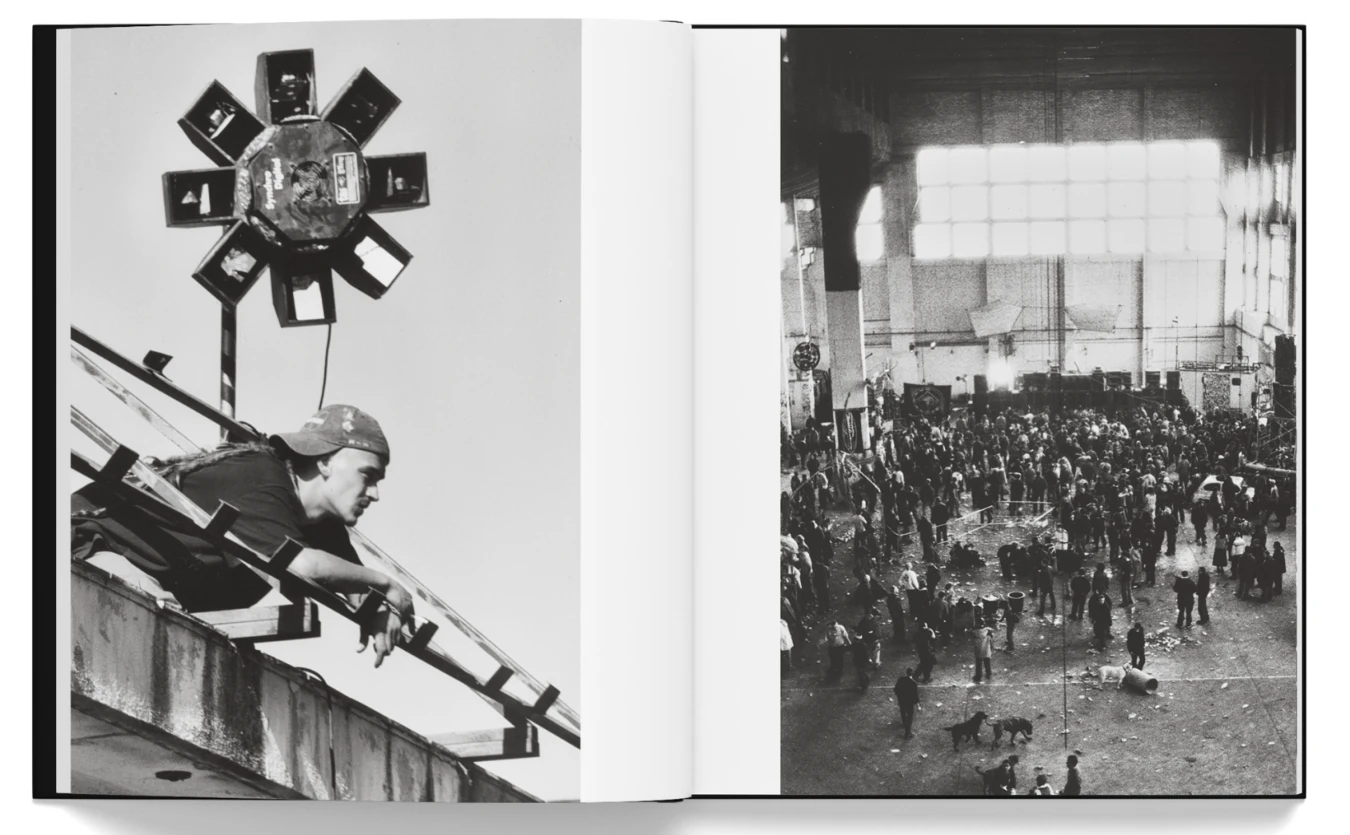
In the available spreads, enormous speakers, industrial interiors and people create a picture of rave culture that goes beyond musical spectacle. The alternation between wider views and closer moments gives the reader both a sense of the scale of the gatherings and a more personal experience.
The 2026 edition
The project had already appeared in a 2023 Union Editions release, limited to 300 copies. The 2026 edition has 196 pages, a hardcover binding and text in English and Italian. The publisher lists it at €59.
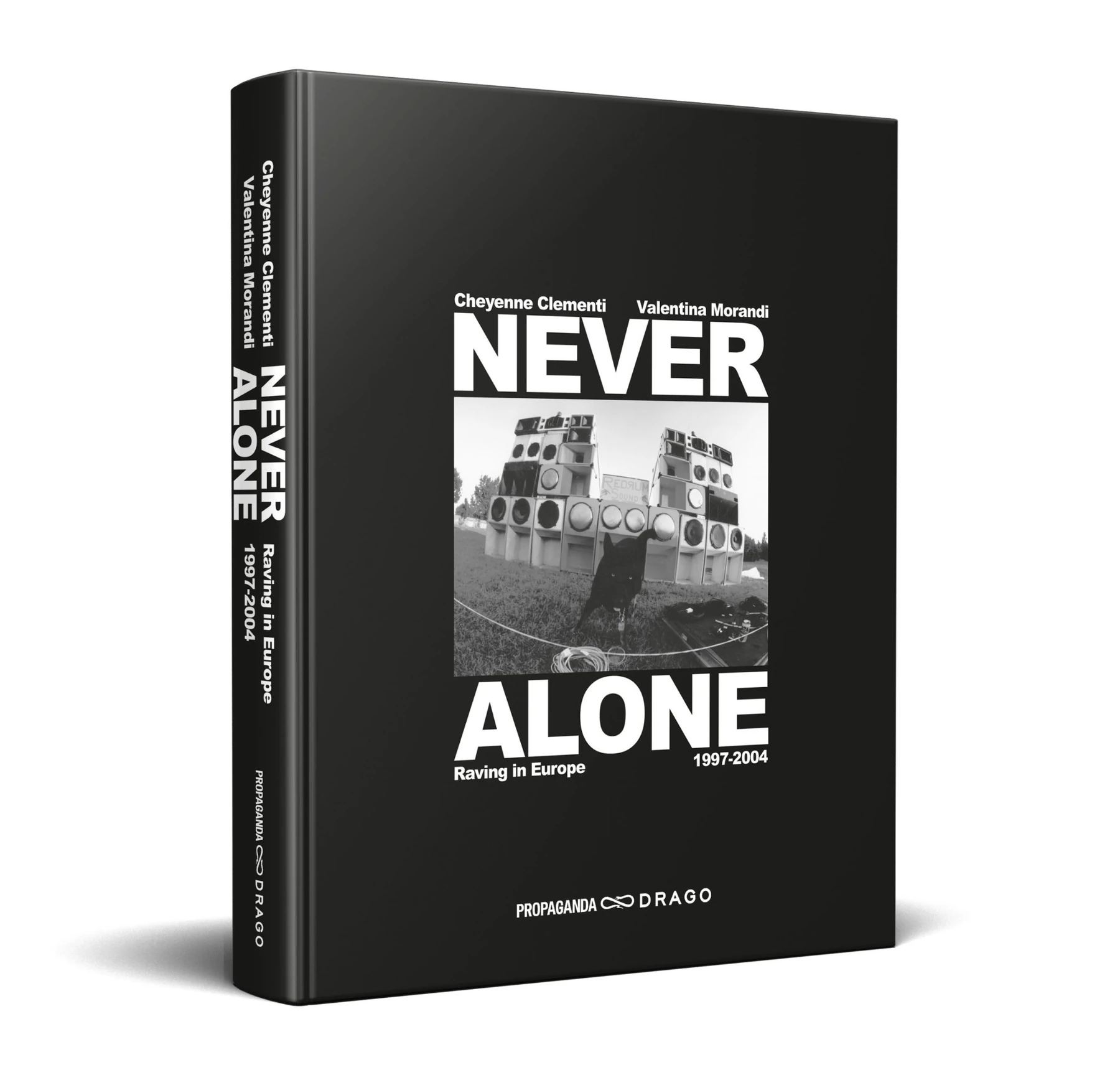
According to the book’s official website, the pages are printed in three inks on natural fine-art paper. The accompanying essay is by Tobia D’Onofrio, author of Rave New World.
More information about the edition on the publisher’s website.
What we think
Never Alone reminds us that documentary photography does not always need to begin with a major editorial assignment. Recording the same community consistently over years can prove more valuable than a series of spectacular individual images. Familiarity with people and an understanding of their environment allow photographers to notice things a passing visitor might overlook.
For anyone documenting a music scene or a small subculture today, the practical challenge is to photograph what happens before and after the main event, retain information about the images and organise the archive. The value of that work may become apparent much later, when the places and people have changed.