Summary
- Tucker Collins filed a lawsuit against the United States on November 23, 2026.
- He lost his right eye while covering a protest in March.
- He seeks compensation for the lasting consequences of his injury.
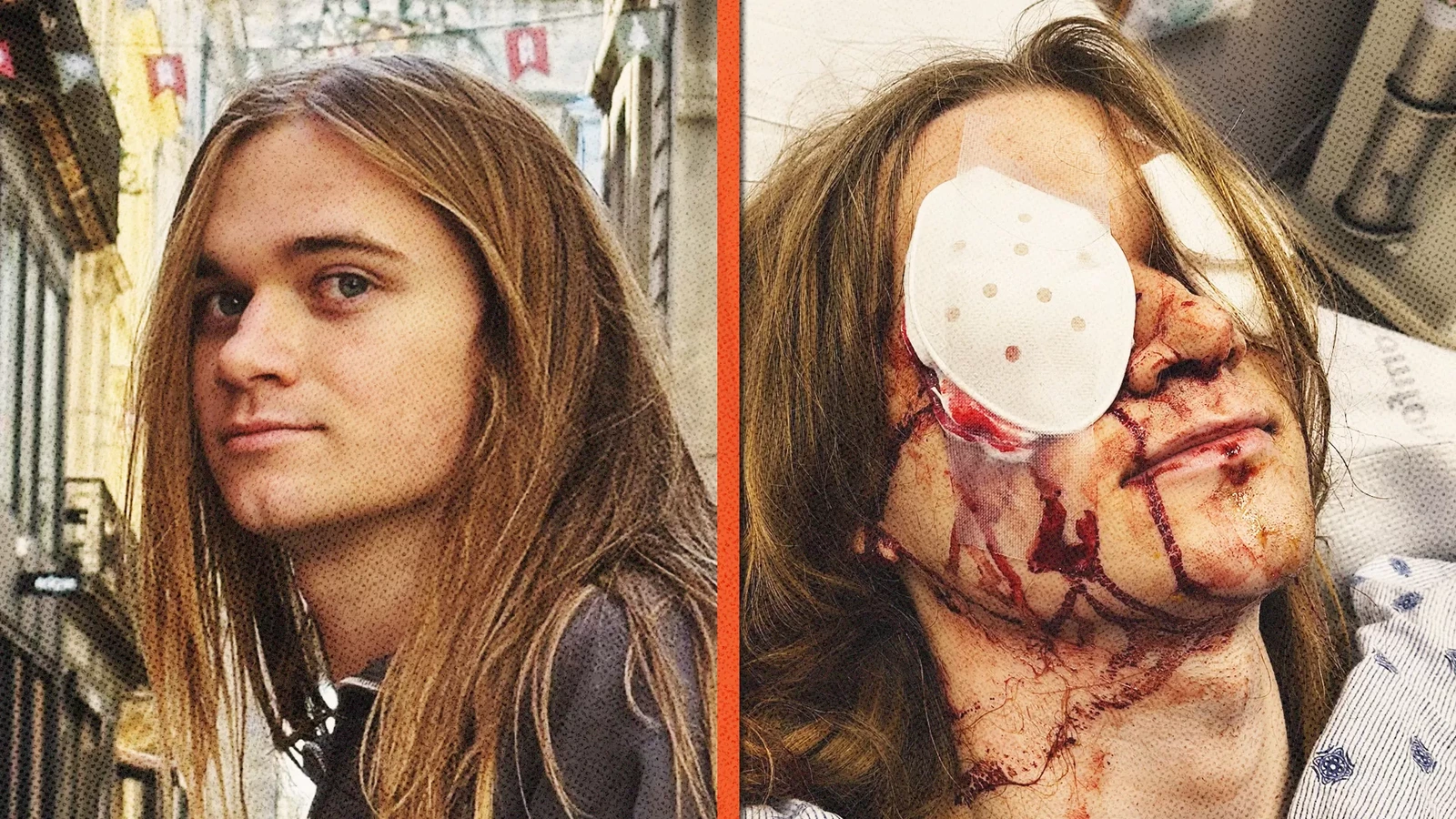
Tucker Collins, the young photographer who lost his right eye while covering a protest in Los Angeles, filed a lawsuit on November 23, 2026, against the United States and ten unnamed federal officers. The case was filed in the US District Court for the Central District of California under number 2:26-cv-13650.
What happened in Los Angeles
On March 28, 2026, the then 18-year-old University of Southern California freshman attended the No Kings protest near the federal Metropolitan Detention Center. He was studying astronautical engineering with a minor in cinematic arts and had a passion for photography and short films.
According to the complaint as reported by City News Service, Collins was documenting the events with his new Sony FX30 when a projectile struck his face, which he attributes to a Department of Homeland Security (DHS) officer. Bystanders gave him first aid and a nurse took him to the emergency department.
The impact fractured bones around his eye socket. Despite a two-and-a-half-hour surgical attempt to save the right eye, doctors had to remove it.
Collins maintains that he posed no threat and heard no order to disperse. In a statement reported in April, DHS said protesters had thrown objects at officers, seven warnings had been issued, and the minimum necessary force had been used.
The lawsuit and the consequences of the injury
The lawsuit alleges excessive force and violations of his civil rights. It seeks compensation for medical and prosthetic care, educational costs and reduced future earning capacity.
In April his lawyers had already submitted a $100 million administrative claim under the Federal Tort Claims Act. According to the new complaint, more than six months had passed without a final resolution of that claim.
Now 19, Collins lives with monocular vision, reduced peripheral vision and impaired depth perception. The complaint describes difficulties driving and handling everyday objects, as well as a need for ongoing ophthalmic and prosthetic care.
Loss of stereoscopic vision does not rule out continuing photography, but it requires adapting how one judges distances and moves through a space. Collins himself fears another injury if he returns to similar protests.
His lawyer, V. James DeSimone, and his family are also calling for criminal accountability for the officer responsible. At the time of reporting on the new lawsuit, DHS had not yet responded to Scripps News’ questions about it.
The need to preserve and access visual evidence also emerges in the case of Greek-American photojournalist Angelina Katsanis, who was injured while covering a protest in Newark and whose case prompted a request for police bodycam footage.
What we think
The right to document events of public interest should not depend on whether someone holds a press credential or works for a media outlet. A student who takes a camera to a demonstration has just as much reason to demand protection against unjustified violence.
The Collins case calls for a substantive investigation, preservation of the available footage and accountability wherever wrongdoing is established. For photographers, physical safety and the ability to return to the field without fear are integral to the freedom to inform the public.