Summary
Eastman Kodak has recorded five consecutive quarters of year-on-year growth in revenue, gross profit and Operational EBITDA. Its third-quarter 2026 results, announced on November 3, show that analog imaging forms part of a broader business recovery.
Kodak has also published a tour of its Rochester film factory, showing how film is manufactured.
What the financial results show
Total revenue rose 3% to $276 million from $269 million in the corresponding quarter of 2025. Gross profit increased from $68 million to $73 million, net income from $13 million to $21 million and Operational EBITDA from $29 million to $31 million.
Advanced Materials & Chemicals (AM&C) generated $99 million in revenue, up 21%, while Print revenue declined 7% to $165 million. The former delivered $21 million in Operational EBITDA, compared with just $1 million for Print.
Alongside photographic and motion picture film, AM&C includes industrial film, chemicals, pharmaceutical operations and advanced materials. The 21% increase therefore does not represent growth in photographic or motion picture film sales alone.
The detailed 10-Q filing attributes $8 million of the increase to higher sales volumes in Industrial Film and Chemicals, $7 million to improved pricing in that business and $1 million to higher Motion Picture volumes. These are contributions to the change in revenue, not the total revenue of each individual business.
Analog photography and film production
Kodak says increased demand for consumer film, alongside equipment constraints and staffing shortages, created order backlogs. The company expanded its workforce and invested in upgraded and new equipment, reducing backlogs and increasing manufacturing capacity.
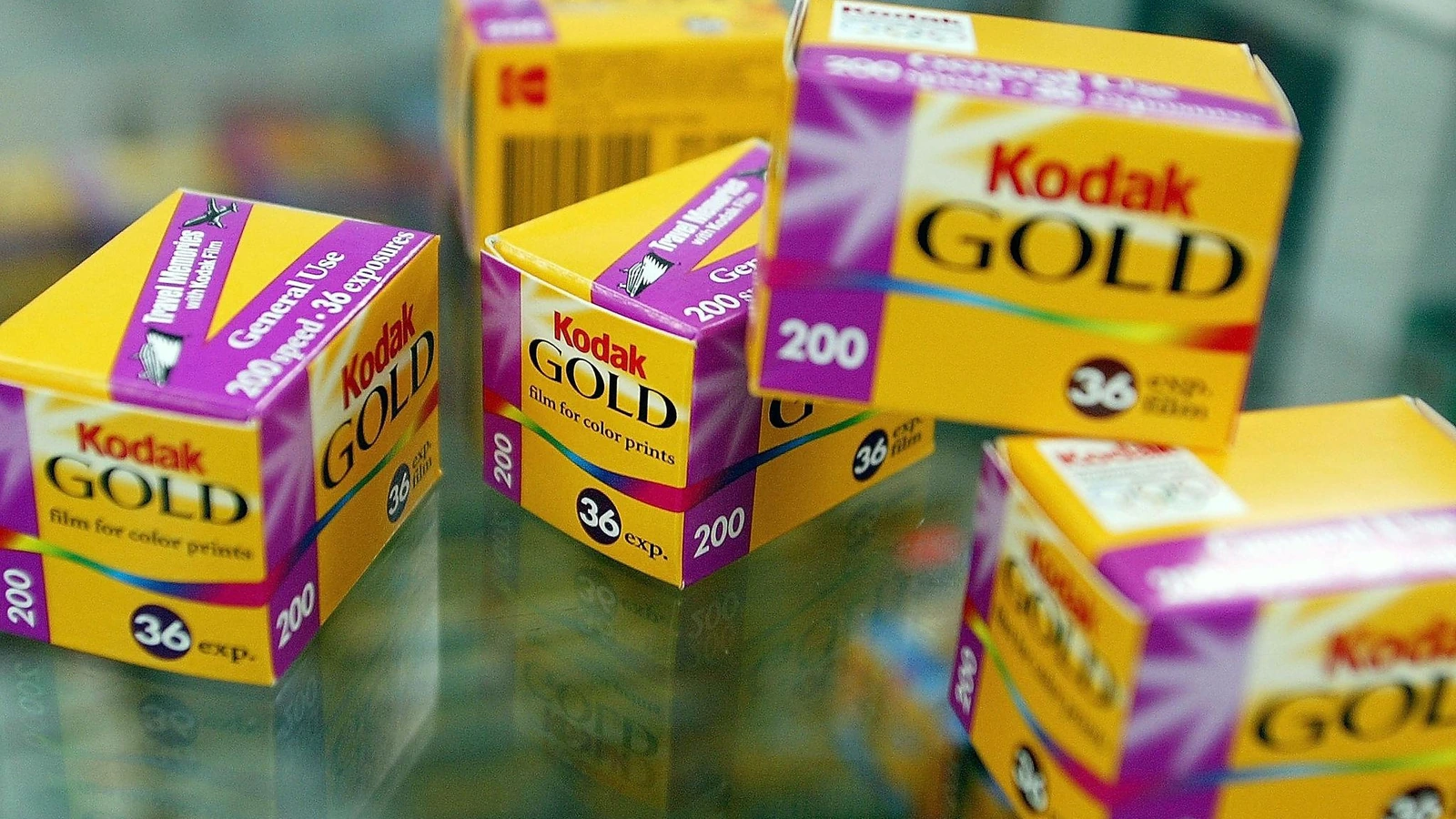
Since the final quarter of 2025, Eastman Kodak has also offered its own line of still film directly to distributors, aiming for more stable prices and reliable supply. The return of Gold 200 and Ultramax 400 in new packaging is part of that strategy.
Cinema still needs film
Christopher Nolan’s The Odyssey is a notable example. According to Kodak, the production consumed more than two million feet of 65mm negative in the 15-perforation IMAX format. Cinematographer Hoyte van Hoytema chose VISION3 250D 5207 for daylight scenes and brighter interiors, and VISION3 500T 5219 for night scenes and low-light conditions.
Film’s presence extends beyond one major production. Seven features shot on Kodak film competed for the Palme d’Or at Cannes in 2026. The company also expanded its range with the VERITA 200D color negative motion picture film (5206/7206).
What we think
For us, the most important development is that Kodak is investing in actual film production rather than simply trading on nostalgia. Analog photography cannot thrive on new cameras alone when its essential consumable is expensive or difficult to obtain. It needs steady production, distribution and a viable laboratory network.
Greater capacity is good news for photographers and filmmakers, but it does not automatically translate into lower prices. Silver and other materials, distribution and processing still affect the final cost. The goal is for film to remain a realistic creative option rather than a privilege reserved for major productions or photographers who can afford expensive individual exposures.