Summary
- NASA has published four images of Earth from the ESCAPADE mission.
- The main frame shows the planet in visible light from about 38,500 miles away, shortly after the spacecraft’s powered Earth flyby.
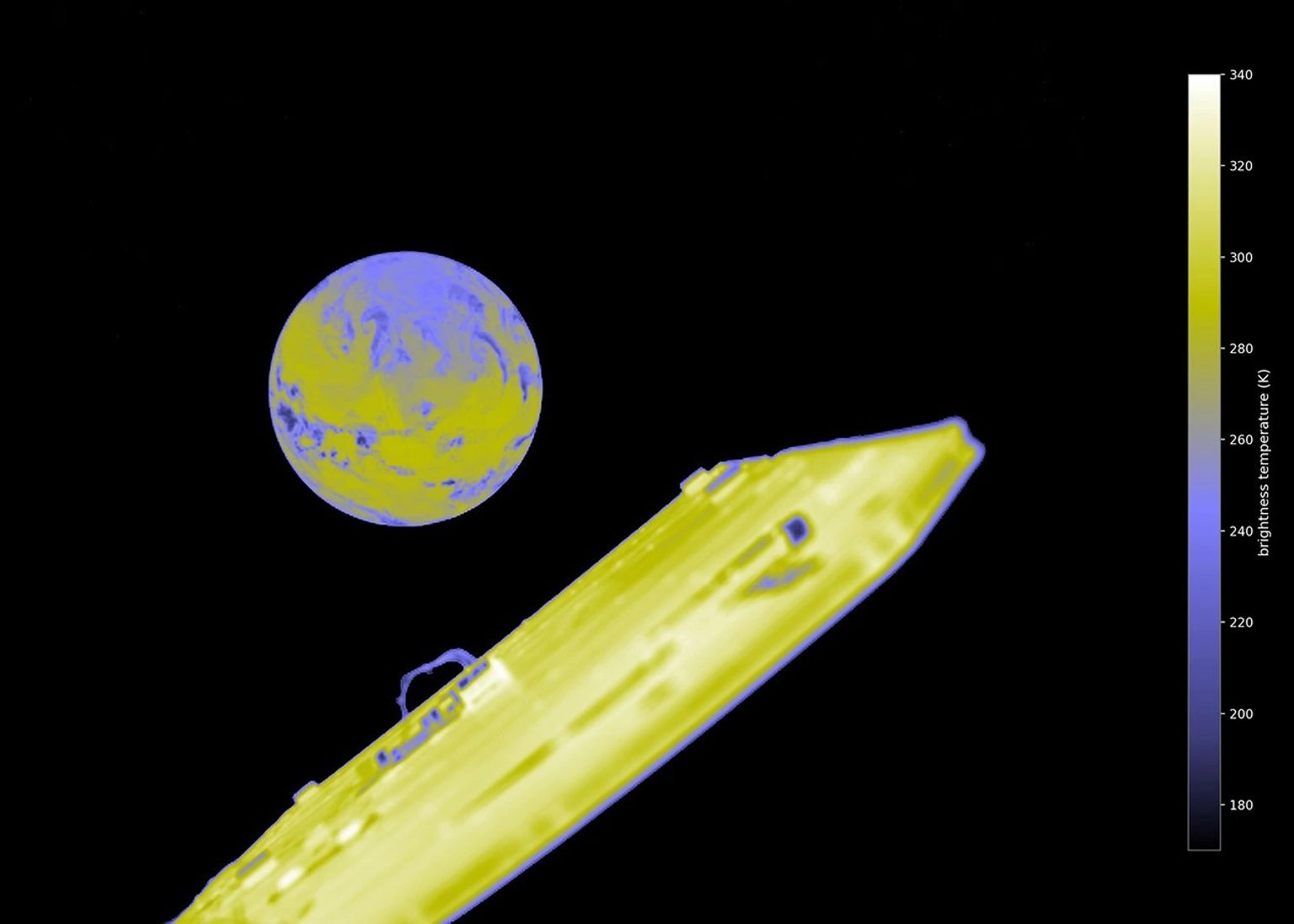
- The same VISIONS system also recorded three infrared versions with different color scales.
- Together, the images work both as compelling space photography and as scientific documentation.
NASA has published a small but genuinely fascinating set of images from the ESCAPADE mission, showing Earth receding as one of the twin spacecraft continued its journey toward Mars. This is not just another “beautiful Earth photo.” It is a sequence that combines visible light, thermal infrared and different color renderings of the same scene.
The visible-light frame was captured on Nov. 9, 2026, about three hours after the spacecraft’s close approach to Earth and the powered flyby that sent it on toward Mars. According to NASA, the spacecraft was about 38,500 miles away at the time, with a view of Earth’s Western Hemisphere.
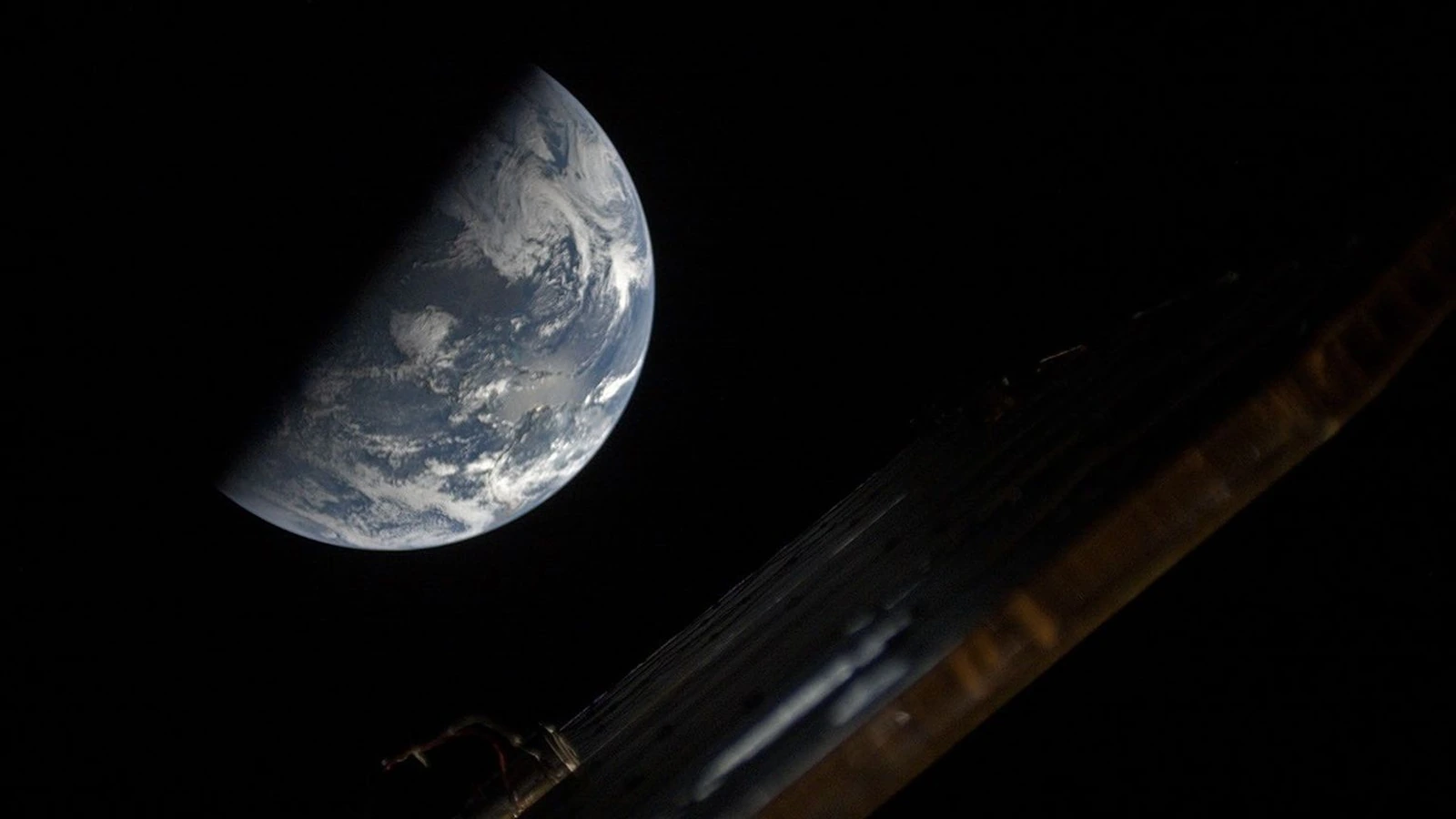
The frame NASA sent from nearly 62,000 kilometers away
What makes the image stand out is its composition. Earth appears partly illuminated, with real depth in the scene, while one of the spacecraft’s solar panels cuts through the foreground. It is clearly useful as mission imagery, but it also has the visual power of a strong space photograph: scale, geometry and a tangible sense of leaving the planet behind.
NASA says the picture was taken around 9 a.m. EST on Nov. 9, shortly after the most critical phase of the flyby. In simple terms, Earth was used as a gravitational slingshot, combined with an engine burn, to give the spacecraft the boost it needed for its trip to Mars.
Visible light and infrared in the same set
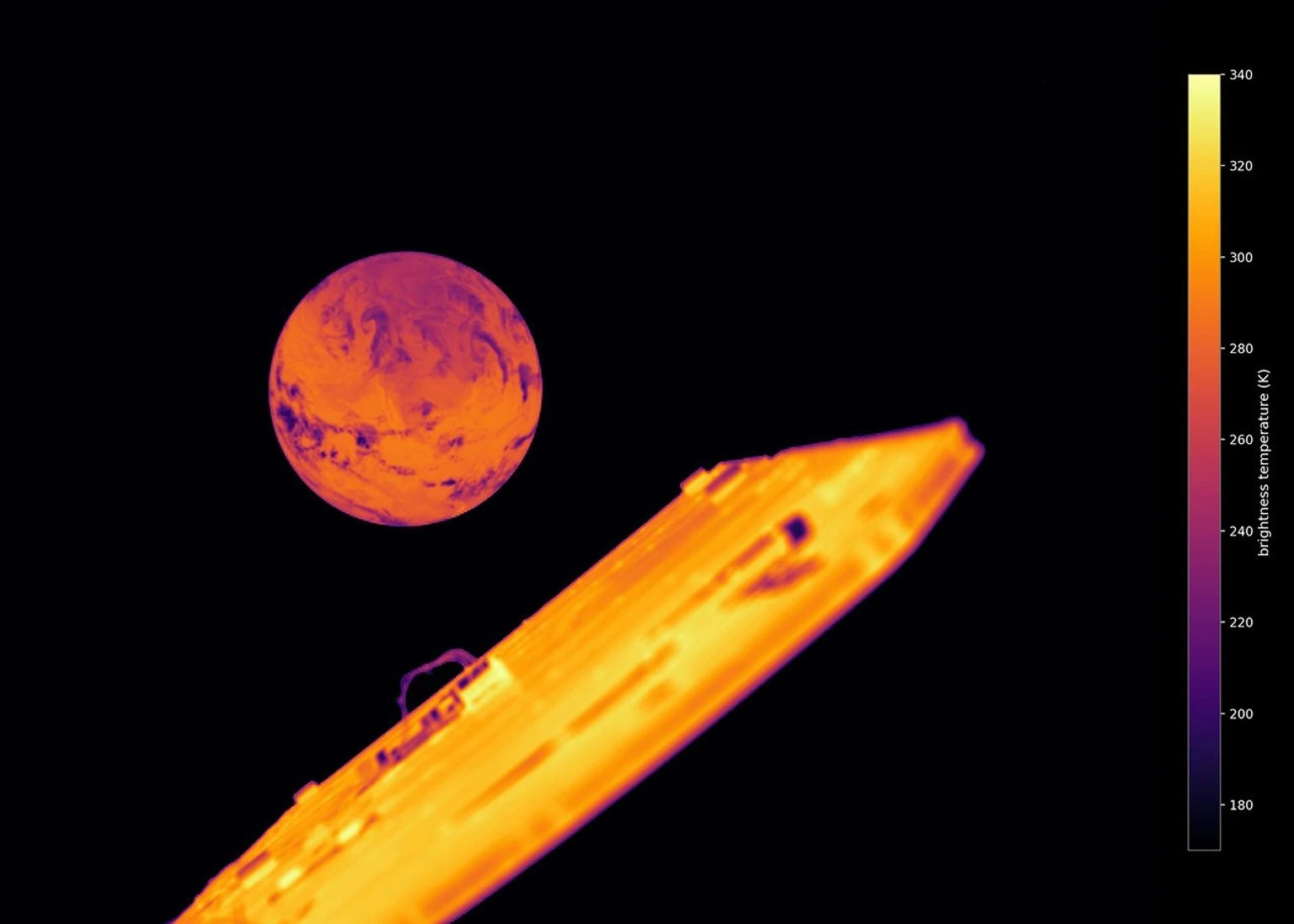
The images were captured with the Visible and Infrared Observation System, or VISIONS, provided by Northern Arizona University. That matters because the released material is not limited to a standard visible-light photograph. The same system also recorded infrared views of the same scene, revealing information that is not directly visible to the human eye.
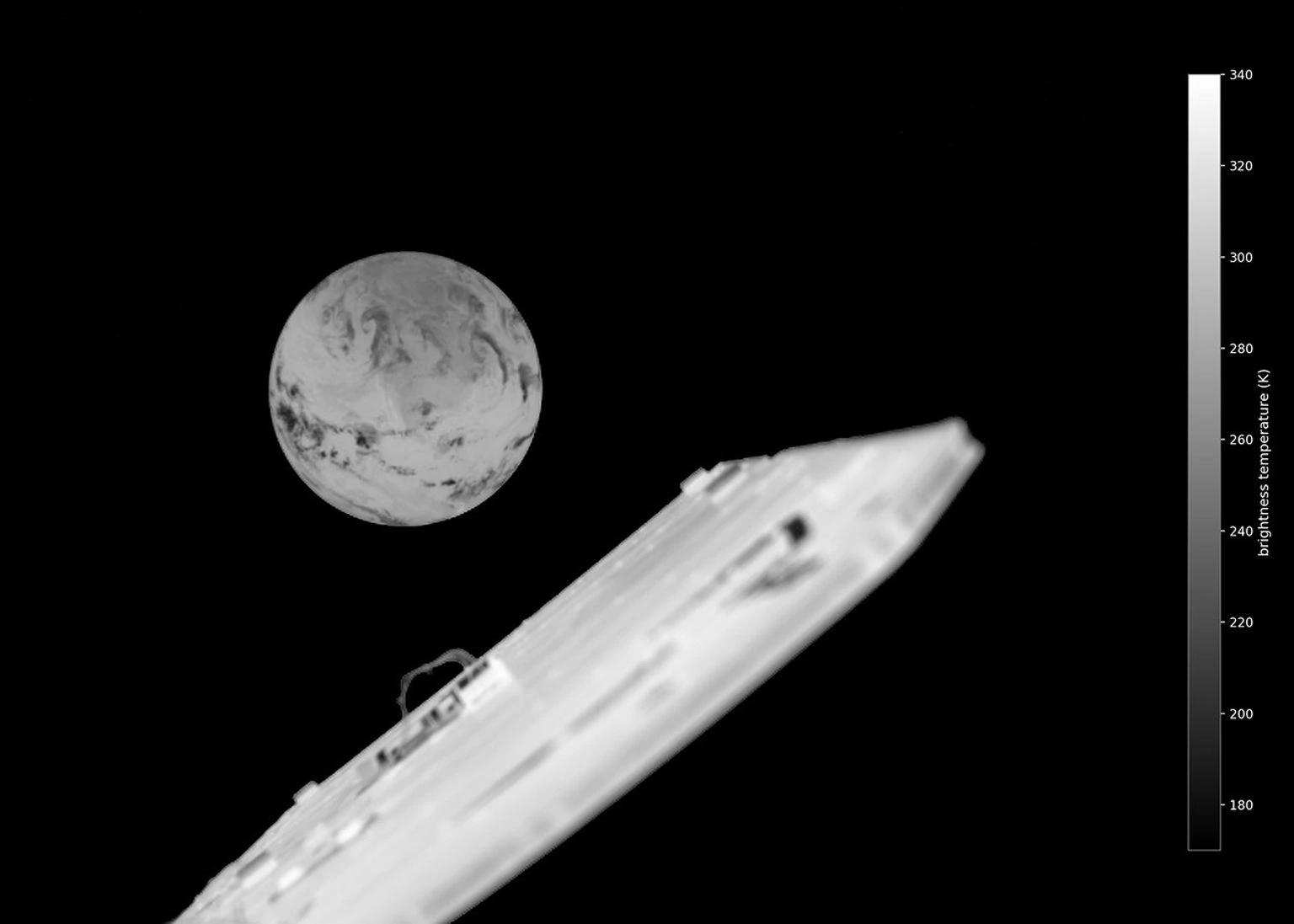
In the grayscale infrared rendering, brighter areas are warmer than darker ones. In the two false-color versions, NASA applies different scales: in one, the warmer areas appear in white, yellow and orange; in the other, they appear in white, yellow and green. The result is visually striking, but more importantly it shows how differently the same frame can be read when you move from aesthetic capture to scientific visualization.
Why the images matter to photographers too
For photographers, the ESCAPADE set is interesting because it reminds us that a space image is never only one thing. It is simultaneously a document, a technical record and an interpretation. We can see the same dual role in other recent NASA missions, such as the first Earth images sent from Orion, where the visual experience of the journey also carries historical weight.
At the same time, the black background of space and the lack of a strong star field are not unusual. As we explained in our piece on why stars often don’t appear in space photos, once exposure is set for a bright planet or illuminated spacecraft surfaces, the much fainter stars in the background disappear easily.
More importantly, this set makes the difference between depiction and interpretation obvious. The visible-light frame speaks the most direct photographic language. The infrared versions, by contrast, show how color can be used as a tool for understanding rather than just a decorative effect.
On the way to Mars
NASA explains that these views came from the second of the two ESCAPADE spacecraft to perform a powered Earth flyby this month. Both spacecraft combined an engine burn with Earth’s gravity to begin a journey of about 10 months to Mars.
Once there, they will enter orbit around the planet and study how the solar wind — a stream of charged particles flowing from the Sun — interacts with the Martian environment and contributes to the gradual loss of the planet’s atmosphere. In that sense, these farewell images of Earth are not just a beautiful in-between moment, but the visual starting point of a mission with a very clear scientific purpose.
What we think
What makes this set stand out is not simply that it shows Earth from far away. It is that, in just four images, NASA demonstrates what a strong space photograph can be today: aesthetically powerful, technically precise and genuinely useful as a scientific tool. For creators, that is a useful reminder that an image does not lose value when it serves information; very often, that is exactly when it gains more depth.