Summary
- More than 7,000 creators oppose potential copyright changes in Australia.
- They demand explicit consent for AI training.
- A parliamentary committee recommends a payment mechanism for rights holders, but no legislative change has been enacted.
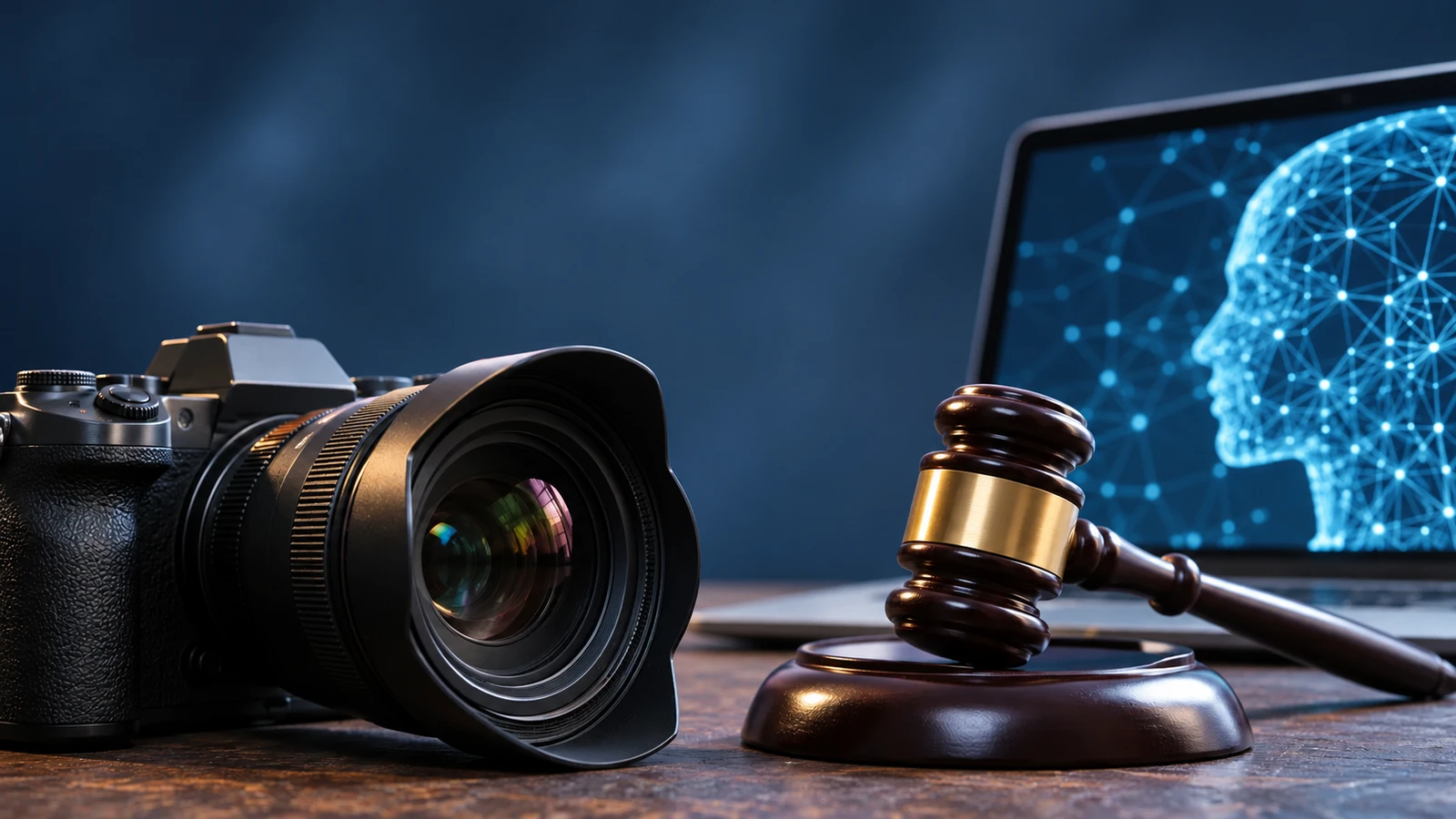
More than 7,000 photographers, writers and musicians worldwide have signed a statement opposing potential changes to Australian copyright law, according to a Society of Authors announcement on November 24, 2026. At issue is whether commercial AI models could be trained on copyrighted works without prior permission from rights holders.
The signatories demand explicit consent before their work is used to train AI models in Australia. They include wildlife photographer Tim Flach. Their statement targets the use of creative works without permission rather than the technology itself.
What Australia is considering
In October 2025, the Australian government ruled out a general text and data mining exception. However, according to CISAC, the international confederation of creators’ societies, other approaches are being considered, including a safe harbour for AI companies in exchange for contributions to a compensation fund or a statutory opt-out scheme.
The distinction between opt-in and opt-out is crucial. Under the first approach, a company must obtain the rights holder’s permission before using the work. Under the second, use could be permitted by default unless the rights holder objects. The precise implementation would depend on the wording of any eventual legislation.
Isabelle Doran, CEO of the Association of Photographers and vice chair of the Creators’ Rights Alliance, told PetaPixel in a statement that photographers already have limited bargaining power against major technology companies. She argues that opt-out would put an additional burden on creators whose work is used without consent.
What the parliamentary committee recommends
On November 24, 2026, the Joint Select Committee on Artificial Intelligence delivered its final report, Artificial Intelligence – the Australian Way. Its recommendations include a mechanism intended to make it easier for Australian rights holders to receive fair payment for works used to train large AI models in the country, according to Copyright Agency.
The report contains recommendations; it is not enacted law or final government policy. Compensation for using a work and the creator’s right to decide whether that use is permitted are separate issues. A payment mechanism alone does not guarantee that prior consent will remain a requirement.
Why photographers outside Australia should care
Australian creative industry and media organisations have also launched the Not AI’s to Take campaign. They want AI companies to secure permission and agree payment before using creative works for training.
In a letter to Australia’s prime minister dated November 9, CISAC warned that the consequences of such a decision could extend beyond the country’s borders. A model trained in Australia may draw on material from creators elsewhere and be distributed internationally. For a photographer in Greece, the issue is therefore not confined to Australia’s domestic market.
The practical problem is that a photograph may appear simultaneously in its creator’s portfolio, an online magazine, an agency archive or a client’s website. Even if a photographer opts out in one place, that choice may not be recognised across every other copy. The ability to identify works in training datasets is just as important as the licensing terms.
VSCO’s policy change illustrates why using an editing tool should be clearly distinguished from training generative AI on users’ photographs.
Similarly, the Wall Street Journal photographers’ protest highlighted the importance of contractual terms in controlling photographic archives.
What we think
Consent should not become a privilege reserved for people with the time, money and legal support to protect their archives. A photograph’s value does not end with its original commission or first publication. If it can be used to develop a commercial AI product, the rights holder should have meaningful control over that use and the ability to negotiate payment.
We want AI tools that help us edit, organise archives and do creative work. But photographers should not have to remove images from the internet to prevent them being used for model training. Publishing a portfolio is part of doing business, not a licence for every future commercial use.
A workable solution needs transparency about the works being used, clear licences and effective ways to enforce rights. The challenge is to make it work for independent photographers as well as large organisations that have the leverage to negotiate deals with technology companies.