Summary
- An Airbnb host in Tasmania sought A$1,755 from a French guest over alleged damage and cleaning.
- ABC News checked the toilet photo with Google SynthID Detector and found evidence of AI generation or editing.
- Airbnb rejected the claim and said the guest would not be charged.
- The case highlights the need to check image provenance alongside other evidence.
A photo appearing to show an overflowing toilet became central to an A$1,755 damage claim against a French Airbnb guest — and an examination found that the picture had been generated or altered with AI.
The dispute arose from a stay in Hobart, Tasmania. On 3 November 2026, investigative reporting brought together an examination of the image, the invoices and communications between the parties.
How the A$1,755 demand arose
French traveller Alban stayed for about two weeks during August and September at two properties managed by a host operating as The A Family. Following a disagreement at check-out, he left a one-star review. Two days later, a compensation request arrived.
The host submitted a A$1,500 invoice for removing a “foreign object” from a toilet through Airbnb’s Resolution Center, alongside an image showing water apparently spilling across the floor. A second invoice sought A$255 for exceptional cleaning. The total claim was A$1,755.
Investigators also found that the businesses named on the invoices could not be verified: their Australian business numbers were invalid, emails bounced back, and no corresponding businesses operated at the stated addresses. The host also accused Alban of having unapproved visitors and leaving the property messy, allegations he denied.
The photo and the Google SynthID finding
Alban doubted the photograph was genuine and shared it on social media to ask others what they thought. He then tried an AI detection tool. ABC News independently examined the image using Google SynthID Detector, which indicated that it had been made or edited with Google AI tools.
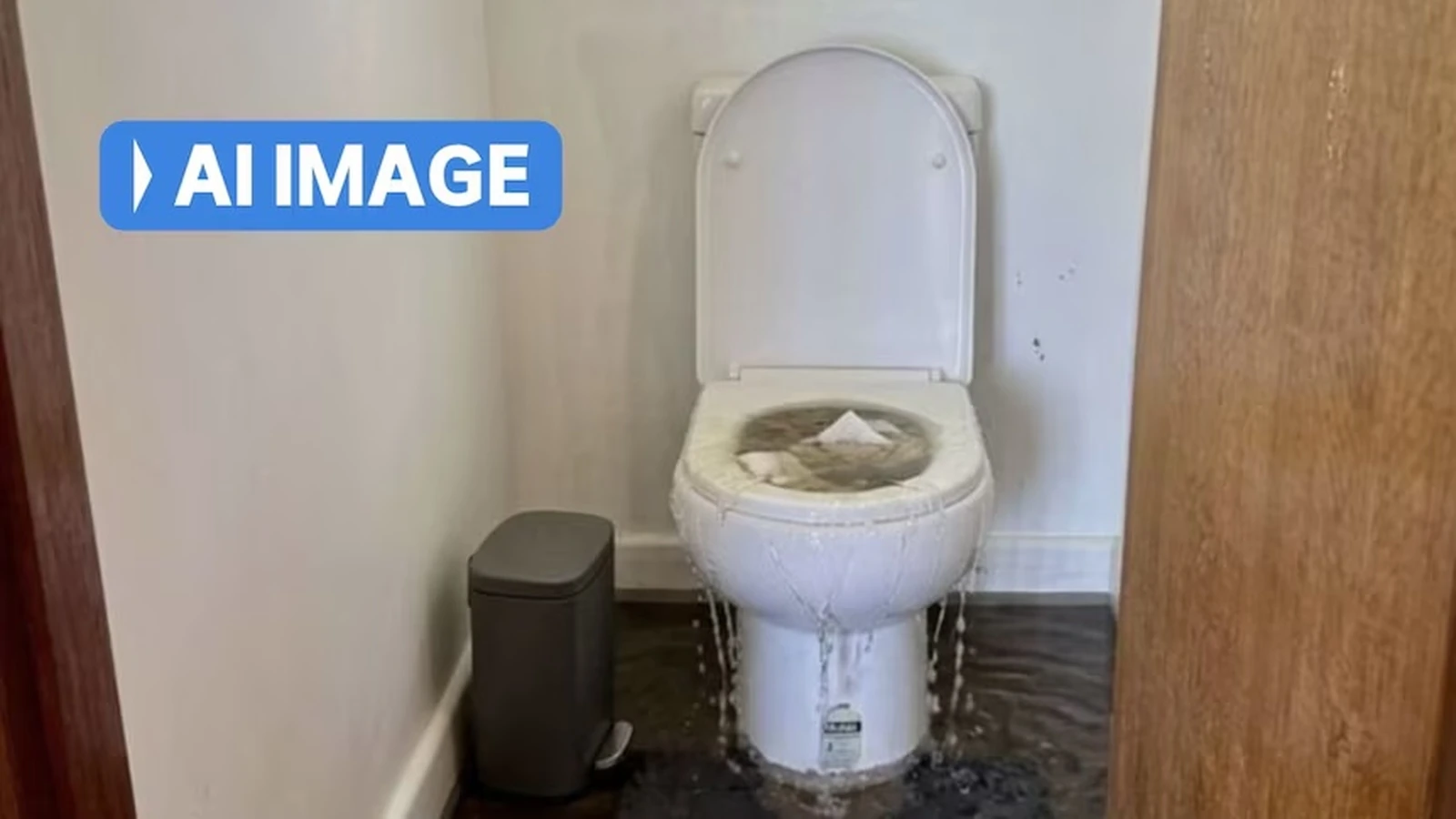
SynthID checks for a digital watermark embedded by compatible generative-AI systems. A positive finding points to AI involvement, not to who performed the edit or whether every element in the scene was fabricated. Equally, no detected watermark does not prove authenticity. The capabilities and limitations of SynthID Detector show why technical checks should be combined with other evidence.
Airbnb rejected the claim — but questions remain
Airbnb said it had investigated the complaint, rejected the host’s compensation request and would not charge Alban. He said he had received almost A$2,000 in refunds covering his stays and tours missed while dealing with the dispute. Worried about the financial impact, he had also moved his flight home to France forward by ten days.
Airbnb’s published Host Damage Protection terms require evidence to be legitimate and verifiable, not doctored or falsified, including through AI. The platform may reject claims that cannot be adequately verified. It did not say whether further action would be taken against this host, who had not responded to ABC News before publication.
When an image is presented as evidence
A damage photograph can influence a reimbursement request, an insurance assessment or a dispute between two parties. A convincing appearance is no longer proof that an event was photographed as it happened. The original file, capture timeline, related communications and independently checkable documentation all matter.
The same issue reaches documentary photography. Even a small edit can change how viewers understand an event. Research into AI-edited photographs and false memories explores a different but closely related risk.
What we think
Anyone who has supplied photographs as documentation understands the value of retaining originals. This is not a debate about applying a filter to improve an image. It is about a picture submitted in support of a demand for real money from another person.
Finding evidence of AI involvement matters. Just as important, the investigation did not stop at a detector result: it checked the invoices, the claimed businesses and the correspondence. That is the standard we should expect whenever an image is offered as proof, whether in a consumer dispute or in photojournalism.
For photographers and filmmakers, the practical lesson is to preserve source files, clearly separate creative edits from documentation, and avoid asking a single AI detector to settle an entire case. Trust in photographs depends on a record that can be examined, not merely on a picture that looks plausible.
Frequently asked questions
Can SynthID identify who altered a photograph?
No. Detection indicates AI generation or editing through compatible watermarked systems. It cannot identify the person responsible or, on its own, establish what actually occurred at the property.
What evidence is helpful in a damage dispute?
Original check-in and check-out photos or videos, capture timestamps, messages exchanged through the platform, verifiable invoices and the communication history can help assess both sides’ claims.