Summary
- November features the Taurids, Leonids and an apparent close pairing of Mars and Jupiter.
- The supermoon falls on November 24 at 16:53 Greek time.
- New Moon occurs on November 9, favoring dark-sky photography.
- Voyager 1 reaches one light-day from Earth on November 18.
- Key dates for observers in Greece
- Taurids: modest numbers, possible spectacular fireballs
- November 15–16: Mars and Jupiter appear close together
- November 17–18: Leonids after the Moon sets
- November 24: a supermoon for landscape photography
- Moon phases: why NASA’s chart shows different dates
- Voyager 1 reaches a distance of one light-day on November 18
- What we think
November 2026 brings Taurid fireballs, the Leonids, a close pairing of Mars and Jupiter before dawn, and a supermoon worth planning a photo shoot around—all visible from Greece.
NASA’s monthly skywatching guide lists the key dates, but the Moon-phase graphic uses US Pacific Time. Below, lunar phases and times are adjusted to Greece (EET, UTC+2); actual visibility still depends on weather and a clear horizon.
NASA’s video walks through the month’s highlights:
Key dates for observers in Greece
| Date | Event | Best viewing window |
|---|---|---|
| November 4–5 | Southern Taurids | Evening and after midnight, away from city lights |
| November 11–12 | Northern Taurids | Night sky, with little moonlight |
| November 15–16 | Mars near Jupiter | Southeast before sunrise |
| November 17–18 | Leonids | After moonset through the early morning |
| November 24 | Supermoon | Eastern horizon around sunset |
Meteor dates are observing windows rather than a precise local peak time for every Greek location. Any hourly meteor rate describes ideal conditions, not a guaranteed number of sightings.
Taurids: modest numbers, possible spectacular fireballs
The Southern Taurids are most active around November 4–5, followed by the Northern Taurids around November 11–12. Each branch typically produces only a handful of meteors—roughly five an hour under ideal dark skies—but an occasional bright fireball can reward patient observers. The meteors appear to radiate from Taurus, yet their streaks can cross much of the sky.
For photography, use a wide-angle lens, tripod and continuous exposures. A 14–24mm lens at f/1.8–f/2.8, 10–20 seconds and ISO 1600–3200 is a practical starting point; adjust for light pollution and moonlight. The November 11–12 window, close to New Moon, offers particularly favorable natural darkness.
November 15–16: Mars and Jupiter appear close together
Before sunrise on November 15 and 16, look southeast. Mars and Jupiter will appear about 1.2 degrees apart—slightly wider than two full-Moon discs placed side by side. Jupiter is the brighter point, with reddish Mars nearby. This is an apparent alignment from Earth, not a close encounter in space.
The pair is visible without a telescope. A moderate telephoto lens can frame both planets above a distant landmark, while a fast wide-angle suits landscapes and timelapses. Photograph them across several mornings to show how their apparent separation changes.
November 17–18: Leonids after the Moon sets
The Leonids originate from debris shed by comet 55P/Tempel–Tuttle and are known for exceptionally fast meteors. NASA cites a possible rate of roughly 15 an hour under ideal conditions, although most observers are likely to see fewer.
From Greece, the useful window is after midnight into dawn on November 17 and especially November 18, once the first-quarter Moon has set and Leo rises higher. There is no need to point the camera directly at the radiant: a dark, unobstructed stretch of sky gives meteors more room to cross the frame.
Mount the camera on a tripod, switch off autofocus, focus manually on a bright star using magnified live view, and run uninterrupted exposures. A second camera can cover another part of the sky. The darker the location, the better the chance of recording faint trails.
November 24: a supermoon for landscape photography
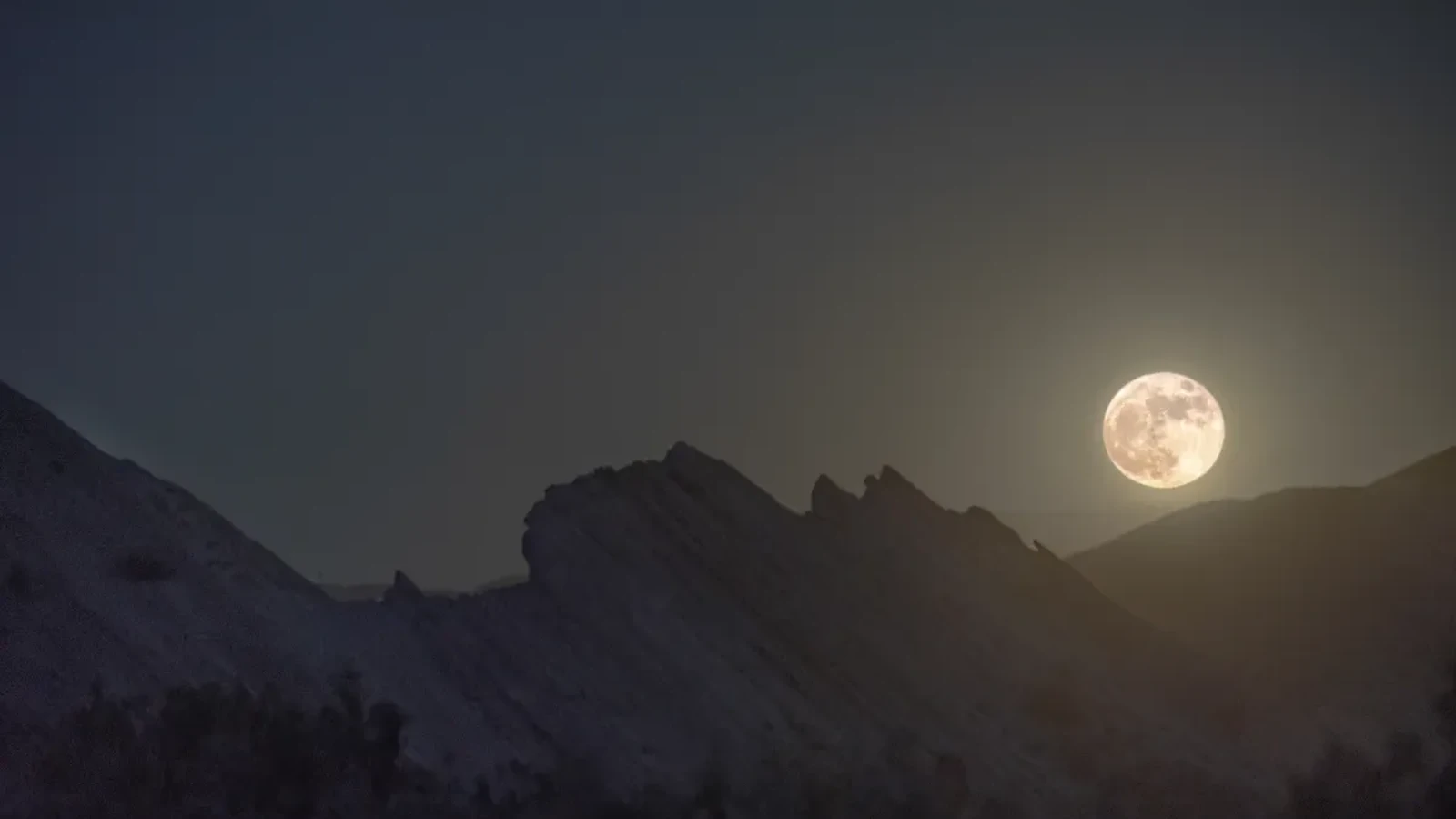
The Full Moon occurs on Tuesday, November 24 at 16:53 Greek time. With the Moon relatively close to Earth along its elliptical orbit, NASA calls this a supermoon—the first in a run continuing through December 2026 and January 2027. It really can appear somewhat larger and brighter, but the difference is subtler than exaggerated online images suggest.
For photography, moonrise around sunset is especially useful: the Moon sits low above the eastern horizon, allowing buildings, mountains or the sea into the composition. Its enormous-looking size near the horizon is largely a visual illusion, though a distant foreground and telephoto lens can create genuine perspective compression.
Start with low ISO and a sufficiently short exposure to preserve detail in the bright lunar disc. If the foreground is much darker, shoot bracketed frames without moving the tripod and combine them with a natural-looking result.
Moon phases: why NASA’s chart shows different dates
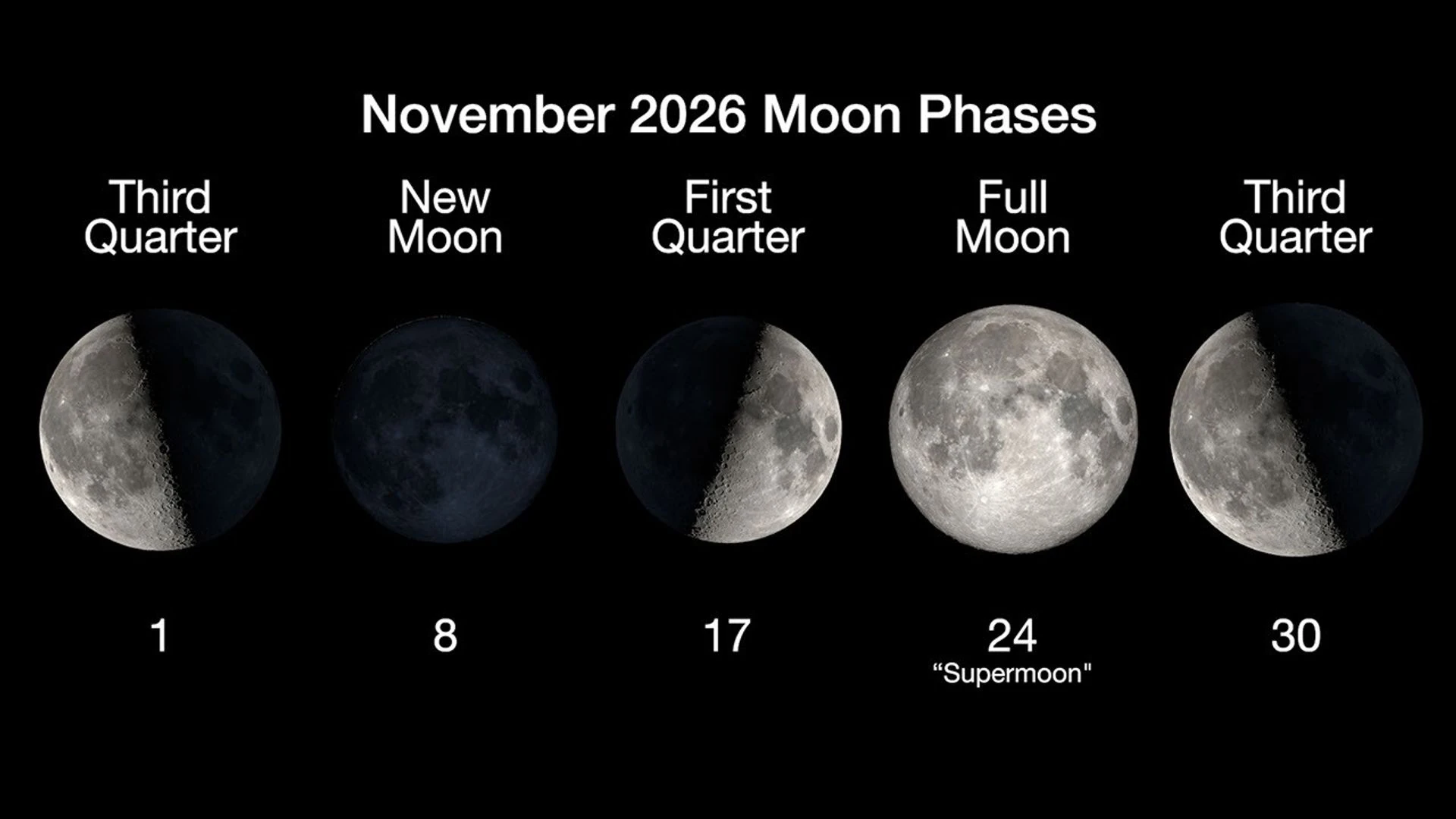
| Moon phase | Date and time in Greece |
|---|---|
| Third Quarter | November 1, 22:28 |
| New Moon | November 9, 09:02 |
| First Quarter | November 17, 13:47 |
| Full Moon | November 24, 16:53 |
| Next Third Quarter | December 1, 08:08 |
That explains why NASA’s Pacific Time graphic labels New Moon as November 8 and the concluding Third Quarter as November 30: in Greece these instants fall on November 9 and December 1. The nights around New Moon offer the darkest natural window for star-filled landscapes.
Voyager 1 reaches a distance of one light-day on November 18
November also marks an event no one can see with the naked eye. Voyager 1, humanity’s most distant spacecraft, is expected to reach a distance of one light-day from Earth on November 18 at 12:16 Greek time, approximately 25.9 billion kilometers away. A radio signal will then need 24 hours to get there, and a reply another 24 hours to travel back.
NASA’s “Shine Bright for Voyager’s Light-Day” activity takes place on November 17, one day before the calculated distance milestone. Voyager 1 lies in the direction of Ophiuchus but is far too distant and faint for visual observation.
To follow how the sky changes from month to month, compare the October 2026 night sky from Greece. The award-winning astronomy photographs of 2026 also offer ideas for thoughtful compositions beyond simply recording celestial events.
What we think
This November offers a genuine photography dilemma. The Taurids demand patience because a bright fireball might appear at any moment, while the Leonids have a more targeted post-midnight window. For one meteor-shooting night, we would prioritize dark skies and the weather forecast over a date circled on the calendar.
Mars and Jupiter are much easier to plan for. Find an unobstructed southeastern horizon, compose in advance, and photograph how the two points move relative to each other over successive mornings. You do not need an expensive astrophotography setup to make a photograph that tells that story.
For the supermoon, we would choose a strong terrestrial foreground over an oversized Moon with nothing around it. Location and careful exposure matter much more to the final image than the “supermoon” label.