Summary
- Darren Aronofsky will receive the Award for Director at ToruńCAMERIMAGE 2026.
- The festival highlights his powerful combination of cinematography, editing and sound.
- It also recognises his enduring collaboration with Matthew Libatique.
- The festival takes place in Poland from November 7 to 14.
Darren Aronofsky, the filmmaker behind Black Swan and Requiem for a Dream, will receive the Award for Director at ToruńCAMERIMAGE 2026, a festival dedicated to the art of cinematography.
The honour was announced on October 29, 2026, ahead of the 34th festival, taking place in Poland from November 7 to 14. It recognises the way Aronofsky brings cinematography, editing, sound and performance together to shape the viewer’s experience of a story.
From Pi to Black Swan: images shaped by a character’s mind
Aronofsky began his feature-film career with the black-and-white Pi (1998), which earned him the directing award at Sundance. Its stark cinematography follows a mathematician obsessively searching for order in a chaotic world. The film introduces an approach that runs throughout his career: the visual form reflects how a character experiences reality.
In Requiem for a Dream (2000), rapid editing, split screens and recurring sounds establish the routines and addictions of the characters. The Wrestler (2008), by contrast, keeps the camera close to Mickey Rourke, often following him from behind both inside and outside the wrestling ring. The film won the Golden Lion in Venice.
Black Swan (2010) builds tension through movement and a camera that stays close to Natalie Portman’s ballerina. Her drive for perfection gradually becomes psychological horror. Aronofsky received Oscar, BAFTA and Golden Globe directing nominations for the film.
Matthew Libatique and the value of creative collaboration
Camerimage also highlights Aronofsky’s long-running collaboration with cinematographer Matthew Libatique. Their partnership started with Pi and has continued as an effort to find a distinctive visual approach for each story rather than repeating a fixed formula.
That relationship carries particular weight at a festival devoted to the craft of cinematography. Alongside its honorary awards, the event has announced new films competing for the Golden Frog, keeping the work of cinematographers at the heart of the programme.
From The Whale to radically different ways of telling stories
Aronofsky has worked across very different kinds of filmmaking. The Fountain examines loss through imagery on a cosmic scale, while mother! keeps the camera close to its protagonist as her home descends into chaos. Noah takes its family drama into an epic setting.
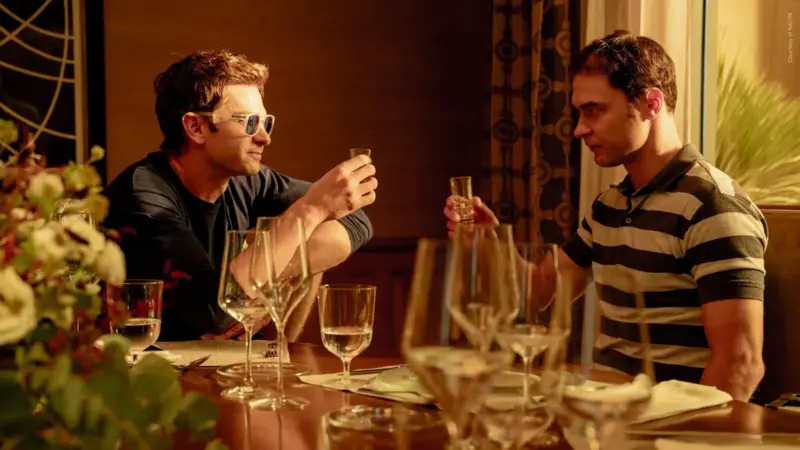
In The Whale (2022), nearly all the action takes place inside an apartment, concentrating attention on the actors. Brendan Fraser won the Academy Award for Best Actor for his performance. The more recent Caught Stealing, meanwhile, shifts to a crime thriller with dark humour set against 1990s New York.
What we think
For directors and cinematographers, Aronofsky’s films make a useful point: a scene does not always have to look “beautiful.” The camera, pacing and sound need to express what the character is going through. Requiem for a Dream makes repetition feel suffocating; The Wrestler brings us almost shoulder to shoulder with its protagonist.
His partnership with Libatique is just as instructive. The goal is not to recognise the same lighting setup or colour palette in every film. It is to see how a lasting creative relationship can produce very different results when the story changes. For anyone making images, that flexibility is more valuable than a rigid signature look.