

Summary
- The world’s largest cinema LED screen will be installed in Nuremberg
- The display will measure 30 metres wide and 16 metres high
- Its native resolution will exceed 8K
- Micro-perforated panels will allow sound to pass through the screen
- The installation will be combined with Dolby Atmos and 3D support
- Completion is scheduled for autumn 2026
A 30-by-16-metre LED cinema screen aims to establish a new benchmark for premium auditoriums.
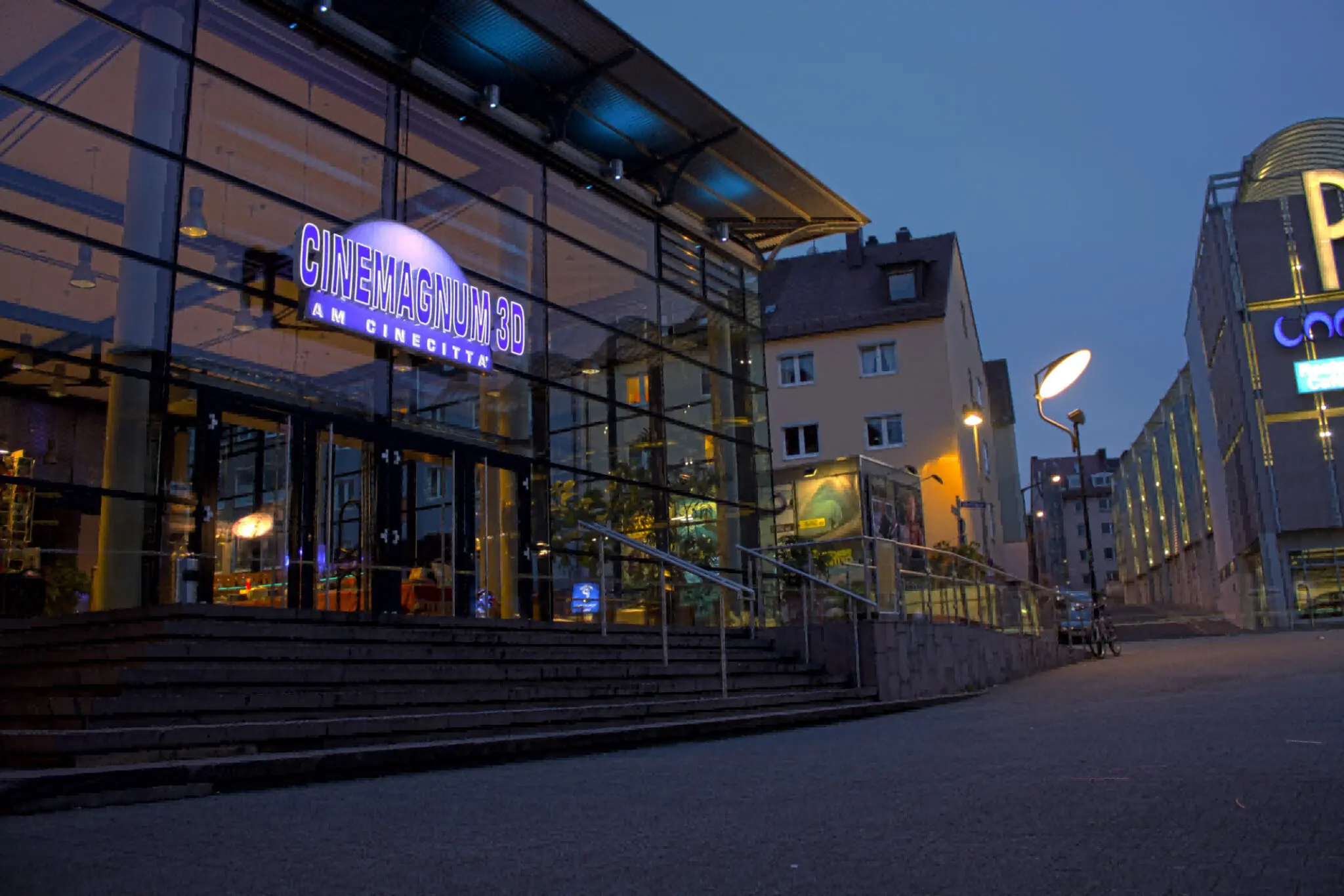
GDC Technology has announced that it will supply the world’s largest cinema LED screen for CINEMAGNUM, the flagship auditorium of the CINECITTA’ multiplex in Nuremberg, Germany. The installation is scheduled for completion in autumn 2026.
The project is significant because it combines a 30-metre-wide display, a native resolution exceeding 8K and acoustically transparent LED technology. It is another indication that direct-view LED screens are beginning to claim a central role in premium large-format cinemas.
A curved wall-to-wall screen
The Tricorne Premium LED screen will measure 30 metres wide and 16 metres high, covering the space from wall to wall and from floor to ceiling.
Its curved design has been selected to improve viewing angles throughout the auditorium and minimise the visible boundaries around the image. The company says the native resolution will exceed 8K, with the aim of retaining a high level of detail across the exceptionally large surface.
Sound passing through the LED panels
One of the installation’s most important technical features is the use of micro-perforated, acoustically transparent LED panels.
The design allows sound from speakers positioned behind the display to pass through it, as it does with conventional cinema projection screens. Dialogues and sound effects can therefore remain spatially connected to the corresponding areas of the image.
According to GDC Technology, the micro-perforation is designed to preserve both image density and HDR performance.
HDR without a conventional projector
Unlike a traditional projection system, a Cinema LED screen directly produces the light that forms the image and does not depend on a projector.
The technology promises higher brightness, increased contrast, deeper blacks and improved colour accuracy. It can also maintain stronger image quality when low levels of ambient light are present inside the auditorium.
The display will be paired with CINEMAGNUM’s existing Dolby Atmos system, which the venue describes as one of the largest installations of its kind. Support for 3D films using active glasses is also planned.
Tricorne Premium LED expands in Europe
GDC Technology is working with German cinema integrator ECCO Cine Supply and Service to complete the project.
The two companies have also signed an exclusive reseller agreement for Tricorne Premium LED systems across German-speaking markets. According to the announcement, installations and confirmed orders reached a total of 25 units worldwide within the first six months following the technology’s debut.
What we think
The screen’s dimensions are impressive, but the more substantial innovation is the combination of HDR imaging and acoustic transparency. Provided the completed installation performs as described, CINEMAGNUM could become an important example of how premium cinemas may transition from projection systems to direct-view LED displays.
Frequently asked questions
How large will the CINEMAGNUM screen be?
The screen will measure 30 metres wide and 16 metres high.
What resolution will it offer?
GDC Technology says its native resolution will exceed 8K.
When will the installation be completed?
The project is scheduled for completion in autumn 2026.
How can sound pass through an LED screen?
The panels contain micro-perforations that allow sound from speakers positioned behind the screen to reach the audience.
Will it support 3D films?
Yes, the venue plans to support 3D screenings using active glasses.