


Summary
- The FCC is considering new restrictions on certain foreign-produced UAS and critical components.
- The proposal explicitly names multi-UAS light shows within its swarming-system category.
- Skyworx is seeking an exemption for drones designed solely for aerial entertainment displays.
- Under the proposal, continued use of previously authorized equipment already held by users would remain permitted.
Large drone light shows involving hundreds or thousands of illuminated aircraft in the United States could be affected by a new FCC proposal because the regulator explicitly names multi-UAS light shows among the “swarming” systems it is considering as military-grade.
The Federal Communications Commission is considering restrictions on the continued importation and marketing of certain previously authorized foreign-produced UAS and critical components on its Covered List. The proposal is not a final rule: comments closed on September 2, 2026, and no final decision has been issued.
The concern for the drone-show industry comes from the FCC text itself, which includes aircraft purpose-built for coordinated and synchronized formations, “including applications such as multi-UAS light shows.” A national-security proceeding could therefore reach purely entertainment-focused aerial productions.
Why drone light shows are part of the debate
One proposed military-grade category concerns UAS with swarming capabilities. The wording is not limited to autonomous military swarms; it explicitly names multi-drone light shows as an example of synchronized operation involving many UAS.
The FCC links coordination of large numbers of drones with potential operational and national-security threats. Entertainment operators argue that the same technical label captures systems with fundamentally different purposes, autonomy and operating models.
Skyworx asks for an entertainment-drone exemption
U.S. operator Skyworx Drone Shows has asked the FCC to exclude UAS specifically designed for aerial entertainment displays. It says its aircraft are lightweight, follow pre-programmed paths and do not behave like autonomous military swarms making real-time decisions.
The company says its show drones do not carry cameras, thermal sensors or LiDAR and that their stations are used for battery charging. Performances operate under the control of licensed remote pilots with FAA safety procedures and approvals.
Drones already in use would not be grounded
The FCC clarifies that even if the proposal is adopted, continued use or operation of previously authorized equipment already in users’ hands would remain permitted. The central concern for operators is therefore future access to new aircraft and replacement components.
The proposal would require affected importation and marketing activity to cease 180 days after publication of a final measure in the Federal Register, if the FCC ultimately adopts it.
Cost, replacement parts and safety
Skyworx argues that replacing fleets and components could cost millions of dollars. It also notes that hardware, firmware and show-control software are tested as an integrated system, so untested substitutions could create new risks rather than improve safety.
The company says it wants to transition to U.S.-made equipment but believes equivalent, proven alternatives are not yet available in every case at the scale required for major productions.
From fireworks alternative to possible collateral damage
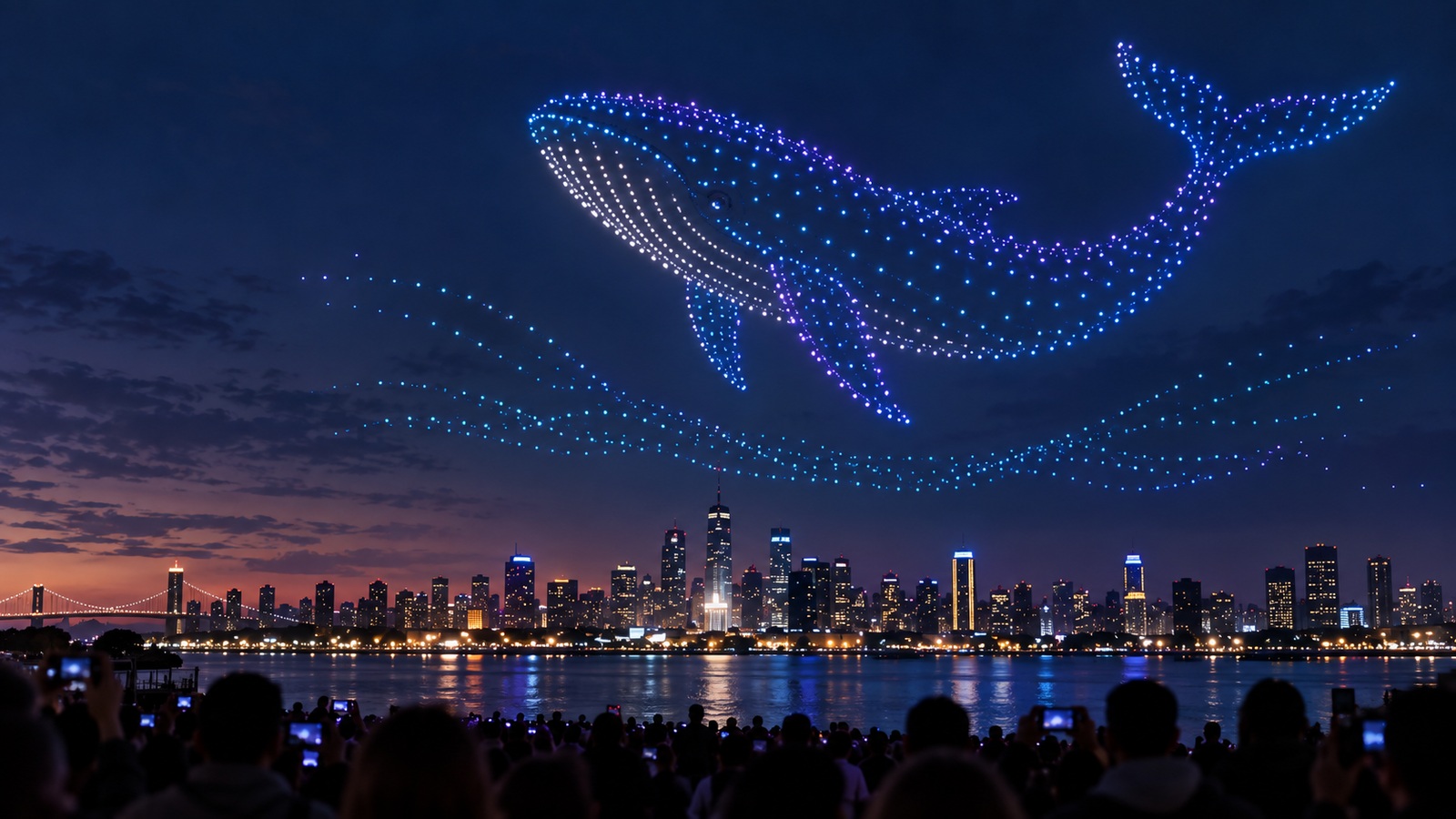
Drone light shows have become a distinct form of visual entertainment, using hundreds or thousands of illuminated points to create moving aerial imagery. Operators also promote them as an alternative to fireworks for cities, festivals, sporting events and brands.
If a final rule does not distinguish entertainment systems from military swarms, the impact could spread from manufacturers to operators, event-production companies and organizations commissioning these displays.
What we think
The industry’s concern is grounded in the proposal because multi-UAS light shows are named explicitly. The key point is that “many drones flying in synchronization” does not by itself equal military capability. A final rule needs a precise definition that addresses genuine risks without unintentionally restricting a legitimate form of aerial visual production.
Frequently asked questions
Has the FCC already banned drone light shows in the United States?
No. This is a proposal concerning importation and marketing of certain categories of foreign-produced UAS and components. No final rule has been issued in this proceeding.
Why are light shows mentioned as military-grade?
The FCC includes them in its discussion of swarming UAS because they use many drones in coordinated and synchronized flights. Operators argue that entertainment systems lack the autonomy and operational role of military swarms.
Would owners be banned from using drones they already bought?
Under the proposal, no. Continued use of previously authorized equipment already in users’ hands would remain permitted.
What is Skyworx asking for?
It wants a clear exemption for UAS specifically designed for aerial entertainment displays so they are not treated as military-grade solely because they fly synchronized formations.