

Summary
- The global handheld smart camera market reached 16.65 million units in 2025, with DJI holding about 62% and exceeding 10 million shipments.
- CIPA recorded 9,438,876 digital still cameras for the same year, but the two datasets cover different product categories.
- Rapid growth in action, gimbal, and 360° cameras is tied to short-form video, vlogging, and social-media creation.
- At the same time, the traditional digital camera market grew 11.2% in 2025.
DJI shipped more than 10 million handheld smart cameras in 2025, a figure higher than the total digital still camera shipments recorded by CIPA in the same year.
The comparison is striking, but it needs the right context: IDC tracks a newer category of portable imaging devices — action cameras, 360° cameras, and gimbal cameras — while CIPA tracks the traditional digital still camera market among companies participating in its statistics.
Even with that distinction, the numbers show how quickly part of the imaging market is shifting toward small, stabilized cameras built around video and social-media workflows.
DJI moved past 10 million units
According to IDC, the global handheld smart camera market reached 16.65 million units in 2025, up 83% year over year. Sales value exceeded RMB 46.1 billion, an 86% annual increase.
DJI accounted for about 62% of global shipments and exceeded 10 million units in a single year for the first time. IDC links much of that performance to DJI’s strong position in action cameras and gimbal cameras, along with its entry into the 360° camera market.
IDC defines a handheld smart camera as a consumer portable imaging device with computing capability, electronic or optical stabilization, at least 2K resolution, and handheld operation. The category includes action cameras, panoramic/360° cameras, and gimbal cameras.
How it compares with the traditional camera market
CIPA’s final 2025 data records 9,438,876 total digital still camera shipments worldwide, up 11.2% from 2024. Of these, 2,436,911 were cameras with built-in lenses and 7,001,965 were interchangeable-lens cameras.
Within interchangeable-lens cameras, mirrorless models reached 6,311,054 units, while DSLR shipments fell to 690,911 units. In unit terms, DJI alone therefore shipped more handheld smart cameras than the total number of digital still cameras reported to CIPA for the same year.
That does not mean DJI sold more mirrorless cameras or more conventional compact cameras than Canon, Sony, Nikon, Fujifilm, Panasonic, and the other participating manufacturers combined. These are different product categories with different use cases and different tracking methodologies. The comparison is useful mainly as a measure of how large the newer video-first portable camera category has become.
Action, gimbal, and 360° cameras are shifting the balance
IDC recorded more than 8 million action camera shipments worldwide in 2025, up 61%. Detachable action cameras, often described as thumb cameras, exceeded 1.3 million units.
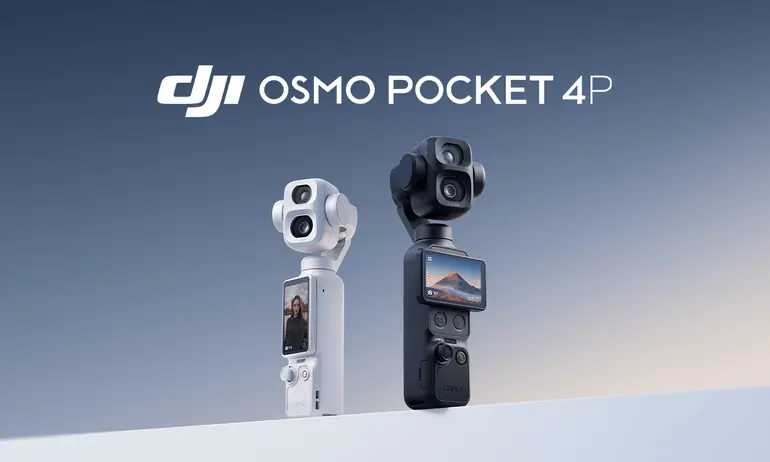
Gimbal cameras grew even faster, with shipments increasing by more than 100% in a year. DJI’s Pocket line held a strong lead in this segment, and IDC specifically points to the Pocket 3 as a major contributor.
The 360° camera market exceeded 2.5 million units, growing by more than 50%. Insta360 retained its leading position, but DJI’s entry with the Osmo 360 quickly expanded the company’s share during the second half of 2025.
Why this market is growing so quickly
The expansion is closely tied to short-form video, vlogging, and social-media content creation. These devices prioritize portability, stabilization, easy editing, and fast sharing instead of the larger body-and-interchangeable-lens workflow of traditional camera systems.
IDC expects the global handheld smart camera market to exceed 40 million units by 2030, implying a five-year compound annual growth rate close to 20%.
At the same time, CIPA’s figures show that the traditional camera market was not collapsing in 2025: total digital still camera shipments rose 11.2%, with especially strong growth among cameras with built-in lenses.
What we think
The key point is not that DJI has directly replaced the mirrorless market, but that a second, very large standalone-camera market has formed around video and mobile-first workflows. For image makers, the definition of a camera is broadening, and convenience, stabilization, and rapid distribution are becoming as important as traditional photographic specifications.
Frequently asked questions
Did DJI really ship more cameras than all CIPA manufacturers combined?
By unit count, IDC says DJI exceeded 10 million handheld smart cameras in 2025, while CIPA recorded 9,438,876 digital still cameras. However, the two figures cover different product categories and are not an exact like-for-like comparison.
What does IDC count as a handheld smart camera?
A portable consumer imaging device with computing capability, stabilization, at least 2K resolution, and handheld use. The category includes action cameras, 360°/panoramic cameras, and gimbal cameras.
How much did the market grow in 2025?
Global handheld smart camera shipments reached 16.65 million units, up 83% year over year.
Did the traditional camera market decline?
Not in 2025. CIPA recorded an 11.2% increase in total digital still camera shipments, with particularly strong growth in cameras with built-in lenses.