

Summary
- Denis Barbas’ “Climbing the Dolomites” follows climbers through the Dolomites using cinematic aerial imagery.
- The drone is used as part of the visual storytelling rather than only for establishing shots.
- In Italy, operators must check UAS geographical zones on D-Flight before every flight.
- Parts of the Dolomites are subject to additional restrictions and prohibitions linked to protected areas.
A short cinematic film from the Dolomites combines climbing, imposing mountain scenery and striking aerial imagery, while also serving as a reminder that drone flights in the region require careful checks of local restrictions.
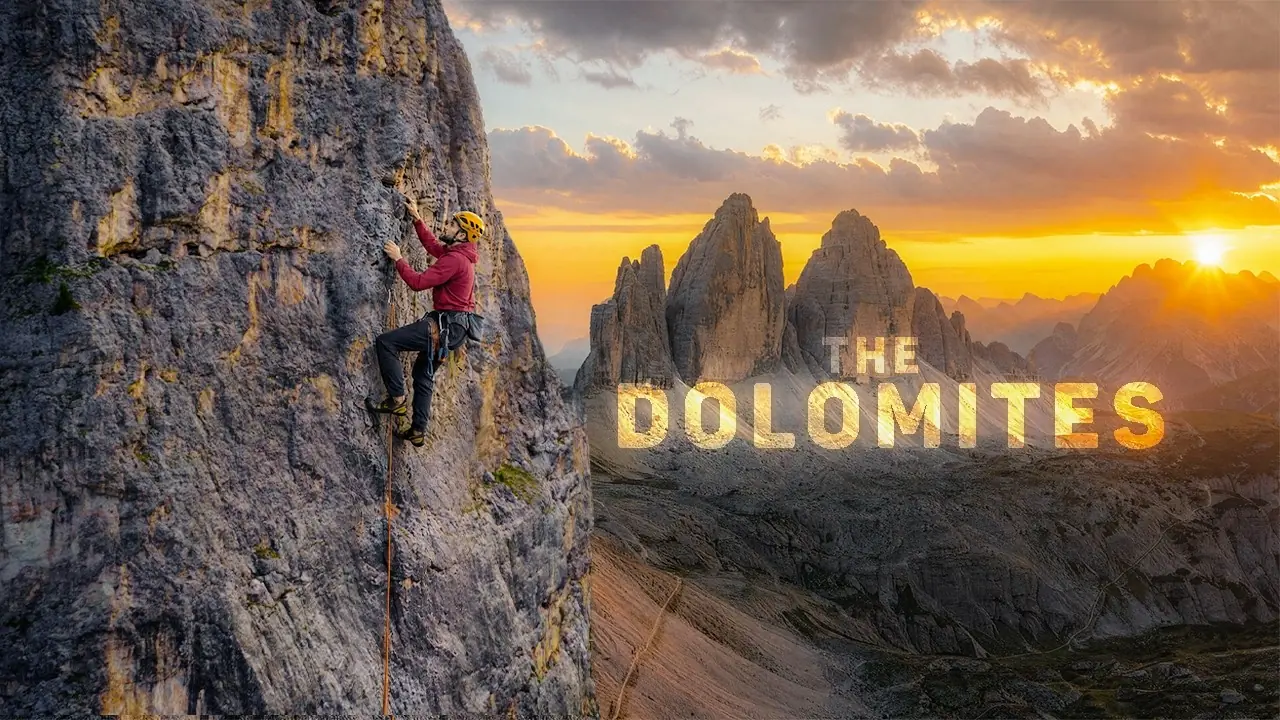
“Climbing the Dolomites” by filmmaker Denis Barbas follows climbers through the range’s distinctive mountain landscape. Long distances, slow movements around the peaks and the changing scale between people and rock make the landscape itself part of the visual narrative.
When the drone becomes part of the storytelling
The strongest images do not rely only on altitude or spectacular scenery. The camera pulls away to reveal the size of the rock formations and returns to compositions that keep people in frame, allowing the scale of the landscape to become immediately visible.
That approach is different from using a drone only for establishing shots. The aerial camera connects the action to the environment and creates continuity as the climbers move through the mountains.
The Dolomites are especially suited to this visual language, with steep peaks, deep valleys and vertical formations that change dramatically with camera angle and light.
A spectacular shot is not necessarily legal everywhere
The Dolomites cover a large area and are not a single unrestricted drone zone. Italy’s ENAC states that before every flight, the operator must check the relevant UAS geographical zone on the official D-Flight map.
These zones can impose restrictions or prohibitions for safety, security or environmental reasons, meaning that two relatively nearby locations can be subject to different rules.
Extra care in protected areas
Parts of the Dolomites are subject to additional restrictions because of their protected status. In South Tyrol, for example, flights by drones under 25 kg have been prohibited in 18 designated protected areas since January 30, 2023, with exemptions available only in specific cases and subject to approval.
The key point for pilots is that low aircraft weight does not itself grant permission to fly. A sub-250 g drone remains subject to geographical zones and the local restrictions applying to the exact location.
Check the exact location, not just the destination
For a photographer or filmmaker planning aerial work in the Dolomites, a general statement that drones are allowed in the region is not enough. The exact take-off point and intended flight area must be checked separately.
- the exact take-off point
- the planned route and operating area
- UAS geographical zones on D-Flight
- any protected-area status
- the requirements of the operating category
- any additional clearance required by the responsible authority
ENAC also notes that some geographical-zone boundaries are being revised to align more closely with the actual boundaries of protected areas. Restrictions should therefore be checked again immediately before the flight, not only during initial trip planning.
What we think
“Climbing the Dolomites” shows how different a mountain film can feel when aerial imagery is designed as part of the narrative rather than as a collection of scenic shots. At the same time, the Dolomites are a clear example of a destination where checking the location and its restrictions is a normal part of production planning.
Frequently asked questions
What is “Climbing the Dolomites”?
It is a cinematic film by Denis Barbas following climbers in the Dolomites and making extensive use of aerial imagery.
Can drones be flown everywhere in the Dolomites?
No. Restrictions depend on the exact geographical zone, and some protected areas prohibit flights or require specific approval.
Where should I check whether I can fly?
The official platform for checking UAS geographical zones in Italy is D-Flight.
Can a sub-250 g drone fly anywhere?
No. Low weight does not override an active geographical prohibition or a specific local restriction.
Should the rules be checked again before the flight?
Yes. Geographical zones and restrictions should be checked for the exact location before every flight.