

Summary
- Elon Musk announced a feature-length AI adaptation of The Odyssey
- He claims the production will be historically accurate and faithful to Homer
- The Odyssey is a mythological poem rather than a historical chronicle
- His attack on Christopher Nolan’s film has focused primarily on its casting
- The announcement highlights the confusion between technological spectacle and artistic creation
Elon Musk has decided that artificial intelligence’s next mission is to restore the “historical accuracy” of an epic filled with gods, Cyclopes, Sirens and magic.
The head of xAI announced that Grok Imagine will create a feature-length adaptation of The Odyssey before the end of 2026, which he claims will be “historically accurate” and faithful to Homer’s art. The statement came as part of his continuing attack on Christopher Nolan’s film adaptation and its casting choices.
The promise matters not because it signals a guaranteed revolution in filmmaking, but because it encapsulates one of the greatest problems of the generative AI era: the transformation of technological spectacle into a substitute for knowledge, art and historical understanding.
A Historically Accurate Myth
The phrase “historically accurate Odyssey” is problematic in itself. Homer’s epic is neither a historical chronicle nor an archaeological record of Mycenaean society. It is a poetic work shaped through a long oral tradition and includes elements drawn from different periods.
The story features Athena, Poseidon, the Cyclops Polyphemus, Circe, the Sirens and Calypso. The idea that a film adaptation can therefore be objectively “historically accurate” is not a serious artistic criterion. It is a slogan vague enough for anyone to fill with their own obsessions.
Classical scholars have also noted that The Odyssey combines cultural and material elements from different eras and cannot be treated as a guidebook for the faithful reconstruction of one specific historical world.
Before this year ends, Grok Imagine will make a full-length movie of The Odyssey that is historically accurate and true to the art of Homer https://t.co/bVHzUmY9WN
— Elon Musk (@elonmusk) July 22, 2026
Accuracy as a Pretext
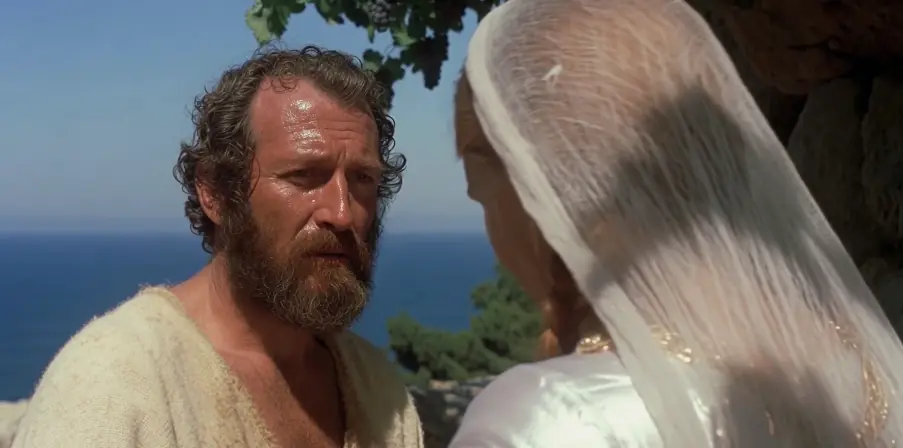
Musk’s dispute with Nolan’s film does not appear to be genuinely concerned with archaeology, weapons, ships or Bronze Age clothing. It has focused primarily on the involvement of Lupita Nyong’o and Elliot Page, while Musk has accused the director of using a diverse cast to meet the Academy Awards’ representation standards.
That accusation is misleading. The Academy’s rules do not require particular actors to be selected for leading roles. A film must meet two of four broader standards, which may also involve its crew, training programmes and senior management.
A large part of the initial online outrage was also based on the false claim that Elliot Page was playing Achilles. Page actually portrays Sinon, a character associated with the story of the Trojan Horse.
When a campaign is founded on inaccurate information but continues even after that information is disproved, it stops being a discussion about art. It becomes a culture-war operation.
Grok Is Not a Director
Making a film is not simply a matter of generating thousands of moving images and placing them in sequence. It requires interpretation, rhythm, dramaturgy, direction, character consistency and deliberate aesthetic choices.
An artificial intelligence model can synthesise images based on its training data. That does not mean it understands Homer, the meaning of homecoming, Odysseus’ transformation or humanity’s relationship with fate.
Musk had already claimed that xAI’s tools would be capable of producing entire films by the end of 2026. So far, however, the distance between an impressive AI trailer and a coherent feature film remains enormous.
The announcement therefore resembles a display of technological power and a personal response to Nolan more than a mature cinematic project.
The Billionaire as Editor of Reality
The deeper problem is not that Musk wants to finance another adaptation of The Odyssey. He has every right to create his own version, and audiences have every right to judge it.
The problem is the belief that owning a technology platform automatically provides authority over history, literature and cinema. Financial power does not transform a personal aesthetic preference into objective truth.
Nor does an AI model become “unbiased” simply because its owner describes it that way. Such systems reflect the sources, instructions, choices and biases of the people who develop them.
In this case, Grok risks being used not to explore Homer, but to validate the version of Homer that Musk already wants to see.
What We Think
Elon Musk’s announcement is not a bold artistic vision. It is a grandiose promise that confuses technological capability with creative value and mythology with historical documentation.
Criticism of Christopher Nolan is entirely legitimate. Inventing an “objectively correct” Homer through a billionaire and his chatbot, however, is not a serious response. It is another episode in Musk’s attempt to present each of his personal obsessions as a mission to save civilisation.
Frequently Asked Questions
What did Elon Musk announce?
He announced that xAI’s Grok Imagine will create a feature-length film adaptation of The Odyssey by the end of 2026.
Why does he describe it as historically accurate?
Musk argues that his version will be more faithful to Homer than Christopher Nolan’s film. He has not, however, provided specific criteria defining what he considers historically accurate.
Can The Odyssey be considered a historical work?
The Odyssey may contain references to real locations, societies and material culture, but it is a poetic and mythological work rather than a historical record.
Can artificial intelligence currently create an entire film?
Modern tools can produce short videos and impressive individual scenes. Creating a coherent feature film with consistent characters, dramaturgy and cinematic quality remains far more difficult.
Why did Musk criticise Nolan’s film?
His criticism focused mainly on its casting choices and their alleged connection to the Academy Awards’ representation standards.