

Summary
- Official Insta360 video runs for about 74 seconds
- Footage from different launches features X5, X6 and Ace Pro 2
- Some cameras returned visibly damaged while preserving their footage
- DJI had just sent 12 Osmo Action 6 cameras on Zhuque-3
- The videos are real-world tests, not complete laboratory certifications
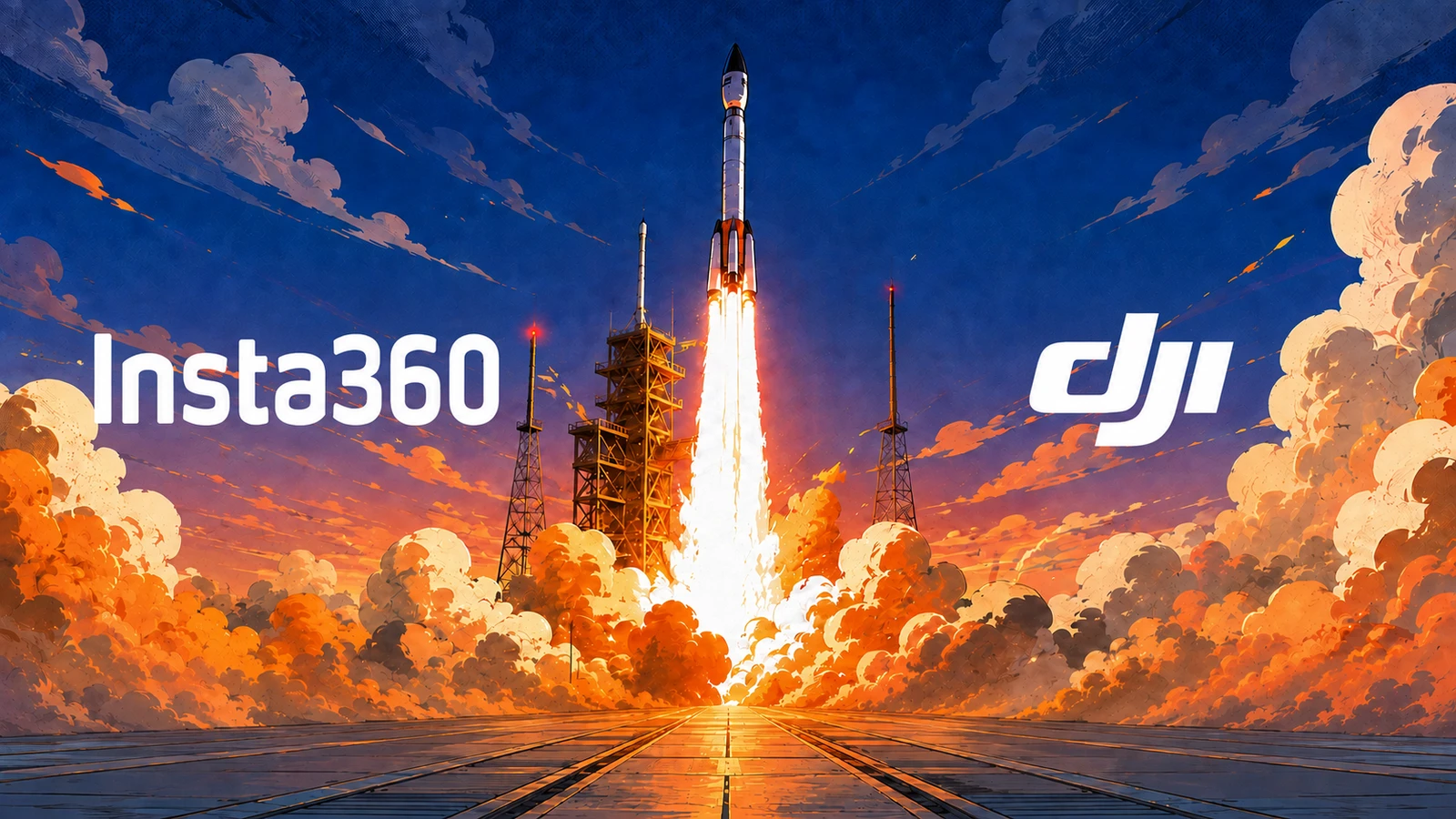
Insta360 has published a short montage of action and 360 cameras at rocket launches, only days after DJI’s unedited Osmo Action 6 flight aboard Zhuque-3.
What Insta360’s new video shows
The official video, “Standing at the Frontlines of Human Dreams: The Ultimate Rocket Test,” runs for about 74 seconds. It combines footage from several launches and places Insta360 cameras where a person could not safely stand.
The montage features the X5 and X6 360-degree models and the Leica co-engineered Ace Pro 2 action camera. Some units return visibly burned or damaged, while the company stresses that their footage survived.
The release follows DJI’s test with 12 Osmo Action 6 cameras on LandSpace’s reusable Zhuque-3 rocket. That official video presented roughly nine minutes of unedited footage from launch through return and vertical landing.
Two different stories from a similar test
DJI pursued the feeling of a continuous technical record: many cameras on one rocket and a long unedited take. Insta360 chooses a rapid supercut combining different missions, angles and models.
One approach demonstrates continuity across a complete flight. The other emphasises variety, proximity to engines and the striking sight of damaged camera bodies that still preserved the file.
What the videos prove — and what they do not
The footage shows that small consumer cameras can serve as onboard recorders in real extreme missions when mounting, position and storage are engineered correctly. It also highlights the value of local recording when a continuous link is unavailable.
It is not a laboratory certification that every unit can withstand any temperature, vibration or load. Thermal exposure changes with mounting point, duration, shielding and bracket. An extreme temperature on an outer surface does not mean every internal component reached the same temperature.
The rivalry beyond spectacle
DJI and Insta360 now compete directly in action and 360 cameras while extending into gimbals, pocket systems and creator tools. The companies have also faced one another in patent disputes.
Pressure on DJI in the US market creates an opportunity for Insta360. For DJI, real missions demonstrate that its engineering extends beyond controlled product demos.
Why extreme tests became marketing
Action cameras are increasingly difficult to distinguish through resolution and frame-rate numbers alone. Manufacturers need a story that translates durability, stabilisation and file survival into memorable images.
A rocket launch compresses heat, vibration, acceleration, severe lighting changes and the possibility of total equipment loss into seconds. That makes it both a real test and an ideal communications stage.
What we think
This action-camera space race produces spectacular footage but requires a calm reading. Insta360 wins on density and device variety, while DJI benefits from a longer continuous record of one reusable flight.
The useful lesson is not that a camera is indestructible. Correct placement, secure mounting, local recording and media recovery matter just as much as the camera’s specifications.
Frequently asked questions
What is Insta360’s new video?
It is the official “Standing at the Frontlines of Human Dreams: The Ultimate Rocket Test,” running about 74 seconds.
Which models appear?
The montage includes Insta360 X5, X6 and Ace Pro 2 cameras across several launches.
Did Insta360 officially answer DJI?
The company did not say so. Timing and subject make the comparison reasonable but do not prove intent.
Were the cameras specially modified?
The brands promote consumer cameras without special modification, but mounting, location and the engineering installation are separate critical parts of every mission.