

Summary
- Photo Ark is celebrating its 20th anniversary.
- Joel Sartore and his team have photographed 18,000 species.
- The project documents animals in zoos, aquariums and wildlife sanctuaries.
- The critically endangered red handfish was selected as the 18,000th species.
- Sartore estimates that the work will require at least another 25 years.
- From a Naked Mole Rat to 18,000 Species
- How Photo Ark Began
- When a Portrait Becomes a Conservation Tool
- Toughie and the Face of Extinction
- The Network Behind the Photographic Ark
- The Red Handfish as Species Number 18,000
- Species Returning From Obscurity
- The Next Milestones
- What We Think
- Frequently Asked Questions
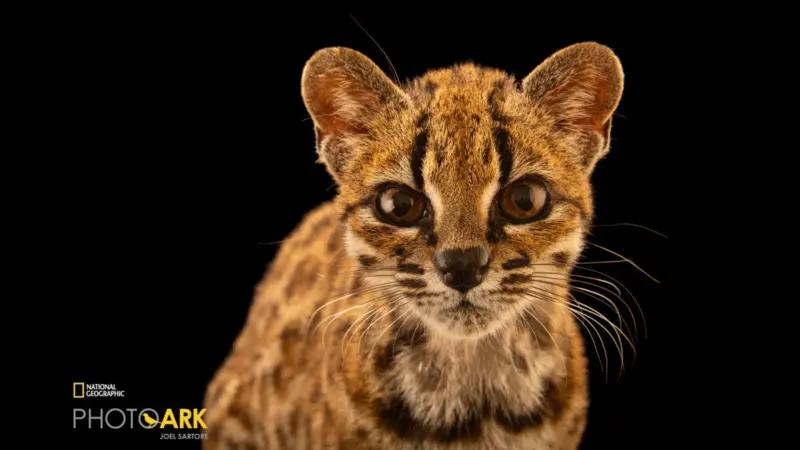
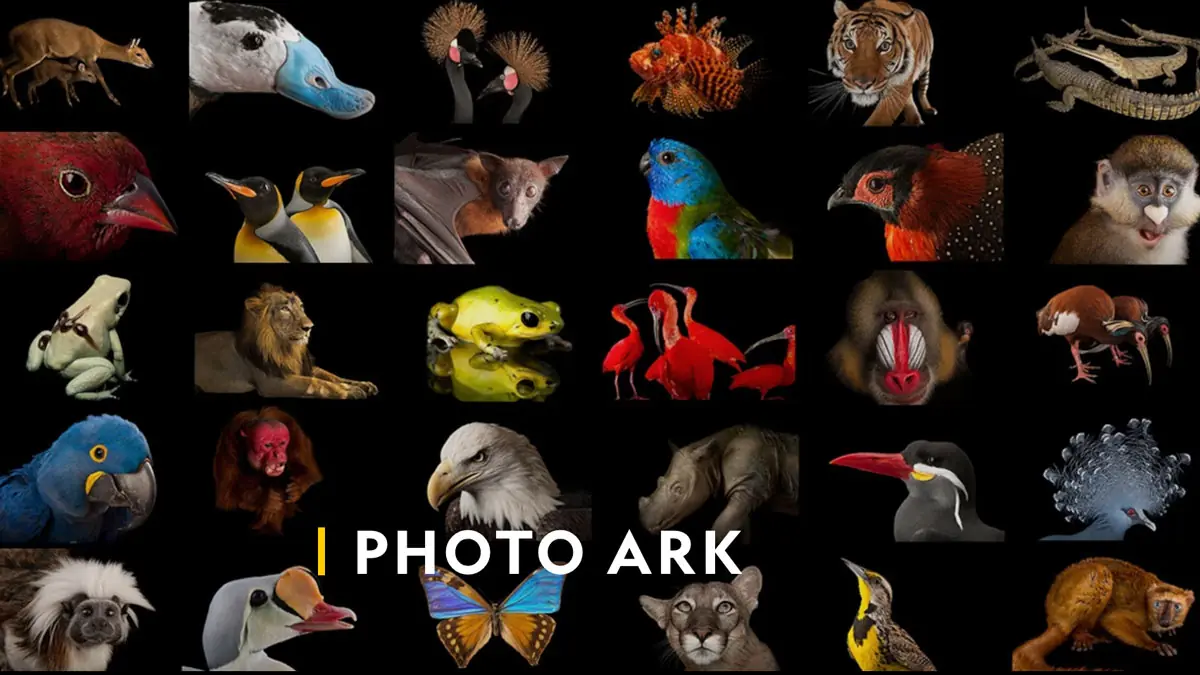
Joel Sartore’s Photo Ark is celebrating its 20th anniversary after photographically documenting 18,000 animal species from around the world.
The photography project, which began in 2006, has reached a new milestone, with American photographer and National Geographic Explorer Joel Sartore creating portraits of 18,000 different species living in zoos, aquariums, wildlife sanctuaries and rehabilitation centers.
The importance of Photo Ark extends beyond the creation of a vast photographic archive. Its mission is to draw attention to rarely featured species, document biodiversity while it still exists and provide meaningful support for efforts to protect threatened animals.
From a Naked Mole Rat to 18,000 Species
The first animal Sartore photographed for Photo Ark was a naked mole rat. The session took place in 2006 inside the kitchen of the Lincoln Children’s Zoo in Nebraska.
Choosing a small and relatively unpopular animal reflected the project’s philosophy from the beginning. For Sartore, a tiny fish, a sparrow or an insect deserves the same attention as a tiger or a polar bear.
The animals are generally photographed against a neutral black or white background. This removes distractions and gives every species equal visual weight, regardless of its size, rarity or popularity.
How Photo Ark Began
The idea developed during a difficult period for the photographer’s family. In 2006, his wife Kathy was diagnosed with breast cancer and underwent seven months of chemotherapy and multiple surgeries.
Sartore remained at home to care for his family and began searching for a different way to contribute to nature conservation. He found inspiration in ornithologist and painter John James Audubon, whose works now provide some of the few remaining visual records of several extinct bird species.
What started as a series of individual portraits developed first into a personal project, then a full-time occupation and eventually a lifelong mission.
When a Portrait Becomes a Conservation Tool
One of the project’s most notable cases involves the Florida grasshopper sparrow, a small brown bird whose population had at one point fallen to approximately 75 individuals.
Sandra Sneckenberger, a biologist working for the U.S. Fish and Wildlife Service, contacted Sartore because the species was failing to attract the necessary public attention and financial support.
Within a year of the photo session, efforts to rescue the bird had secured more than one million dollars in funding. The money made captive breeding, genetic research and other conservation measures possible.
Toughie and the Face of Extinction
Among the animals documented by Photo Ark was Toughie, the last known member of the Rabbs’ fringe-limbed tree frog species. The Panamanian tree frog lived in a dedicated facility at the Atlanta Botanical Garden after wild populations were devastated by chytrid fungus.
A few months after the photo session, his caretaker, Mark Mandica, managed to record approximately ten seconds of the animal’s call. It was an exceptionally important audio record because the distinctive sound had already disappeared from the forests of Panama.
In 2015, Toughie’s photograph was projected onto the façade of St. Peter’s Basilica at the Vatican together with a recording of his call. The frog died in 2016, and the species is now considered extinct.
The Network Behind the Photographic Ark
Although Photo Ark is closely associated with Sartore, its operation depends on an international network of scientists, zoos, aquariums, sanctuaries and conservation organizations.
His family is part of the core team. His son, Cole Sartore, handles technical work, set construction, lighting, test shots, video and selected photography sessions. Kathy Sartore assists with the demanding schedule of journeys and institutional contacts.
The team also includes a database manager and taxonomy specialists. Among them is French photographer Pierre de Chabannes, who joined the project in 2015 after helping Sartore identify and photograph 51 bird species in a single day.
A photo session lasting just 15 minutes may require months of communication and preparation. Missions are scheduled roughly six months in advance, while each journey is designed to include as many locations and species as possible.
The Red Handfish as Species Number 18,000
In early 2026, the team completed a three-week journey across Australia. It contacted 135 locations and eventually visited 36 facilities, ranging from Alice Springs Desert Park to a laboratory in Hobart, Tasmania.
During the mission, Photo Ark passed the milestone of 18,000 species. The red handfish was selected as the official 18,000th entry. It is a critically endangered marine species measuring approximately three inches in length.
The fish uses its fins to move across the seafloor in a manner resembling walking. An estimated 520 individuals remain, many of them at the University of Tasmania in Hobart. The destruction of its natural habitat is one of the major threats to its survival.
Species Returning From Obscurity
The archive does not include only animals approaching extinction. In some cases, it documents species that were believed to have disappeared but were later rediscovered.
One example is the Lord Howe Island stick insect, a large insect that was considered extinct until it was found in 2001 on a steep rock formation near Australia.
Another case is the Florida bonneted bat. There were fears that the bat had become extinct as early as 1979, but its 2026 Photo Ark portrait offers new visual evidence of its fragile recovery.
The Next Milestones
Photo Ark has passed the halfway point toward its official goal of documenting at least 25,000 species living under human care. Sartore nevertheless believes that creating a sufficiently representative archive of the planet’s animal diversity will require at least another 25 years.
At the top of his list of animals he most wants to photograph is the Javan rhinoceros, one of the rarest large mammals in the world. It is followed by the Tonkin snub-nosed monkey, a rare primate found in northern Vietnam.
The 64-year-old photographer understands that the project will probably continue with the next generation. His son Cole is expected to assume a larger role in Photo Ark when Sartore can no longer maintain his current pace of travel.
What We Think
Photo Ark demonstrates that wildlife photography can function as more than an aesthetic or educational medium. The systematic documentation of thousands of species is creating an important historical archive, but the program’s greatest value lies in its ability to transform unfamiliar animals into recognizable faces of the biodiversity crisis. A photograph cannot prevent extinction on its own, but it can generate the public interest, funding and scientific action required to give a species a genuine chance of survival.
More about the project here.
Frequently Asked Questions
What Is Photo Ark?
Photo Ark is a long-term photography and conservation program founded by Joel Sartore with support from the National Geographic Society. Its goal is to photograph species living in zoos, aquariums and wildlife sanctuaries while promoting education and conservation action.
How Many Species Have Been Photographed?
By the project’s 20th anniversary, Photo Ark had documented 18,000 species. Its official goal is to photograph at least 25,000 species living under human care.
Which Animal Was Selected as the 18,000th Species?
The red handfish was selected as the 18,000th entry. It is a critically endangered Tasmanian fish that moves across the seafloor using its fins.
Why Are Black or White Backgrounds Used?
Neutral backgrounds visually isolate the animal and give every species equal prominence. An insect or tiny fish is therefore presented with the same attention as a large and widely recognized mammal.