


Summary
- Leopardus tilcayo is a newly described small wild cat from Bolivia’s Yungas forests.
- Genomic analysis compared 38 Leopardus individuals and resolved five tiger-cat species.
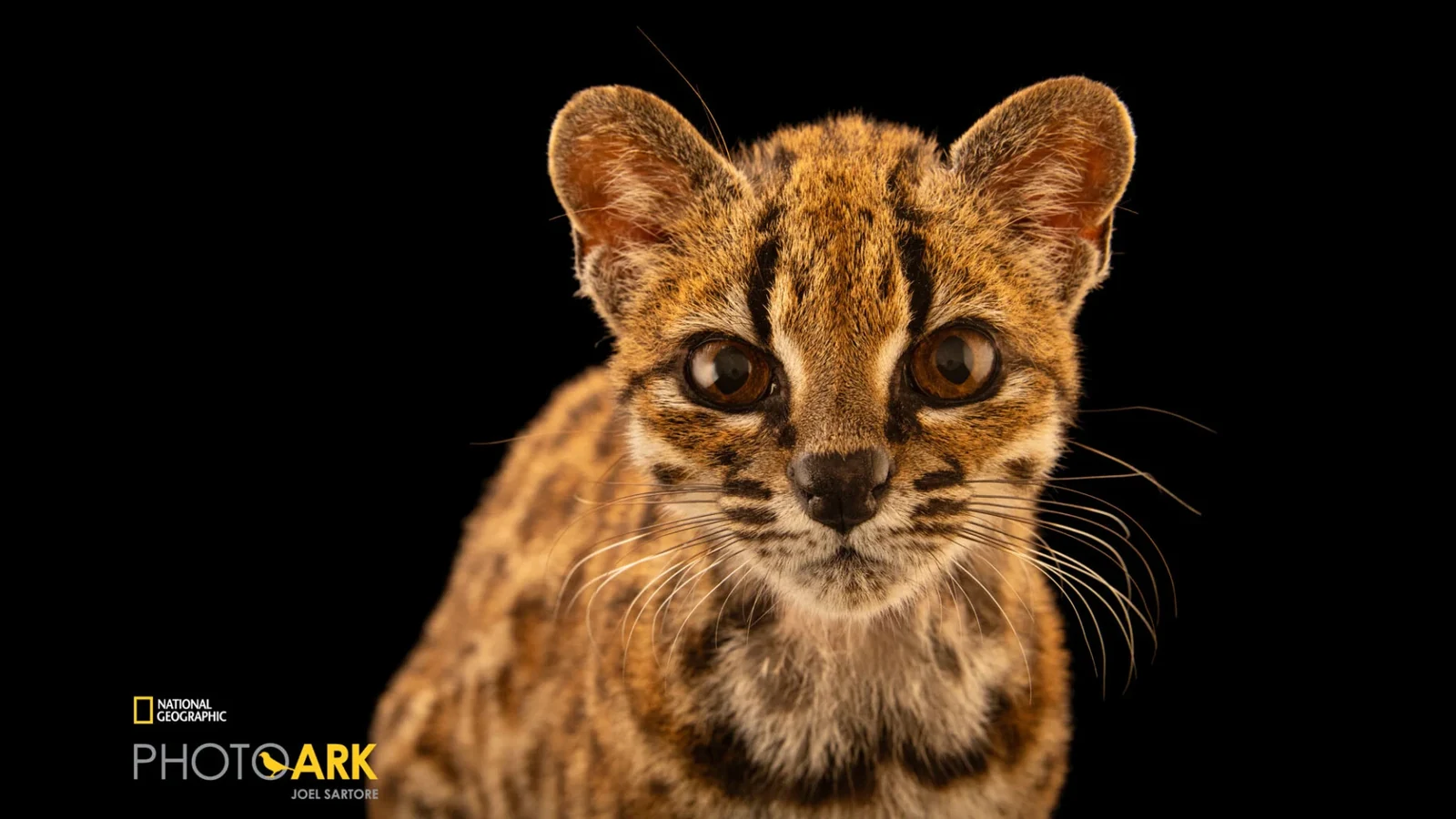
- Joel Sartore photographed the known male at Senda Verde for the National Geographic Photo Ark.
- Basic information about the species’ ecology and population remains unknown.
A tiny spotted cat from Bolivia’s Yungas forests has been recognized as a new species — the first living cat species formally described in more than a century — and Joel Sartore has already photographed it against the Photo Ark’s signature black background.
The new species is called Leopardus tilcayo. The male living at Senda Verde Animal Refuge in Coroico, Bolivia, was found as a kitten on a road near a forest and was initially mistaken for a domestic cat. Years later, its appearance and especially genetic analysis showed that it belongs to an evolutionary lineage that had not previously been recognized.
The story has a strong photographic dimension. Joel Sartore travelled to the refuge to photograph the cat for the National Geographic Photo Ark. We have previously covered both the process behind Sartore’s Photo Ark sessions and the project’s progress to 18,000 photographed species; this time, the portrait is directly tied to a newly described species.
From a “weird kitten” to genetic recognition
Biologist and National Geographic Explorer Paola Nogales-Ascarrunz first encountered the animal in 2016 after the refuge contacted her about an unusual cat. When she revisited photographs in 2019, she noticed that it did not fit well with Leopardus tigrinus, the species it had initially been assumed to represent.
The research that followed used whole-genome sequencing and compared genetic material from 38 individuals in the genus Leopardus, including living animals and museum specimens. The analysis concluded that the South American tiger cats examined represent five distinct species.
The new Leopardus tilcayo
Leopardus tilcayo is smaller than an average domestic cat. The known male is approximately 46 centimetres long in the body and weighs about 1.4 kilograms. It has light-brown fur, dark irregular rosettes, short rounded ears and prominent whiskers.
According to the genomic analysis, its lineage diverged from related tiger cats about 1.4 million years ago. The same study also describes a new Peruvian subspecies, Leopardus tigrinus antisuyo.
In front of Joel Sartore’s camera
Sartore photographed the tilcayo at Senda Verde using the established visual language of the Photo Ark: controlled lighting and a clean black background that completely isolates the animal from its surroundings. The images reveal both the cat’s face and the distinctive pattern of its coat, turning the scientific description into an immediate visual record.
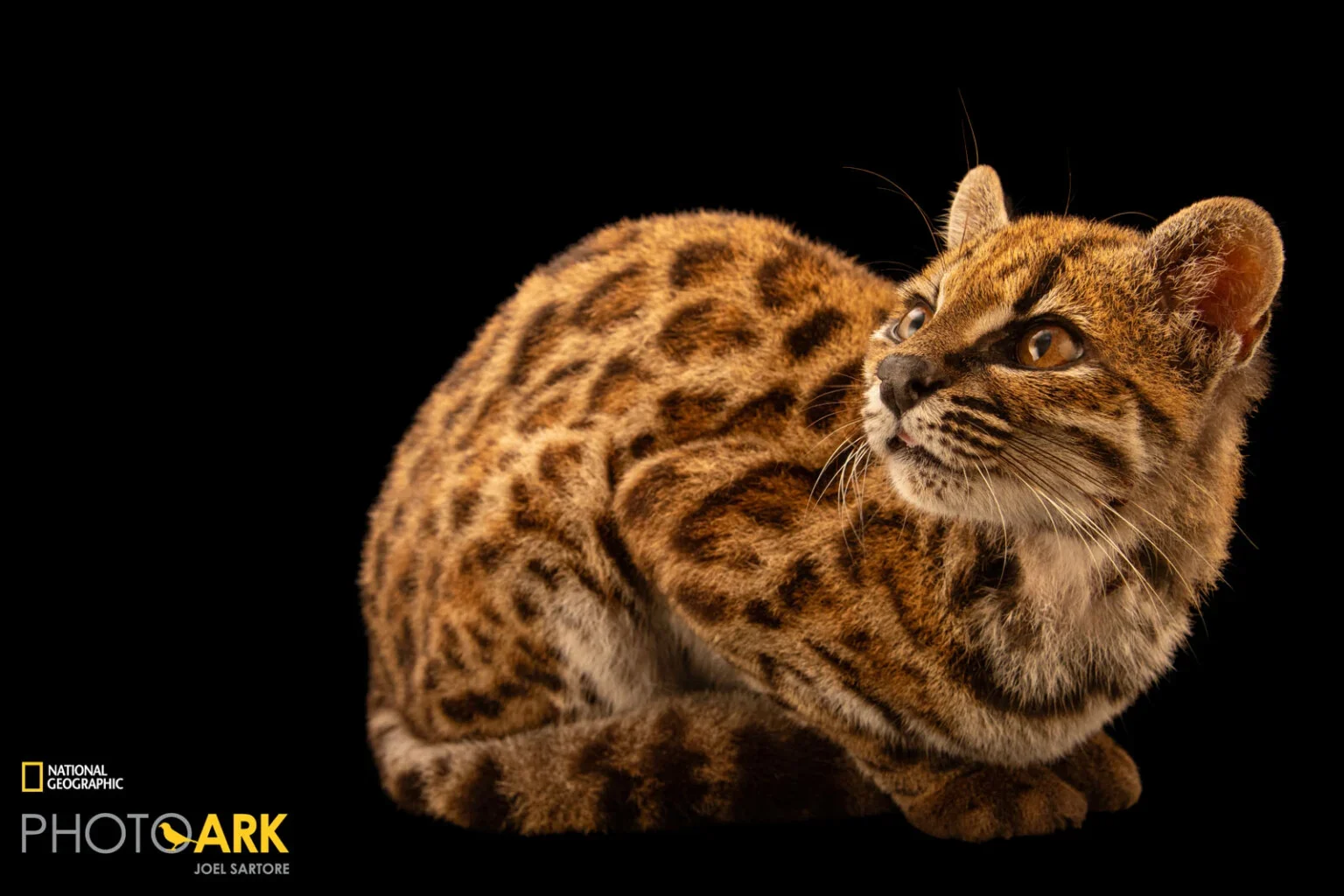
The session comes during a milestone year for the Photo Ark, which has completed 20 years and reached 18,000 photographed species. The tilcayo also shows another role for the archive: it can introduce a species to the public at the same moment that species receives a formal scientific identity.
How much do we know about the species?
Formal naming does not mean the biology of the tilcayo is already well understood. Basic questions remain about its diet, reproduction, predators, exact range and population size in the wild.
The species is associated with Bolivia’s Yungas forests, a montane ecosystem under pressure from deforestation and mining. A clearer taxonomy therefore matters for conservation as well, because distinct evolutionary lineages may require separate assessment and protection.
What we think
With Leopardus tilcayo, photography is doing more than illustrating a scientific news story. The Photo Ark’s consistent visual system creates a clear, recognizable portrait of a species at the exact moment it receives a formal place in taxonomy — just as the deeper work of understanding it begins.
Frequently asked questions
What is Leopardus tilcayo?
It is a newly described small wild cat species from Bolivia’s Yungas forests, formally named in 2026.
Why is the discovery so unusual?
It is the first formal description of a new living cat species in more than a century.
How was it shown to be a separate species?
Whole-genome comparisons across 38 Leopardus individuals revealed a distinct evolutionary lineage.
Who photographed the tilcayo for the Photo Ark?
Joel Sartore photographed it at Senda Verde Animal Refuge in Coroico, Bolivia, for the National Geographic Photo Ark.