

Summary
- The Reel shows the process behind a Joel Sartore Photo Ark photo session
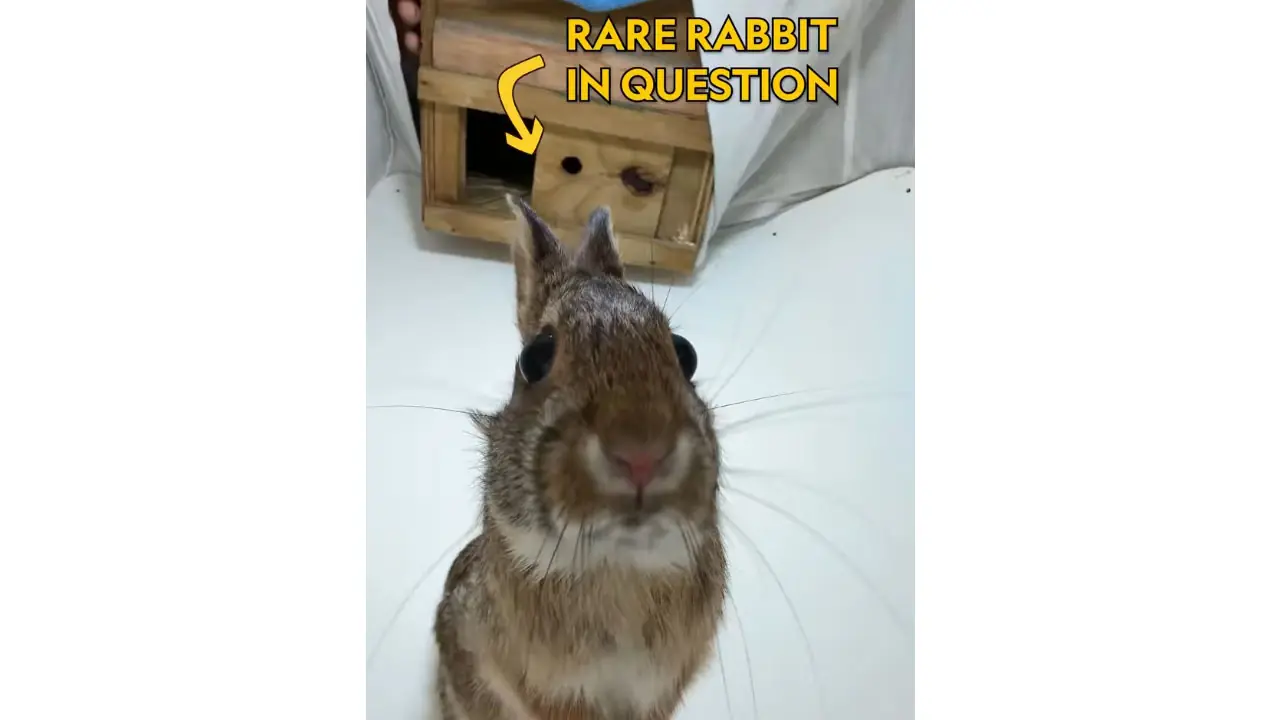
- The subject of the shoot is a rare New England cottontail
- Photo Ark uses a consistent photographic language with neutral black and white backgrounds
- The project has now documented 18,000 different species
- Its long-term goal is to photograph at least 25,000 species living under human care
A National Geographic Reel takes us behind Joel Sartore’s camera and reveals how much work happens before another species is added to the Photo Ark.
In the short video, the photographer and National Geographic Explorer shows part of the process that leads to the distinctive portrait of a new species for the Photo Ark, with a rare New England cottontail taking center stage. From preparation to the moment Sartore announces that the rabbit is now part of the Ark, the Reel reveals what normally remains outside the final frame.
That is precisely what makes it photographically interesting. The final result looks minimal — one animal, a clean background and carefully controlled lighting — but behind it is an organized system of research, access, collaboration and production. Photo Ark has now reached 18,000 photographed species, making the consistency of that process even more remarkable.
What the Reel really shows
The interesting part of this Reel is not an impressive shooting technique. It is the brief glimpse it provides into the production process.
Sartore and his team do not simply arrive somewhere, set up a camera and wait. Photo Ark now operates through an international network of people and organizations that help identify species and make photo sessions possible. The team even includes taxonomy specialists, while a shoot lasting only a few minutes can require far more preparation.
The result is a useful reminder that many photographs that appear “simple” are only simple in their final frame.
The New England cottontail in front of the lens
The animal Sartore photographs in the Reel is a New England cottontail, scientifically known as Sylvilagus transitionalis. It is New England’s only native rabbit and looks remarkably similar to the eastern cottontail, to the point that reliably distinguishing the two can require skull examination or DNA analysis.
The species suffered a major population decline during the 20th century, primarily because of the loss of the dense shrub and young forest habitat it needs. Conservation and habitat restoration efforts led the U.S. Fish and Wildlife Service to determine in 2015 that federal listing under the Endangered Species Act was not necessary, while conservation work continues.
That adds another dimension to the Reel: the subject in front of the camera is not simply “a rabbit,” but a species with its own ecological history and survival challenges.
The photo shoot begins long before the shutter
Photo Ark is distinctive because it transfers some of the logic of studio portraiture into animal photography.
But the control suggested by a studio environment does not mean the subject can be treated like an object. The animal has its own timing and needs, and the process has to be organized around them.
Access, collaboration with the people who know the animal, preparation of the set and the ability to complete the shoot efficiently are all part of the photographic work. Photo Ark itself depends on partnerships with zoos, aquariums, wildlife sanctuaries and other institutions around the world.
For a photographer, this may be the Reel’s most useful lesson: preparation is not something that happens before photography. It is part of photography.
Why the black and white backgrounds work
Photo Ark’s visual language has remained remarkably consistent. Animals are generally photographed isolated from their surroundings against clean black or white backgrounds.
The choice removes almost every visual distraction. A tiny fish, an insect or a rabbit can therefore carry the same weight within the frame as a tiger or rhinoceros. That equal treatment of species lies at the heart of the Photo Ark philosophy.
Photographically, however, there is a second interesting effect: when thousands of images follow the same basic aesthetic, they stop functioning only as individual portraits and become a unified body of work.
Repetition here is not a lack of creativity. It is the identity of the project.
From a few thousand portraits to 18,000 species
The scale of this consistency becomes clearer when looking at Photo Ark’s development.
PTTL covered Joel Sartore’s progress back in 2015, when the project had reached around 5,000 photographed species. Since then, the archive has more than tripled.
More recently, we took an in-depth look at the major new milestone as Photo Ark celebrated 20 years and reached 18,000 photographed species. The critically endangered red handfish from Tasmania was selected as the official species number 18,000.
The official goal is to document at least 25,000 species living under human care in zoos, aquariums and wildlife sanctuaries.
The Reel therefore becomes more interesting when viewed at this scale: it is less than a minute from a process that has been systematically repeated for two decades.
What a photographer can take away from it
You do not need to photograph wildlife to find something useful in this Reel.
The first lesson is consistency. Sartore did not need to invent a different aesthetic for every new species. Instead, he created a clear visual system and applied it to thousands of different subjects.
The second is the importance of preparation. Photography does not begin when the eye reaches the viewfinder. It begins with research, access, knowledge of the subject and the creation of the conditions in which an image can happen.
And the third is that a long-term project gains strength through accumulation. A portrait of a rabbit can be interesting. Eighteen thousand portraits of different species sharing the same photographic language are something entirely different.
What we think
This Reel fits perfectly into “The Photography Reel You Need to See” because it does not rely on a spectacular viral moment. It shows something far more useful: the work behind the image.
Photo Ark is a characteristic example of how far a simple photographic idea can go when it has a clear purpose and consistency. The white or black background is only the visible part. The real strength lies in the process that allows the same idea to be repeated across thousands of different species for two decades.
Frequently asked questions
What is Photo Ark?
Photo Ark is Joel Sartore’s long-term photography and conservation project supported by National Geographic, with the goal of photographing species living under human care and raising awareness about biodiversity conservation.
Which animal appears in the Reel?
Joel Sartore photographs a New England cottontail, Sylvilagus transitionalis, New England’s only native rabbit.
How many species does Photo Ark include today?
Photo Ark has reached 18,000 photographed species, while the project’s goal is to document at least 25,000 species living under human care.
Why are the animals photographed against black or white backgrounds?
The neutral background removes distractions and gives different species similar visual weight regardless of their size or popularity.