


Summary
- Dual slots do not improve image quality, but they can create an immediate in-camera backup.
- For weddings, events, news and other unrepeatable assignments, simultaneous recording to two cards has real value.
- Overflow increases capacity but is not backup, while RAW/JPEG split does not equal two full RAW copies.
- For video, simultaneous recording depends on the camera body, recording format and media.
- A second card protects against a single-card failure, not theft, camera destruction or poor backup practices after the shoot.
A second memory-card slot does not make a camera better, but it can make a critical image file much harder to lose.
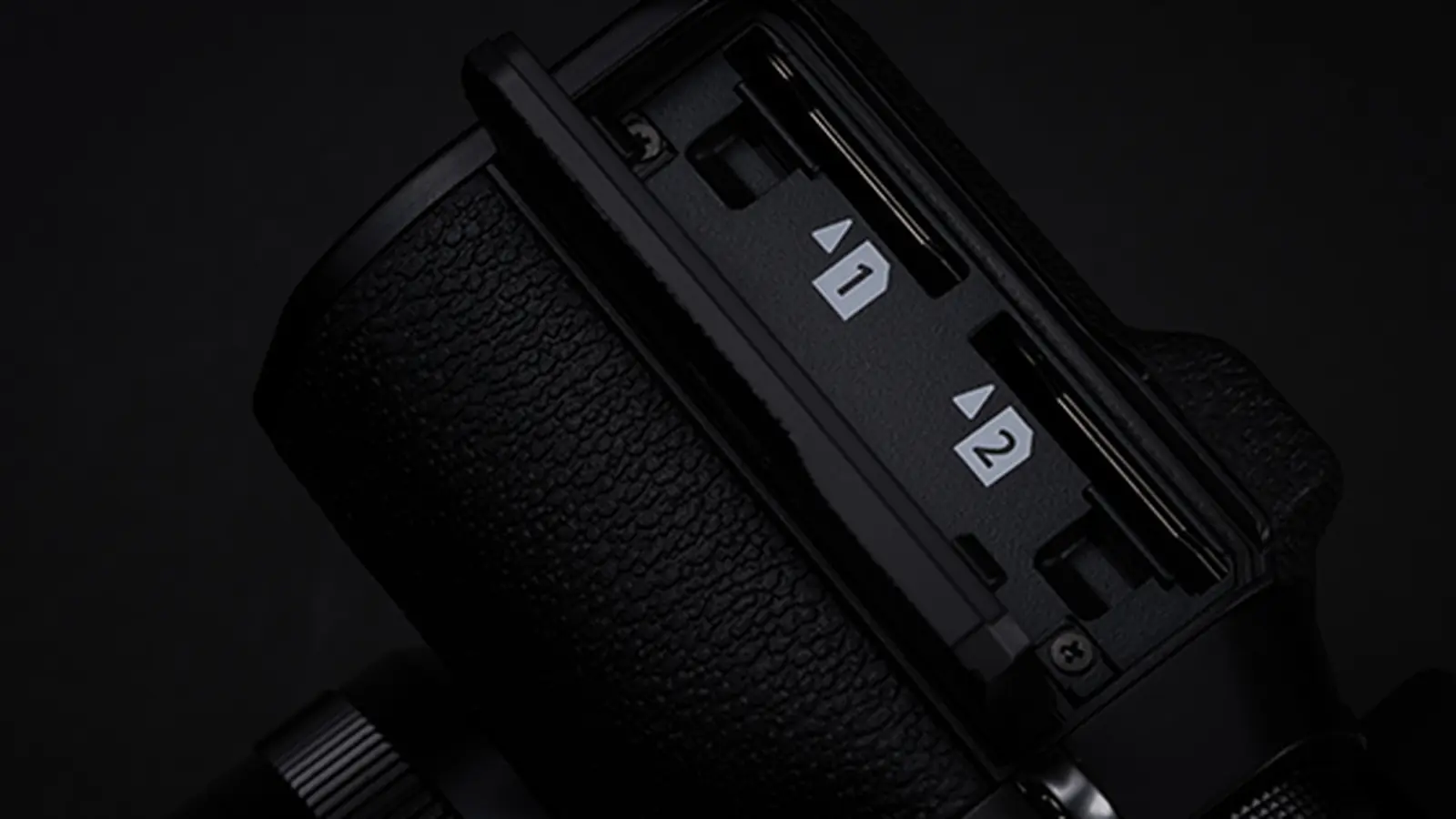
The key question is not simply whether a camera has one or two slots, but what kind of work is being done and how those slots are configured. Depending on the camera, two cards can be used for simultaneous recording, overflow, RAW/JPEG separation or separate storage for stills and video.
The real advantage: two copies at the moment of capture
The most important use of dual slots is simultaneous recording of the same file to both cards. If one card develops a problem, a second copy already exists before the files are transferred to a computer.
That matters most when the shoot cannot be repeated: weddings, baptisms, corporate events, concerts, sports, photojournalism, wildlife and other paid assignments where lost material cannot simply be recreated.
Overflow is not backup
Overflow or relay recording switches to the second card when the first one fills up. It is useful for long shooting sessions, but it does not create a second copy of the same file.
The same applies to writing RAW to one card and JPEG to the other. That creates two versions of the capture, not two equivalent RAW backups. When data security matters more than capacity, full simultaneous recording is generally the more appropriate choice where supported.
Video requires more attention
Two slots do not automatically mean every video format can be written to both cards at the same time. Support depends on the camera, codec, bitrate and approved media. Sony’s α7S III supports simultaneous recording to two cards, while Nikon notes that the Z 5 backup mode described in its dual-slot guide applies to still images, not video.
For professional video work, the manual therefore matters more than the simple ‘dual card slots’ line in a specification sheet.
When you really need it
For professional coverage of unrepeatable events, dual slots are highly valuable. They are not an absolute guarantee, but they reduce one specific risk: losing the work because one card fails.
For travel, landscape, street and personal projects, they are useful but not always essential. If files are offloaded regularly and part of the work can be repeated, a single-slot camera can still be perfectly practical.
For hobby use, the second slot is mainly an additional layer of convenience and security. Reliable cards, a disciplined backup routine and the right lens may matter more than excluding an otherwise suitable camera purely because it has one slot.
What a second card cannot protect against
Simultaneous recording mainly protects against failure of one storage medium. It does not protect against theft or destruction of the camera, formatting both cards by mistake, or poor file management after the shoot. Memory cards should not remain the only copy of important work.
The setup that makes the most sense
For critical stills work, a sensible setup is two reliable cards with appropriate speed ratings, simultaneous recording of the same file to both, verification that both slots are active, and a transfer to at least two independent storage locations after the shoot.
It is also important to check whether the two slots use the same media and offer the same performance. Some cameras mix CFexpress and SD or impose format-specific restrictions.
What we think
Dual card slots should not be treated as a universal measure of camera quality. They are, however, a genuine risk-management feature. For a professional recording unique moments for a client, they matter far more than they do for casual personal shooting. If losing an entire shoot would carry serious professional or financial consequences, the second slot becomes much more than a convenience.
Frequently asked questions
Are dual card slots essential for a professional photographer?
Not for every kind of work, but they are especially important for weddings, events, sports, photojournalism and other assignments that cannot be repeated.
Do two cards automatically mean I have a backup?
No. The camera must be configured for simultaneous recording or backup. Overflow simply moves to the second card when the first becomes full.
Is RAW on one card and JPEG on the other enough?
It is better than having only one file, but it is not a full RAW backup. Critical work is better protected by writing the same file to both cards.
Does dual-slot recording always work for video?
No. It depends on the camera model, recording format and media. Check the manual for the exact mode you use.
Is a single-slot camera unsuitable?
No. It can be completely suitable for many uses. The real question is how important immediate in-camera redundancy is for your work.