

Summary
- The Nikon D6 is no longer listed in the US catalog.
- According to an email from Sales Support, the D850 has reached the end of its commercial life in the UK market.
- The original Z5 and four F-mount lenses are being withdrawn in individual markets.
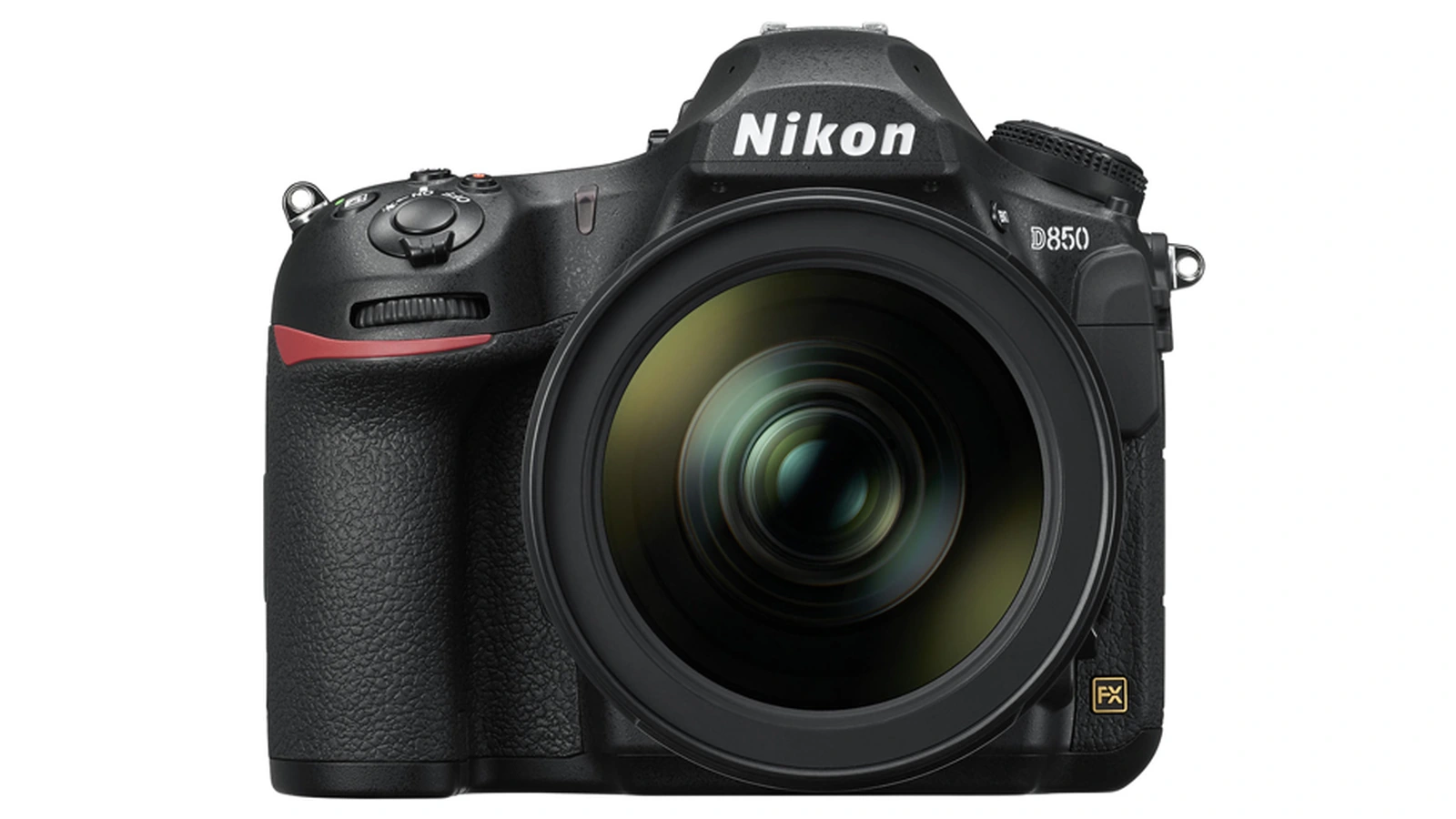
Nikon’s last professional flagship DSLR, the D6, is no longer among the current models listed by Nikon USA. The original Nikon Z5 has reportedly also left the US catalog, while an email from Nikon Sales Support published on November 26, 2026, indicated that the Nikon D850, one of the digital era’s landmark DSLRs, has reached the end of its commercial life.
The developments of the past few days do not mean that sales stopped simultaneously in every country. They do show how much the role of DSLRs in Nikon’s current system has diminished. Nikon’s official 2017 teaser is a reminder of what the D850 represented.
The Nikon D850 and the end of new orders
On November 26, Nikon Rumors published correspondence attributed to Nikon Sales Support. According to the email, the model has reached the end of its life, no additional stock is expected and new orders are no longer accepted. PetaPixel identifies Nikon’s UK sales team as the sender.
The D850, however, remains in Nikon USA’s official catalog at a reduced body-only price of $1,999.95. The notice to the UK sales network concerns stock replenishment and does not by itself establish the date on which worldwide manufacturing or sales ended.
Why the D850 stood out
The D850 was announced on August 24, 2017. Its 45.7 MP full-frame BSI CMOS sensor, base ISO 64 and 153-point autofocus system allowed photographers to combine high resolution with demanding action photography. Burst speed reached 7 fps with the body alone and 9 fps with the optional MB-D18 grip and appropriate battery.
For landscape, product and fashion photography, that resolution offered room for large prints and cropping. Wildlife photographers benefited from the same flexibility when subjects were distant. The D850 also offered full-frame 4K UHD up to 30p without an additional crop, still-image sequences for high-resolution time-lapse and focus shift to capture material for focus stacking. Battery life was rated at approximately 1,840 still images per EN-EL15a charge under CIPA standards.
More information here.
The D6 leaves the professional lineup
Nikon Japan officially classifies the D6 as an old product (旧製品), a change already reported in 2025. Its removal from the US catalog is the next step. The 2020 D6 had a different focus from the D850: a 20.8 MP sensor, 105 cross-type AF points and bursts of up to 14 fps. Wired Gigabit Ethernet enabled rapid image delivery from major sporting events and news assignments.
Nikon did not introduce a D7. The mirrorless Z9 took over as the professional flagship, and for those still shooting DSLRs, software updates for the D6 and D780 illustrate the support that older models have received. Removal from a catalog is not automatically a notice that technical support has ended.
More information here.
The Z5 and four F-mount lenses
The original Z5, announced in July 2020, was a more affordable entry into the full-frame Z system, with a 24.3 MP sensor, in-body stabilization and dual SD card slots. Its removal from the US catalog was reported on November 25. This is a different situation: its successor, the Nikon Z5II, was introduced in April 2025 with a newer processor and significant autofocus changes. The available Japanese page for the original Z5 does not establish an equivalent discontinued label for the camera body.
More information here.
The November 25 Nikon Rumors report states that the AF-S NIKKOR 500mm f/5.6E PF ED VR is no longer listed by Nikon USA and is marked discontinued by B&H. Japanese retailer Map Camera also lists the AF-S NIKKOR 105mm f/1.4E ED, AF-S NIKKOR 28mm f/1.8G and AF-P DX NIKKOR 10-20mm f/4.5-5.6G VR as discontinued.
These lenses cover different needs, from wildlife and portraits to landscapes and architecture. The 500mm PF was particularly important for photographers needing a relatively portable super-telephoto. Phase Fresnel technology enables a more compact optical design. For those moving to Z, FTZ and FTZ II adapters retain autofocus with compatible AF-S and AF-P lenses. The DX 10-20mm, as an APS-C lens, does not use the entire full-frame sensor.
Which DSLRs remain?
Three models remain in Nikon’s official US catalog: the APS-C D7500, the full-frame D780 and the D850. The withdrawal of the D3xxx and D5xxx lines, which introduced many enthusiasts to photography, was reported as early as 2022. Today’s portfolio is much smaller, although retailers may still hold stock of other models.
What we think
The D850 is one of those cameras that does not need replacing simply because technology has moved on. If you work with F-mount lenses and its resolution, battery life and optical viewfinder suit your photography, there is no reason to switch systems because of this news. If you are building a Nikon system from scratch or need advanced subject recognition and more flexible video autofocus, however, we would invest in Z-mount.
For a professional planning to keep a DSLR for years, the practical issue is to check the availability of batteries, spare parts and repairs locally. When buying a used D850, we would inspect the body’s condition, shutter count, autofocus operation and card slots. The withdrawal of an excellent camera changes buying options, not the quality of the photographs it can produce.