Summary
- Clio Barnard’s I See Buildings Fall Like Lightning won Best Film in Rome.
- Tim Blake Nelson’s The Life and Deaths of Wilson Shedd received the Jury Grand Prix.
- Congo Boy won Best Director and shared the Audience Award with Mustang.
- The ceremony took place on October 24, 2026.
Clio Barnard’s “I See Buildings Fall Like Lightning” won Best Film at the 2026 Rome Film Fest, while Tim Blake Nelson’s “The Life and Deaths of Wilson Shedd” received the Jury Grand Prix.
The winners of the 21st Festa del Cinema di Roma were announced on October 24 at a ceremony in the Sala Petrassi of the Auditorium Parco della Musica Ennio Morricone. Eighteen films competed in Progressive Cinema, with Jan Komasa chairing the jury.
Watch the trailer for “I See Buildings Fall Like Lightning”, also featured in film festival listings.
“I See Buildings Fall Like Lightning”: Best Film and an acting prize
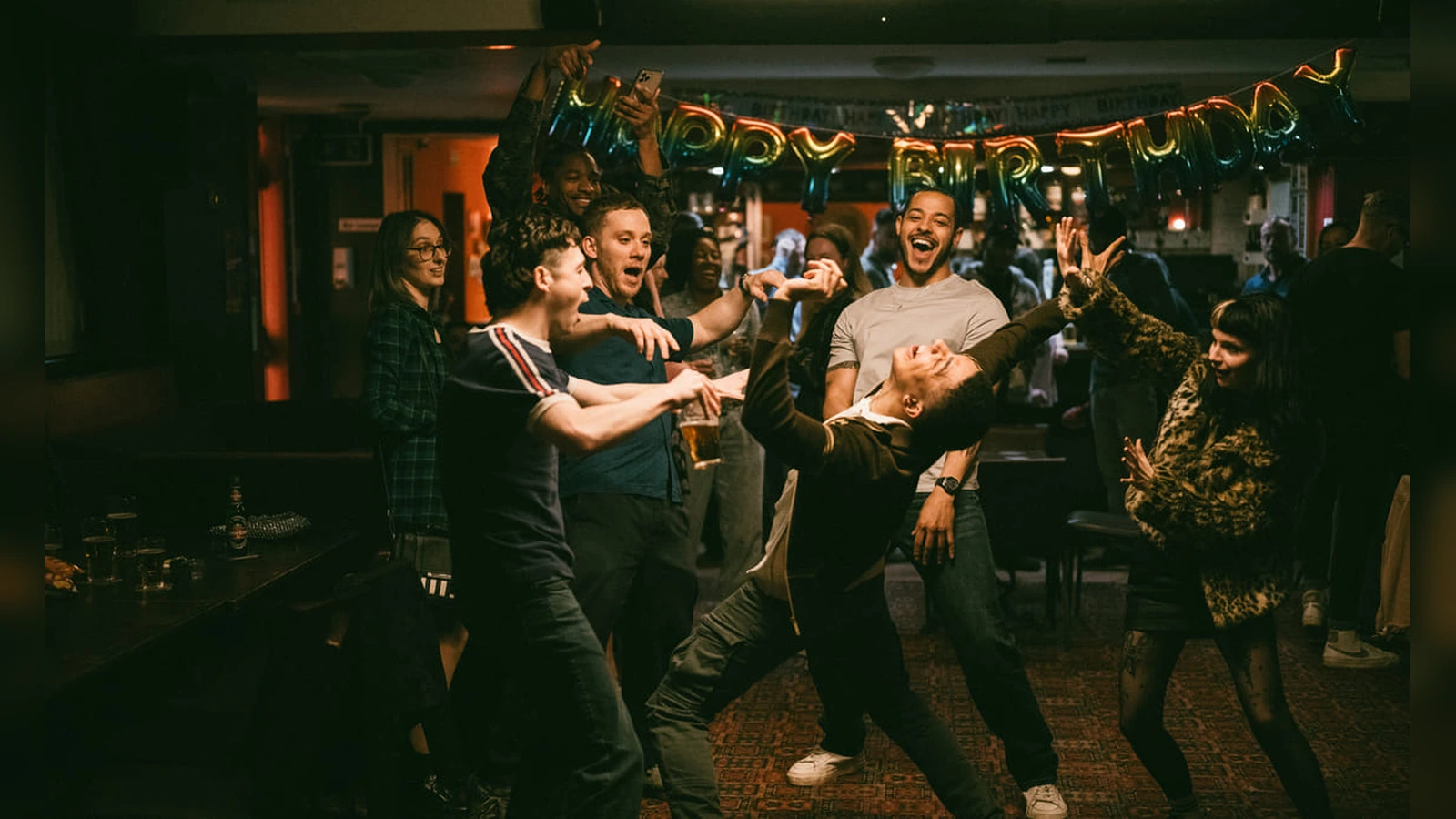
Clio Barnard’s film follows five childhood friends from Birmingham entering their thirties and facing the gap between the futures they imagined and the lives they now lead. Financial inequality, family responsibilities, secrets and disappointment put their bonds under strain. Enda Walsh adapted the screenplay from Kieran Goddard’s novel of the same name.
The cast includes Anthony Boyle, Joe Cole, Jay Lycurgo, Daryl McCormack and Lola Petticrew. Boyle also shared the Best Actor prize. The film had already received the Audience Award in the 2026 Cannes Directors’ Fortnight.
Tim Blake Nelson receives the Jury Grand Prix
The American film “The Life and Deaths of Wilson Shedd” is a crime-tinged drama written and directed by Tim Blake Nelson. Amanda Seyfried plays a teacher who takes a job at a maximum-security prison in Oklahoma and develops a relationship with an inmate played by Scoot McNairy.
The film explores violence, punishment and the limits of human empathy. Its cast also includes Wunmi Mosaku, Missi Pyle, William Jackson Harper and Elizabeth Marvel. No verified official trailer was found for embedding.
Directing, screenplay and performances: The other prizes
Rafiki Fariala won Best Director for “Congo Boy”, while Abia Castillo, Diego Rabasa and Diego Luna shared the Best Screenplay award for “Ceniza en la boca (Ashes)”. Victoria Luengo was named Best Actress for Mikel Gurrea’s “Sants”.
Paolo Pierobon shared Best Actor with Anthony Boyle for his performance in Simone Catania’s “Brianza”. The Special Jury Prize went to the Al Mawla family for Rakan Mayasi’s “Yesterday the Eye Didn’t Sleep”.
“Congo Boy” follows Robert, a 17-year-old Congolese refugee in the Central African Republic, trying to care for his siblings while pursuing his dream of becoming a musician. Watch the trailer published by Festival FFA.
Best first feature, documentary and audience awards
Lisa Forslund’s “Clementine Orange” won Best First Feature, with a special mention for “El tren fluvial (The River Train)” by Lorenzo Ferro and Lucas A. Vignale. Mahsa Karampour’s “Dans la gueule de l’ogre (Into the Jaws of the Ogre)” won Best Documentary, and Patric Chiha’s “Un hiver russe (A Russian Winter)” received a special mention.
The Terna Audience Award was shared by Rafiki Fariala’s “Congo Boy” and Kasia Smutniak’s “Mustang”. Honorary awards included lifetime achievement prizes for Javier Bardem and Julianne Moore, alongside the Industry Lifetime Achievement Award for producer Tessa Ross.
Award-winner screenings and the wider festival circuit
Repeat screenings of the winning films took place on Sunday, October 25. “The Life and Deaths of Wilson Shedd” screened at 9:00 p.m. in Sala Sinopoli, while “I See Buildings Fall Like Lightning” played at 9:30 p.m. in Sala Petrassi. The programme also included “Congo Boy”, “Sants”, “Clementine Orange” and the award-winning documentary.
Rome’s results arrived just days after the London Film Festival awards, where Sergei Loznitsa’s archival documentary “Imperium” took the top prize. Around the same time, Sitges announced its own winning films in fantastic cinema.
What we think
The two top choices in Rome are interesting precisely because their stories are so different. Barnard returns to a group of friends and the ways class and living conditions shape relationships. Nelson turns to a far more confined and violent setting. In both cases, the people, rather than a high-concept premise, appear to drive the storytelling.
For filmmakers, it is worth comparing how the spaces shape those stories: friends moving through bars, homes and neighbourhoods versus a narrative set inside a prison. Even the trailer for Barnard’s film gives a sense of how much the group’s rhythm and shared history matter. The directing prize for “Congo Boy” adds a third approach to that conversation, with music woven into its narrative.