


Summary
- The Samsung P9 reaches 4,000MB/s reads and 3,800MB/s writes
- Samsung claims support for 12K direct recording in compatible workflows
- P9 and P7 will ship in 1TB, 2TB, 4TB and 8TB capacities
- The P7 has completed a two-metre drop test
- The global rollout begins in September
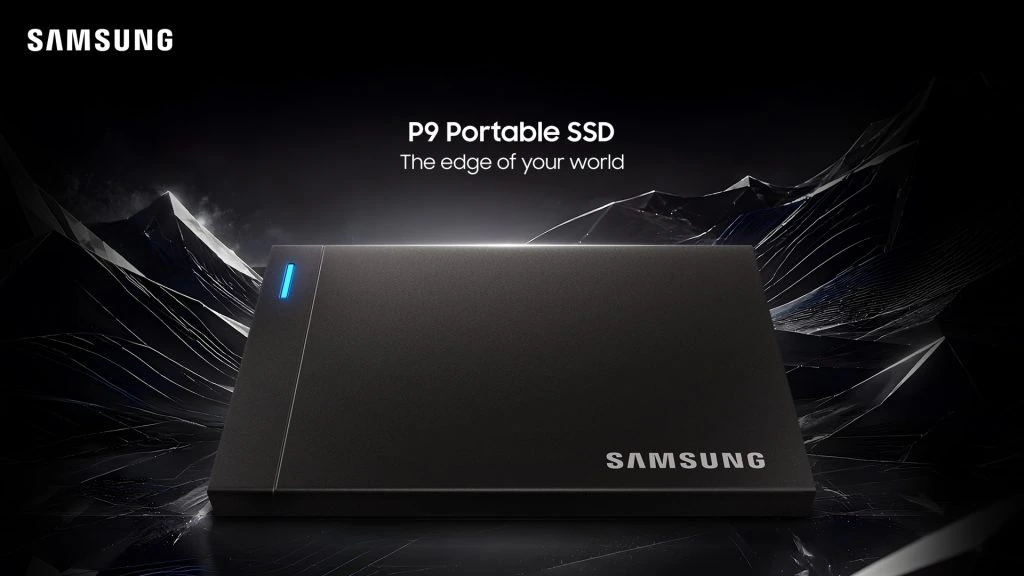
Samsung has introduced the P9 and P7 Portable SSDs with USB4, speeds up to 4,000MB/s, capacities up to 8TB and a direct focus on ultra-high-resolution video workflows.
The two drives debuted at Gamescom 2026 in Cologne. The P9 is the flagship, reaching sequential reads of 4,000MB/s and writes of 3,800MB/s, while the P7 prioritises broad compatibility and portable durability.
For image creators, the meaningful change is USB4 in a Samsung portable SSD with enough sustained performance for the company to claim 12K direct recording support. It could reduce intermediate copies and accelerate ingest, backup and editing when the camera, computer, cable and software support the same performance chain.
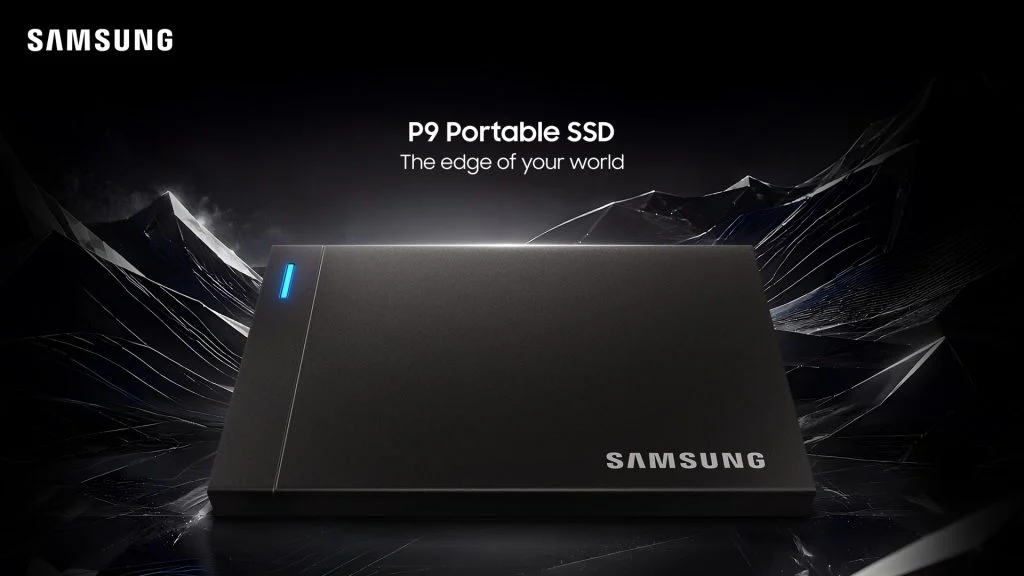
P9: 4,000MB/s reads and 3,800MB/s writes
The P9 reaches 4,000MB/s sequential read and 3,800MB/s sequential write speeds. Samsung compares it with the previous 4TB T9, whose USB 3.2 Gen 2×2 interface reaches 2,000MB/s for reads and writes. Under ideal conditions, the new model doubles the ceiling.
The difference should be most visible in large sustained transfers: daily camera cards, RAW folders, multicam proxies, large ProRes files or uncompressed sequences. Real speed depends on the USB4 host, cable, file system, temperature and write queue.
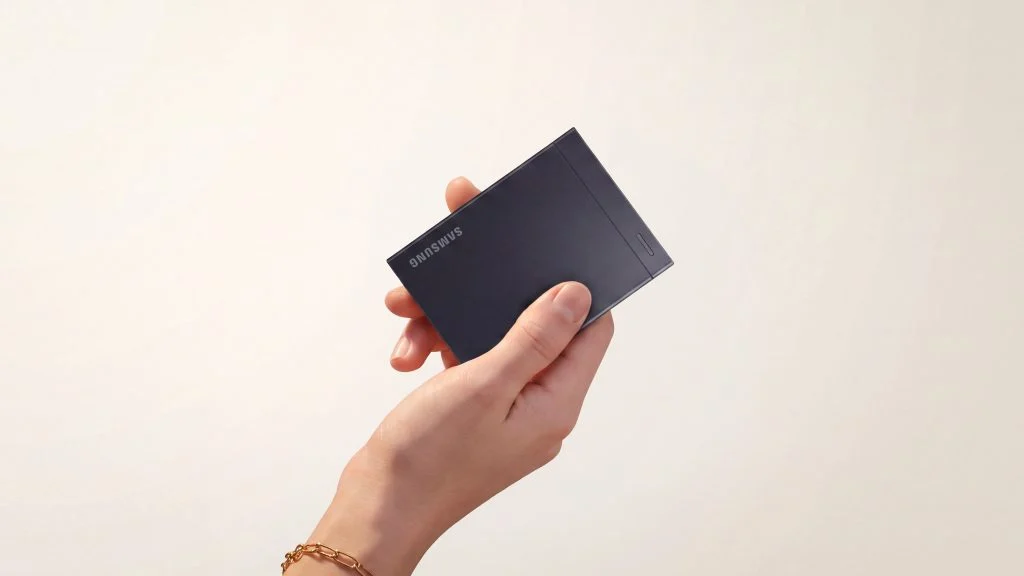
The first 8TB USB4 portable SSD at 4,000MB/s
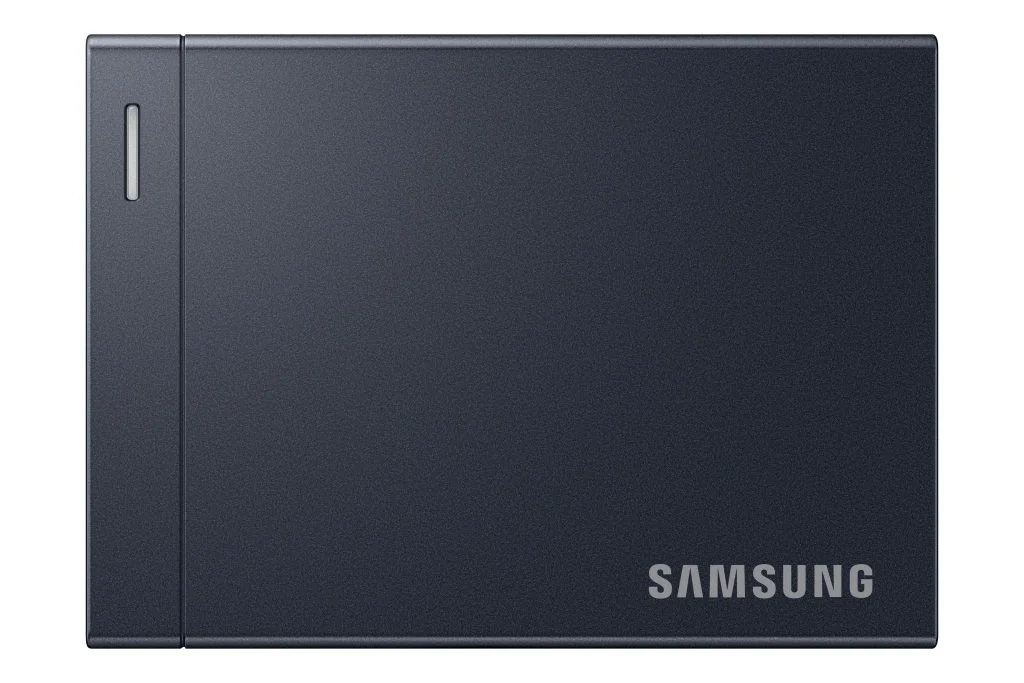
Samsung calls the P9 the world’s first 8TB USB4 portable SSD supporting speeds up to 4,000MB/s. That capacity matters for travel productions and DIT workflows where one device may need to hold hours of high-bitrate footage or large photographic RAW sets.
The P9 received a CES 2026 Innovation Award. It will ship in 1TB, 2TB, 4TB and 8TB versions, although Samsung notes that capacities and timing may vary by market.
What 12K direct recording means
Samsung says the P9’s sustained write performance supports direct 12K recording in professional production workflows. That does not mean every 12K camera can automatically record to it. The camera or capture system must support USB recording, the codec must be compatible, and the data rate must remain below sustained SSD throughput.
Where the chain is compatible, direct recording can bypass smaller internal media, make capture-to-edit handoff faster and remove one ingest step. Critical production still requires checking the camera maker’s approved media list and creating a second copy.
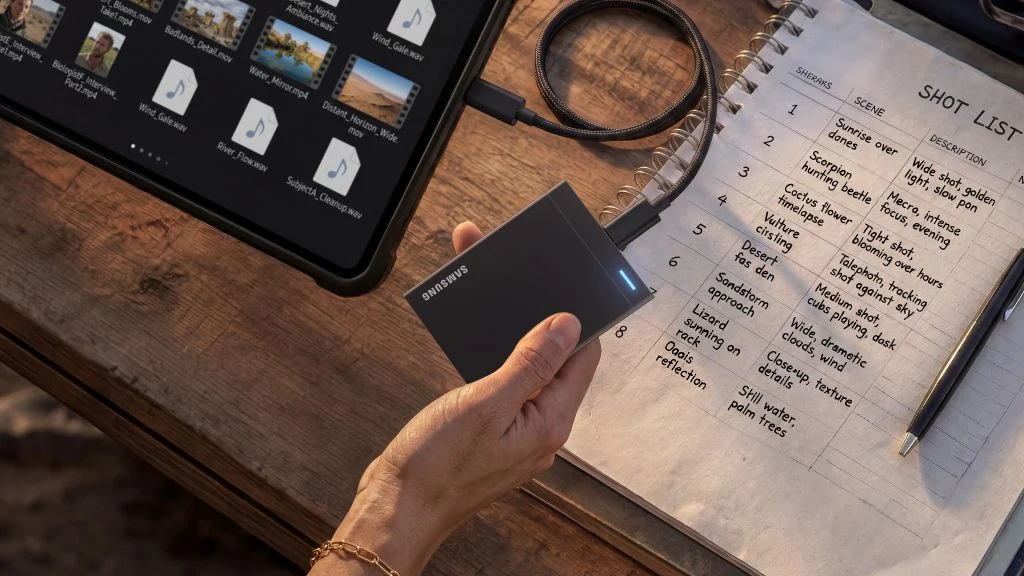
P7: USB4 for more devices
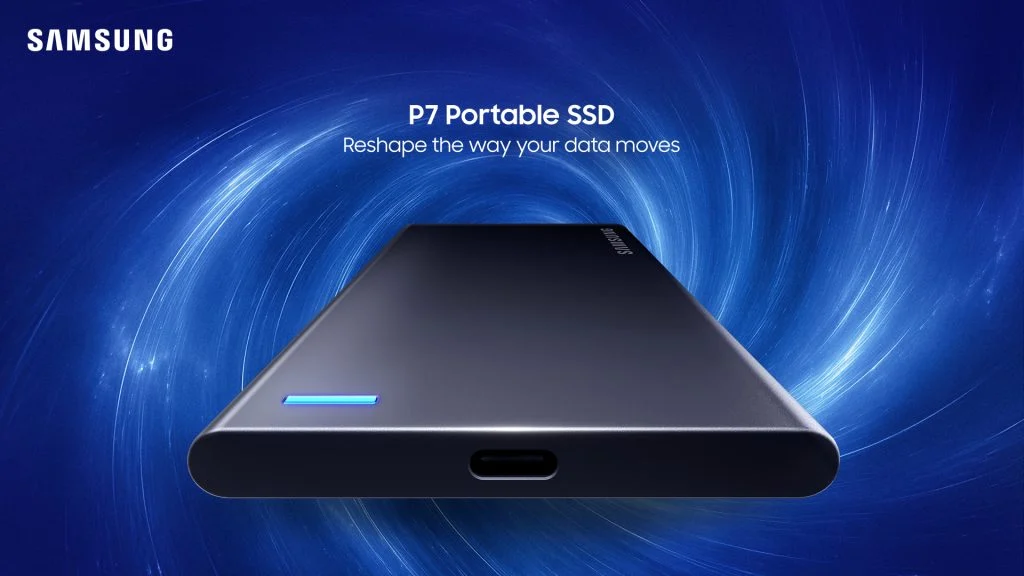
The P7 also uses USB4, but the announcement does not provide separate maximum read and write figures. Samsung describes it as a versatile option for desktops, laptops, smartphones, consoles and cameras, giving it broader positioning than the professional P9.
USB4 compatibility does not guarantee identical performance on every device. A phone or camera may operate in a slower USB mode, while consoles can impose their own external-storage restrictions. The advantage is the ability to use one drive across more environments without a separate enclosure.
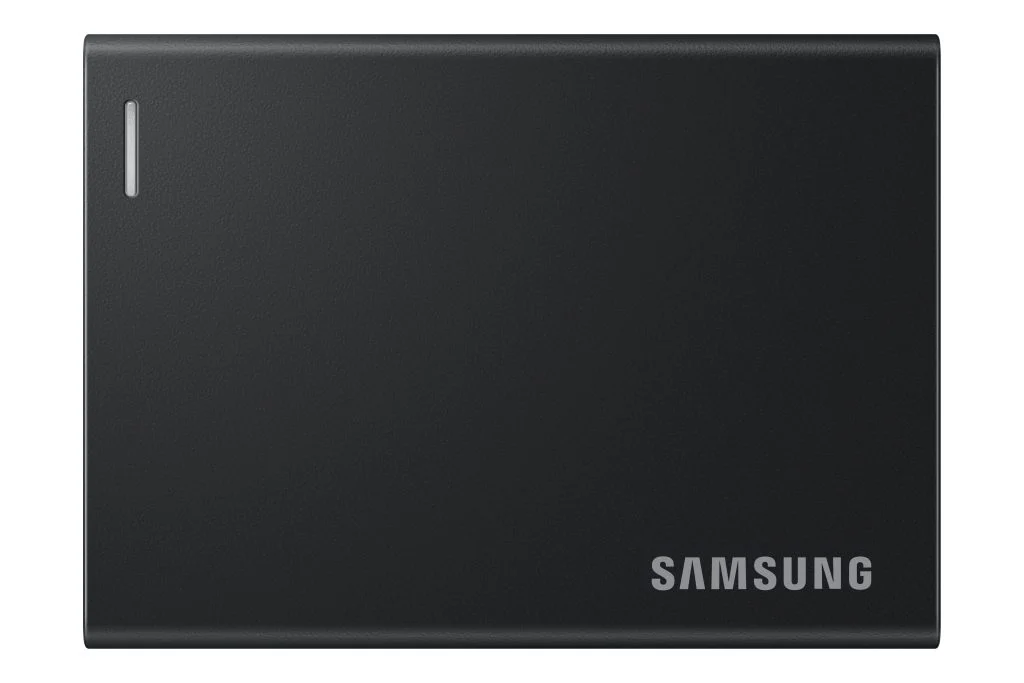
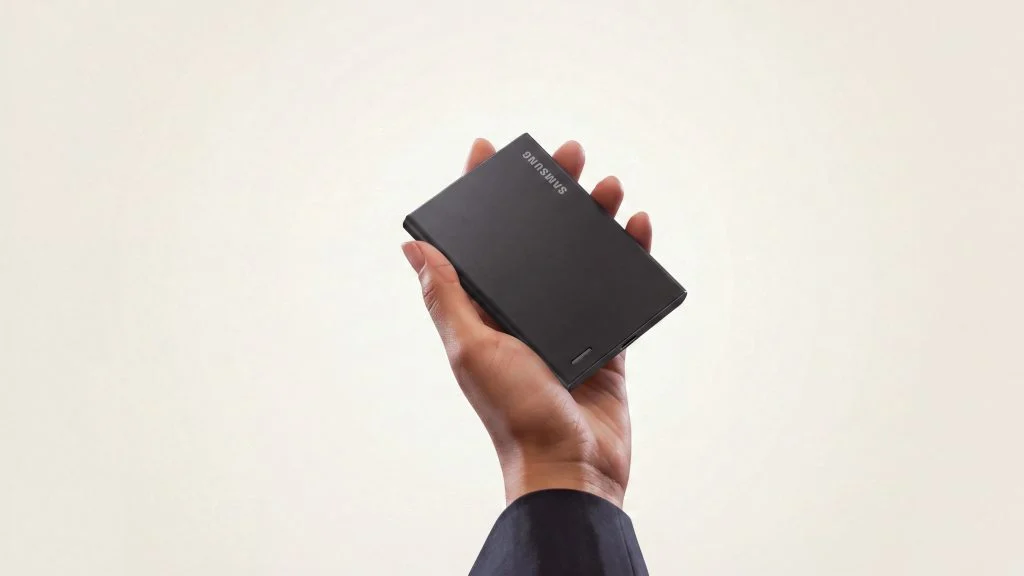
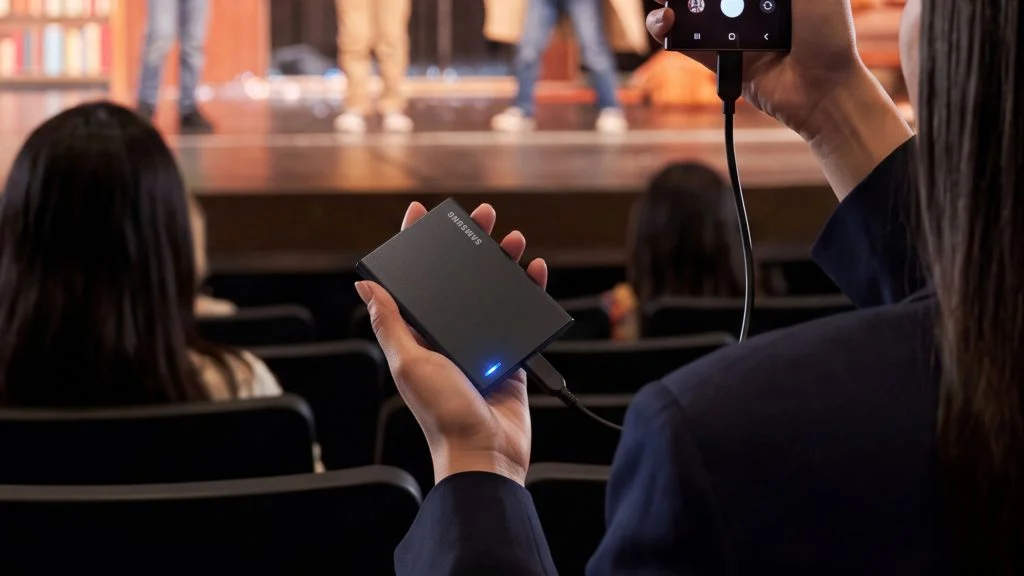
Durability outside the studio
For the P7, Samsung reports completed two-metre drop, shock and vibration tests. These are useful for travel and outdoor shoots, but do not replace proper data management: a durable SSD still needs an independent backup and safe disconnection.
Capacities, availability and prices
The global rollout of the Samsung P9 and P7 Portable SSDs begins in September in 1TB, 2TB, 4TB and 8TB capacities. Versions may vary by market or arrive later. Full details are in Samsung’s official announcement.
P9 suggested prices are $339.99 for 1TB, $649.99 for 2TB, $1,349.99 for 4TB and $2,699.99 for 8TB. P7 prices are $289.99, $549.99, $1,149.99 and $2,289.99 respectively.
What we think
The P9 delivers a clear speed gain over the T9, while 8TB solves a real capacity problem for large video projects. The 12K direct-recording claim is the headline, but its value will depend on camera compatibility lists and sustained stability, not only a 4,000MB/s peak. The P7 looks more sensible for users who need USB4 across many devices without necessarily paying for the P9’s highest sustained workflow.
Frequently asked questions
What are the P9 maximum speeds?
Up to 4,000MB/s sequential read and 3,800MB/s sequential write.
Does it really support 12K direct recording?
Samsung says the P9’s sustained write performance supports it in professional workflows when the camera or capture system and format are compatible.
Which capacities will be available?
Both models were announced in 1TB, 2TB, 4TB and 8TB versions.
When does availability begin?
The global rollout starts in September, with possible differences by market and capacity.