Summary
- Shure introduced the MV360 and MV360+ for 360° spatial audio recording.
- MV360 connects over USB-C and supports audio up to 32-bit float/96 kHz.
- MV360+ adds standalone microSD recording and phone-based remote control.
- MV360 costs €389 in Europe, while MV360+ is expected in 2027.
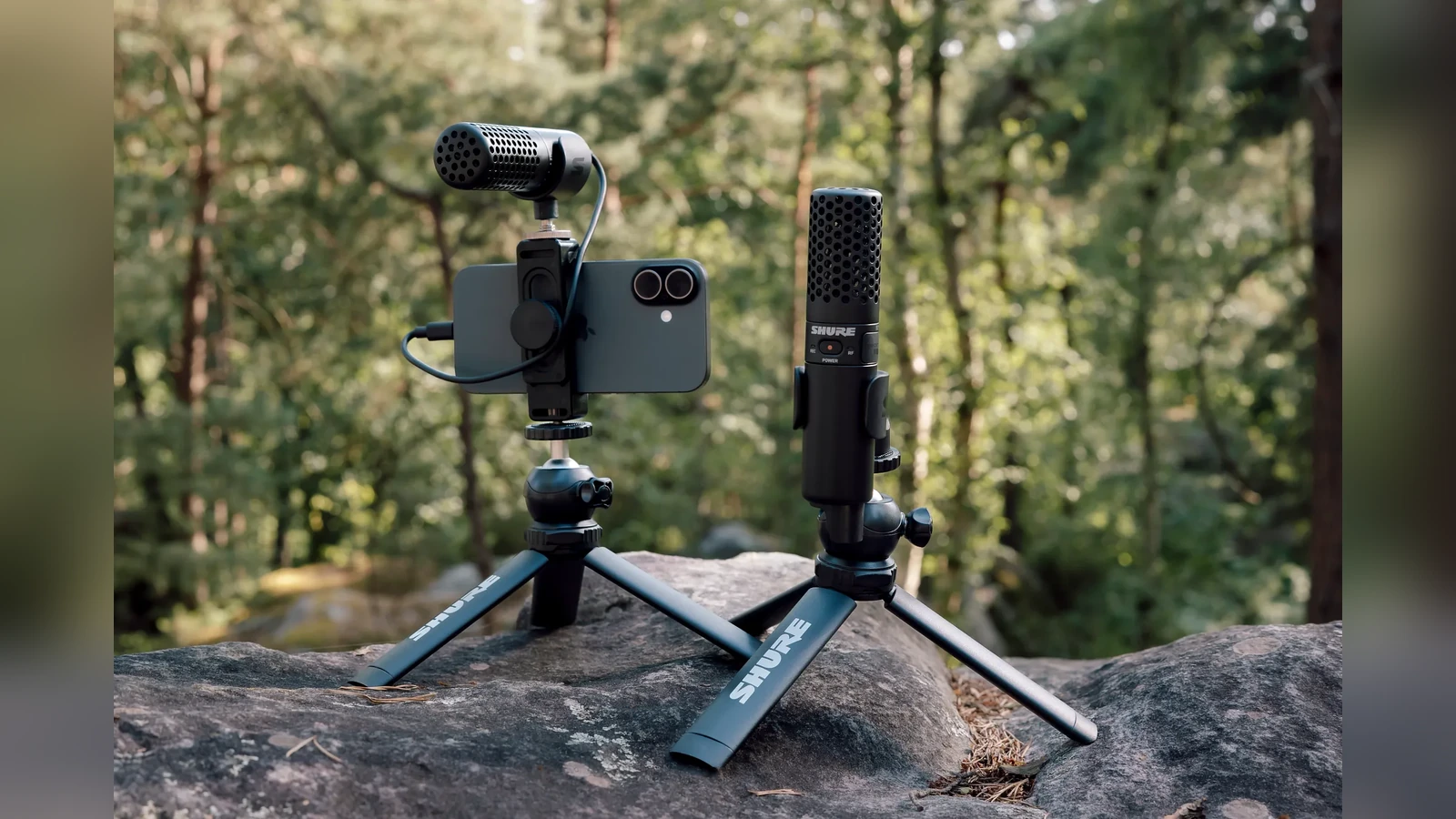
Shure is bringing 360° audio recording closer to filmmakers with its new MV360 and MV360+ microphones, designed to capture both sound and the direction from which it arrives.
The MV360 is available now, while the MV360+ is scheduled for early 2027 with standalone recording to a memory card. Both use a four-capsule array to capture Ambisonic audio, which can later be remixed for different playback formats.
Shure MV360: 360° recording via phone or computer
The MV360 connects over USB-C to a compatible phone, tablet or computer and supports mono, stereo, binaural and Auto Tracking modes. Auto Tracking virtually steers the microphone towards the strongest voice or moving source, which can help with interviews and podcasts.
Recording is supported up to 32-bit float/96 kHz. Shure MOTIV Audio and MOTIV Mix can simultaneously save a ready-to-use two-channel recording and a four-channel AmbiX B-format file, preserving mixing choices for later. On Windows, 32-bit float recording requires Shure’s ASIO driver.
For post-production, Virtual Mic Editor supports up to four steerable virtual microphones, a spatial audio heatmap and surround configurations up to 7.1.4. EQ, compression, limiting, noise reduction and a 3.5 mm monitoring output are also provided.
The Sony ECM-AX10 spatial audio smartphone microphone offers another example of how spatial recording is moving from complex rigs to portable creator tools.
More information here.
MV360+: standalone recording for cameras and 360° production
The MV360+ is aimed more directly at mirrorless, DSLR, action and 360° camera workflows. It adds a rechargeable internal battery and onboard 32-bit float recording to microSD, allowing the microphone to be positioned near the sound source without a constantly connected phone.
Shure specifies remote control from a phone at around 100 feet (approximately 30 metres), including starting, stopping and configuring recordings. The wireless link controls the device rather than transmitting its audio: sound is stored on the microphone and synced with video in post. A separate European MV360+ product page has not yet been identified.
Price and availability
The MV360 is available with an official European recommended price of €389 ($349 in the US). The kit includes the microphone, mini tripod, phone clamp, mounting clips, two USB-C cables, carry case and foam windscreen.
The MV360+ is expected in early 2027 at an announced US price of $449. An official European price has not been identified. Its package will include a tripod, mounts, case, USB-C cable and 3.5 mm audio cable, among other accessories.
What we think
For documentary work or filming wildlife, keeping an entire sound field and deciding afterwards which way the microphone should “point” can be very useful. A voice, passing vehicle or bird call may come from an unexpected direction while the camera is rolling.
The MV360 looks well suited to mobile productions and ambience capture. The MV360+ is the more interesting option for camera-based shoots because onboard recording and remote control remove the need to keep a computer or phone attached. For a conventional interview that demands isolated dialogue, though, a lavalier or shotgun still serves a different purpose; wireless microphone choices for smartphone creators address that need more directly.
The intended final format matters too. Binaural audio is straightforward to enjoy through headphones, while four-channel Ambisonic recording gives an editor more freedom but requires more post-production. Capturing a ready stereo file alongside full 360° audio is therefore a meaningful workflow advantage.
Frequently asked questions
Does the MV360 need a dedicated app to record?
Compatible USB audio apps can record its standard mono, stereo or binaural modes. Full four-channel Ambisonic capture uses Shure MOTIV software or a compatible DAW.
What makes the MV360+ different?
The MV360+ adds standalone microSD recording powered by an internal battery, with remote control from a phone. The MV360 relies on a USB-C connection to a recording device.