

Summary
- Sony’s first fisheye zoom for full-frame E-mount
- Circular fisheye at 8mm and diagonal fisheye at 14mm with a constant f/3.5 aperture
- Approximately 314g in weight and a minimum focusing distance of 15cm
- Launching in late September 2026 with an announced European price of €1,700
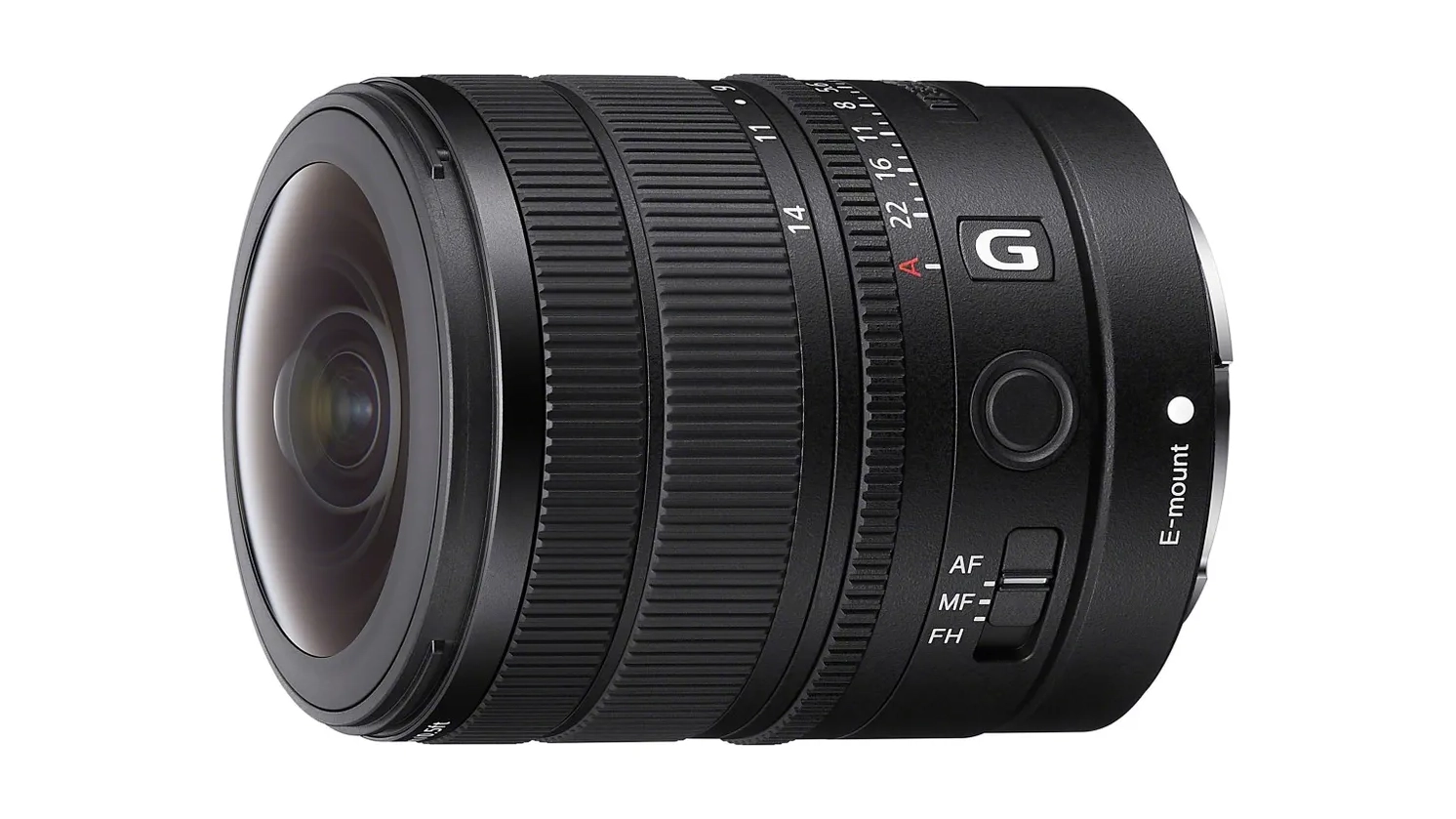
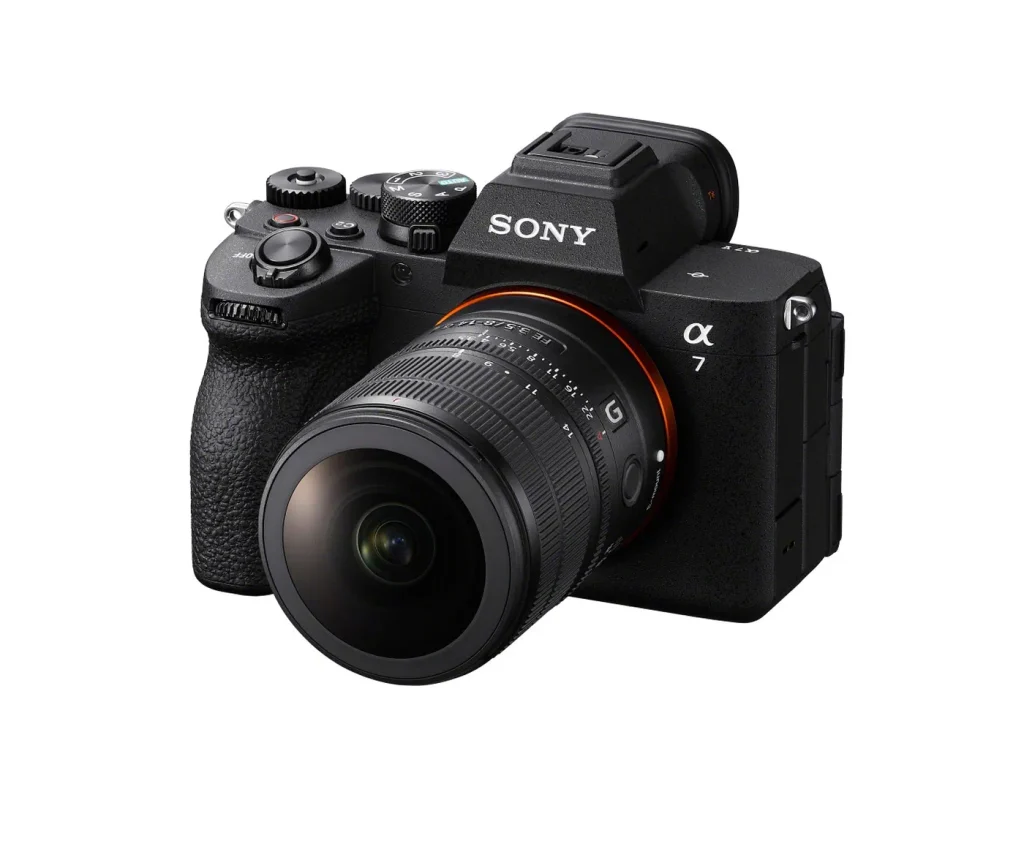
Sony has introduced the FE 8–14mm F3.5 Fisheye G, its first fisheye zoom for full-frame E-mount, offering circular and diagonal projections in a body weighing approximately 314g.
The new lens was announced on September 8, 2026, and carries the model code SEL814G. Its existence had already surfaced in yesterday’s reports about three new Sony lenses, but the company has now confirmed this particular model’s specifications, European price and release window.
What makes it interesting is the ability to change not only the framing but also the shape of the image: from a complete circle at 8mm to an image that fills the rectangular frame at 14mm. With a constant maximum aperture of f/3.5 and autofocus, the lens is aimed at creators who want to use the distinctive distortion of a fisheye deliberately, in both stills and video.
From a circle at 8mm to a full frame at 14mm
On a full-frame sensor, the FE 8–14mm F3.5 Fisheye G works as a circular fisheye at 8mm, projecting a round image with a 180-degree angle of view and a black area around it. At 14mm, it becomes a diagonal fisheye: the image covers the entire frame, with the 180-degree angle measured across its diagonal.
That does not mean it turns into a conventional ultra-wide-angle lens that preserves straight lines at 14mm. The fisheye rendering remains part of the result. In a building, an interior or a sports scene, curvature can be used as a compositional element; it is not, however, a substitute for a wide-angle lens when accurate geometric reproduction is the goal.
In practical terms, the zoom allows photographers to choose between two very different presentations of the same scene without changing lenses. The difference is not simply how large the subject appears, but how the entire surrounding space is arranged within the image.
314g and internal zoom
The lens measures approximately 63.1mm in maximum diameter and 82.8mm in length, weighing approximately 314g. Its zoom mechanism is internal, with Sony stating that it minimises shifts in the centre of gravity when changing focal length. This is particularly relevant when using a gimbal or rig, where the balance of the setup affects handling.
The construction includes dust and moisture resistance, without a guarantee of complete sealing. The front optical element has a fluorine coating to make cleaning easier and reduce the adhesion of contaminants. This is therefore a design intended to support outdoor work, not a waterproof lens.
Close-up shooting and video handling
The minimum focusing distance is 15cm, while maximum magnification reaches 0.22x at 14mm. This is not 1:1 macro magnification, but an opportunity to get close to a subject while retaining a substantial amount of its surroundings in the image. A nearby object can therefore dominate the foreground, with the fisheye perspective emphasising its relationship with the surrounding space.
The optical design uses extra-low dispersion ED glass and aspherical elements. According to Sony, these are intended to limit chromatic and other aberrations while maintaining high resolution throughout the zoom range. The company also reports fast autofocus, quiet operation and reduced focus breathing, meaning less change in framing when focus shifts.
Controls include separate focus, zoom and aperture rings, a zoom lock switch and the option to disable the aperture ring’s click stops. Linear Response MF provides a linear response during manual focusing, useful when controlled transitions are needed instead of automatic subject tracking.
Two practical details confirmed by the official specifications are a rear holder for sheet-type filters, rather than conventional front screw-in filters, and the absence of built-in optical stabilisation. The availability of in-body stabilisation depends on the camera being used.
Why Sony also links it to VR production
The lens’s small diameter has another application. Using two FE 8–14mm F3.5 Fisheye G lenses and two VENICE Extension System Mini units, Sony describes an arrangement in which the optical axes can sit approximately 64mm apart. This distance approaches the average separation between human eyes and is used for stereoscopic capture with a sense of depth.
This is a specialised dual-camera configuration, not a capability to produce stereoscopic content with a single lens on one camera. The VENICE Extension System Mini is sold separately. Likewise, a 180-degree angle of view does not mean the lens can capture an entire 360-degree scene on its own.





European price and availability
According to Sony’s official European announcement, the FE 8–14mm F3.5 Fisheye G is expected in late September 2026, with an announced European price of €1,700. The Greek press release confirms the same release window without specifying a separate price for the Greek market.
What we think
The FE 8–14mm F3.5 Fisheye G has a clear creative focus: it combines two different fisheye renderings, autofocus and low weight rather than attempting to replace an everyday ultra-wide-angle lens. The key question for photographers and videographers is how often they need this particular projection. The zoom’s flexibility has practical value, but choosing it remains primarily a decision about visual style rather than simply gaining a wider focal-length range.
Frequently asked questions
Does it produce an image without fisheye distortion at 14mm?
No. At 14mm, it fills the rectangular frame but retains a diagonal fisheye projection, with a 180-degree angle of view across the diagonal.
Can a single lens capture stereoscopic VR?
Not in the configuration Sony describes. It requires two lenses and two VENICE Extension System Mini units in a suitable dual-camera arrangement.
When will it launch, and what is its European price?
The lens is expected in late September 2026, with an announced European price of €1,700.