

Summary
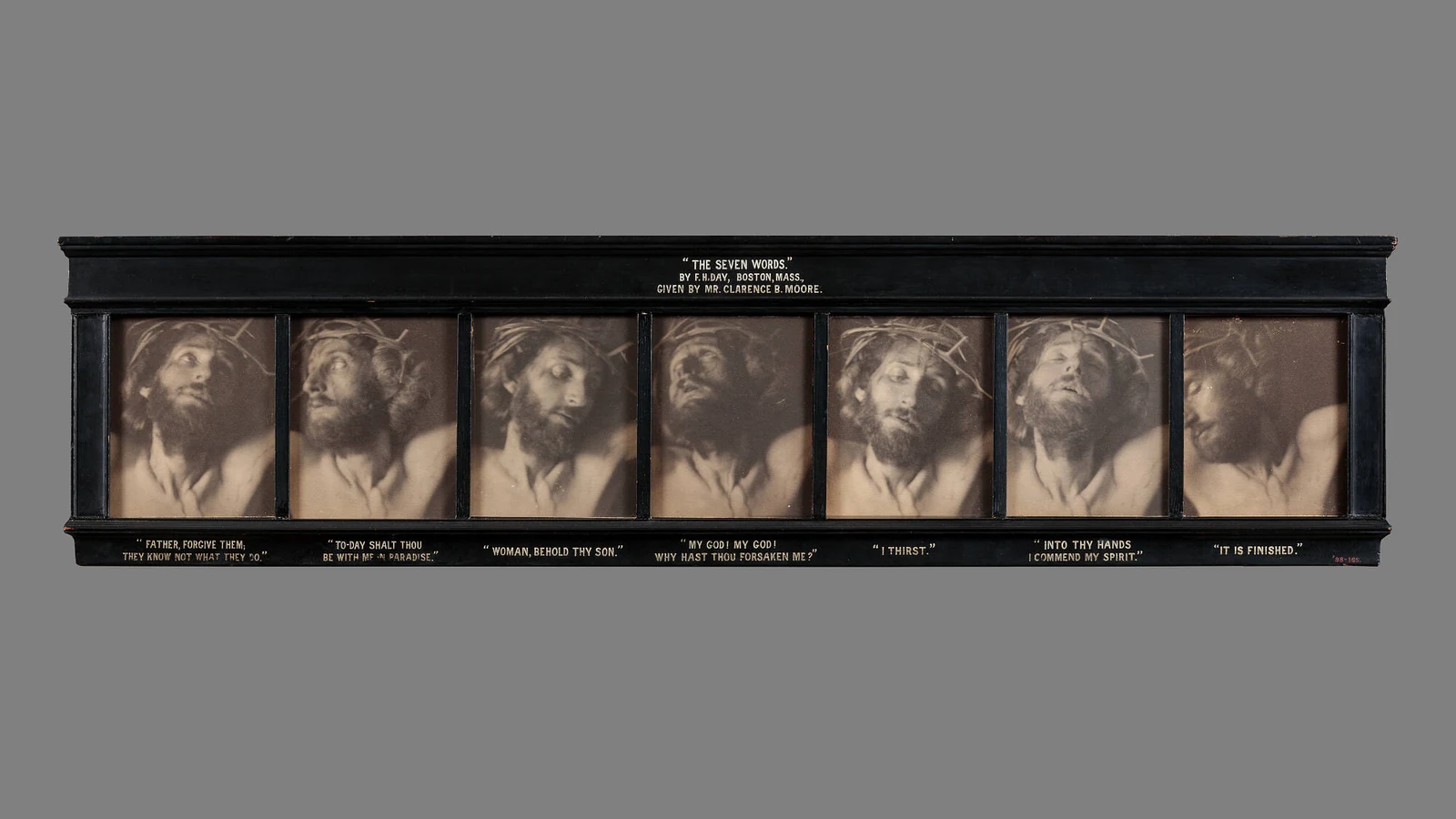
- The Seven Words was created in 1898 by photographer Fred Holland Day and consists of seven platinum prints.
- Day photographed himself as Christ as part of a wider project of around 250 negatives.
- The Toledo Museum of Art version is catalogued as object 2024.37 and is not currently on view.
- Recent coverage reports that the work is planned to go on display in fall 2027.
F. Holland Day’s The Seven Words is not a recent photographic discovery: it was created in 1898, yet more than a century later it is back in the spotlight as one of the boldest works of early art photography.
This particular version is in the collection of the Toledo Museum of Art under object number 2024.37, and the museum currently lists it as “Not on View.” Recent coverage dated September 30, 2026 reports that it is planned to go on display in fall 2027, while museum director Adam M. Levine has described it as “the most important photograph people don’t know about.”
That is what makes the story relevant today: not that the museum acquired it now, but that a work from 1898 is again prompting discussion about the moment photography began demanding a place alongside the fine arts.
Seven photographs for the seven last words
The Seven Words consists of seven platinum prints made in 1898. In the Toledo Museum of Art version, each print measures approximately 13.3 × 10.8 cm, and the seven images survive with their original black card mounts and original black lacquered wooden frame.
The seven close-up self-portraits correspond to Christ’s seven last sayings on the cross. Instead of describing the scene in a wide composition, Day isolated the face and expression, turning the sequence into a highly theatrical study of the body, faith and representation.
The photographer cast himself as Christ
From 1895 to 1898, Day worked on a much larger project devoted to the life of Christ, producing around 250 negatives from the Annunciation to the Resurrection. He played Christ himself, deliberately lost weight, grew his beard and imported cloth and a cross from Syria for the production.
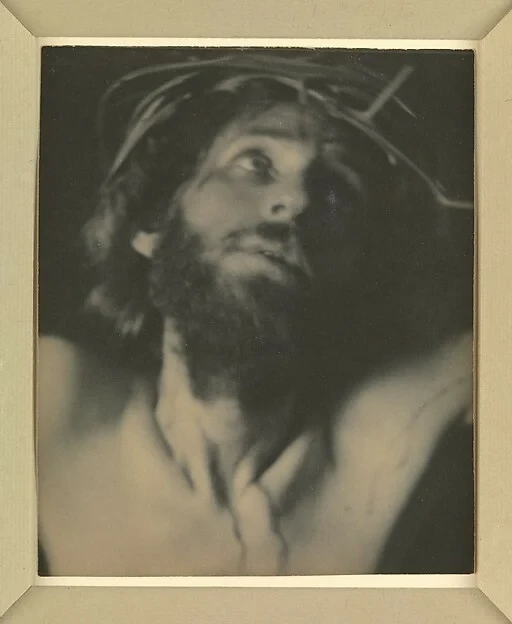
The Metropolitan Museum of Art notes that Day travelled to Oberammergau in 1890 to see the famous Passion Plays. Shortly before staging the Crucifixion for his photographic project, he made the close-up portraits that became The Seven Words.
When photography was fighting to be accepted as art
The work was shown at the Philadelphia Photographic Salon in 1898, at a time when photography was still fighting for artistic legitimacy. Choosing a sacred subject, while also casting the photographer himself as Christ, made the series even more challenging for audiences of the period.
According to the Met, Day defended the use of photography for sacred subjects as a matter of artistic freedom. The work is significant not only because of its subject, but because it deliberately blurs the boundaries between self-portraiture, staging and photographic recording.
A key work of American Pictorialism
F. Holland Day was one of the important figures of American Pictorialism, the movement that argued photography could function as personal artistic expression rather than simply as a mechanical record of reality.
That idea is especially clear in The Seven Words: the image was conceived, staged and performed by the artist himself. In contemporary terms, the work can be read simultaneously as photography, performance and constructed self-portraiture.
What we think
The Seven Words remains highly relevant to contemporary image-makers because it shows how early photography began moving beyond straightforward recording. In 1898 Day used staging, transformation of his own body and sequential storytelling in ways that would be immediately recognisable in contemporary photographic and performance projects.
Frequently asked questions
When was The Seven Words created?
The work was created in 1898 by American photographer F. Holland Day.
Is it a single photograph or a series?
It is a sequence of seven platinum prints presented together as a single work.
Who appears as Christ in the photographs?
F. Holland Day himself. For the broader project he altered his appearance and used dedicated costumes and props.
Why is the work being discussed again in 2026?
Not because it was acquired now: the Toledo Museum of Art lists it under object number 2024.37. The new hook is recent international coverage and the report that it is planned to go on view in fall 2027.