

Summary
- World Photography Day is celebrated today, August 19.
- The date is connected with the public presentation of the daguerreotype in 1839.
- The 200 years celebrated in 2026 are not counted from 1839 but from Niépce's first permanent images around 1826–1827.
- France has officially designated 2026 as the year photography celebrates its 200th anniversary.
- The Bicentennial of Photography will run from September 1, 2026, through September 30, 2027.
- Why photography is celebrated on August 19
- Why we say photography turns 200 in 2026
- How well do you know the history of photography?
- What made 1839 so important
- 2026 is more than another anniversary
- Why photography is still worth celebrating
- Best wishes to the people of photography
- What we think
- Frequently Asked Questions
World Photography Day is celebrated today, August 19, and in 2026 the date carries special weight: photography is officially in the year in which it celebrates its 200th anniversary.
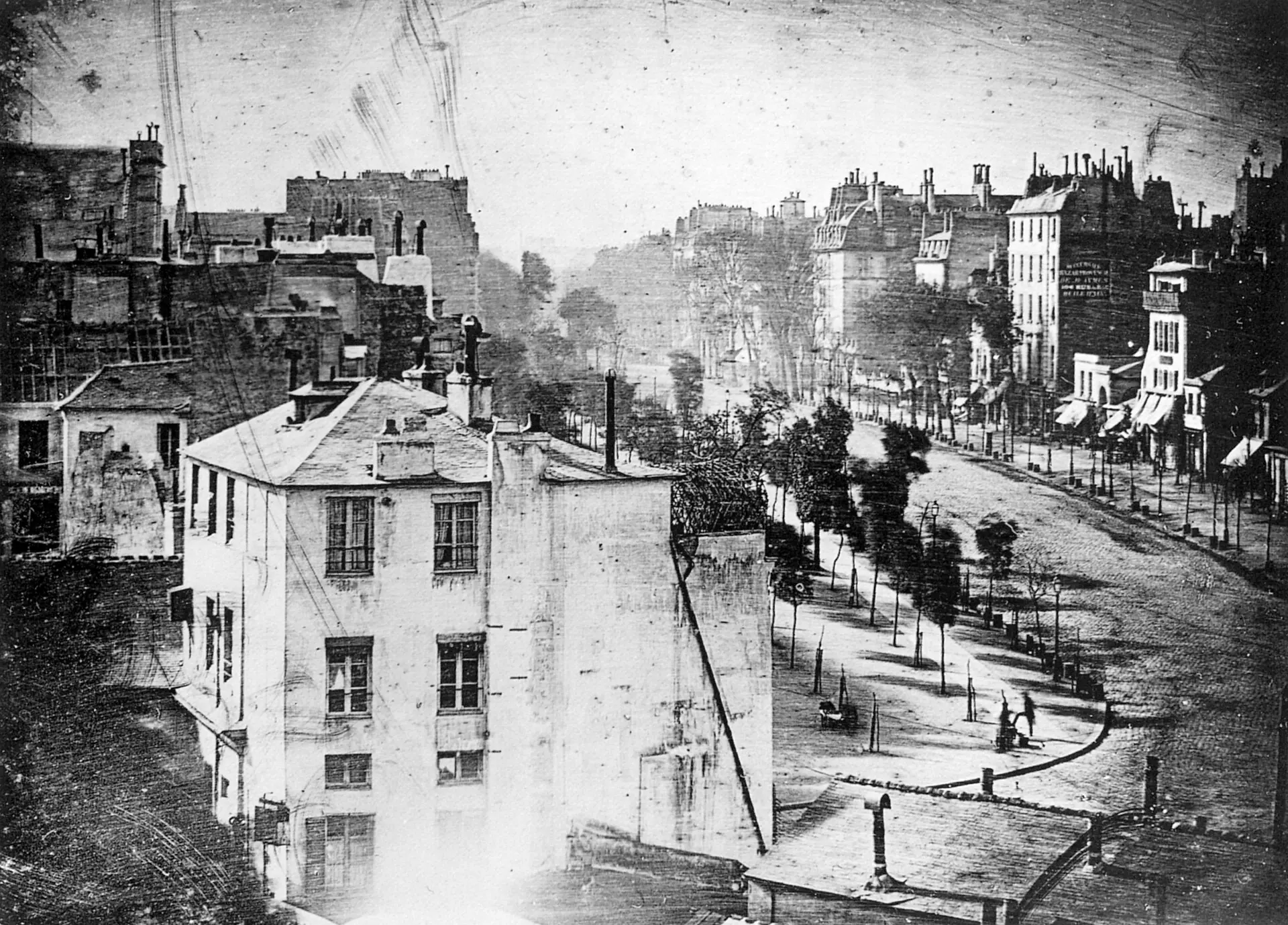
August 19 takes us back to 1839 and François Arago’s public disclosure of the daguerreotype in Paris, an event that played a decisive role in spreading photography around the world.
The 200 years being celebrated in 2026, however, are not counted from 1839. The major anniversary is connected with Nicéphore Niépce’s first permanent photographic images around 1826–1827. The French Ministry of Culture officially states that “in 2026, photography celebrates its 200th anniversary” and is launching a Bicentennial of Photography running from September 1, 2026, through September 30, 2027.
Why photography is celebrated on August 19
The story behind today’s date begins with one of the most important public presentations in the history of the image.
On August 19, 1839, François Arago presented Louis Daguerre’s process during a public session of the Académie des sciences. The disclosure of the details of the daguerreotype allowed the new method to become widely known and spread rapidly internationally.
The Académie des sciences notes that many historians treat the date as a practical “starting point” in photography’s public history because it involved a stable process, extensive publicity and immediate global impact.
That does not mean photography itself was born in 1839.
Attempts to permanently fix an image had begun earlier, and this is where the connection with the major anniversary being celebrated this year becomes important.
Why we say photography turns 200 in 2026
Here we need to separate two different historical milestones.
1839 explains August 19.
The 200 years lead back to Nicéphore Niépce and the first permanent photographic images around 1826–1827.
The Harry Ransom Center at The University of Texas at Austin, which preserves the famous View from the Window at Le Gras, currently dates the image to 1827 and describes it as Niépce’s only known surviving photographic view made with a camera obscura.
Its dating, however, has not always been presented so precisely. An earlier official reference from the same institution describes the work as having been made in 1826 or 1827.
This matters because it explains why both years appear when discussing the birth of photography.
France has now made its official choice: the Ministry of Culture explicitly says that photography celebrates its 200th anniversary in 2026 and connects the Bicentennial with the first permanently fixed images made in the early nineteenth century near Chalon-sur-Saône and with Niépce’s invention.
Put simply: we are not celebrating 200 years since the daguerreotype of 1839. We are celebrating two centuries since the beginnings of Niépce’s permanent photographic image around 1826–1827.
For the full story, including the dating of Le Gras and France’s official Bicentennial, PTTL published an in-depth feature yesterday on 200 years of photography, from Niépce to the present day.
How well do you know the history of photography?
Two centuries of photographic history mean inventions, people, technological changes and images that transformed the way we see and record the world.
To mark today’s celebration, test how much you really know about photography’s history with PTTL’s interactive Quiz.
What made 1839 so important
The daguerreotype was not the first successful attempt to create a permanent image, but it did something decisive: it moved photographic processes beyond the experimental stage and placed them in front of a much wider audience.
Arago’s August 1839 announcement followed the first presentation of the discovery to the Académie des sciences on January 7 of the same year. On August 19 the details of the process were publicly disclosed, opening the way for its rapid expansion.
Photography then stopped being the concern of a small group of inventors and researchers. During the following decades it entered portraiture, science, the documentation of places and events and, gradually, everyday life.
That is why 1839 remains one of the most important milestones in the history of photography even though the story of the permanent photographic image began earlier.
2026 is more than another anniversary
France’s official 200-year celebration is not limited to a single day.
The French Ministry of Culture’s Bicentennial of Photography begins on September 1, 2026, and ends on September 30, 2027, with events across metropolitan and overseas France and in more than 30 countries.
The programme includes historical and contemporary photography, public collections, publishing, exhibitions, festivals, meetings, conferences and educational projects. The Ministry itself presents photography as a medium that for two centuries has shaped how people see the world, record events and communicate stories, emotions and ideas.
Today’s World Photography Day therefore occupies a rare position: it comes only days before the official launch of an international celebration looking back across two centuries of photographic history.
Why photography is still worth celebrating
Photography has changed almost everything around it, but perhaps the most remarkable thing is how naturally it has become part of everyday life.
It is used for art and personal expression, but also for science, journalism, historical records, documentation and personal memory. France’s Bicentennial highlights exactly this extraordinary range of uses, from artistic to scientific, social, political and educational applications.
A family photograph and an image documenting a major historical event may have completely different purposes, yet they share something fundamental: they preserve a visual moment that would otherwise have disappeared.
Two centuries after Niépce’s first experiments, that ability remains at the heart of photography.
Best wishes to the people of photography
Today belongs to everyone who loves photography.
PTTL wishes a happy World Photography Day to all photographers, professionals and amateurs, to those who teach and study photography, to those preserving photographic archives and collections, and to everyone who continues to observe the world through a lens.
Good light, good photographs and images worth preserving for longer than the moment in which they were made.
And for anyone who has left their camera aside, August 19 is a very good reason to take it out again.
What we think
This year’s World Photography Day is particularly interesting because it forces us to put the history in the correct order.
August 19, 1839, was the moment when a photographic process was publicly presented and began spreading at unprecedented speed. The roots of the permanent photographic image, however, are earlier, in Niépce’s work around 1826–1827. That is why 2026 can legitimately be both photography’s 200th anniversary year and another anniversary of the historic August 19.
Two centuries later, someone does not need to know the entire history of photography to understand what this invention achieved. Opening an old family album, a historical archive or a personal image collection is enough.
Photography gave us a way to keep something from time.
And that remains a very good reason to celebrate it.
Frequently Asked Questions
Why is World Photography Day on August 19?
On August 19, 1839, François Arago publicly presented Louis Daguerre’s daguerreotype process at the Académie des sciences. The date is regarded as a major milestone in photography’s international dissemination.
Why do we say photography celebrates 200 years in 2026?
The French Ministry of Culture has officially designated 2026 as photography’s 200th anniversary year, connecting the celebration with the first permanent photographic images and the invention of Nicéphore Niépce.
So did photography begin in 1826 or 1839?
They are different milestones. Niépce’s first permanent images are generally placed around 1826–1827. 1839 was the year the daguerreotype was publicly disclosed and photography began spreading on a much larger scale.
Is View from the Window at Le Gras from 1826 or 1827?
The Harry Ransom Center currently dates it to 1827, while an earlier official reference from the same institution used “1826 or 1827.”
When is the official 200-year celebration taking place?
France’s Bicentennial of Photography runs from September 1, 2026, through September 30, 2027, with events in France and more than 30 countries.