

Summary
- Women Photographers Are Dangerous features more than 60 artists
- It includes over 100 works from the 19th century to the present
- The article follows ten photographers who changed different fields of image-making
- Historians Laure Adler and Clara Bouveresse authored the volume
- The US edition is published on September 15, 2026
- Why “dangerous”
- 1. Anna Atkins: photography as a scientific book
- 2. Julia Margaret Cameron: portraits need not be clinically sharp
- 3. Virginia de Castiglione: self-staging before the selfie
- 4. Dorothea Lange: social crisis acquired a face
- 5. Gerda Taro: the camera at the front
- 6. Lee Miller: from the surrealist studio to the camps
- 7. Margaret Bourke-White: industry, Life and war
- 8. Eve Arnold: intimacy without idealisation
- 9. Claudia Andujar: photography and political commitment
- 10. Zanele Muholi: the archive as self-protection and claim
- More than a corrective anthology
- Availability and price
- What we think
- Frequently asked questions
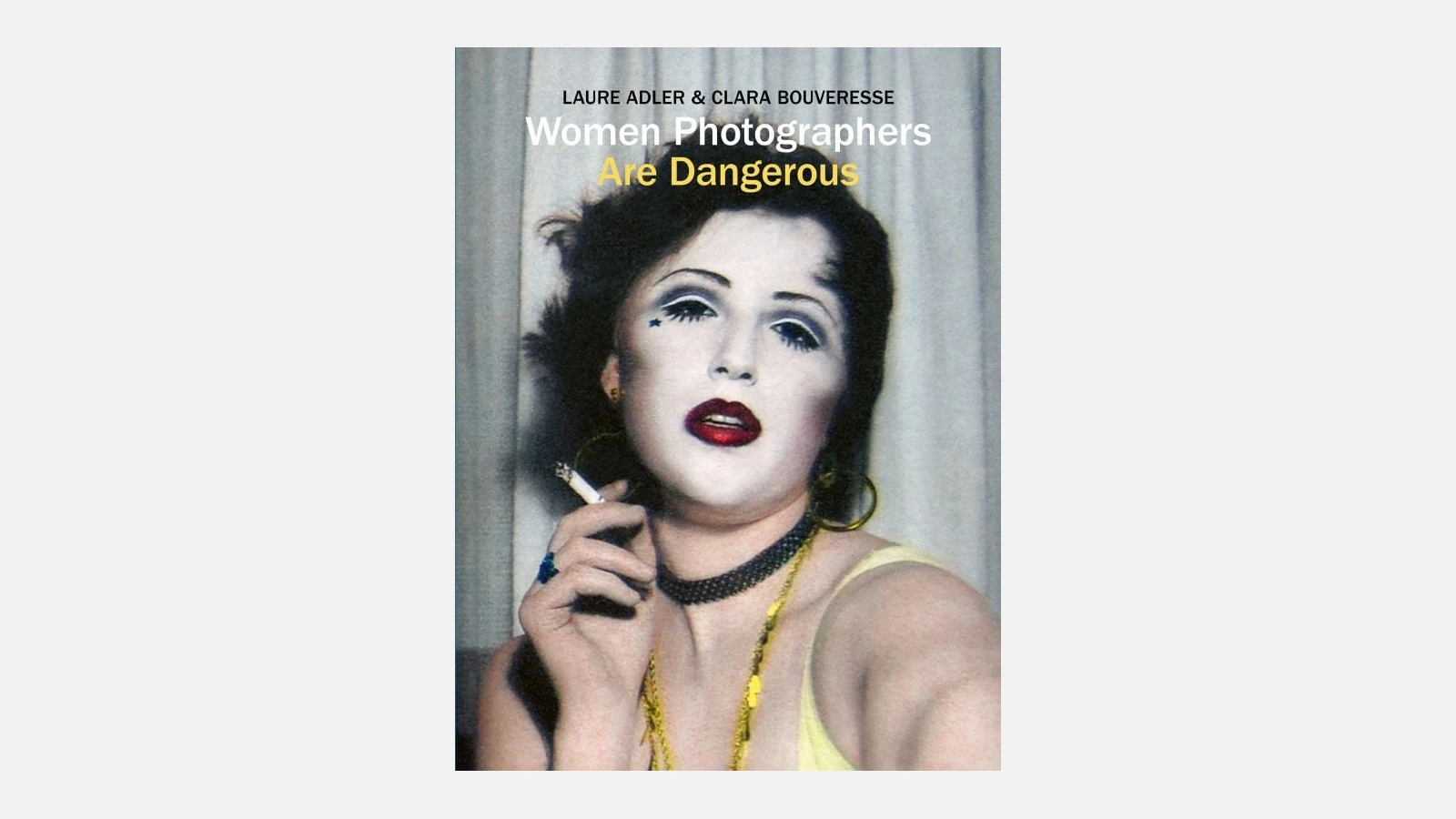
Women Photographers Are Dangerous uses more than 60 artists to rewrite the history of photography as a history of science, war, the body, politics and the right to define one’s own image.
Historians Laure Adler and Clara Bouveresse bring together over 100 works from the 19th century to the present in a 160-page hardback. Its range begins with Anna Atkins’s cyanotypes and reaches contemporary “visual activist” Zanele Muholi, passing through photojournalists, experimental artists, portraitists and women whose archives received late recognition.
The book’s value lies in more than restoring names. It shows that women were not added later to a male history of the medium: they were present in its scientific use, the construction of portraiture, the growth of the illustrated press, war reporting and the transformation of private life into political evidence.
Why “dangerous”
The title does not describe a single aesthetic. It describes the threat a woman can represent when she holds the camera, selects the subject, controls representation and refuses to remain a muse or object. For others, danger was literal: they worked in wars, dictatorships, streets, prisons and communities under pressure.
Adler and Bouveresse cross continents and generations. The ten cases below are not a list of “the best,” but a way to see how photography itself changed when the gaze moved into hands that official history often kept outside the frame.
1. Anna Atkins: photography as a scientific book
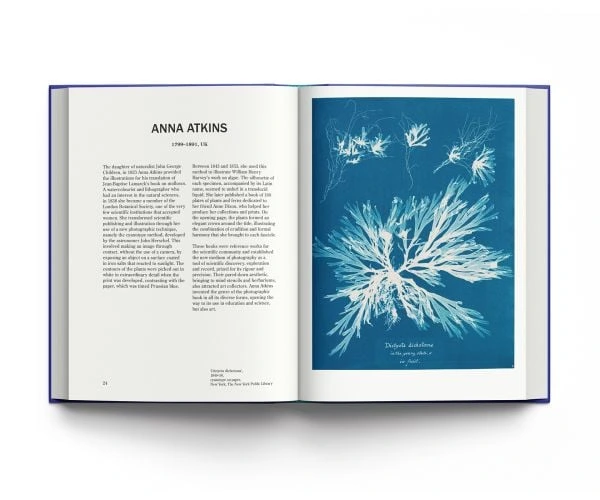
Botanist and cyanotype pioneer Anna Atkins began publishing Photographs of British Algae: Cyanotype Impressions in 1843. It is regarded as the first book illustrated with photographic images, at a time when photography was still defining its uses.
Her contribution is double. She demonstrated that the new medium could provide precise scientific documentation while the repetition of plant forms, direct contact with paper and deep Prussian blue created an independent aesthetic. She did not merely illustrate knowledge; she placed photography inside its production.
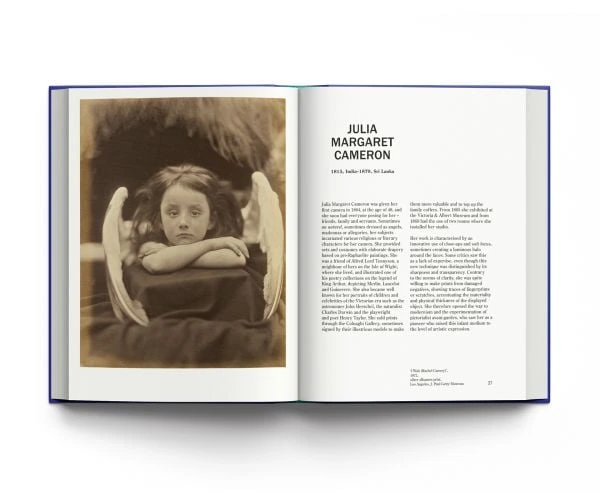
2. Julia Margaret Cameron: portraits need not be clinically sharp
Julia Margaret Cameron began photography later in life and chose a language opposed to the technical perfection admired by many contemporaries. Close faces, shallow depth, controlled softness, dramatic light and staged biblical or literary scenes made portraiture psychological and theatrical.
Her importance lies in rejecting the idea that photographic precision is the only path to truth. Cameron used soft focus and process marks not as mistakes but as expression, making room for photography that resembles memory more than measurement.
3. Virginia de Castiglione: self-staging before the selfie
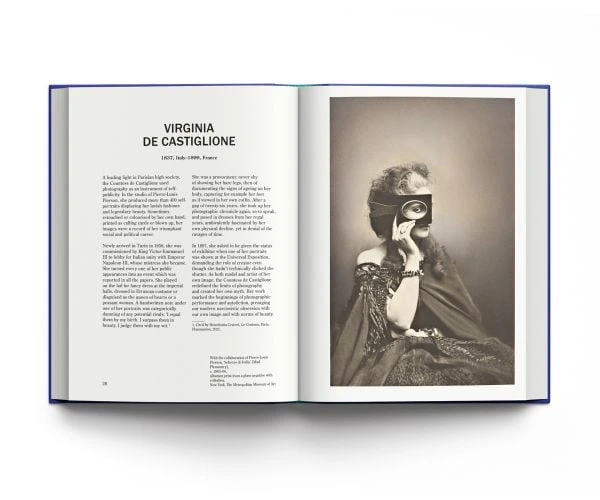
Virginia de Castiglione was not simply a model. In her long collaboration with photographer Pierre-Louis Pierson she designed costumes, poses, sets and personas, turning hundreds of images into an early, complex archive of self-presentation.
Her place in history is deliberately difficult: who is the creator when the person before the lens controls the idea and performance while someone else operates the camera? That ambiguity makes the work contemporary. Castiglione turned portraiture from passive recording into identity performance.
4. Dorothea Lange: social crisis acquired a face
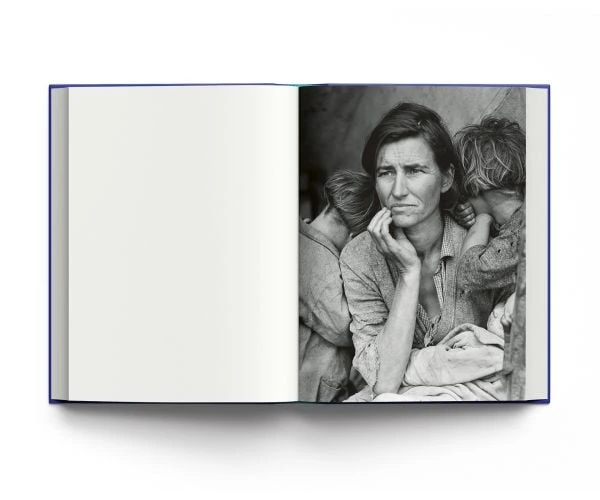
Dorothea Lange left studio portraiture to document the Great Depression and worked for the Farm Security Administration. Her 1936 Migrant Mother became one of social documentary’s most recognisable images because it compresses an economic crisis into a gaze, hands and family closeness.
Her work also reveals the limits of photographic power. An image may mobilise audiences and institutions, yet the subject does not necessarily control its circulation or later meaning. Lange remains essential because her work makes us discuss social effectiveness, composition and ethics together.
5. Gerda Taro: the camera at the front
Gerda Taro covered the Spanish Civil War at close range, alongside Robert Capa but also under her own credit. Her pictures focused on fighters, civilians and women within the conflict. She died in 1937 from injuries sustained near the Battle of Brunete.
Later history often absorbed part of her work into the “Robert Capa” brand, a name the two had initially constructed together. Restoring Taro is not simply biographical correction; it shows how archives, captions and markets can redistribute authorship.
6. Lee Miller: from the surrealist studio to the camps
Lee Miller moved from fashion, portraiture and Surrealism into work as a war correspondent for Vogue. She documented wartime London, the liberation of Paris and the Dachau and Buchenwald camps, bringing into a fashion magazine images that could not be treated as decoration.
Her famous photograph in Hitler’s Munich apartment bathtub is a complex act of witness and staging: muddy boots, the dictator’s portrait and Miller’s naked body place the photographer inside the historical image rather than hiding her behind the camera.
7. Margaret Bourke-White: industry, Life and war
Margaret Bourke-White brought the geometry of industrial photography into mass magazines and became Life’s first woman photographer, with one of her images on the magazine’s first cover in 1936. As a war correspondent she covered World War II and documented the liberation of Buchenwald.
Her work demonstrated that technical precision, access to heavy industry and reporting from war zones were not male fields. Her relationship with Life also shaped how the large photograph and photo essay formed public understanding of the world.
8. Eve Arnold: intimacy without idealisation
Eve Arnold joined Magnum in 1951 and became a full member in 1957, one of the agency’s first women. She photographed Marilyn Monroe, politicians, workers, families and communities across the US, Europe, Middle East and China without strictly separating celebrity portraiture from social reporting.
Her strength was access without removing uncertainty from a face. In her Monroe images, the star appears between a constructed public image and private exhaustion. Arnold proved that intimacy could be a journalistic tool rather than a synonym for beautification.
9. Claudia Andujar: photography and political commitment
Claudia Andujar devoted decades to working with and advocating for the Yanomami in Brazil. Her work combines portraits, experimental techniques, health documentation and activism for land and community survival against disease, mining and state pressure.
Andujar changes the question from “what does the photograph show?” to “within what relationship was it made?” Her long presence and political action do not erase inequalities between photographer and community, but make it impossible to read the work as neutral exotic observation.
10. Zanele Muholi: the archive as self-protection and claim
Zanele Muholi identifies as a visual activist and creates an extensive archive of Black LGBTQIA+ life in South Africa. Portraits and self-portraits treat visibility not as an aesthetic trend but as an answer to violence, erasure and absence from official archives.
In the Somnyama Ngonyama self-portraits, Muholi darkens skin tone and turns ordinary objects into symbolic costumes. The viewer does not merely look at a face; they meet a gaze that returns observation and challenges who has the right to classify whom.
More than a corrective anthology
The book’s more than 60 photographers do not form a single “female gaze.” The presence of Tina Modotti, Berenice Abbott, Diane Arbus, Vivian Maier, Martine Franck, Susan Meiselas, Cindy Sherman, Nan Goldin, Shirin Neshat, Laia Abril and many others shows the opposite: different politics, techniques, social positions and uses of the image.
That is the volume’s most useful argument. Photography’s history becomes more accurate not when it adds a separate footnote marked “women photographers,” but when it recognises that cyanotype, art portraiture, photojournalism, performance, intimate documentary and contemporary visual activism cannot be explained correctly without them.
Availability and price
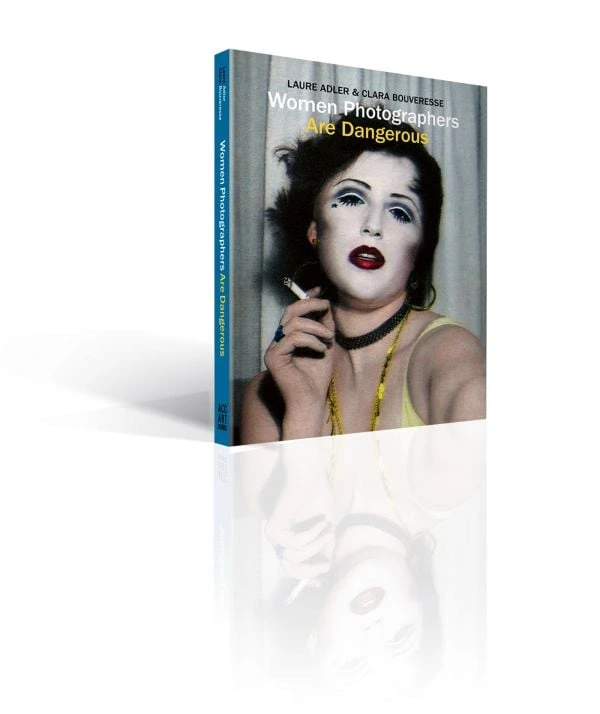
Women Photographers Are Dangerous is published by ACC Art Books on September 15, 2026. The 160-page hardback costs $40 in the US, carries ISBN 9781788843713 and includes 35 colour and 75 black-and-white images. More information and purchase options are available on the official ACC Art Books product page.
What we think
The title is provocative, but its essential message is historical: the camera becomes dangerous when it redistributes visibility and power. The book is most useful when read not as a celebratory list but as a map of conflicts around technology, access, authorship and public memory. These ten paths show how different those dangers can be — from seaweed on cyanotype paper to a self-portrait that refuses to lower its gaze.
Frequently asked questions
Who wrote Women Photographers Are Dangerous?
It was written and compiled by Laure Adler, a historian and author specialising in women’s studies, and Clara Bouveresse, a photography historian with a PhD in art history.
How many photographers does it include?
It features more than 60 artists from the 19th century to the present and over 100 photographic works.
Is it only a history book?
No. It combines history with work from science, art, journalism, war, feminist activism and contemporary political image-making.
When is it published?
The US edition is published by ACC Art Books on September 15, 2026.
How much does it cost?
The official US price for the hardback is $40.