

Summary
- View from the Window at Le Gras returns to France for the first time since 1827
- Exhibition at the Musée Nicéphore Niépce from late April to late June 2027
- Exceptional loan from the University of Texas at Austin’s Harry Ransom Center
- Historical objects and contemporary work mark photography’s bicentenary
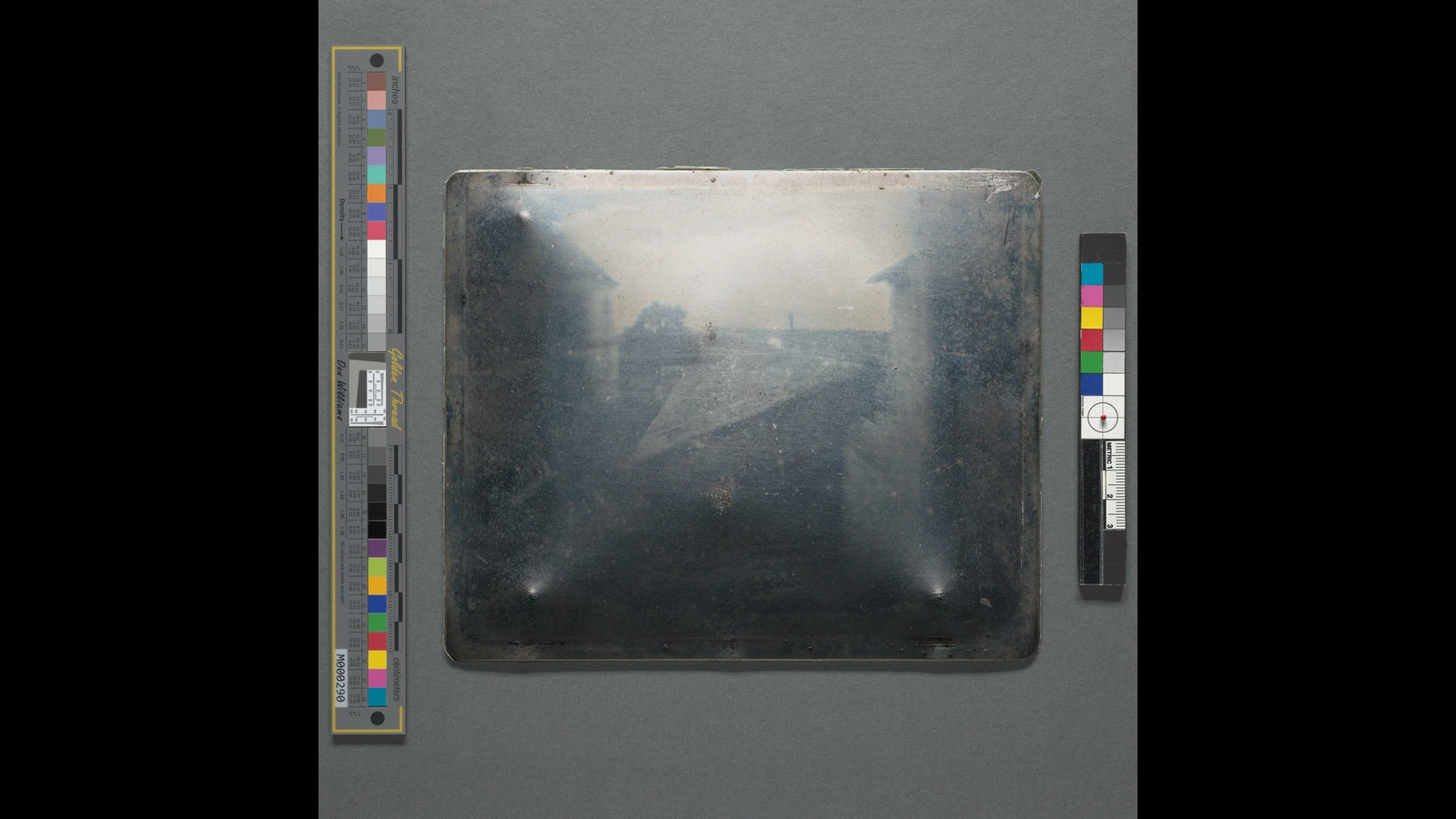
View from the Window at Le Gras, the oldest surviving photograph made with a camera obscura, will return to France in spring 2027 for an exhibition at the Musée Nicéphore Niépce in Chalon-sur-Saône.
Nicéphore Niépce’s heliograph will travel from the Harry Ransom Center at the University of Texas at Austin on exceptional loan for the Bicentenaire de la Photographie. According to France’s Ministry of Culture, its display is planned from late April to late June 2027.
It will be the work’s first return to France since 1827, offering a rare reunion between the original object and the region where it was made. The anniversary programme provides a tangible reference point for considering 200 years of photography, from Niépce’s experiments to today’s digital image.
A view that took days to record
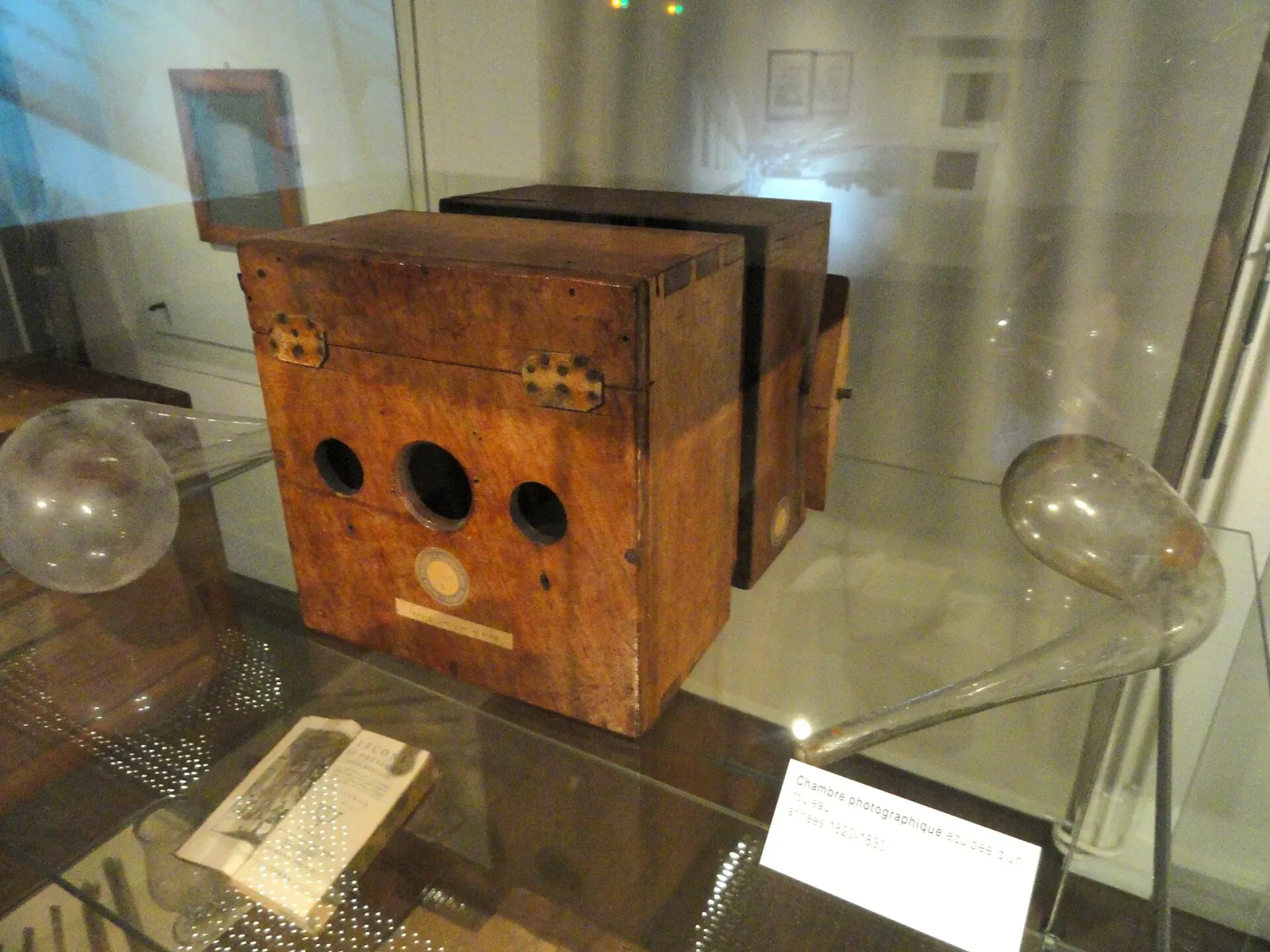
Niépce made the image in spring 1827 from a window of his house at the Le Gras estate, near Chalon-sur-Saône. He used a polished pewter plate coated with a thin layer of bitumen of Judea dissolved in oil of lavender. The plate was placed inside a camera obscura, the darkened chamber that projects an external scene onto its opposite surface.
Light selectively hardened the coating, allowing the image to remain on the metal. The exposure lasted several days — almost three, according to the French ministry’s announcement. The sun’s changing position explains why different sides of the buildings appear illuminated in the same image.
The object measures approximately 16.7 × 20.3 centimetres. Its historical significance lies in the successful, permanent recording of a real view. More than twenty other heliographic plates and prints by Niépce survive from 1825–1829, but View from the Window at Le Gras is his only surviving camera-obscura view.
From early experiments to the Texas collection
Born in Chalon-sur-Saône in 1765, Niépce was experimenting with recording images as early as 1816. His first attempts produced images that did not last. In 1829 he began collaborating with Louis Daguerre, four years before his death. Photography was publicly introduced in 1839, after Niépce had died.
The Le Gras plate passed through private collections in Britain during the nineteenth and twentieth centuries. The Harry Ransom Center acquired it in 1963 with the Gernsheim Collection. It has since remained one of the institution’s most significant objects relating to photography’s history.
What the 2027 exhibition will include
The exhibition L’empreinte d’Hélios. 1826-1827, Niépce invente la photographie ! will explore the inventor’s experiments and techniques through works and objects from French public collections. Participants include the Bibliothèque nationale de France, the Société française de photographie, the Cinémathèque française and the Musée Niépce. Contemporary artists will respond creatively to historical processes in each section.
Historian Michel Frizot is preparing a catalogue containing new research and an inventory of 29 objects connected with photography’s invention. An updated edition of the Photo Poche volume on Niépce, originally published in 1984, is also planned, edited by Sylvain Besson, the museum’s director of collections, and accompanied by contemporary artistic responses.
The loan results from cooperation between the Harry Ransom Center, the museum in Chalon-sur-Saône, the Bibliothèque nationale de France, the Ministry of Culture and the French Embassy in the United States through Villa Albertine.
An anniversary extending beyond France
The Bicentenaire de la Photographie runs from September 1, 2026 to September 30, 2027. It includes hundreds of exhibitions, conferences, screenings and educational activities in France and approximately thirty other countries, focusing on collections, contemporary practice, publishing and photography’s professions.
The Musée Nicéphore Niépce is located at 28, quai des Messageries in Chalon-sur-Saône. Anniversary programming and visitor information are published on the museum’s official website.
Our take
The plate’s return is particularly valuable because the exhibition connects it with the experiments, materials and failures that preceded it. For today’s photographers, Niépce’s multi-day exposure offers a meaningful starting point for reconsidering the relationship between time, light and a lasting image.
Frequently asked questions
What is the oldest surviving photograph made with a camera?
It is Nicéphore Niépce’s “Point de vue du Gras”, a view from a window at his Le Gras home, dated to spring 1827. The image was made on a pewter plate using the heliography process.
When and where will it be exhibited in France?
It will be shown at the Musée Nicéphore Niépce in Chalon-sur-Saône from late April to late June 2027, as part of “L’empreinte d’Hélios. 1826-1827, Niépce invente la photographie !”.
Where is the photograph normally kept?
It belongs to the Harry Ransom Center at the University of Texas at Austin, which acquired the Gernsheim collection in 1963. The centre is lending it for the exhibition in France.