

Summary
- Vania Tloupas discusses how she continues to discover new layers in the work and personality of her father, Takis Tloupas.
- She explains how the exhibition “Another Europe” reveals the restless traveller who searched for a shared human experience beyond Thessaly.
- She describes the difficulty of curating such a personal archive and her wish for it to remain alive and accessible.
- She also talks about her own photographic identity, economy of exposures, and the value of deliberate observation.
Vania Tloupas talks to PTTL about her father, Takis Tloupas, the exhibition “Another Europe,” the management of his photographic archive, and her own relationship with photography.
Having grown up inside the photo studio, surrounded by negatives, prints, the darkroom, and her father’s workshop, she describes how childhood familiarity gradually gave way to an awareness of the scale of the body of work in front of her.
In the conversation, she discusses the “eternal traveller” behind the images, the difficulty of curating such a personal archive, her own path in portrait photography, and her wish for Takis Tloupas’s work to remain alive and accessible.
The interview
Vania, you grew up beside one of Greece’s most important photographers. When did you truly realise that your father was not simply “dad with the camera,” but a creator with a distinct place in the history of Greek photography?
The real realisation did not come suddenly, but gradually, and in fact it is a process that continues to evolve even today, over the years. As I grow as a person, as my eye matures and my knowledge of art deepens, I discover new aspects and layers in his work. It took quite a few years for me to step outside the childhood familiarity of the photo studio and look at his images as a photographer myself. Today, every time I return to his archive, I understand the scale of his imprint more deeply. I realise that he was not simply recording the life of our region, but preserving the soul of an entire era. In that way, “dad” keeps transforming inside me into an increasingly significant creator, making me feel awe at the legacy he left behind.
What is the first image you remember of Takis Tloupas as a photographer? Do you remember him more behind the camera, inside the studio, or travelling in search of images?
You know, for me home was an extension of the shop. I literally grew up there, in an environment full of negatives and photographs. The darkroom was simply another room to me, one I entered very naturally but also carefully.
My playtime was divided between the courtyard, where I would constantly see my father photographing someone, and his workshop. The sounds from there, as he prepared the frames for photographs, were among the most familiar sounds I knew, while the smell of the glue he used was always spread throughout the shop. That image of my father creating inside his own universe is the most vivid memory I have.
The magical thing is that this place remains exactly the same to this day. The darkroom and the workshop have remained unchanged over time.
The exhibition “Another Europe” presents a side of his work that is much less familiar to the wider public. When did you discover this material, and when did the idea emerge that it should be presented as a standalone exhibition?
Over the last decade, during the process of archiving, I discovered this specific body of work from Europe. It was a real revelation. I felt the need to share with the public this other side of him: the man behind the camera, the restless creator and eternal traveller.
I was incredibly moved by the way, in such difficult times and with so few means, he set out to discover the world — in fact, many trips were made on a Vespa and later in a Citroën 2CV. I wanted to show that the penetrating eye he had for the Greek landscape was carried intact into European avenues as well, demonstrating the breadth of his artistic identity.
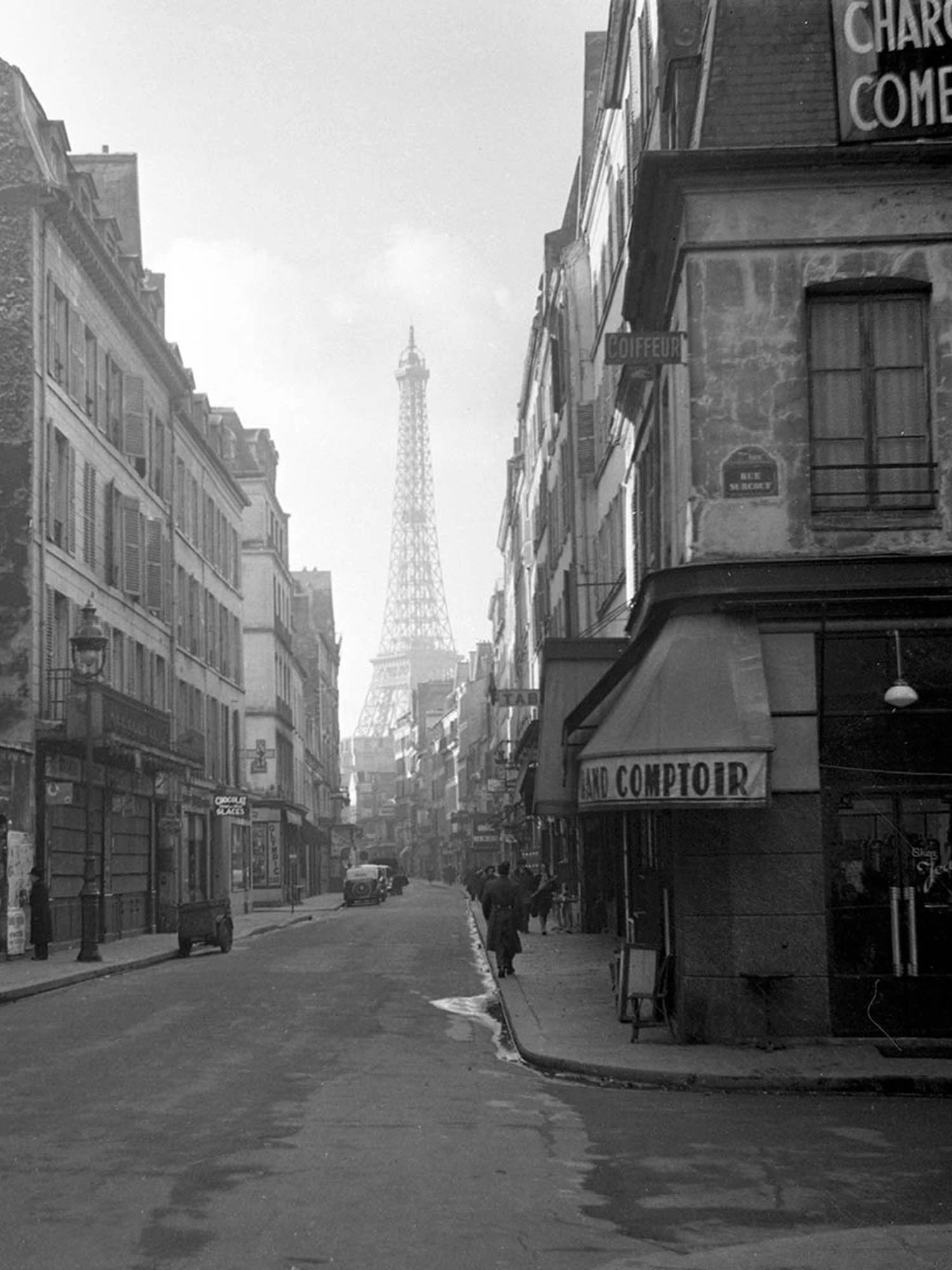
Takis Tloupas has become closely associated with Thessaly, the plain, and its people. What did you discover by looking at the photographs he made far from the place he knew so well? Was he a different photographer in Europe?
For most people, my father is the photographer of the Thessalian plain and of working people. That is the image we all have in mind.
My father was not a different photographer in Europe. On the contrary, he was exactly the same, and that is the magical part. Whether he was in the Thessalian plain or in Paris, Venice, Austria or Germany, the way he looked at the world remained unchanged: direct, deeply human and substantial. He was not interested in making a simple tourist or monumental record. He carried the same inner impulse and the same sensitivity from the villages of Thessaly to the streets of Europe’s major cities. Everywhere, he searched for the shared human experience, the honesty of the moment and the truth of ordinary people in everyday life.
In these images we see more of the man behind the photographer and the “eternal traveller.” What do these photographs reveal about his character that may not be as visible in his better-known work?
These photographs bring to the surface a side of him that I know well, but that the public may not suspect: a man who was fascinated by the unknown. He had an incredible desire to keep discovering things outside the ordinary, and that pushed him to take his Vespa or his Citroën and leave. On the plain he was at “home”; he knew the people and the codes of communication. In Europe, however, he found himself in a foreign world, without even speaking their language. Yet the unfamiliar did not frighten him; it fascinated him. Through these images you see a citizen of the world, full of vitality and with a romantic, light-hearted spirit that may be overshadowed by the austerity of his Thessalian work. We see the authentic, free traveller who is fascinated by the unknown, by movement in the streets, who becomes one with the crowd and fears nothing. That curiosity kept him young, and that sense of wonder before what was new ultimately reveals how deeply he loved life.
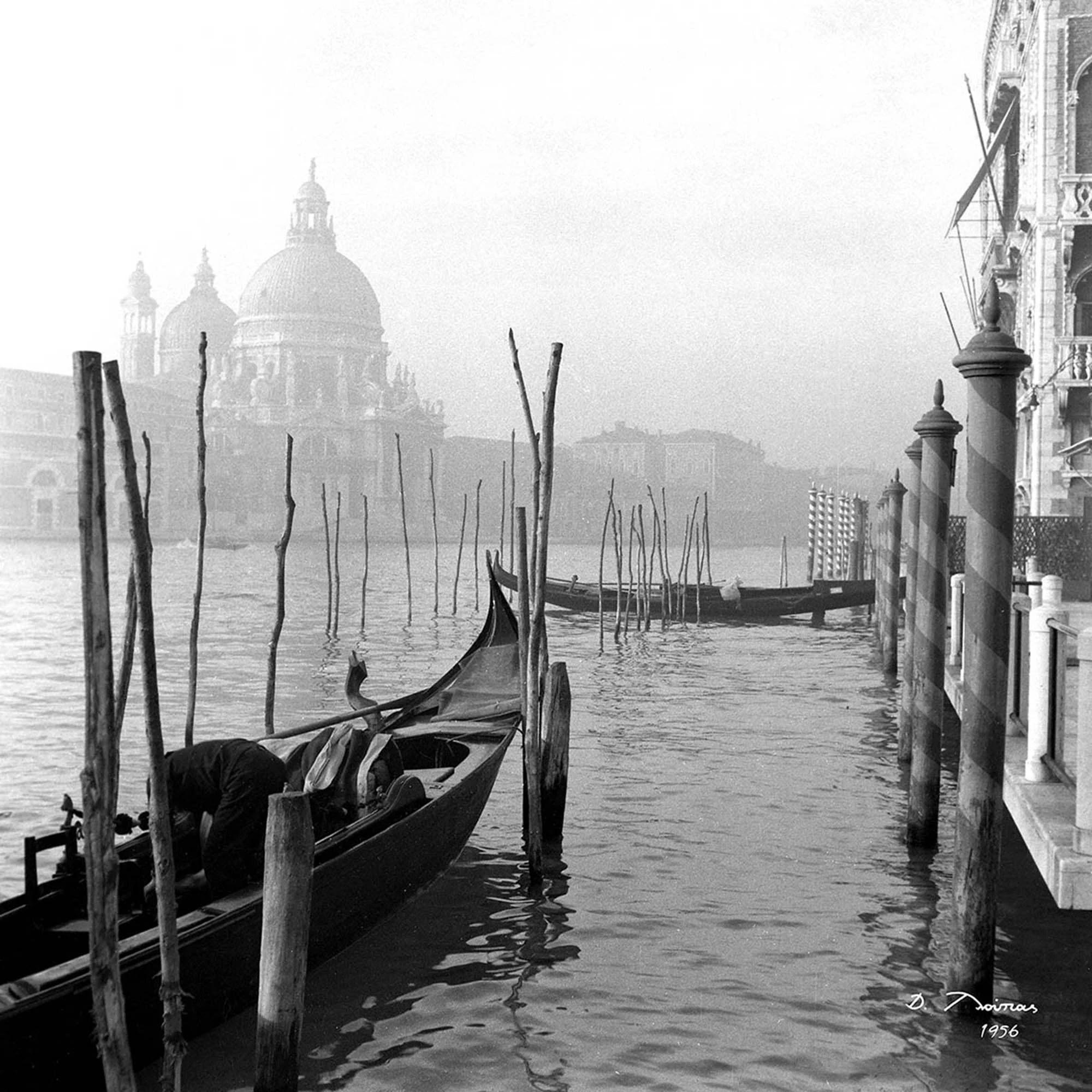
Looking at this material, are there photographs in which you feel he was not so much photographing a foreign place as something familiar that he recognised in people? Is human presence ultimately the deepest “signature” of Takis Tloupas?
Yes, absolutely. No matter how far he travelled, his eye was always searching for a deep human connection, and that was the most familiar thing to him. In many of his photographs from Europe, you can see that he is not concerned with major attractions or imposing buildings, but with ordinary people in everyday life — or simply, in his own way, he connects all of those things together. Even in the most cosmopolitan setting, my father managed to unlock the soul of the other person, because in those “strangers” he saw something deeply familiar: human nature itself. What he searched for, and ultimately captured with his camera, was the shared human condition, and the human figure was always at the centre. He saw the same basic needs everywhere, which is why his gaze has this universal, timeless force.
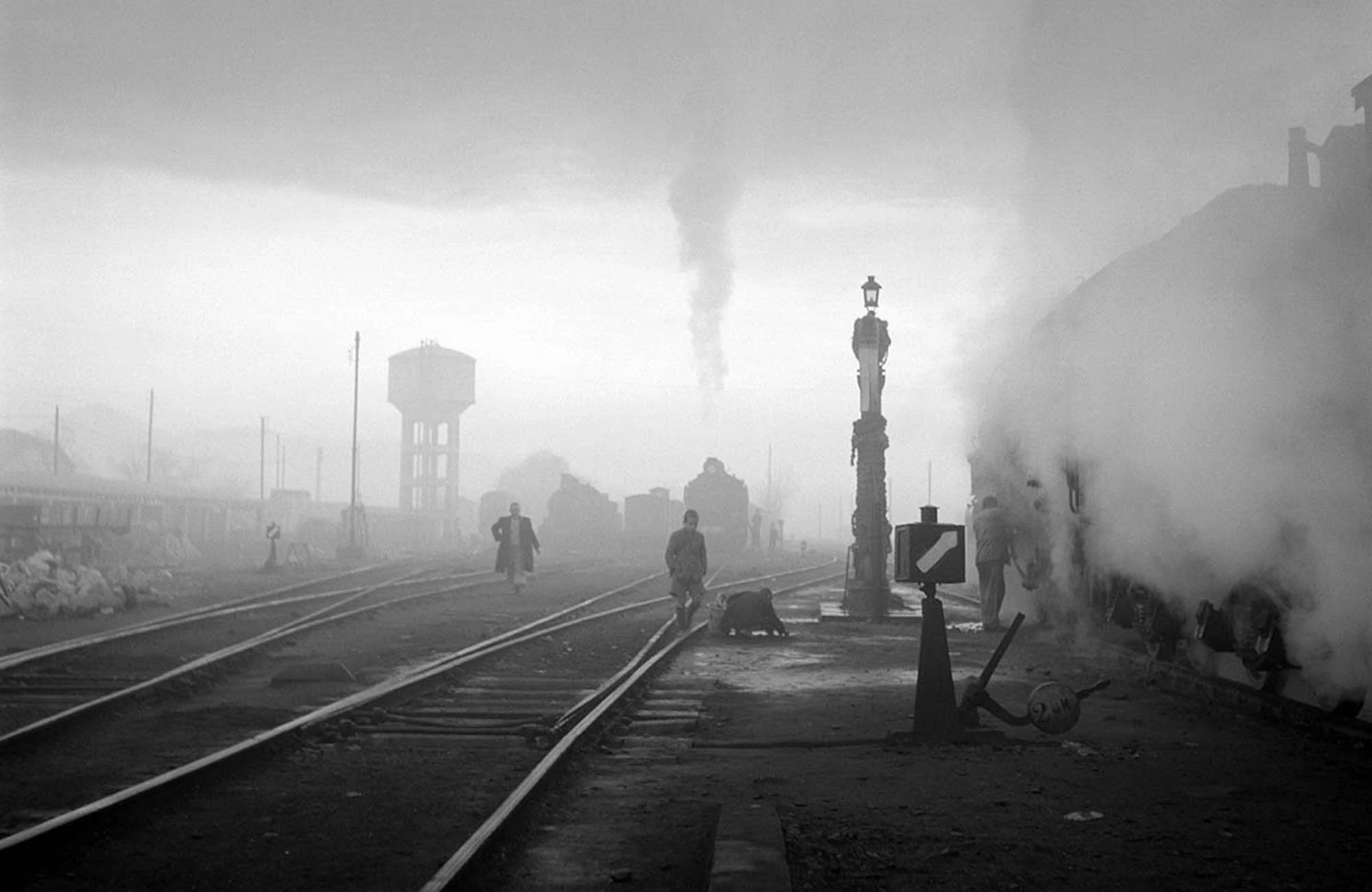
Many photographs in the exhibition are being shown for the first time. As both the curator and the creator’s daughter, how difficult is it to decide which image leaves the archive and which remains inside it?
The selection is always incredibly difficult, because the material is exceptionally important and valuable. To avoid getting lost, each time I try to create a story, a central thread that essentially guides my choices. Even then, I make changes until the very last moment. I do not want to leave anything out, but I know very well that not everything can fit into one exhibition.
Of course, the fact that some photographs are not selected and remain in the archive does not mean that they are shut away in a drawer and that nobody can access them. The archive is alive, catalogued and documented to a large extent.
When I had to choose the images for this particular exhibition, the challenge was to bring out his love of travel. I want visitors to enter the exhibition and feel that they are travelling with him.
When you curate your father’s work, can you really distance yourself and function exclusively as a photographer and curator, or is the personal relationship inevitably part of every choice?
It is impossible for me to distance myself completely and, to be honest, I do not try to. The personal relationship and our shared memories are always there, in every choice I make. When I curate an exhibition, of course I work as a professional photographer; I judge the aesthetics, the composition and the historical value of the images. But behind the curator there is always the daughter. When I hold a negative in my hands, I do not simply see a good photograph; I remember my father, the smell of the workshop, our conversations. That emotion is not a weakness. It is my own internal “key” to understanding his work in a way that nobody else could. The final selection of photographs is always made with an absolute balance between mind and heart.
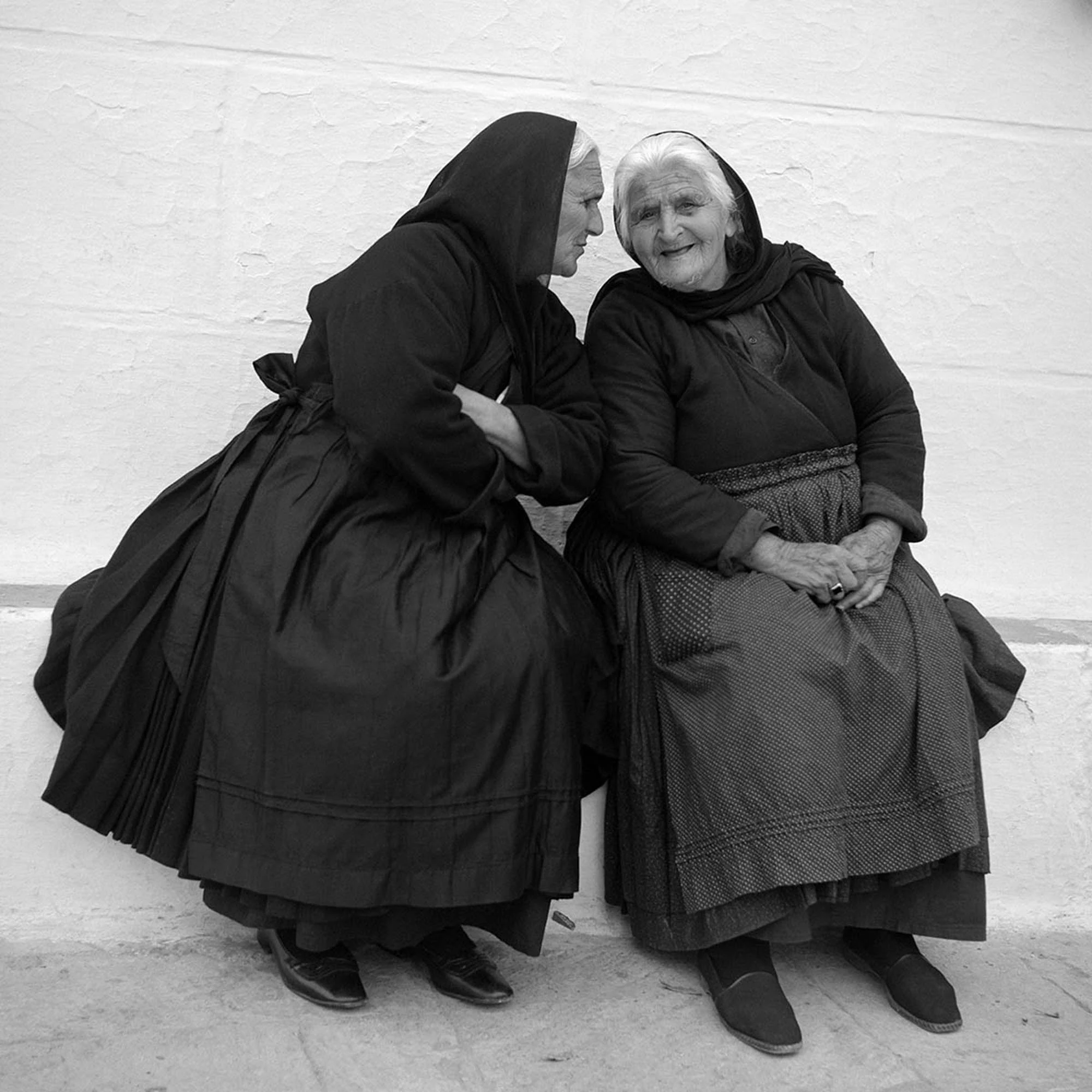
Is there also the opposite difficulty? Loving a photograph for personal reasons but, as a curator, having to decide that it does not belong in the narrative of an exhibition?
Yes, that is perhaps the most difficult part. There are photographs that are emotional treasures for me because they remind me of a particular moment with my father or a story of ours. But when an exhibition is being built, the narrative and the flow of the works have to be clear for the viewer.
This exhibition is not limited to photographs; it also includes personal objects, archival material and even his Vespa. Why was it important to you for this side of his life and travels to be present in the exhibition space?
It was extremely important because I wanted the visitor to meet the man behind the photographer, the “eternal traveller.” His Vespa, his glasses, his watch, his cameras, the tools he used, personal photographs of him — these are not simply exhibits; they are pieces of his everyday life and the instruments of his freedom. By placing these objects in the space, the viewer feels the pulse of the journey. The exhibition gains a living, human dimension and you feel that you are travelling with him too.
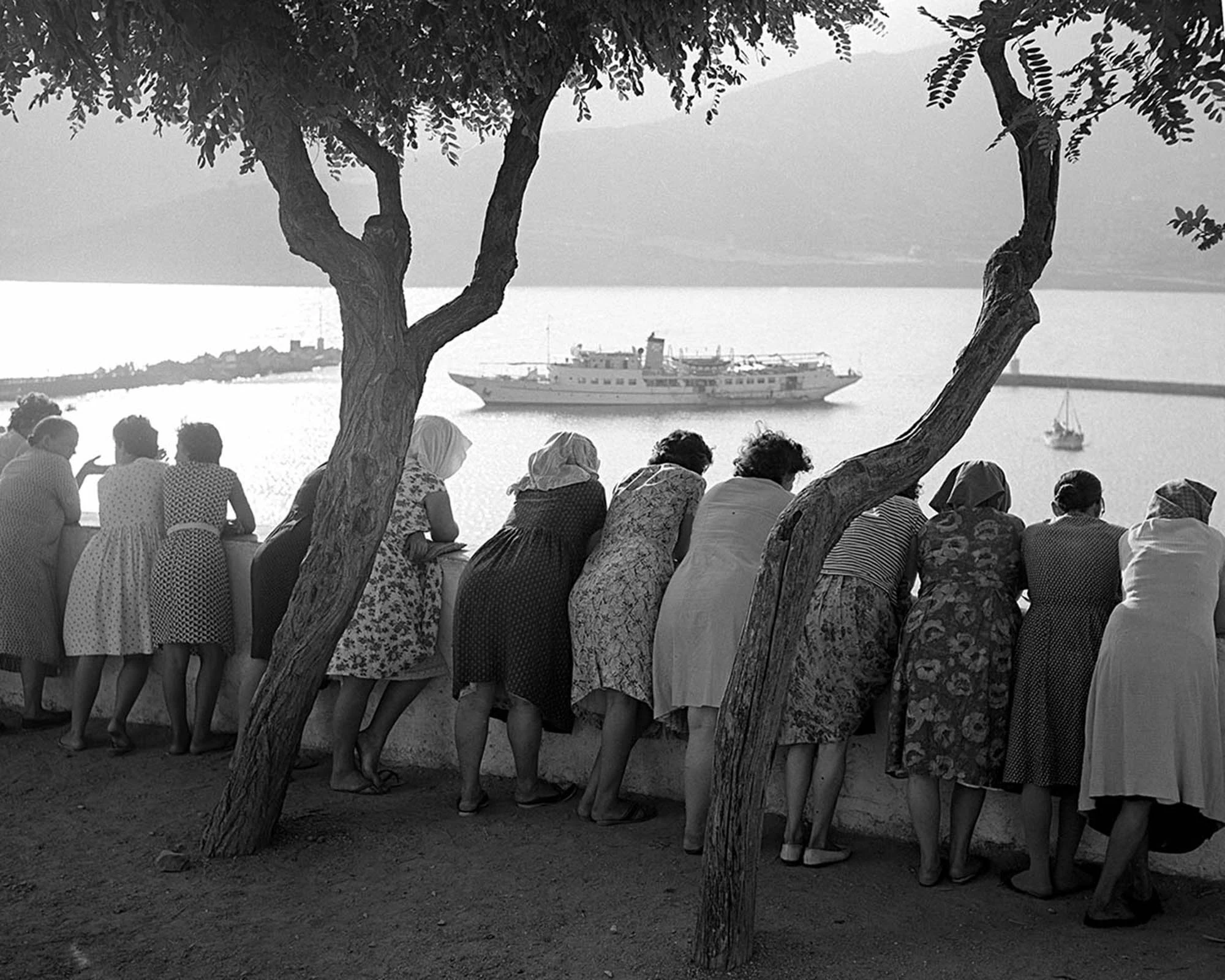
Your father worked in an era when every frame carried a different weight from today. What do you think he would say if he saw today’s photographic reality, and what from his relationship with patience, observation and choosing the moment do younger photographers need to rediscover?
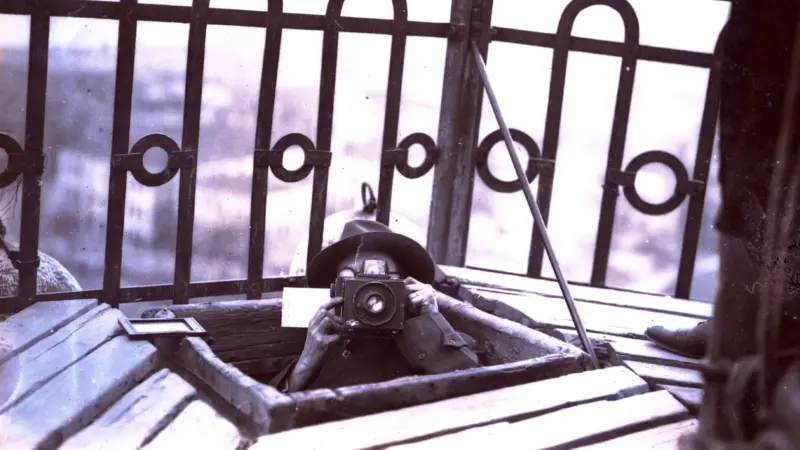
I believe he would be frightened and fascinated at the same time by the ease with which so many things are now done in photography. He was a practical person who liked making things, devising solutions and following progress, so he would certainly admire technological development and the speed of today’s tools. However, I think he would warn us about a major trap. He would say that the ease of taking a photograph should not turn into carelessness. For him, every click had its own ritual: first you had to think, then feel, and only then press the button. In today’s flood of billions of images, he would remind us that the essence of photography is not in quantity, but in the patience to truly look at the world around you, with your soul, and only then photograph it.
As a photographer yourself, how difficult was it to develop your own photographic identity with such a strong point of reference beside you? Did you ever consciously try to move away from his way of seeing?
From the beginning, I knew very clearly that I wanted to work with portraiture. That helped me develop my own photographic identity from a very young age, because I chose a direction and a way of seeing completely different from my father’s. I did not need to make a conscious effort to distance myself from his gaze, because his perspective was very different from mine. With such a powerful creator as a point of reference, the difference in my subject matter became my own refuge and my absolute freedom.
Is there any element in the way he photographed that you now recognise in your own work, even if you never set out to adopt it?
That influence is always there; it is inevitable. When I look through my lens, I always have in mind everything I learned from him. The study of light is what guides me in every frame. At the same time, from him I learned an economy of exposures, so I never photograph indiscriminately. Every frame must have a reason to exist.
You manage an enormous photographic archive, part of which continues to reveal unknown material. Do you feel there are still sides of Takis Tloupas that we have not yet discovered — themes or periods still waiting to come to light?
The main element is economy and calculation in the number of exposures, because I never photograph indiscriminately. Growing up surrounded by film, I learned very early that every click had a specific cost. That gave me a deep discipline: to think about and calculate my frame before pressing the button. Of course, in the end I too get carried away by the ease of today’s process, and I always take more photographs than I would if I were shooting film.
How do you believe such an important photographic archive should be treated today: as a family legacy, as a work of art, or as part of collective historical memory?
It begins as a precious family legacy and it is an important work of art, but above all it is part of the collective historical memory of our region. That is why my duty is not to keep it shut in a drawer, but to keep returning it to society. My great wish is for the archive to remain a living organism, fully accessible for study and research. I want it to be an open source of inspiration for young photographers and researchers, a living cell of culture that will continue to generate ideas and reveal stories, with the ultimate goal of creating a Museum for Takis Tloupas.
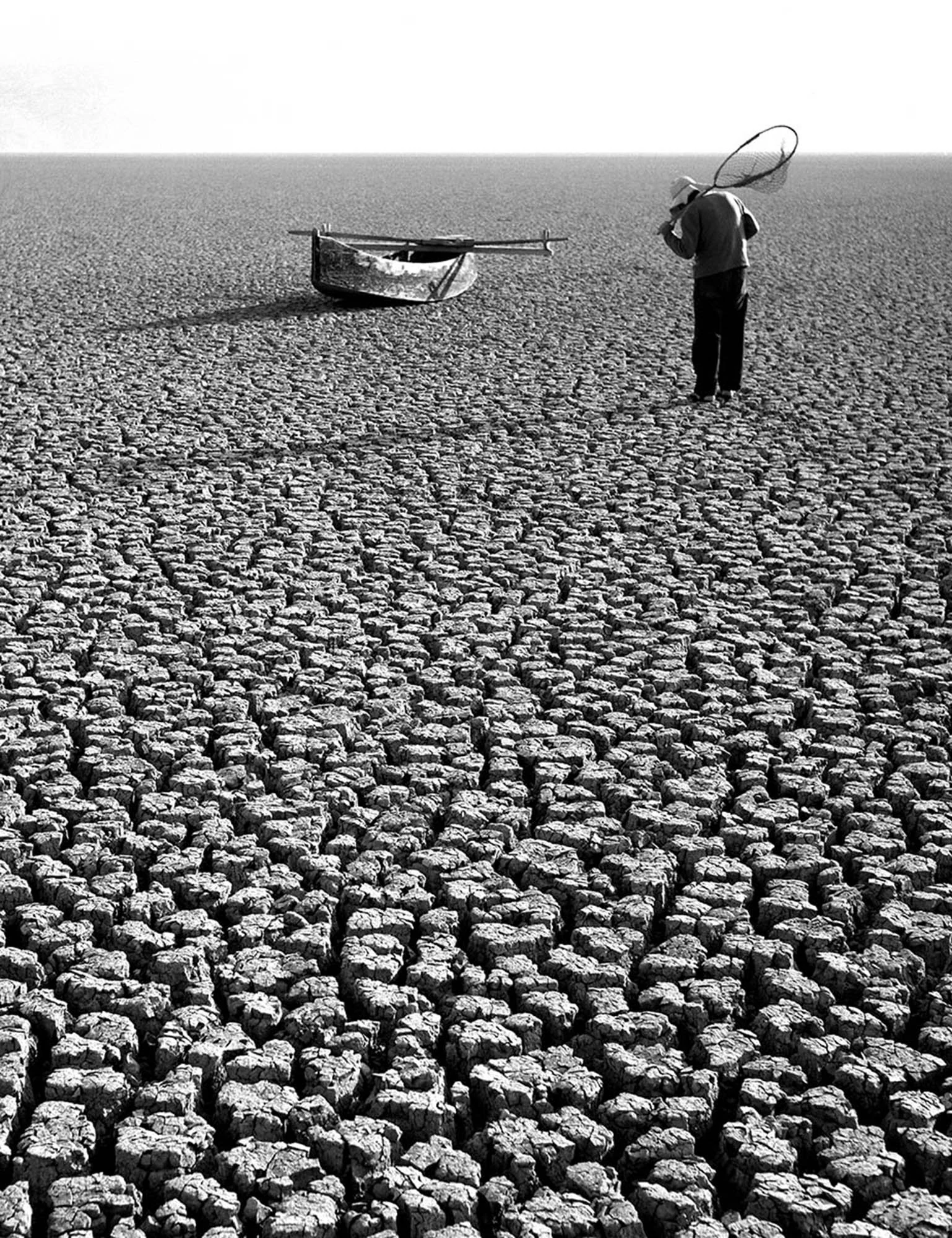
If Takis Tloupas could walk through the exhibition “Another Europe” today, what do you think his first reaction would be on seeing these personal travel images displayed so many decades later?
I believe his first reaction would be a big, warm smile filled with surprise and emotion. He was a modest man who did not photograph with posterity in mind but out of a pure love of life, so I think he would feel awe seeing these personal moments, his journeys on the Vespa and his spontaneous photographs of Europe become the focus of such an important exhibition. He would be fascinated that the public today comes into contact with so many personal objects that characterise him, and he would feel that that journey never ended but continues through the eyes of visitors.
Is there one photograph from the exhibition that, for you, captures Takis Tloupas more than any other, both as a person and as a photographer? Why that one?
That photograph contains everything about him: freedom, a thirst for life and the magic of the unknown that guided him. It shows a man who was not afraid to leave the safety of his own place in order to discover the world, carrying only his Vespa, his gaze and a smile. For me, that frame is the very essence of my father: a free spirit and a restless creator.
What would you ultimately like visitors to take with them as they leave “Another Europe”? A different image of the great photographer, or more the feeling that they got to know the man Takis Tloupas a little better?
I would like them to keep his unique way of seeing, but also the simplicity he had as a person, feeling as though they had met him personally. As they leave, I would like them to carry with them his deep optimism, seeing how such an important creator remained authentic and unpretentious throughout his life.
If I asked you to set aside for a moment the roles of curator and photographer and simply complete the sentence “My father, Takis Tloupas, was…”, what would you say?
My father, Takis Tloupas, was light, simplicity and love of life itself!
What we think
The interview brings Takis Tloupas into focus through two levels that continually meet: the creator’s way of seeing and his daughter’s personal memory. Vania Tloupas describes the archive not as a closed family legacy, but as living material that she wants to keep returning to society, connecting curation with the continuity of photographic memory.
Short biography
Vania Tloupas was born in Larissa in 1969 and grew up in the photo studio of her father, Takis Tloupas. She studied Photography in Athens and has run her own studio in Larissa since 1991, specialising in portraiture. In the autumn of 2024, she presented her solo exhibition “50 women over 50” at the Hellenic American Union, a body of work dedicated to female maturity. At the same time, as manager of the Takis Tloupas Photographic Archive, she works on its digitisation and presentation and curates exhibitions drawn from the archive.
Frequently asked questions
What does the exhibition “Another Europe” reveal through the Takis Tloupas archive?
According to Vania Tloupas, it presents a lesser-known side of him: the man behind the camera, the restless creator and “eternal traveller,” through material she discovered while working on the archive.
What does the exhibition include beyond the photographs?
Vania Tloupas mentions Takis Tloupas’s Vespa, glasses, watch, cameras, tools and personal photographs, helping visitors come closer to the person behind the work.
How does Vania Tloupas view the management of the photographic archive?
She wants the archive to remain a living organism, accessible for study and research, and to function as an open source of inspiration for younger photographers and researchers.
What is her long-term goal for the archive?
As she says in the interview, the ultimate goal is the creation of a Museum for Takis Tloupas.
Links
tloupas.gr · takis.tloupas.gr · vania.tloupas.gr
Instagram: @vania_tloupa_photography · @takis_tloupas_photography