

Summary
- The Photography Club of the 2nd Gymnasium of Kifisia has operated systematically since 2012.
- Participation has grown from around 15 students to more than 30.
- Students work on theory, composition, camera settings, colour and practical field work.
- The club organises photo outings, multi-day trips and group exhibitions.
- Its experience shows why more photography clubs are needed in schools.
- From an idea to a student photography community
- What children learn through photography
- Photography steps outside the classroom
- When the lens changes the way you see
- The difficulties of a school photography group
- “Go out. Don’t be afraid”
- About Pavlos Zamenopoulos
- What we think
- Frequently asked questions
Photography can become much more than a technical skill inside school: it can be a way of observation, expression, collaboration and understanding the world.
Teacher and amateur photographer Pavlos Zamenopoulos, coordinator and head of the Photography Club of the 2nd Gymnasium of Kifisia, speaks to PTTL about an initiative that started in 2009 and has operated systematically since 2012.
PTTL’s relationship with this initiative goes back many years. In a 2013 article about the club’s first exhibition, we already wrote that it is very important for the art of photography to spread in Greek schools. That point remains relevant today: just as school gives space to music, theatre and the visual arts, it also needs to create more opportunities for students to engage with photography.
Creating photography groups can be a meaningful first step. A practical guide for setting up a school photography group shows that such an effort can start with simple means, even smartphones, and can be supported through collaboration with photographers and a final exhibition or presentation.
In the interview below, Pavlos Zamenopoulos explains how the club works, what children learn, why outings matter, what changes when a student sees their photograph printed, and which difficulties such an initiative faces in public school.
From an idea to a student photography community
How did the Photography Club at the 2nd Gymnasium of Kifisia begin?
The Photography Club of the 2nd Gymnasium of Kifisia began from my desire to create an extracurricular school activity that was different from those usually organised by colleagues in schools. So, little by little, I made the first attempt in November 2009. It operated for one school year and then began systematically in October 2012. We had a short two-year pause because of Covid and then continued normally until today.
What was the original idea behind creating the group?
My love for photography led me to create the Photography Club. I wanted to pass that love on to the children. I wanted them to see the world with a different gaze, the gaze through the photographic lens, and honestly, that gaze has sometimes surprised me positively.
How has the club evolved since 2012?
In 2012 we started cautiously. We did not know how many students would come, what response there would be, nothing at all. Fortunately, things went much better than we expected. The students taking part in the club increased every year. We started with around 15 participants in the first year and now participation exceeds 30 students.
How many students usually participate each year?
Officially, up to 30 students take part. This is a limit imposed by the Ministry of Education. Unofficially, we have reached 43, including former students who have gone on to upper secondary school and want to continue.
Does a student need previous photography experience in order to participate?
No, a student does not need previous experience in photography. After all, we start from the very basics, the ABC of photography.
What children learn through photography
What do children learn through their participation in the Photography Club?
First, they learn what photography is. They learn the basic rules of photography, such as composition, camera settings and colour palette. They also learn local history, how to cooperate with one another and, most importantly, how to contribute to society.
Do you work more on photography theory or practical training?
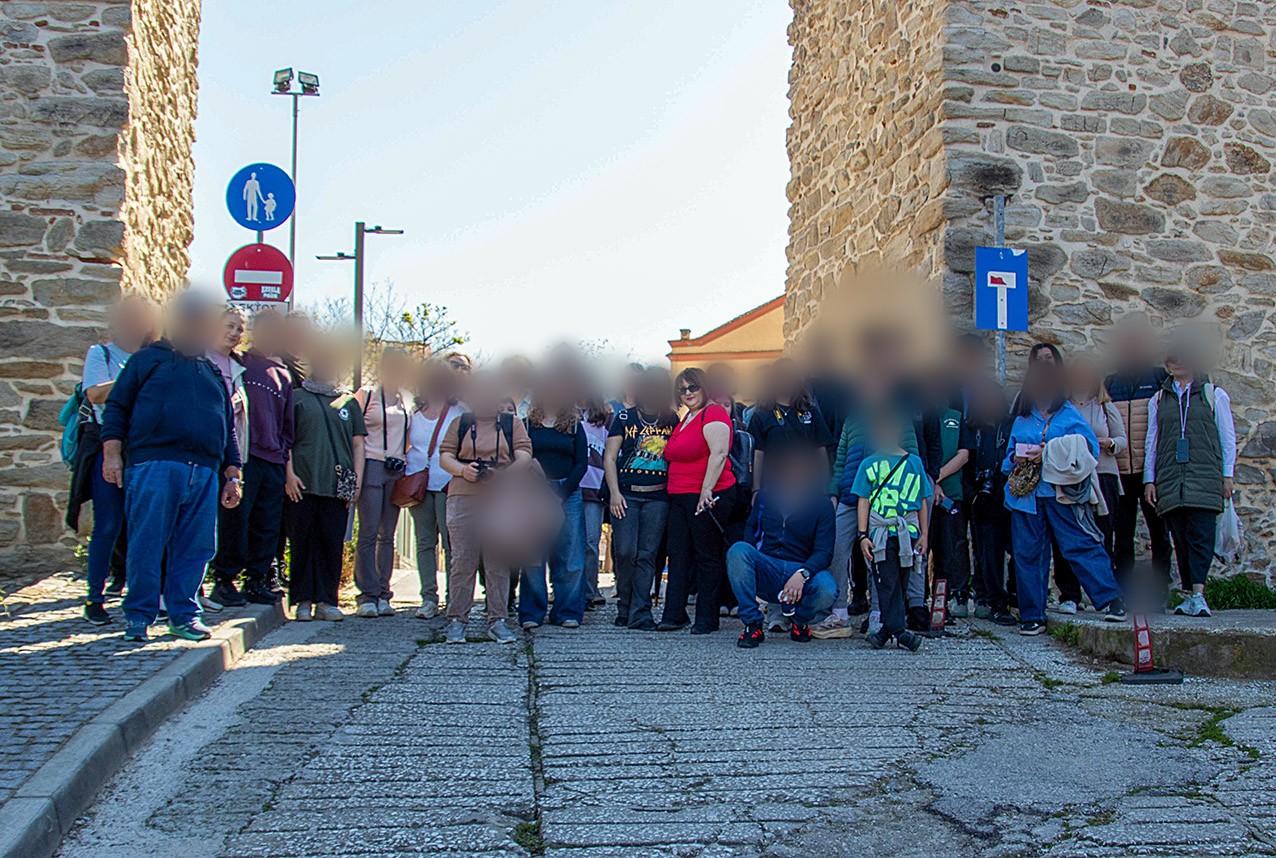
We do both, theory and practice. In our meetings we work on the theoretical part and once a month we do practical work by going on an outing to different parts of Athens and beyond.
What equipment do the students use? Cameras or mobile phones?
In the first years I asked the children to have a camera, even a compact one. A DSLR would have been ideal. Some children who had the possibility bought one. In recent years, as mobile phones have improved greatly, they also photograph with phones.
What subjects do the children usually photograph?
The subject matter varies. On our outings we deal mostly with street photography, architecture, travel photography and landscapes. But there are also children who have photographed still life, night scenes and whatever captures their interest.
Photography steps outside the classroom
Are there photography outings or activities outside school?
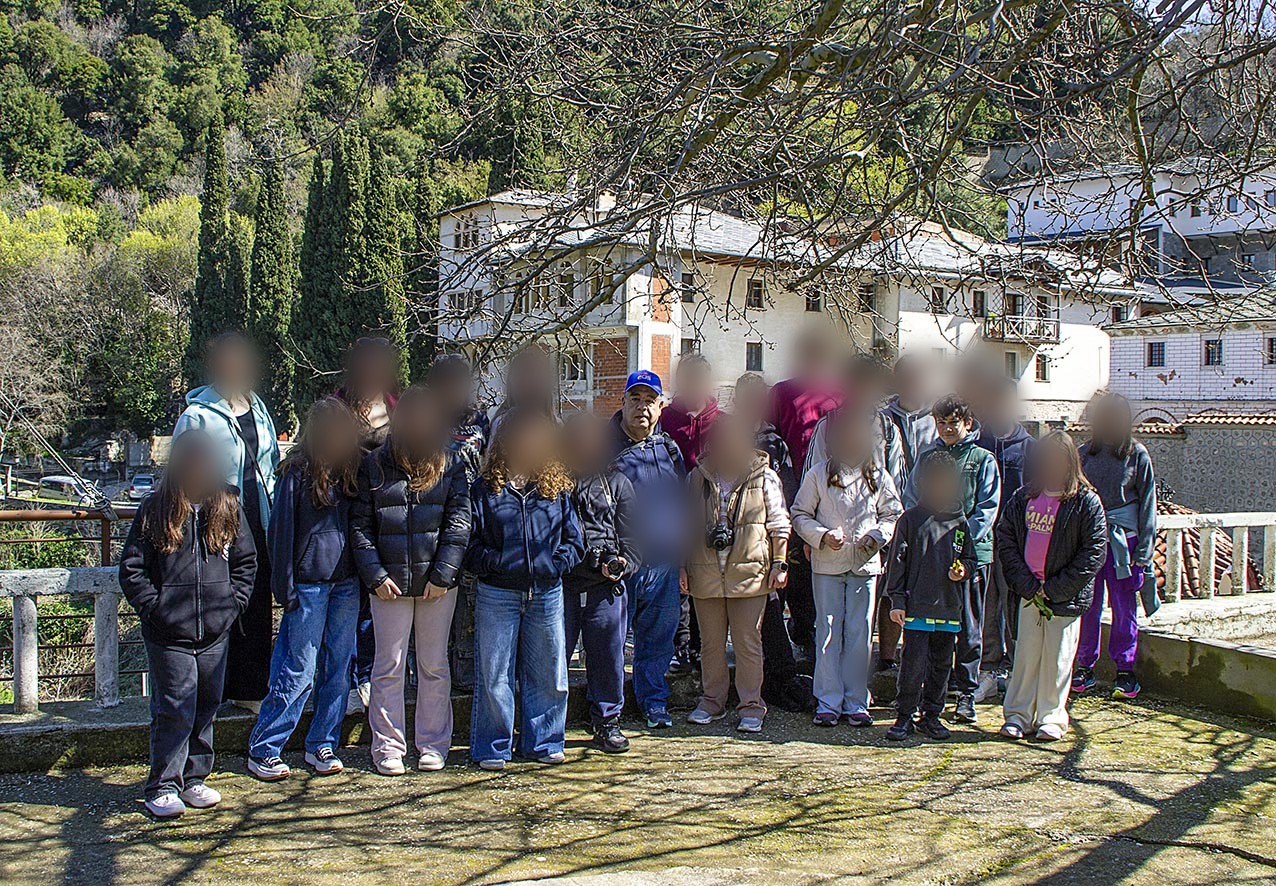
Of course there are. In winter there is usually one outing per month, on a Saturday or Sunday, to different parts of Athens. In the first years we organised a one-day outing outside Athens in April. Since 2017 this outing has become a multi-day trip. As the Easter holidays begin, we leave for our multi-day photography outing. These outings have taken place in various parts of Greece and we have also gone twice to Apulia in southern Italy. Last Easter our destination was Eastern Macedonia and part of Thrace, with Kavala as our base.
How do students react when they see their photographs presented to others?
The surprise of many children when they see their photographs printed is great. They cannot imagine the difference between seeing their image on a phone or computer screen and seeing it printed on photographic paper in 20×30 or 30×45 size. They are fascinated…
Has the club organised photography exhibitions or presentations of work?
The club has organised six group photography exhibitions in total. The photographs are sold and the proceeds from all the exhibitions have been given to charitable causes, while the photographic material that has been exhibited until today can be found on the Photography Club blog.
Which moment from all these years do you remember most strongly?
There are many moments that have stayed etched in my mind. The strongest was when we were setting up our first exhibition and I saw the joy and satisfaction in the children’s eyes when they saw their photographs printed and displayed in the auditorium of our school.
When the lens changes the way you see
How does photography help a student observe everyday life differently?
I believe the lens changes their perspective on the world around them. It happened to me too. They observe things, objects and situations from a different point of view. Many times during school trips, children have told me about “frames” they have “captured” with their gaze.
What role does cooperation play within the group?
A very big one. But I would change the question a little. What role has the club played in the cooperation of the children among themselves? A very big role. Children who at school seemed indifferent to one another, during outings become small groups or one big group, cooperating and even competing over who will take the best frame.
Are there children who continued with photography after school?
Some children, yes. Even though we have lost contact with most of them, from time to time I see them posting their photographs on social media. To tell the truth, sometimes I have “envied” their frames.
The difficulties of a school photography group
What difficulties does a school cultural programme like this face?
The difficulties are many. Some children start enthusiastically and along the way give up because of increased obligations, usually private lessons.
Photography is a relatively expensive hobby. Financial problems affect the programme. Especially for the multi-day outings, the cost is high and not everyone can take part. There is no financial support, not even from the municipality. Only in 2023 did the AIGEAS Foundation of Mr Martinos give us sponsorship that covered part of the cost of our trip to southern Italy.
Because most of our outings take place outdoors, the weather is also a major problem. We have had to cancel our outings several times because of the weather.
What is needed in order for such initiatives to receive greater support in public schools?
In the past, teachers who organised extracurricular activities such as the Photography Club had a two-hour reduction in teaching hours each week. This has been abolished. Also, travelling during school operating hours is very difficult because of bureaucracy and, from what I have been informed, the latest instructions make these movements even harder. In addition, any financial cost is borne by the teacher. There have been many times when I have paid for these trips out of my own pocket. But there is a very great reward: the children’s smile and satisfaction.
“Go out. Don’t be afraid”
What message do you want the Photography Club to pass on to students?
Go out. Don’t be afraid. Face the world through the lens. Believe in yourselves and impress us.
What are the group’s next plans?
Our next plans? To keep photographing. Whenever and whatever we like.
In winter we will organise ourselves again as a group with our old and new members. We are preparing, if we manage it, a six-day outing in April 2027 to the Dalmatian coast and in May 2027 our 7th group exhibition in the auditorium of our school in Kifisia.
In closing, I would like to thank all those who have helped in implementing this programme. First of all, the parents. Our sponsors in the exhibitions. The teachers of the school. The school principals and everyone who has helped us all these years.
About Pavlos Zamenopoulos
Pavlos Zamenopoulos is an Electrical Engineer (T.E.) and teaches Technology in a Gymnasium. Before entering education, he worked as a lighting and sound technician in various performances and theatres. He has been involved with photography for many years and systematically since 2011. He has attended photography seminars at the studio on Plataion Street with Tasos Sklavounos and at DIKEA of the Municipality of Acharnes with Giorgos Sirsiris. He has taken part in five group exhibitions and has curated six exhibitions of the Photography Club of the 2nd Gymnasium of Kifisia.
Website: pzamenopoulos-photos.blogspot.gr
Instagram: @pzamenopoulos
Facebook: Pavlos Zamenopoulos
What we think
The experience of this club shows in practice that photography deserves a more meaningful place in school, alongside the other arts. Not only as technical knowledge, but as a visual language that helps students observe, narrate, cooperate and express themselves.
Creating more school photography groups is a realistic way to achieve this. It does not require expensive equipment: it can begin with mobile phones, basic exercises, photography outings and a final exhibition, with support from teachers, photographers and local photography groups.
Frequently asked questions
When did the Photography Club of the 2nd Gymnasium of Kifisia begin?
The first attempt took place in November 2009 and systematic operation began in October 2012.
Does a student need a camera?
No. In recent years, students also use mobile phones, while the teaching starts from the basics.
How many students participate?
Officially up to 30, while the group has unofficially reached 43, including former students who continued in upper secondary school.
What does the group’s activity include?
Theory, practical photography, outings, multi-day trips and group exhibitions.
Can a similar group be created in another school?
Yes. PTTL has published a practical guide for teachers who want to start a school photography group.