

Summary
- Giorgos Tsafos returns to Petrousa in 2027 for the fourth experiential photography workshop around Babinten
- The workshop has only three available places and focuses on photographic experience, human-centred storytelling and reportage
- For Giorgos Tsafos, trust and time are essential elements in creating meaningful photographs of people
- Applicants are asked to submit a portfolio of 12–15 images related to reportage and human-centred photography
- Participation remains free, with the goal of creating a cultural and historical legacy and enriching the Association’s photographic archive
- He prefers truthful, unstaged images and wants the final result to develop into a complete photographic story
Giorgos Tsafos talks to PTTL about the fourth experiential photography workshop at Babinten in Petrousa, explaining why human connection, authenticity and photographic storytelling are at the heart of the process.
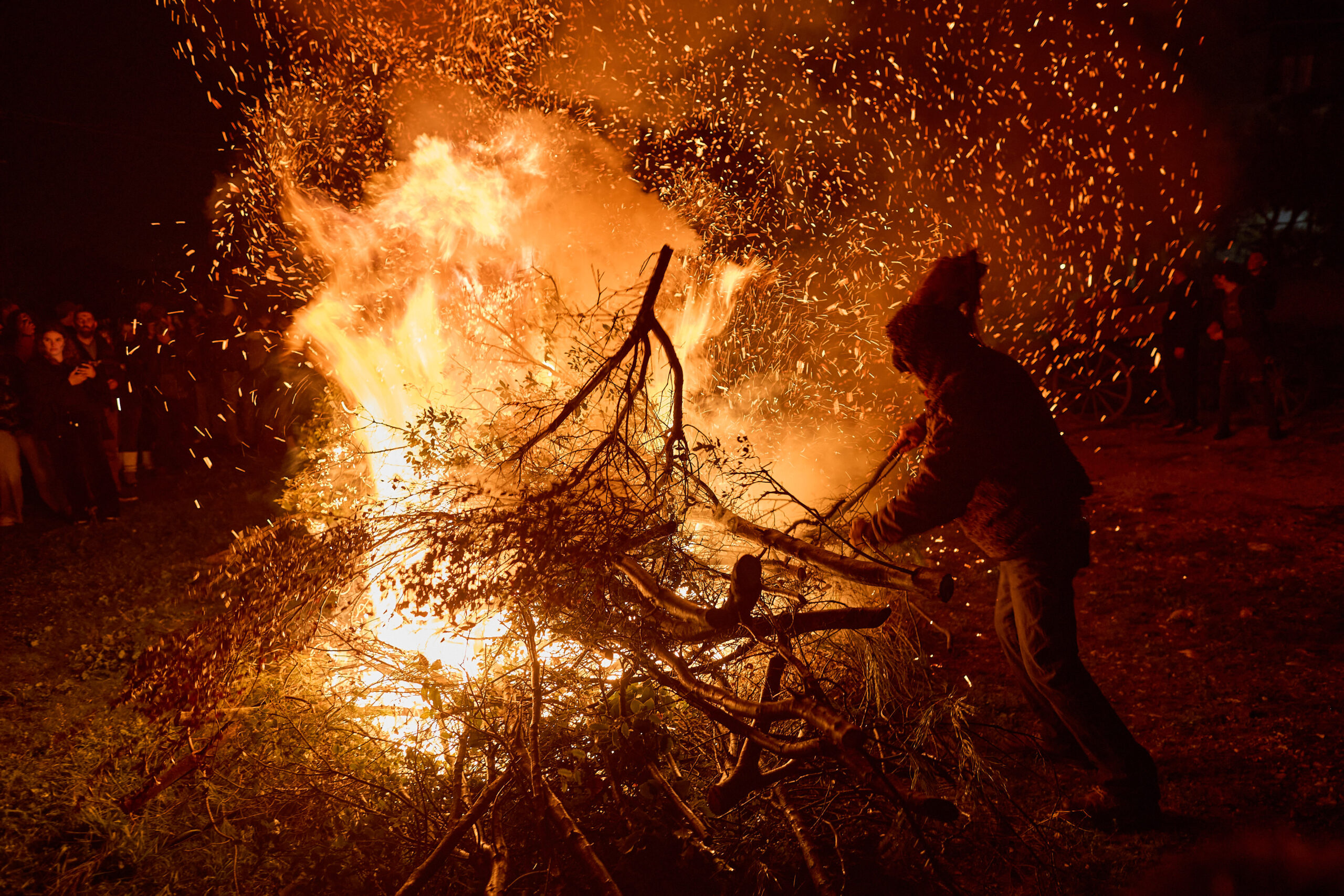
In 2027, Giorgos Tsafos returns to Petrousa for the fourth edition of the experiential photography workshop around Babinten, with his constant point of reference being not only the event itself but, above all, the people of the area, whom he first met in January 2015.
His approach is particularly interesting because the workshop is not treated as just another technical photography lesson. Participation, trust, understanding the custom and the time invested in people are at the centre of a process aimed at producing images with substance and value as photographic documents.
The relationship with Petrousa and the experiential workshop
Giorgos, in 2027 the experiential photography workshop at Babinten reaches its fourth edition. What keeps bringing you back to Petrousa every year?
The people. They have always been my priority, not the event itself. And although this year we are organising the fourth workshop in a row, my first encounter with the people of Petrousa was in January 2015.
After three previous editions, what has changed in the way you personally photograph and perceive Babinten?
Babinten is a celebration with a “dynamic” character. Every year is different. Every time I return, I focus on different subjects and make different images. For the same reason, some participants from previous workshops choose to come back.
What will be different about the 2027 workshop compared with previous years?
Every year we try to offer participants a meaningful, experiential experience, not simply a “photography lesson”.
You use the term “experiential workshop”. What does that mean in practice for the photographer who comes to Petrousa?
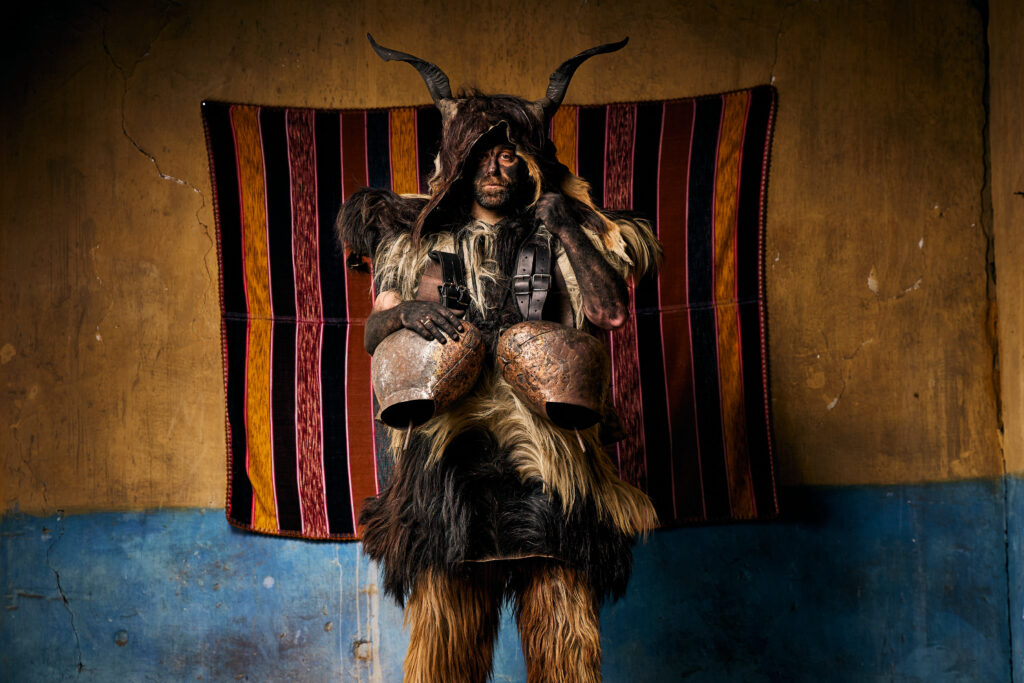
In my opinion, if you want to make truthful images at Babinten, you have to live it. And that is something I want interested photographers to understand.
The workshop is not suited to people who do not want to get involved. They must be willing to become one with the locals, to laugh, dance, drink, joke and even dress up if the need arises. Full participation is a prerequisite.
Authenticity, documentary photography and human connection
When does a photograph of a folk event move beyond an impressive snapshot and become a genuine photographic document?
Very briefly, when it is truthful and represents exactly what is happening, as opposed to images made simply to look beautiful.
We do not want beauty, carefree imagery and hypocrisy. We want substance, value, meaning… Exactly the opposite of what the modern era imposes and what the demands of the “free market” dictate.
Babinten is now listed in the National Inventory of Intangible Cultural Heritage. Does that change the responsibility of a photographer trying to document it?
I do not think so. However, its inclusion in the list does, to some extent, certify that this is an authentic custom.
Where do you draw the line between a photographer participating in a custom and beginning to influence what is happening in front of the camera?
Speaking more generally and not exclusively about Babinten, I always try to go almost unnoticed precisely because I do not want to influence the course of a custom in any way.
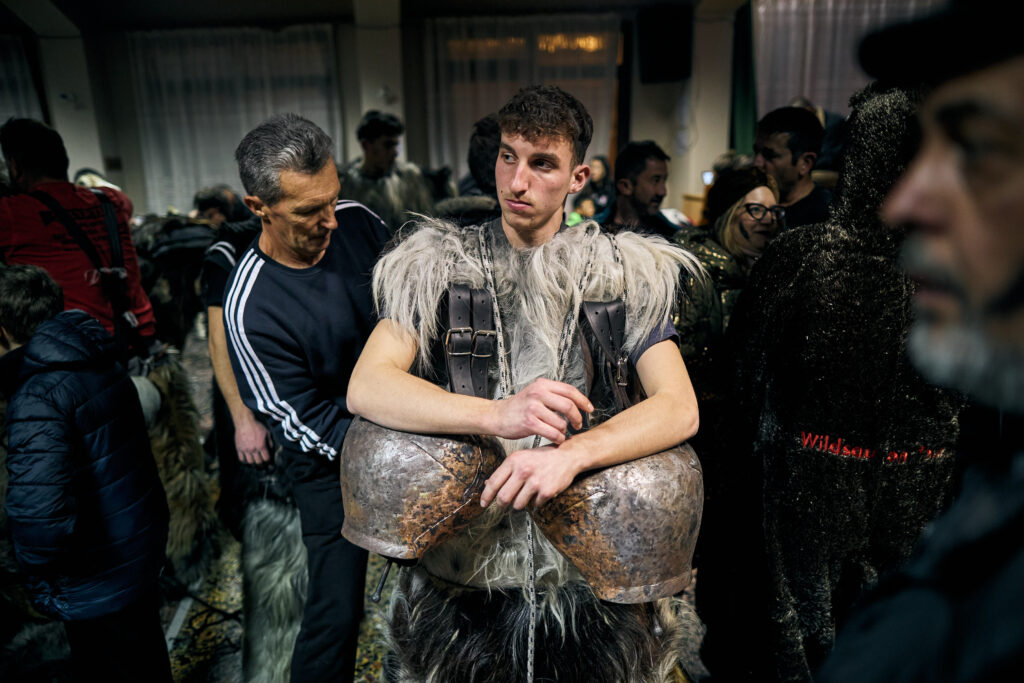
I avoid asking participants for posed images and rely on the dynamics of the moment, whatever they may be, even when I know in advance that they will not give me the best possible photographs. It is enough for me that they are truthful.
How important is the relationship of trust with residents and participants in creating meaningful images?
It is crucial, and not only for Babinten but for everything I choose to photograph. And that requires TIME! Human-centred photography needs TIME! That is what makes it difficult and demanding.
You cannot appear out of nowhere in a café, start photographing old men for ten minutes and then disappear as if you were never there.
In human-centred photography, at the very least, you have to respect the person in front of you and be willing not only to take something from them but also to leave something of yourself behind when you leave. You should not return as the same person.
Most people cannot do that because they feel that the boxes of information they have built their lives around, their small world, are being threatened.
Technical readiness and portfolio selection
The photography involves night scenes, movement, crowds and events that do not repeat themselves. What is the biggest mistake you see photographers make under these conditions?
If you know what you want and know how to do it, you will not make a mistake.
You ask applicants to submit a portfolio of 12–15 photographs. What is the first thing you look for when you open a candidate’s portfolio?
I look to see whether they have genuinely worked in a reportage style and with human-centred storytelling, and of course I look at their sense of framing.
The workshop does not aim to teach you how to use your camera and its functions. It is assumed that every applicant can do that with their eyes closed. The goal is to go beyond that…
What could make you reject a portfolio even if it contains technically excellent photographs?
What many photographers, even professionals, have not understood is that a portfolio is not simply 5–10 good photographs. Every time, you have to adapt it according to what the person you are addressing wants to see.
What matters more is the priority each photographer gives to selecting their images, rather than the individual photographs themselves.
I have had a professional photographer send me material that gave the impression it was simply “whatever they happened to find”. Of course, he is not the only one. I was simply surprised when I learned that he was, and remains, a professional.
Why do you believe that a portfolio of landscapes or drone photographs is unsuitable for this selection?
Because it is completely unrelated. A photographer learns to approach a landscape in one way, while a custom such as Babinten requires an entirely different photographic approach.
There we are talking about effective on-the-fly photography or, if you prefer, run-and-gun!
There are only three available places. Why do you choose such a small group, and what does that allow you to do differently during the four days?
For practical reasons. First of all, because when there are many people, they relax. I do not want relaxation. I do not want a carefree attitude. I expect military-level readiness at any moment. As if you were working for a major news organisation.
Secondly, communication with a small number of people is much easier and, thirdly, because 3+1 people can travel more easily in one car.
How important is photographic equipment in a workshop like this, and what do you consider genuinely essential for a participant to bring?
It is important to the extent that it helps you achieve what you have in mind.
Generally speaking, I would suggest having a standard zoom such as a 24-70mm or 24-105mm, f/2.8 or f/4, and an even faster wide-angle prime, such as a 35mm, 28mm or 24mm.
From understanding the custom to photographic storytelling
What is the role of the briefing by the Cultural Association and the anthropologist before the photography begins, and how much can knowledge of the custom change the images someone eventually creates?
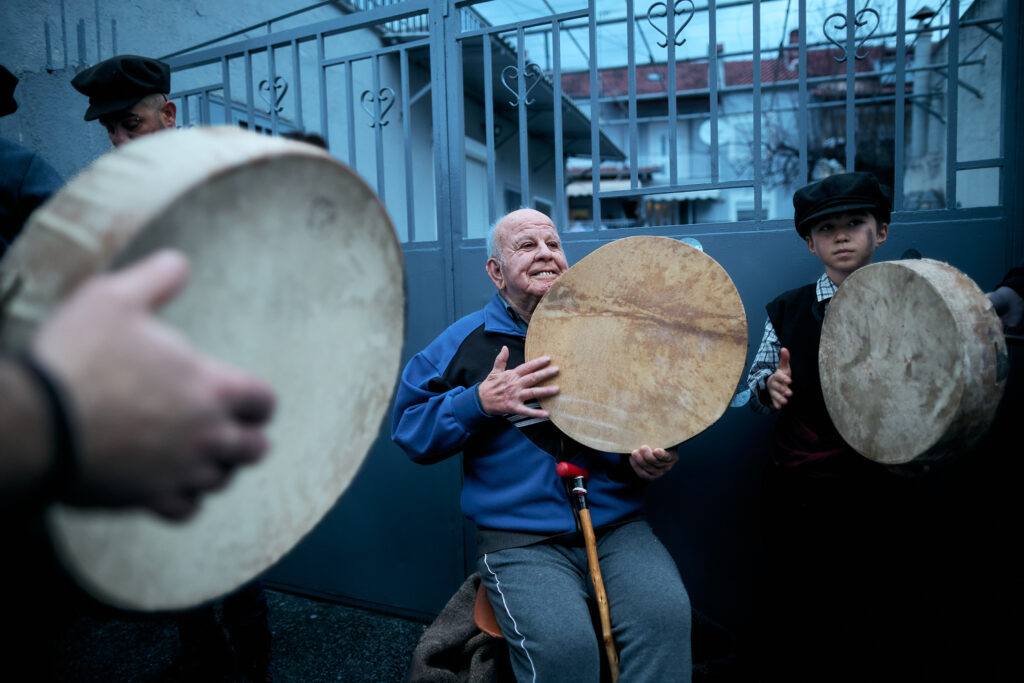
This is a very important initiative because we do not want someone to arrive as a simple observer, like a tourist.
We want them to know what they are going to see, what they are going to experience, what the custom means to the local community and so on.
At the end of the four days, what do you want to see from a participant: individual strong photographs or a complete photographic story?
Ideally the second, although I usually see the first.
How important is the process of selecting and sequencing the photographs after shooting in order to turn the material into a narrative?
It is extremely important and, in practice, difficult when we are talking about material from two or three people.
The participants’ photographs can become part of the Association’s archive and potentially be used in exhibitions. How important is it for you that the work has a life after the workshop ends?
It is the be-all and end-all. It is the reason this workshop was created.
We want the Cultural Association to enrich its photographic archive every year with work from an organised group of photographers. Many people take pictures with their phones, but usually those images remain inside the devices and do not become a historical document for the future.
Creating exhibitions based on a selection of the best possible material that has been photographed is equally important.
Why did you choose to keep participation free in a workshop that requires so much time and personal guidance?
It is a cultural initiative that the Cultural Association and I designed together.
Culture is not capitalised on, it is not priced; it is offered generously. This is not a professional activity. We do not aim to produce financial profit but a cultural and historical legacy.
This is not a wedding photography or next-day photography seminar. We are not trying to discover the unknown. We are trying to look inside ourselves and at the way we perceive the environment around us…
If a photographer is considering submitting a portfolio but hesitates because they have no previous experience in photojournalism or folk events, what would you like them to know before deciding?
That they will most likely not be able to perform as they expect and will simply end up spending their time on conventional shots…
If you could give the three photographers selected only one photographic assignment for their first day in Petrousa, what would it be?
To look for genuine emotions. That means constantly observing and being ready at any moment, with the eye behind the viewfinder, and photographing with 35mm and wider.
Giorgos Tsafos
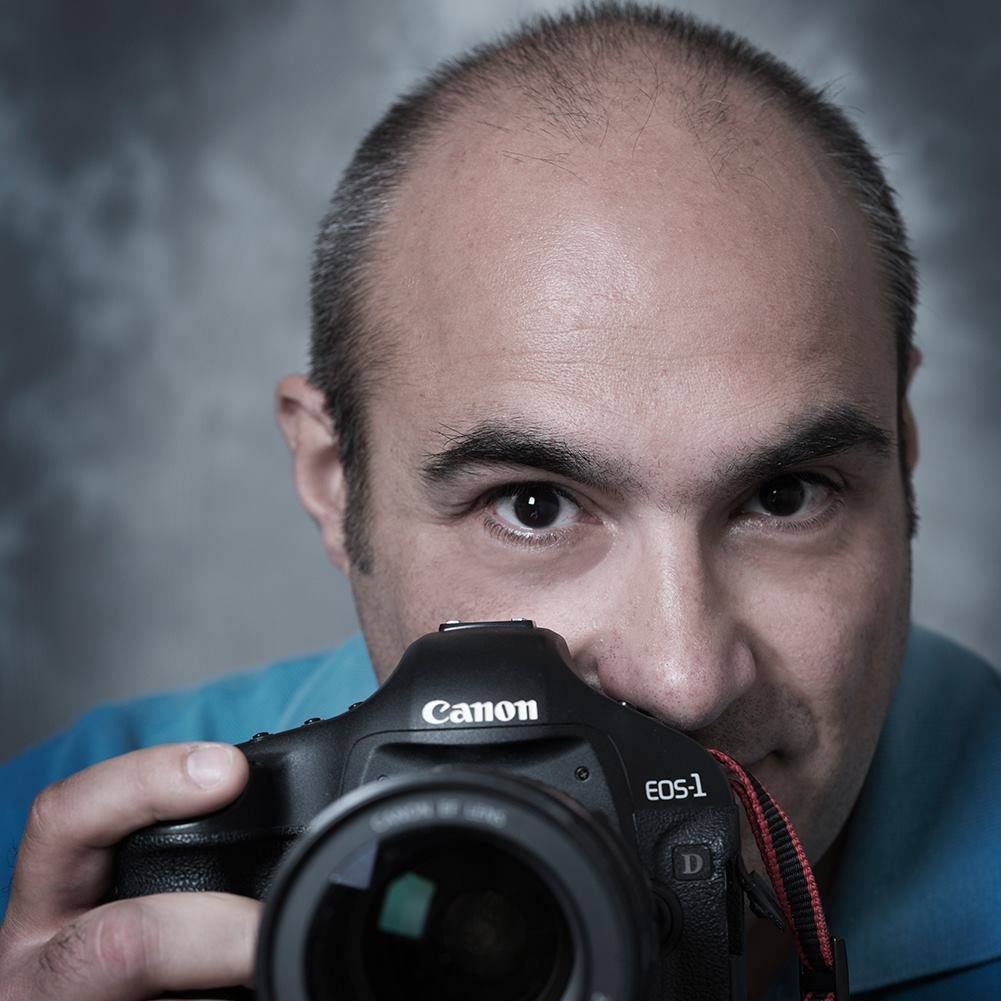
In recent years, Giorgos Tsafos has specialised in human-centred, non-commercial photography related to folk events, traditions and customs. Through this work, he finds both the time and the reason to travel as often as possible, documenting subjects that, as he notes, most people completely ignore.
Recently, he spoke at the 1st Regional Meeting of the Living Cultural Heritage Network, held in late May in Drama, about the photographic depiction and documentation of customs.
He has been involved in photography for more than 30 years and has also worked as a technical writer on photography-related subjects and as an author. A self-described nonconformist by conviction, he has so far stubbornly refused to create a personal website.
Giorgos Tsafos can be found on Instagram.
Frequently asked questions
How many photographers can take part in the workshop?
There are three available places, allowing the group to remain small, flexible and easier to coordinate.
What kind of portfolio is requested from applicants?
A portfolio of 12–15 photographs is requested, relevant to reportage-style, human-centred photography and storytelling. Landscapes and drone photographs are not considered relevant to the workshop.
Is previous technical photography knowledge required?
Yes. The workshop is not designed to teach the basic operation of a camera but to move beyond that, towards photographic storytelling and effective work in the field.
Is participation free?
Yes. Giorgos Tsafos describes the workshop as a cultural initiative whose purpose is not financial profit but the creation of a cultural and historical legacy.
What we think
Giorgos Tsafos’ interview shifts the emphasis away from equipment and technical perfection towards something more difficult: the photographer’s relationship with the people in front of the camera.
His insistence on time, trust and avoiding staged imagery describes a demanding approach to documentary photography. At the same time, the goal of preserving photographic material in the Association’s archive and using it in exhibitions gives the workshop a purpose that goes beyond individual creation, connecting photography with the preservation of collective memory.