Summary
- Ahmed al-Bekkar sealed his photographic archive behind a wall before fleeing Syria in 2016.
- Roughly ten years later, he returned to Raqqa and recovered the photographs and books.
- The collection contains about 3,000 prints and a much larger digital archive.
- He is now photographing the city’s historic places again to document how they have changed.
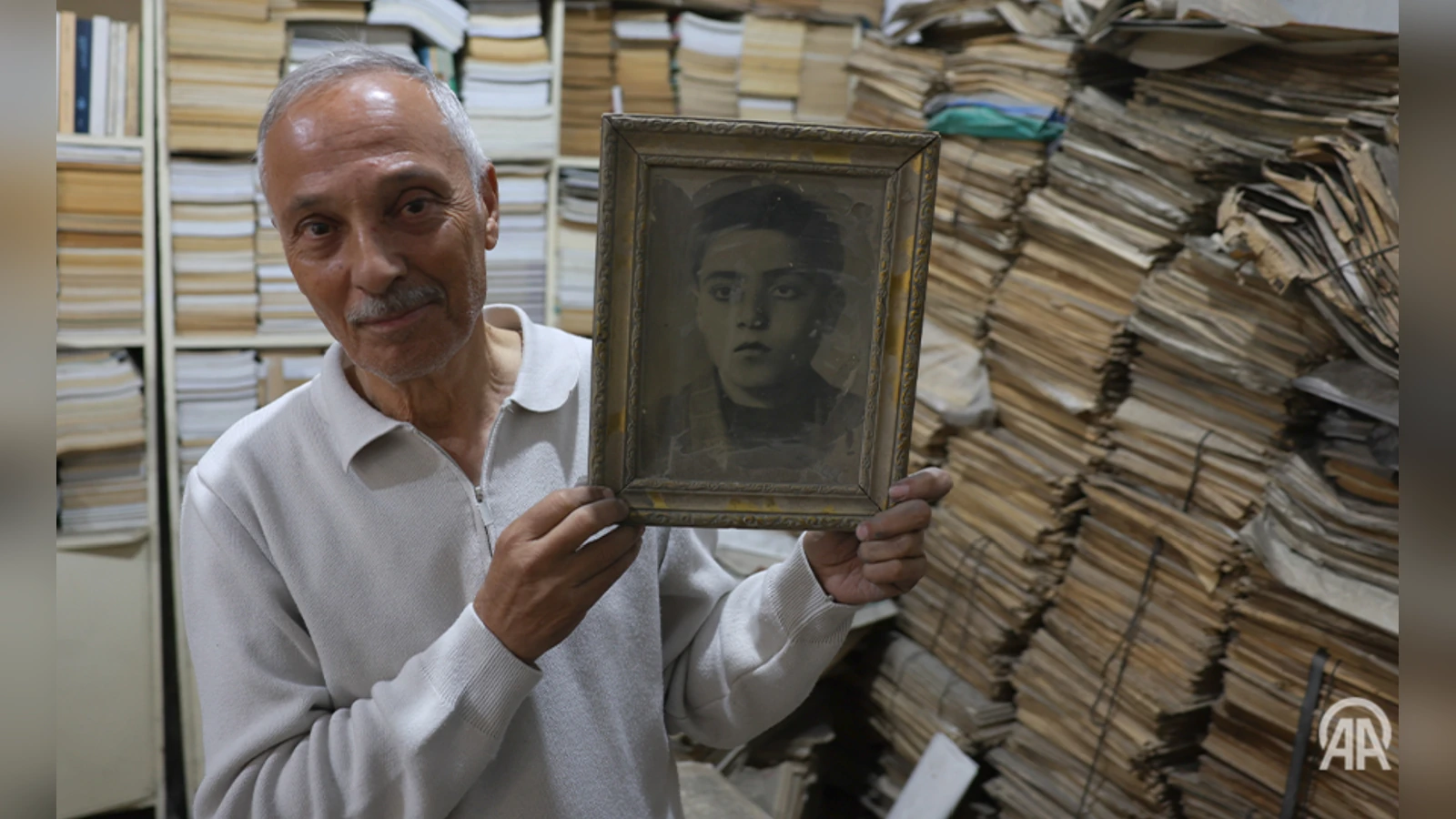
A decade after fleeing Syria, photographer Ahmed al-Bekkar returned to Raqqa and dismantled the wall he had built to protect thousands of photographs, books and personal records.
The 66-year-old had bricked up the entrance to his private library, afraid its contents would be destroyed or looted during the war. In 2026, he finally entered the room again and found the archive where he had left it.
The wall that protected an archive
Al-Bekkar left Raqqa on August 10, 2016, and arrived in Istanbul five days later. His hometown had endured fighting, destruction and looting, as well as violence by ISIS and forces of the Assad regime. Before departing, he concealed the library entrance behind a newly built wall.
Back in Raqqa, he watched the bricks being removed one by one. Recovering the books and photographs meant far more than reclaiming possessions: they held memories of his childhood, his youth and family members who were no longer alive.
Speaking with Anadolu Agency, he described how every piece of paper carried its own history, along with the time and care it had taken to collect and preserve these materials.
3,000 prints and a much larger digital collection
His physical archive includes approximately 3,000 printed photographs of Raqqa. He also holds a considerably larger digital collection documenting historical landmarks, cities and marketplaces across Syria. Together, the images record everyday life and an urban identity profoundly changed by war.
His interest in photography and cultural heritage began early. He grew up opposite an old mosque, surrounded by historic buildings that captured his imagination. Since returning, he has revisited sites he photographed years ago, making new images that show their current condition.
A photographic life in exile
His decade in Türkiye was not a pause in his artistic work. In Istanbul, he continued taking photographs, helped establish the House of Migrants association and the Turkish-Arab Art House, and held two solo exhibitions in the Fatih district.
The exhibition “Memories of My Homeland” brought together photographs of Raqqa, other parts of Syria and the destruction caused by war. In November 2025, he showed 55 prints in different sizes, alongside photographs from Istanbul and elsewhere in Türkiye. His second exhibition, “Istanbul, Farewell,” was devoted to the city that had hosted him for ten years.
What it means to preserve photographic memory
Al-Bekkar’s experience has a very different historical setting from the rediscovered glass-plate archive of Philippe Halsman, yet both remind us how images kept out of sight for years can illuminate not only a photographer’s practice but the times in which the pictures were made.
In Raqqa, the significance is especially tangible. Photographs allow a place to be compared before and after a conflict while preserving smaller personal histories that rarely find their way into official historical records.
What we think
The idea of a photographer building a wall in front of his own archive without knowing whether he would ever return is a powerful reminder of what photographs actually hold. Those 3,000 prints are not simply pictures of streets and buildings. They contain faces, families and the city as he knew it.
There is also something practical here for anyone who makes images. We spend plenty of time choosing cameras and drives, but a lasting archive needs more than a working backup: clear organization, useful descriptions, copies in separate places and a plan for how somebody else might understand the material years from now.
Al-Bekkar protected what he could with the means available to him. Now, by photographing the same locations again, he can connect two moments in Raqqa’s history separated by a decade of war and exile. That is one of documentary photography’s most important qualities: images can become even more valuable when the world they depict has changed.