Summary
Jon McCormack, one of the people who helped shape the iPhone photography experience, retired from Apple at the end of October 2026 after more than eight years at the company.
As vice president of camera and photos software engineering, he oversaw the Camera and Photos apps and technologies that influence how images and videos are captured, processed, viewed and edited.
In the video below, published before his departure, McCormack discusses his photographic work and the relationship between technology and personal creative expression.
His role in the iPhone camera
McCormack joined Apple in 2018 and led the team developing software for Camera and Photos. Its work goes far beyond the interfaces of those apps: it determines how sensor data becomes the image a user saves, views or shares.
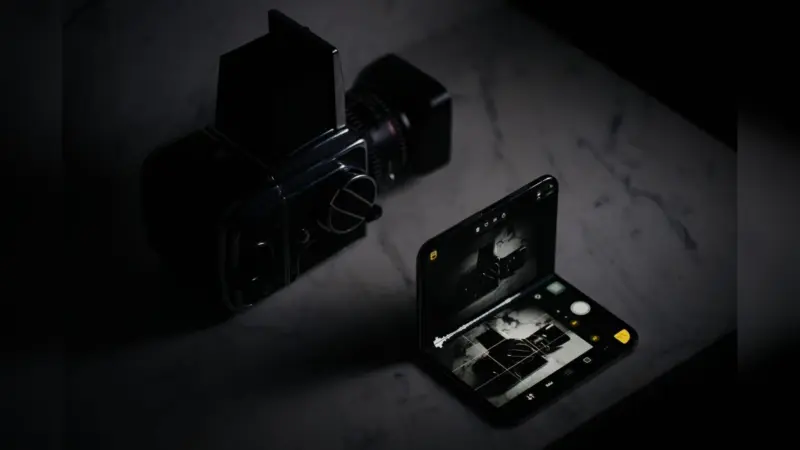
The process can combine multiple frames and exposures with noise reduction and tone processing. This computational photography pipeline in smartphones plays a central role in the appearance of a modern iPhone photo, alongside the sensor and lenses.
His retirement was reported on November 19 by Mark Gurman. According to that report, Apple has not appointed a direct successor at the same vice-president level, with responsibilities being redistributed among other executives. McCormack reported to Apple software chief Craig Federighi.
Photography as a real moment in the age of AI
McCormack has spoken publicly about the distinction between recording a photograph and generating or altering image content with artificial intelligence. He did not reject every use of AI: he drew a distinction between computational assistance and manufacturing or changing events within an image presented as a genuine memory.
That distinction matters as photo apps gain increasingly powerful generative editing tools. At the same time, Apple has developed Apple Reference Image, a system intended to verify the origin of an iPhone photograph and help establish how the final image relates to the original capture.
There is no substantiated connection between his public views on photographic authenticity and his decision to retire.
An engineer who is also a photographer
Beyond his role at Apple, McCormack is an active nature photographer and conservationist. In 2026 he published the photography book Patterns: Art of the Natural World. His experience as both a technologist and a photographer provides useful context for the ideas he brought to camera development.
What we think
On an iPhone, as on most modern smartphones, the look of a photograph is not determined by the lens or sensor alone. Software intervenes at every stage and can substantially change the result. That makes the departure of the person who led this work more consequential than an ordinary executive reshuffle.
McCormack’s approach to authenticity deserves to remain part of the conversation. Using computational processing to reduce noise or balance highlights is one thing. Removing or inventing objects while presenting the result as an untouched record of what stood before the lens is another. For documentary photographers, photojournalists and anyone recording actual events, the difference has practical and ethical consequences.
The question for Apple’s next camera-software leadership is not only how much more impressive photos can become. It is whether photographers will continue to know which parts of an image were recorded by the camera and which were generated later by software.