

Summary
- Apple Reference Image was found in a privacy disclosure included in iOS 27 beta 5
- The system could authenticate that an image was captured by a real iPhone camera
- Authentication appears to require a dedicated Reference mode at the time of capture
- Verification would use sensor data and Apple's Private Cloud Compute
- The feature is not currently active and has not been officially announced for the final release of iOS 27
- How Apple Reference Image appears to work
- Private Cloud Compute is an important part of the idea
- It does not prove that “everything in the picture is true”
- Why the approach is different from AI detectors
- Journalists and professionals may be the real audience
- The camera industry is already moving toward C2PA
- Social media remains the difficult part
- The iOS 27 paradox: More AI and more authentication
- It is not yet an official iOS 27 feature
- What we think
- Frequently asked questions
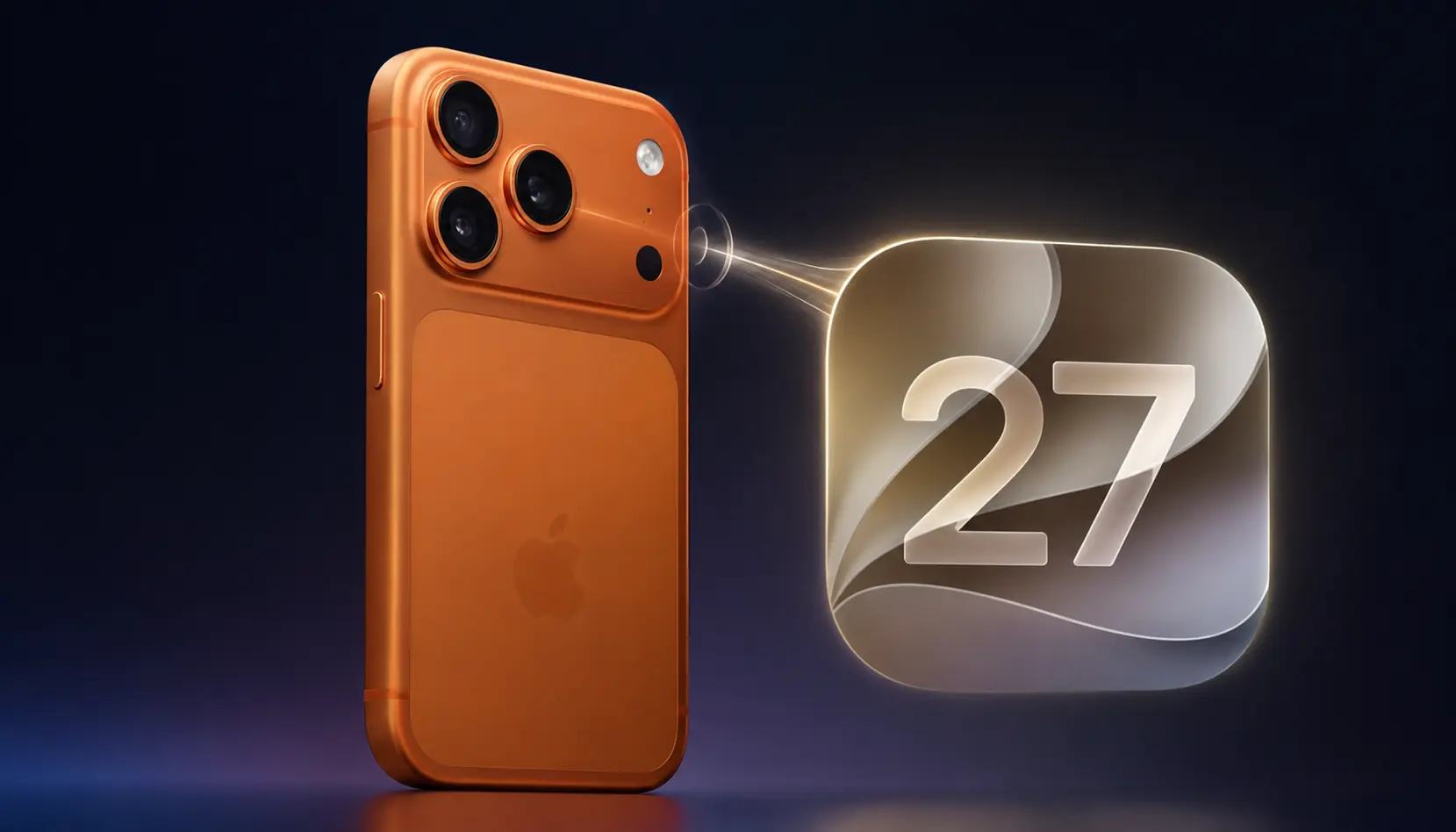
Apple appears to be developing a new system that does not try to detect whether an image is AI-generated, but instead attempts to prove that a specific photograph was actually captured by an iPhone camera.
References to Apple Reference Image were discovered in a privacy disclosure included in iOS 27 beta 5, revealing an optional photo provenance authentication system. The feature is not active and Apple has not officially announced it, but information contained in the beta describes a new Reference mode in the Camera app through which an image could later be checked to confirm that it originated from a real iPhone sensor.
The system matters because it reverses the way image verification is usually approached today. Instead of an algorithm trying to guess after the fact whether an image was generated by AI, Apple appears to want to establish a chain of evidence at the moment of capture that can prove where a photograph originated.
How Apple Reference Image appears to work
According to information contained in iOS 27 beta 5, the user would first enable Reference Image in the camera settings and then capture the photograph using a dedicated Reference mode.
The feature therefore does not appear to be automatically applied to every iPhone photograph, nor does it seem capable of retroactively authenticating images that already exist in the Camera Roll.
Additional provenance information would be stored at capture, including data associated with the sensor and the device hardware. When the user wants to authenticate the image, they would be able to tap a Reference badge.
The verification process appears to rely on Apple’s Private Cloud Compute. Information found in the beta describes sending the necessary data and image into the protected processing environment, where the sensor, capture time frame and hardware identifiers are checked. If the image passes authentication, it receives a unique identifier and is returned to the device as an authenticated version.
Private Cloud Compute is an important part of the idea
The use of Private Cloud Compute is significant because the process requires access to particularly sensitive provenance information.
Apple designed PCC so that data used for a request is retained only for the time required to complete that processing and is not available even to Apple staff. The architecture relies on Apple silicon, hardware-backed attestation and cryptographic verification of the software running on its servers.
For Reference Image, information found in the beta says Apple would receive sensor data, a hash and the assessment result, but would not gain conventional access to the original photograph as a stored file on its servers. Processing takes place inside the protected PCC environment.
This is consistent with Apple’s official Private Cloud Compute specifications, which state that data is used exclusively to fulfil a specific request and is not retained after that request has been completed.
It does not prove that “everything in the picture is true”
An important distinction is necessary.
Apple Reference Image, based on what has been discovered so far, could prove that an image originated from specific real hardware and successfully passed Apple’s authentication process.
That does not automatically certify the truth of what the image depicts.
Someone could, for example, photograph a screen displaying a fake image, a staged event, or a physical object deliberately created to mislead. The camera may be able to prove what its sensor recorded, but not whether the real-world event behind the scene was truthful or deceptive.
That is the fundamental difference between provenance and “proof of truth.”
Why the approach is different from AI detectors
PTTL has already explained why today’s AI detectors cannot provide a definitive answer about whether an image was generated by artificial intelligence.
Detectors analyse a finished image and search for patterns considered characteristic of generative AI. But image models are constantly improving, files are compressed and edited, and metadata is frequently stripped by social media and messaging services.
Reference Image takes the opposite approach.
It does not ask:
“Does this image look AI-generated?”
It asks:
“Can we prove this image was created by a specific real camera sensor?”
From a technical perspective, the second question may prove far more useful in situations where the provenance of an image has genuine value.
Journalists and professionals may be the real audience
The requirement to activate a special Reference mode makes it difficult to imagine every iPhone owner capturing all of their everyday photographs this way.
Instead, the system appears particularly useful in professional situations where the origin of a file may need to be demonstrated.
A photojournalist might need evidence that an image originated from an actual camera capture. Similar value could exist for insurance claims, technical documentation, investigations, legal proceedings and other situations where when and with which device a file was created matters.
That also helps explain why the feature could remain optional rather than becoming part of every photograph captured by an iPhone.
The camera industry is already moving toward C2PA
Apple is not the first company attempting to create a trustworthy provenance chain for photographs.
The industry has already moved toward C2PA and Content Credentials, an open technical standard designed to securely store tamper-evident information about the origin and history of digital media.
C2PA is not limited to the initial capture. It can establish a chain of information showing how a file was created and what changes were subsequently made.
PTTL has already covered the integration of Content Authenticity into the Photo Mechanic workflow, where the principle is exactly that: the provenance and history of an image should remain verifiable throughout the photographic workflow.
Based on what has been found in the iOS 27 beta, Apple’s Reference Image appears to be its own system rather than simply an implementation of C2PA. This raises the crucial issue of interoperability: how useful will an authenticated photograph remain once it leaves the Apple ecosystem or passes through services that do not understand the Reference credential?
Social media remains the difficult part
Even a technically strong authentication system has limited usefulness if provenance information disappears when an image is posted online.
Platforms frequently resize and recompress images while stripping metadata. A screenshot can also break the original authentication chain.
That does not make Reference Image useless. It means the system is unlikely, by itself, to solve the enormous problem of AI-generated images spreading across social networks.
Its greatest value may lie in the original file, where a journalist, publisher, client or organisation can request the authenticated version and verify its provenance.
The iOS 27 paradox: More AI and more authentication
What makes the development particularly interesting is that the same operating system that appears to be preparing Reference Image is also introducing more powerful AI tools for altering photographs.
PTTL has already covered the new AI editing tools coming to Apple Photos with iOS 27, including features capable of removing objects, extending the frame or changing an image’s composition.
This produces a revealing picture of photography’s future: the same smartphone may increasingly transform images with AI while simultaneously providing a dedicated method for authenticating the original capture.
Those two directions are not necessarily contradictory. The same technological evolution may ultimately make both of them necessary.
It is not yet an official iOS 27 feature
The most important point at this stage is that Apple Reference Image has not been officially announced as a feature that will be released to users.
The information comes from text discovered in iOS 27 beta 5. The feature was not active there, and Apple has not confirmed a release date, compatible iPhone models or whether it will be included in the initial public version of iOS 27.
The existence of a detailed privacy disclosure is stronger evidence than a conventional supply-chain rumour, but it is still a software feature under development and may change before release.
What we think
Apple Reference Image is moving in a direction that could prove more important than another AI detector.
As synthetic imagery improves, identifying “fake” content purely from pixels will become increasingly difficult. Authenticating the provenance of a real capture is potentially a stronger approach, particularly for journalism and professional documentation.
The key issue will be interoperability. If Reference Image remains a closed mechanism that functions primarily inside Apple’s ecosystem, its usefulness will be limited compared with a broadly supported standard such as C2PA.
If Apple can make authentication simple and widely recognisable, however, hundreds of millions of iPhones could effectively become cameras with built-in capture provenance. In the era of generative AI, that may prove more important than another incremental improvement in image quality.
Frequently asked questions
What is Apple Reference Image?
It is a photo provenance authentication system discovered in iOS 27 beta 5 that appears designed to verify that an image was captured by a real iPhone camera. It has not yet been officially announced.
Will it work with every iPhone photograph?
Based on information in the beta, no. Reference Image would need to be enabled and the image captured using a dedicated Reference mode.
Does it prove that a photograph shows the truth?
No. It can authenticate the origin of a camera capture, but it cannot prove that the physical scene itself was not staged or misleading.
Is Apple Reference Image the same as C2PA?
Not according to the information available so far. C2PA is an open provenance and Content Credentials standard, while the system found in iOS 27 appears to rely on Apple hardware and Private Cloud Compute.
Will it be included in the final version of iOS 27?
That has not been confirmed. The feature was found in beta software and is not yet active or officially announced by Apple.