

Summary
- The iPhone 18 Pro and iPhone 18 Pro Max have been officially introduced
- The 48MP Fusion main camera gains a real six-blade variable aperture
- Variable aperture physically controls light intake and depth of field
- New Pro controls provide greater manual control for photography and video
- 4K time-lapse recording in Dolby Vision HDR is supported
- The A20 Pro is manufactured on a 2nm process with a 6-core CPU and 7-core GPU
- Apple claims up to 40% higher GPU performance and 50% more memory bandwidth
- The new vapor chamber has roughly three times the surface area
- Battery life reaches up to 36 hours of video playback on the Pro and 45 hours on the Pro Max
- US prices start at $1,199 and $1,299 respectively
- Pre-orders open September 12 and sales begin September 18
- Official European and Greek pricing had not yet been published
- 48MP main camera with a real variable aperture
- From rumor to real production hardware
- New Pro controls for photography and video
- 4K time-lapse in Dolby Vision HDR
- 2nm A20 Pro with a new architecture
- Three times the vapor-chamber surface area
- Up to 45 hours of video playback on iPhone 18 Pro Max
- Smaller Dynamic Island with three Live Activities
- Availability and price
- What we think
- Frequently asked questions
The iPhone 18 Pro and iPhone 18 Pro Max are official, featuring a 2nm A20 Pro chip, a 48MP main camera with a real variable aperture and battery life reaching up to 45 hours of video playback on the Pro Max.
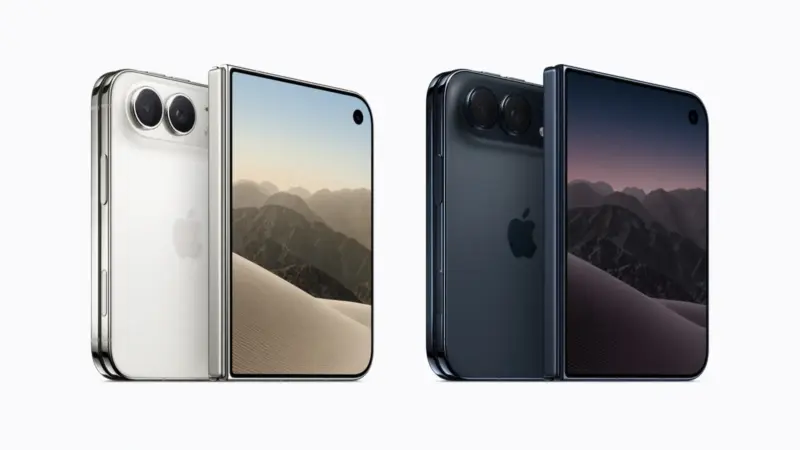
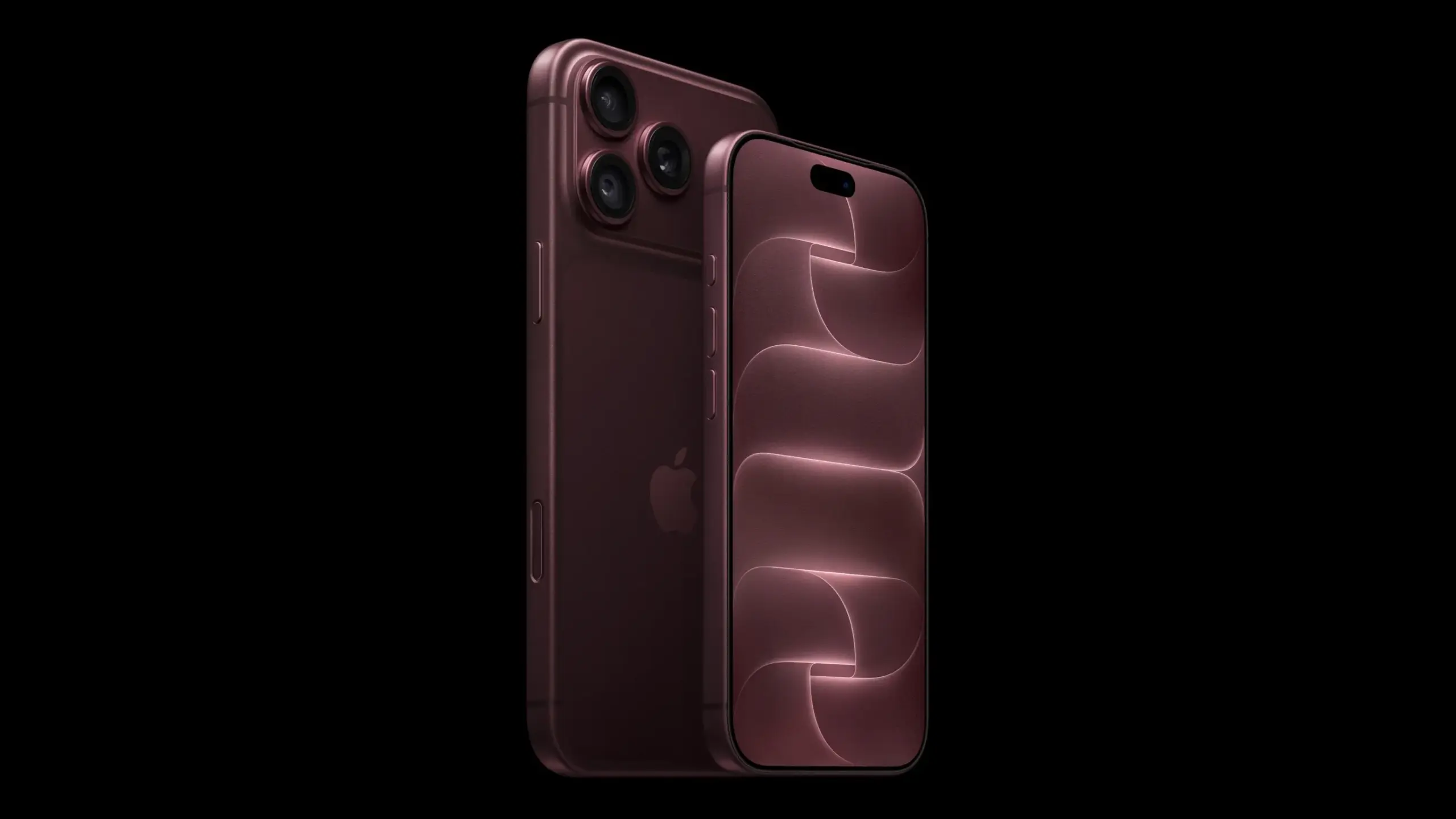
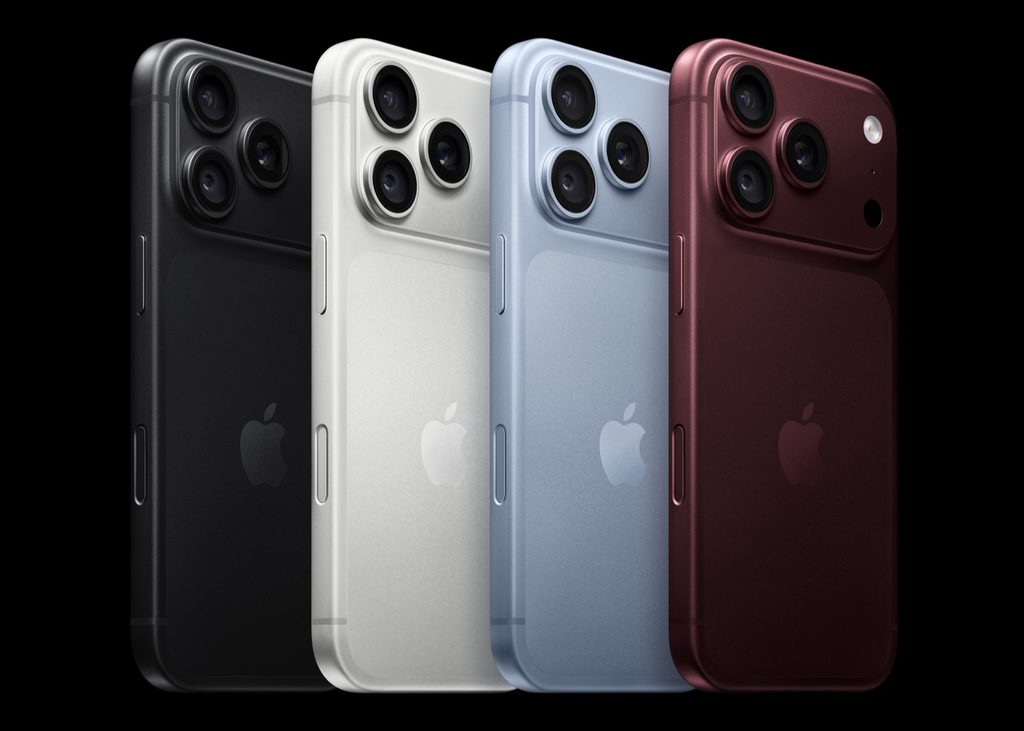
Apple officially introduced the iPhone 18 Pro and iPhone 18 Pro Max at its September 9 event, retaining the basic design philosophy of the previous generation while significantly upgrading the camera, cooling system, processor, battery life and Dynamic Island. The two models come in Deep Black, Silver, Glacier and Burgundy, with a more uniformly color-matched glass back.
For PTTL, the most important development is the camera. After months of reports and leaks, Apple has brought a real mechanical variable aperture to the iPhone for the first time, on the 48MP main camera. This provides physical control over the amount of light and depth of field before computational processing rather than simply simulating the result through software.
48MP main camera with a real variable aperture
The new 48MP Fusion Main camera uses a mechanical variable-aperture system with six extremely thin blades. Apple says the opening can change to control how much light reaches the sensor and the real depth of field. In darker conditions, it can open wider, with the company saying this helps Night Mode captures complete faster while improving quality.
This is a meaningful change to the photographic behavior of the iPhone. On previous Pro models, the physical aperture of the main camera remained fixed, and the iPhone relied on exposure, shutter speed, multi-frame capture and computational photography to adapt to different conditions.
With a genuine variable aperture, the optical system gains another physical parameter that can be controlled. A smaller opening can, for example, increase depth of field when more planes in the image need to remain in focus, while a larger opening allows more light to reach the sensor.
Before the announcement, PTTL examined what a variable aperture could actually change for natural bokeh and depth of field, noting that the main value of the technology is not necessarily “more blur,” but genuine optical control.
The confirmation is also interesting because previous leaks had raised doubts about whether variable aperture would be restricted to the Pro Max. PTTL had covered the possibility that the feature could become exclusive to the larger model, but the official unveiling now establishes the final system used in the Pro line.
From rumor to real production hardware
The new camera did not appear out of nowhere. In April, PTTL reported supply-chain information indicating that production preparations for the variable-aperture mechanism were already moving forward.
Until shortly before the keynote, however, crucial questions remained unresolved, including which models would receive the system and how much actual control Apple would give photographers.
The official announcement settles the most important point: variable aperture is real hardware and not simply another Portrait Mode parameter.




New Pro controls for photography and video
Apple is pairing the new hardware with additional manual camera tools.
The new Pro controls provide greater control over capture parameters, with Apple demonstrating shutter-speed adjustment so creators can influence motion blur. The controls apply to both photography and video.
This becomes particularly important when combined with the variable aperture. On a conventional camera, aperture, shutter speed and ISO work together as fundamental tools for controlling exposure and the creative rendering of an image. Apple is now bringing more of those concepts into the iPhone’s native capture experience.
Photographic Styles also gain additional control over texture and grain.
4K time-lapse in Dolby Vision HDR
For video, the iPhone 18 Pro models gain 4K time-lapse recording in Dolby Vision HDR.
It is a more specialized addition than a general increase in video resolution, but it has practical value for creators using the iPhone for productions, landscapes, astrophotography sequences or long-duration captures involving major changes in brightness.
Apple is also adding support for Google’s SynthID and its own Apple Reference Image standard for visual-content provenance and authenticity.
2nm A20 Pro with a new architecture
Inside both phones is the new A20 Pro, the first iPhone-series processor based on a 2nm manufacturing process.
Its CPU has six cores, including two high-performance “super cores” and four efficiency cores. The GPU moves to a seven-core design and, according to Apple, delivers up to 40% higher graphics performance.
The A20 Pro also includes a second Neural Engine, taking the system to a total of 32 NPU cores, while Apple reports a 50% increase in memory bandwidth. The changes target graphics workloads as well as increasingly demanding on-device Apple Intelligence and Siri AI processing.
Three times the vapor-chamber surface area
Cooling is another major part of the upgrade.
Apple is using a next-generation vapor chamber with roughly three times the surface area of the system in the iPhone 17 Pro. The A20 Pro is thermally connected to the system to move heat away from the chip more effectively.
That matters during sustained video capture, gaming, image processing and other demanding workloads where the device needs to maintain high performance without quickly hitting thermal limits.
Up to 45 hours of video playback on iPhone 18 Pro Max
Battery life rises significantly, particularly on the larger model.
Apple rates the iPhone 18 Pro for up to 36 hours of video playback and the iPhone 18 Pro Max for up to 45 hours. For the smaller Pro, the company also says 15 minutes of wired charging can provide up to six hours of video playback.
These numbers refer to Apple’s specific video-playback test and do not translate directly into 36 or 45 hours of mixed everyday use.
Even so, the gains combined with the more efficient A20 Pro and improved cooling suggest Apple has placed much more emphasis on sustained use.
Smaller Dynamic Island with three Live Activities
Dynamic Island remains, but it takes up less space.
The new system can now display and manage up to three Live Activities instead of two, taking advantage of the additional available space at the top of the display.
The external design remains broadly similar to the iPhone 17 Pro, retaining the aluminum construction and large camera plateau, but the back has a more uniform transition between the glass and the rest of the enclosure.
The four official colors are Deep Black, Silver, Glacier and Burgundy.
Availability and price
In the United States, the iPhone 18 Pro starts at $1,199 with 256GB of storage, while the iPhone 18 Pro Max starts at $1,299, also with 256GB. Both represent a $100 increase over the previous generation.
Pre-orders open on Saturday, September 12, 2026, with general availability beginning on Friday, September 18, 2026.
At the latest check, Apple had not yet published confirmed final euro pricing for the European market or official Greek pricing. For that reason, currency-conversion estimates are not being presented as actual European prices.
Apple has published the official iPhone 18 Pro and iPhone 18 Pro Max announcement in Apple Newsroom. The dedicated product page had not yet appeared on the Greek version of Apple’s website at the latest check.
What we think
The iPhone 18 Pro does not change dramatically on the outside, but its camera upgrade is much more interesting than another megapixel increase. A genuine variable aperture introduces physical optical control that the iPhone has been missing and could prove especially useful for both photography and video.
The crucial detail will be the actual operating range of the aperture and how much direct control Apple gives creators. If it integrates meaningfully with the new Pro controls, the iPhone moves closer to the logic of a real photographic tool, although that does not remove the physical limitations of a small smartphone sensor and lens.
At the same time, the 2nm A20 Pro, substantially larger vapor chamber and increased battery life show a generation focused more on sustained practical use than on a dramatic visual redesign.
Frequently asked questions
Do the iPhone 18 Pro models have a real variable aperture?
Yes. Apple confirmed a 48MP Fusion main camera with a real mechanical six-blade variable-aperture system that physically changes the lens opening.
What does variable aperture change photographically?
It can change how much light reaches the sensor and the real depth of field. This gives the camera physical optical control that previous iPhones did not have.
Which processor do the iPhone 18 Pro models use?
They use the 2nm A20 Pro with a six-core CPU, seven-core GPU, two Neural Engines and a total of 32 NPU cores.
What battery life does Apple claim?
Up to 36 hours of video playback for the iPhone 18 Pro and up to 45 hours for the iPhone 18 Pro Max.
When do they launch and how much do they cost?
Pre-orders begin September 12 and sales start September 18, 2026. US pricing starts at $1,199 for the Pro and $1,299 for the Pro Max, both with 256GB. Official European and Greek prices had not yet been published at the latest check.