

Summary
- Apple’s event takes place today, September 9, at 8:00 p.m.
- Greek time, but Apple has not yet confirmed the new models
- The iPhone 18 Pro and Pro Max are expected alongside Apple’s first foldable iPhone, while the standard iPhone 18 will likely move to spring 2027
- Variable aperture on the main camera is the most significant photography rumor, with newer reports leaving open the possibility of Pro Max exclusivity
- A new Samsung multilayer stacked image sensor could improve responsiveness, noise and dynamic range, but its exact implementation remains unclear
- The telephoto camera is expected to retain a 48MP foundation with a potentially wider aperture, while a 200MP periscope telephoto is not expected in this generation
- The foldable is rumored to feature two 48MP rear cameras with no telephoto, while the latest report points to a 12MP front camera
- iOS 27 code contains references to waveform, histogram, focus peaking and manual focus, although their activation has not been confirmed
- There are still no official European or Greek prices for the new models
- Which iPhones we expect today
- The starting point is already high: three 48MP rear cameras
- Variable aperture: the biggest main-camera rumor
- What variable aperture would actually change
- A new multilayer image sensor from Samsung
- Telephoto: a wider aperture may matter more than more “x”
- Ultra Wide and selfie: much less certainty
- iOS 27: Waveform, Histogram, Focus Peaking and manual focus
- Camera Control: Simpler Design With Pressure Sensors
- The foldable “iPhone Duo”: two 48MP cameras, but no telephoto
- What we probably should not expect today
- Availability and price
- The six camera details that will matter tonight
- What we think
- Frequently asked questions
Hours before today’s Apple Event, the most credible reports suggest that the biggest photography change in Apple’s new Pro iPhones could be the introduction of a physical mechanical aperture with variable opening, while the company’s first foldable iPhone appears set to make a significant compromise with two rear cameras and no telephoto lens.
Apple has officially confirmed that today’s event will take place on September 9 at 10:00 a.m. Pacific Time, or 8:00 p.m. in Greece, but it has not announced any models or technical specifications. Reports from the final days before the keynote point to the introduction of the iPhone 18 Pro, iPhone 18 Pro Max and Apple’s first foldable iPhone, which one last-minute report claims will be called the iPhone Duo. The standard iPhone 18 is now expected in spring 2027.
For photographers and content creators, the most interesting story is not another race to increase megapixel counts. The iPhone 17 Pro already has three 48MP rear cameras. What could genuinely change today is how the iPhone physically controls light before it reaches the sensor, the aperture of the telephoto lens and potentially the architecture of the image sensor itself. At the same time, code found in iOS 27 suggests Apple is testing tools more commonly associated with specialized capture apps and professional cameras.
Which iPhones we expect today
The first important point is that today’s event is not expected to introduce the entire iPhone 18 family. Current reports suggest Apple is moving to a split release cycle for the first time, with the iPhone 18 Pro and iPhone 18 Pro Max arriving in the fall alongside the foldable model, while the lower-priced iPhone 18, iPhone 18e and a possible iPhone Air 2 move to spring 2027.
Apple has confirmed none of these names. Even the foldable has been unofficially referred to as iPhone Fold and iPhone Ultra, while the latest report attributed to Mark Gurman points to the name “iPhone Duo.” Until the names appear during Apple’s presentation, they remain unconfirmed information.
PTTL has already collected the official Greek time and everything genuinely confirmed about today’s Apple Event.
The starting point is already high: three 48MP rear cameras
To judge any upgrade announced tonight properly, it is worth remembering what the iPhone 17 Pro already offers.
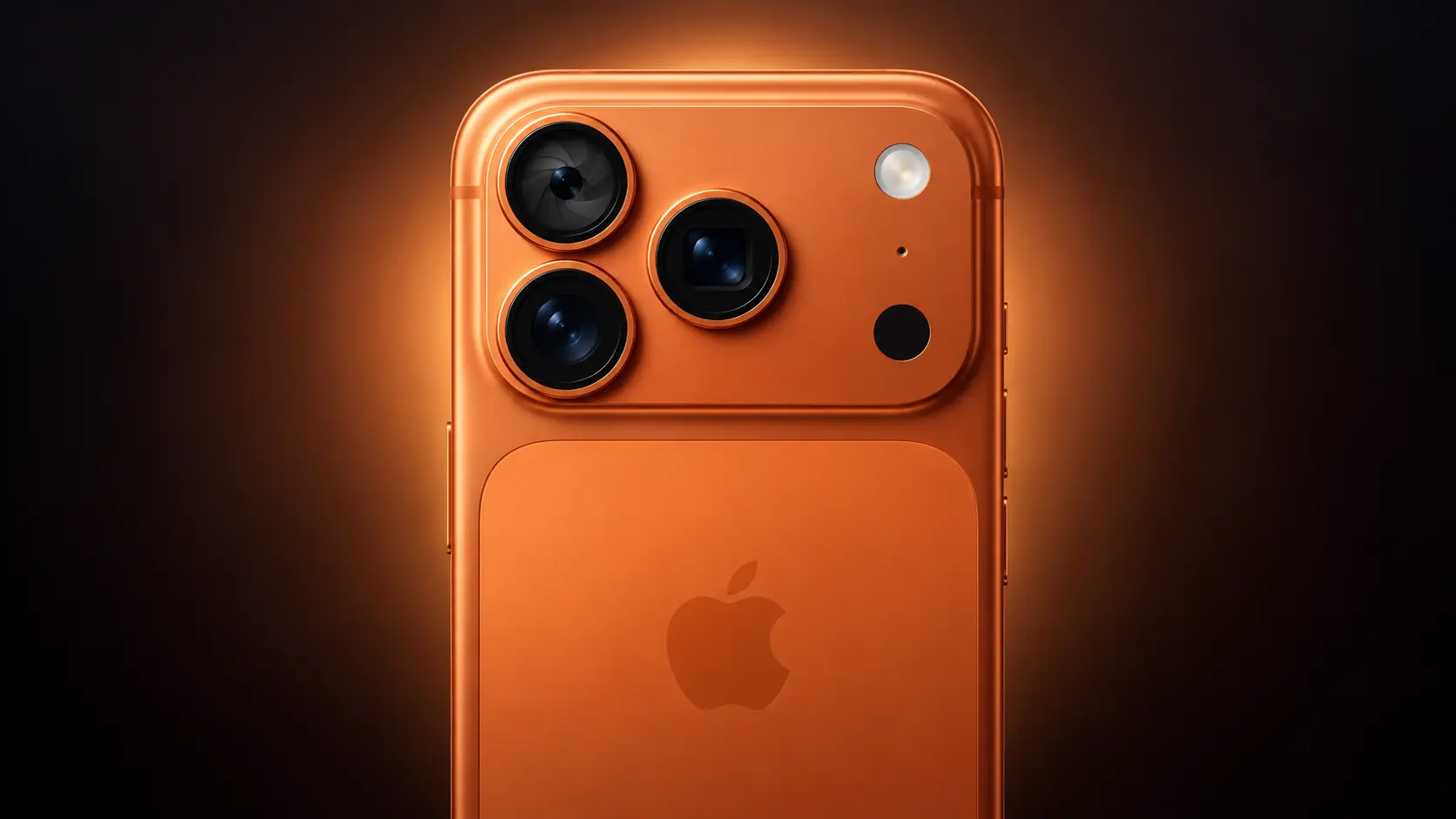
Apple’s official specifications include a 48MP Fusion main camera at 24mm with a fixed f/1.78 aperture, a 48MP Fusion Ultra Wide at 13mm and f/2.2, and a 48MP Fusion telephoto at 100mm, or 4x, with an f/2.8 aperture and a tetraprism design. The telephoto also provides an 8x optical-quality option at 200mm through a sensor crop. On the front is an 18MP Center Stage camera with f/1.9 and autofocus.
That means Apple does not necessarily need more megapixels to deliver a meaningful upgrade. The most interesting rumors instead focus on the optics, aperture and the way the sensor captures the image.
Variable aperture: the biggest main-camera rumor
For more than a year, multiple sources have reported that the main camera on the iPhone 18 Pro models could gain a variable aperture, something Apple has never offered on an iPhone.
On today’s Pro models, f/1.78 is physically fixed. A genuine variable-aperture system would introduce a mechanism capable of changing the physical lens opening. This could allow the camera to stop down when greater depth of field or tighter control over incoming light is required. The actual f-stop range has not leaked with enough reliability, and it remains unclear whether Apple will provide direct manual control or automate much of the process.
The biggest question hours before the announcement is which model gets the technology. Earlier reports, including information from Ming-Chi Kuo, pointed to both the iPhone 18 Pro and Pro Max. A newer Ice Universe leak claims the feature will be limited to the Pro Max, while Mark Gurman has also interpreted Apple’s event artwork as a possible reference to a mechanical aperture on the Pro Max. At the same time, other recent roundups continue to point to variable aperture on both Pro models. The available information therefore has not fully converged.
PTTL has already covered the report suggesting variable aperture could become exclusive to the iPhone 18 Pro Max.
What variable aperture would actually change
The technology is photographically more interesting than another line on a specification sheet, but there is also an important misconception.
If the new system still opens no wider than f/1.78 and simply allows the lens to stop down toward numerically higher f-stops, it will not by itself create more natural bokeh than today’s iPhone when the other optical characteristics remain comparable. What it would provide is something the current model lacks: genuine optical control over depth of field. In a group portrait, macro photograph or close-up, for example, stopping the lens down could keep a larger portion of the subject within the acceptably sharp area.
The feature could be even more significant for video. In very bright conditions, a narrower physical aperture could reduce the need for extremely fast shutter speeds and help creators retain more natural motion blur. We still do not know the aperture range, however, or how much control Apple will give the user.
PTTL has examined why variable aperture does not automatically mean more bokeh and where its real photographic value lies.
A new multilayer image sensor from Samsung
Another interesting report suggests that at least one of the new Pro models could use a new three-layer stacked image sensor developed by Samsung.
The architecture, reportedly known as PD-TR-Logic, integrates three layers of circuitry and could improve sensor responsiveness, reduce noise and increase dynamic range. It would also represent a significant change in Apple’s supplier chain, where Sony has been the main image-sensor supplier for years.
There is an important caveat: it is not clear which camera would use the new sensor, which Pro model would receive it, or whether Samsung would supply only part of Apple’s production.
This multilayer sensor should also not be confused with separate reports about a future main sensor around the 1/1.12-inch size class. Those reports have been described as part of a broader future camera development roadmap rather than a confirmed iPhone 18 Pro specification.
Telephoto: a wider aperture may matter more than more “x”
Information surrounding the telephoto camera is less specific, but one direction has appeared repeatedly: a wider aperture.
The current iPhone 17 Pro telephoto is a 48MP, 100mm, 4x unit with an f/2.8 aperture. Apple is reportedly testing a telephoto camera with a wider aperture for the next generation. A numerically lower f-stop could allow more light to reach the sensor, reduce noise, enable faster shutter speeds and provide stronger natural subject separation, particularly as available light decreases.
By contrast, there is no equally strong last-minute evidence confirming a dramatic change in the optical zoom factor or range. Reports have mentioned Apple testing a teleconverter, but there is not enough evidence to treat it as a likely final feature.
One more important clarification: reports of a 200MP periscope telephoto do not appear to concern the iPhone 18 Pro generation. Current information places such a transition no earlier than 2028.
Ultra Wide and selfie: much less certainty
There is no strong last-minute indication of a major Ultra Wide upgrade. Most recent reporting has focused on the main and telephoto cameras, making retention of the current 48MP foundation for the Ultra Wide plausible, although this remains unconfirmed.
The situation is similarly unclear at the front. Older reports pointed to a 24MP selfie camera for the premium iPhone 18 models, while newer information shortly before the event does not point to a front-camera change with the same confidence. The safest pre-keynote expectation is therefore that the 18MP Center Stage camera may remain, although this is not certain.
iOS 27: Waveform, Histogram, Focus Peaking and manual focus
Some of the most interesting photography changes may ultimately reside not inside the camera module but inside Apple’s Camera app.
An analysis of iOS 27 beta code found references to Waveform and Histogram displays during capture, Focus Peaking, clipped-highlight warnings, repeated self-timer captures and new manual-focus controls. There is also code for image correction that changes according to the physical aperture, an especially interesting clue alongside persistent variable-aperture rumors.
None of these tools is currently available as a completed feature inside the standard Camera app, so it cannot be assumed that all of them will be activated today or even released simultaneously.
If they do appear, however, Waveform monitoring, Focus Peaking and manual focus in particular would move Apple’s built-in Camera app significantly closer to the needs of users who currently rely on third-party apps for deeper control.
Camera Control: Simpler Design With Pressure Sensors
Changes are also expected for Camera Control, the dedicated camera control on the side of the iPhone. On current models, the system uses both touch-sensitive sensors, which detect finger movement across the control, and pressure sensors, which determine how firmly the user presses it.
With the iPhone 18, Apple is reportedly considering a simpler design that would remove the separate touch-sensing system and rely primarily on pressure sensors. The goal appears to be reducing complexity and potentially lowering manufacturing and repair costs, rather than eliminating Camera Control altogether.
It remains unclear whether this change would affect the current swipe gestures used to adjust camera settings such as zoom.
The foldable “iPhone Duo”: two 48MP cameras, but no telephoto
Apple’s first foldable iPhone may be the most striking new hardware of the evening, but it probably will not be the best new iPhone for photography.
The latest information attributed to Mark Gurman claims the device will be named iPhone Duo and will feature two 48MP rear cameras. Earlier reports describe the arrangement as a main and Ultra Wide camera with no telephoto. The latest report also points to a 12MP front-facing camera.
This creates an unusual scenario: the most expensive iPhone in the new generation could offer less photographic flexibility than the iPhone 18 Pro and especially the Pro Max. Anyone who regularly uses telephoto focal lengths for portraits, concerts, travel, wildlife or distant subjects would have a practical reason to look more closely at the conventional Pro models.
The foldable’s selfie system remains one of the open questions. Older information described different configurations, including solutions with more than one front camera, while the newest Bloomberg-sourced report carried by MacRumors simply mentions a 12MP camera. Until the keynote, the final arrangement remains unconfirmed.
What we probably should not expect today
The volume of leaks surrounding future iPhones has created an easy trap: features Apple is reportedly exploring for the coming years are sometimes presented as if they already belong to the iPhone 18 Pro.
Reports of a much larger main sensor and a 200MP periscope telephoto have appeared in future development plans and prototype testing. The 200MP camera in particular is not expected before 2028 according to the latest information.
Likewise, a teleconverter has appeared as technology under consideration rather than a feature supported by the same repeated evidence as variable aperture.
Based on the information available today, the most reasonable expectation is therefore an evolution of the existing 48MP architecture rather than a complete replacement of the camera modules with dramatically higher-resolution sensors.
Availability and price
At the time of writing, Apple has not announced European or Greek prices for any new iPhone and no official product pages are live for the rumored iPhone 18 Pro, Pro Max or foldable. Apple’s official Greek iPhone page still covers the current lineup, while the presentation is available through the official Apple Events page.
For the iPhone 18 Pro and Pro Max, the latest report based on information from Mark Gurman points to a $100 U.S. increase compared with the equivalent current models. This remains unofficial information rather than an announced price.
For the foldable, the latest information originating from Bloomberg points to a $2,000 starting price for 256GB, with more expensive configurations potentially reaching roughly $3,000. The same report says sales could begin as early as October. No European or Greek price or availability has been announced.
For the Pro models, September 12 has been reported as a possible preorder date, with Friday, September 18 considered the most likely first day of availability. These dates remain estimates and are expected to be confirmed or disproved by Apple’s official announcements.
The six camera details that will matter tonight
The first and most important is the real variable-aperture range. Without knowing the maximum and minimum f-stop, its actual photographic usefulness cannot be judged.
The second is whether the technology reaches both Pro models or only the Pro Max. If the latter proves correct, it would create one of the most meaningful camera differences between the two Pro sizes in recent years.
The third is the telephoto camera: its new aperture, real focal length and whether Apple changes the way it provides its 8x optical-quality option.
The fourth is the new multilayer image sensor and, most importantly, which camera and which models actually use it.
The fifth is the selfie camera, where reports remain contradictory on both the Pro models and the foldable.
The sixth is software. Waveform, Histogram, Focus Peaking and manual focus could provide more everyday value for creators than a small numerical specification increase.
What we think
If the most credible reports prove accurate, this year’s iPhone photography story will not be “more megapixels,” but more genuine optical control.
Variable aperture has the potential to be a meaningful evolution because it affects the image optically before computational processing. Its value, however, will depend on the actual f-stop range and whether Apple gives photographers meaningful control. If the maximum opening remains f/1.78 and the system simply stops the lens down, that does not automatically mean more natural bokeh.
The potential telephoto improvement is just as interesting. For real-world photography in low light, a wider aperture could matter far more than a more impressive magnification number.
The foldable, meanwhile, appears to reveal its design priorities clearly. If it really ships without a telephoto lens, Apple will be asking the highest price for the most unusual iPhone, not necessarily for its best photographic iPhone. The true camera ranking of the new models can only be established after the final specifications are known and, more importantly, once real photo and video files are available for evaluation.
Frequently asked questions
Has Apple confirmed the iPhone 18 Pro and iPhone 18 Pro Max?
No. Apple has confirmed its September 9 event for 10:00 a.m. Pacific Time, but at the time of writing it has not officially announced the new models or their specifications.
Will the iPhone 18 Pro definitely have variable aperture?
No. It is one of the most repeated rumors, but reports disagree over whether both Pro models will get it or whether it will be limited to the iPhone 18 Pro Max.
Will the telephoto zoom change?
There is no strong last-minute confirmation of a dramatic change in optical zoom factor. The more consistent report concerns a potentially wider telephoto aperture, while 200MP technology is expected in a later generation.
Will the selfie camera have 24MP?
That remains uncertain. Older leaks pointed to 24MP, while newer information does not provide the same confidence that Apple will move away from the current 18MP front camera.
What cameras is the foldable iPhone expected to have?
The most credible reports point to two 48MP rear cameras and no telephoto lens, while the latest report mentions a 12MP front camera. The final arrangement remains unconfirmed until Apple’s presentation.