

Summary
- The original 2007 iPhone was not photographically ahead of the best camera phones of its era
- Autofocus, OIS, 4K, depth bokeh, Ultra Wide cameras, Night mode, 48MP sensors and long zoom had appeared elsewhere before reaching the iPhone
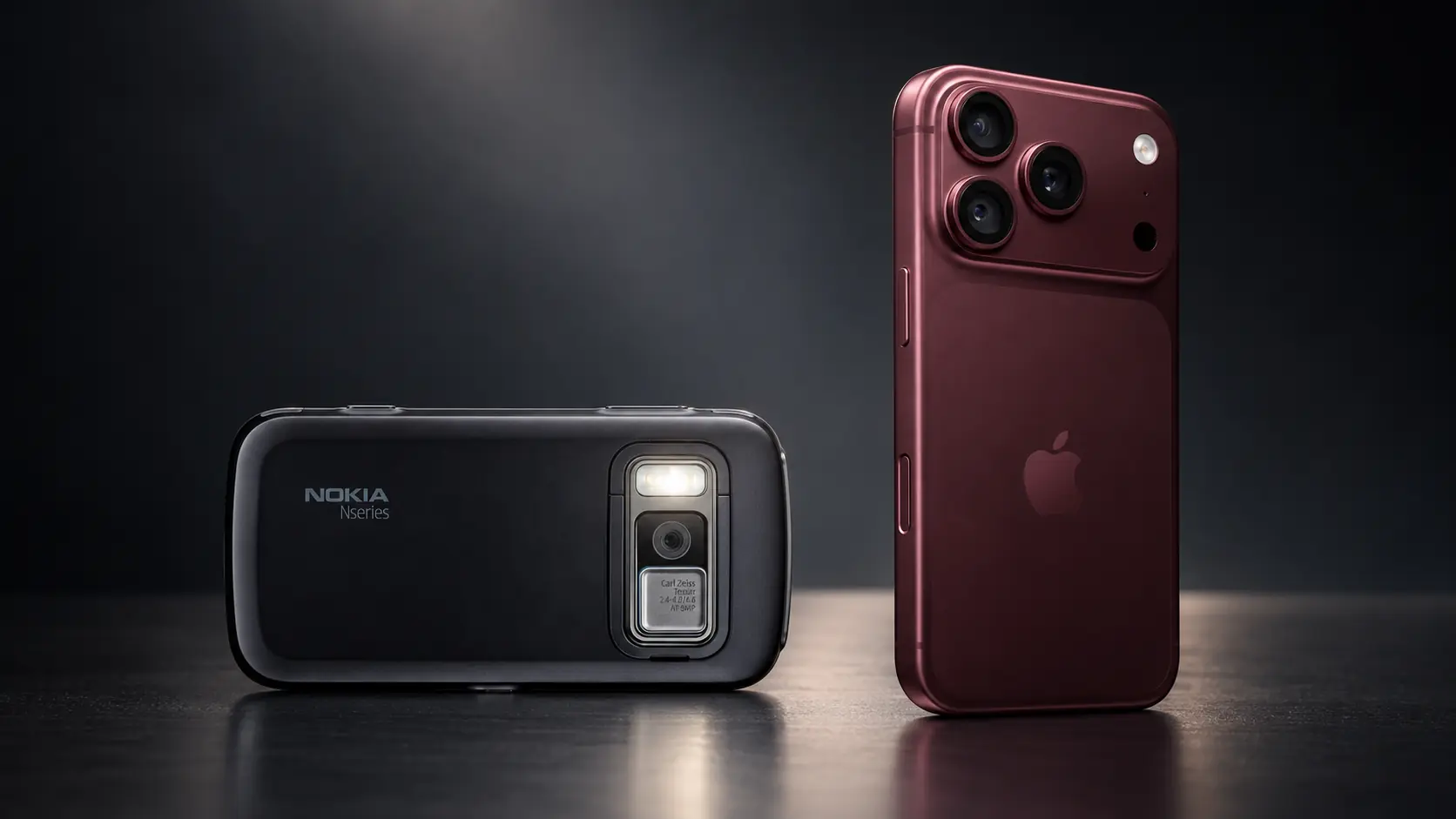
- The iPhone 18 Pro introduces a real f/1.48, f/1.8, f/2.8 and f/4.0 variable aperture, but Nokia was already using variable aperture in 2009
- Apple has genuine firsts particularly in True Tone flash and advanced video workflows including Dolby Vision, ProRes RAW, Log 2 and genlock
- In Greece, iPhone 18 Pro starts at €1,499 and Pro Max at €1,659, while the 2TB versions reach €3,059 and €3,229 respectively
- The original iPhone was not photographically ahead
- How many features appeared elsewhere before reaching the iPhone?
- Autofocus, video and 4K: Apple arrived later
- OIS: Nokia arrived first, Apple later evolved the concept
- Portrait mode: perhaps the best example of “not first, but mainstream”
- Ultra Wide: LG had shown the way in 2016
- Night mode: Google had already changed the rules
- 48MP reached the iPhone years after Android
- Long zoom: Huawei first, tetraprism later
- iPhone 18 Pro: variable aperture is new to Apple, not smartphones
- The new Pro controls also had predecessors
- Where Apple genuinely pioneered
- Apple Reference Image: the next battle is authenticity
- Pricing and availability in Greece
- What we think
- Frequently asked questions
The iPhone became one of the most important cameras of the digital era not because Apple was always first, but because it turned hardware, software and computational photography into an exceptionally simple mass-market capture experience.
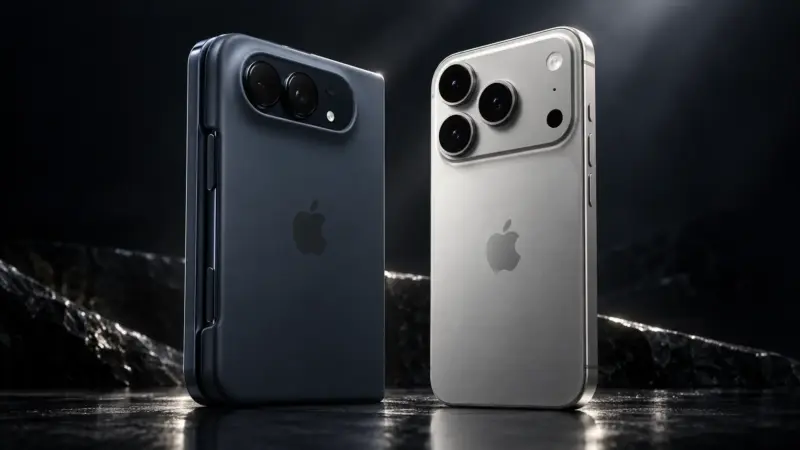
On September 9, 2026, Apple introduced the iPhone 18 Pro and iPhone 18 Pro Max, and the new iPhone 18 Pro camera system with a real variable aperture added another chapter to that history: the 48MP Fusion Main gains six mechanical blades, four selectable aperture settings of f/1.48, f/1.8, f/2.8 and f/4.0, and new Pro controls for aperture, shutter speed, white balance and a histogram.
The announcement matters because it perfectly separates two ideas that are often confused: “first on an iPhone” and “first on a smartphone.” Variable aperture is a significant development for the iPhone, but Nokia had already used the underlying concept in the N86 8MP in 2009, roughly 17 years before Apple.
The original iPhone was not photographically ahead
When the original iPhone launched in 2007, its camera was extremely simple: a 2MP sensor with no autofocus and no native video recording.
At the same time, significantly more advanced camera phones were already available. Nokia’s N95 offered a 5MP camera with Carl Zeiss optics and video, while Sony Ericsson’s K750 had appeared in 2005 as a 2MP autofocus camera phone. Sony itself listed the K750 among its successful products as a “2 megapixel auto-focus camera phone.”
The original iPhone’s innovation was therefore not its camera hardware. It was the way photography became integrated into a large touchscreen, a highly accessible interface and later an ecosystem of apps, editing and instant sharing.
How many features appeared elsewhere before reaching the iPhone?
The picture becomes clearer by looking at some of the major milestones in mobile photography.
| Feature | Example before Apple | Arrival on iPhone |
|---|---|---|
| Autofocus | Sony Ericsson K750, 2005 | iPhone 3GS, 2009 |
| Video recording | Camera phones such as Nokia N95 | iPhone 3GS, 2009 |
| Front-facing camera | 3G/video-call phones and Nokia N95 | iPhone 4, 2010 |
| OIS | Nokia Lumia 920, 2012 | iPhone 6 Plus, 2014 |
| 4K video | Android phones such as Galaxy Note 3, 2013 | iPhone 6s, 2015 |
| “Living” photos | HTC Zoe, 2013 | Live Photos, iPhone 6s, 2015 |
| Depth-assisted bokeh | HTC One M8, 2014 | Portrait mode, iPhone 7 Plus, 2016 |
| Rear Ultra Wide camera | LG G5, 2016 | iPhone 11, 2019 |
| Computational Night mode | Google Pixel Night Sight, 2018 | iPhone 11, 2019 |
| 48MP Main camera | HONOR View20, 2018 | iPhone 14 Pro, 2022 |
| 5x folded zoom | Huawei P30 Pro, 2019 | iPhone 15 Pro Max, 2023 |
| Variable aperture | Nokia N86 8MP, 2009 | iPhone 18 Pro, 2026 |
| Advanced manual controls | Nokia Lumia 1020, 2013 | New native Pro controls, iPhone 18 Pro, 2026 |
The table does not mean that the implementations are technically identical. It does show something important: a considerable part of the iPhone’s evolution involved maturing ideas that had already been explored elsewhere.
Autofocus, video and 4K: Apple arrived later
Autofocus reached Apple with the iPhone 3GS in 2009. The most important part of its implementation was tap-to-focus: users could simply touch the part of the image they wanted in focus.
The same iPhone was Apple’s first to officially support video recording. Apple was not pioneering video cameras in phones, however, as the feature was already common on many camera phones.
The pattern was similar with 4K. The iPhone 6s introduced a 12MP camera, 4K video and Live Photos in 2015, but Samsung notes that the Galaxy Note 3 was already among the first smartphones to offer 4K UHD recording in 2013.
Even Live Photos had a clear conceptual predecessor. HTC Zoe in 2013 captured high-resolution photos that came to life through three-second snippets and presented them inside a motion-based gallery. It was not identical to Apple’s implementation, but the basic idea of combining a photograph with motion had appeared two years earlier.
OIS: Nokia arrived first, Apple later evolved the concept
Optical image stabilization is another revealing example.
The Nokia Lumia 920 already offered real optical image stabilization in a smartphone in 2012. Apple added OIS two years later with the iPhone 6 Plus.
Apple later pushed the idea further. On the iPhone 12 Pro Max, it moved the image sensor itself rather than lens elements, bringing sensor-shift stabilization from dedicated cameras into the iPhone.
The progression illustrates how a company can initially follow a technology and later create an important evolution of its own.
Portrait mode: perhaps the best example of “not first, but mainstream”
In 2016, the iPhone 7 Plus introduced a dual-camera system, a 56mm telephoto lens and the foundation for Portrait mode.
For millions of users, it was the first time a smartphone made the appearance of shallow depth of field and a blurred background so accessible.
It was not, however, the first smartphone to use a secondary sensor for depth information.
The HTC One M8 with Duo Camera had already included a dedicated depth sensor in 2014. HTC used that information for UFocus and for modifying the foreground or background after capture.
Apple therefore did not invent depth-assisted computational bokeh. What it did was turn it into a simple, clearly defined feature inside the normal Camera app and help make Portrait mode a standard expectation across the smartphone industry.
Ultra Wide: LG had shown the way in 2016
The Ultra Wide camera arrived on the iPhone with the iPhone 11 generation in 2019.
Three years earlier, the LG G5 featured two rear cameras, including a secondary 135-degree lens. LG described it as the widest field of view available on a smartphone at the time.
The transition from the iPhone 6 generation to the iPhone 11 shows how quickly Apple moved from a simple single-camera architecture to multiple focal lengths and heavy computational processing.
Night mode: Google had already changed the rules
Night mode also reached the iPhone 11 in 2019.
Google had introduced Night Sight on Pixel devices in 2018, using multiple frames, alignment and computational processing to capture low-light images without relying on a powerful flash.
The technology behind Pixel Night Sight and astrophotography is a particularly clear example of how smartphone photography moved from “better sensor” toward “better algorithm.”
Apple followed the same broad path with Night mode, Smart HDR, Deep Fusion and later Photonic Engine. Its strength was integrating these systems into an experience that usually required no manual intervention.
48MP reached the iPhone years after Android
The iPhone remained at 12MP for many years.
The major change arrived in 2022 when the iPhone 14 Pro moved to a 48MP Main camera with a Quad Pixel sensor and full-resolution capture through ProRAW.
HONOR had already introduced the View20 with Sony’s 48MP IMX586 sensor in December 2018, describing it as the world’s first high-definition 48MP rear smartphone camera.
Apple therefore did not pioneer either the resolution increase or the broader pixel-binning approach. It waited until the technology could be integrated into its own 24MP, 48MP, ProRAW and computational imaging workflow.
Long zoom: Huawei first, tetraprism later
Huawei’s P30 Pro helped popularize folded/periscope optics in 2019 as a way to achieve much longer real focal lengths inside a thin smartphone.
Apple waited until 2023 to reach 5x optical zoom with the iPhone 15 Pro Max and its 120mm tetraprism telephoto.
Apple’s architecture is not identical to a conventional periscope. The engineering goal is the same: create a longer optical path without a huge lens protruding from the phone.
On the new iPhone 18 Pro, Apple now uses a 48MP Fusion Telephoto at 100mm, or 4x, with a tetraprism and 3D sensor-shift OIS. It also offers a 12MP 200mm option that Apple carefully describes as “8x optical-quality,” rather than a separate true 8x optical lens.
iPhone 18 Pro: variable aperture is new to Apple, not smartphones
The biggest photography change for the 2026 generation is undoubtedly variable aperture.
The iPhone 18 Pro and Pro Max use a 48MP Fusion Main camera with six mechanical blades and four selectable apertures: f/1.48, f/1.8, f/2.8 and f/4.0. The system can open wider in low light or stop down to increase real depth of field.
The implications for real bokeh and depth of field had already been examined before launch in PTTL’s analysis of the iPhone 18 Pro variable aperture.
The underlying technology, however, is far older. Nokia’s N86 8MP used variable aperture in 2009.
In 2018, the Samsung Galaxy S9 and S9+ used a genuine Dual Aperture system with physical f/1.5 and f/2.4 settings.
Huawei later pushed the concept further with the Mate 50 Pro and its physical f/1.4-f/4.0 aperture with multiple intermediate settings.
The new iPhone therefore does not invent variable aperture. What changes is that Apple now combines it with its computational photography, ProRAW and manual controls inside the native Camera app.
The new Pro controls also had predecessors
On the iPhone 18 Pro, Apple now provides manual control over parameters such as shutter speed, white balance and aperture, along with a histogram.
For iPhone users, this is a major change. For smartphones as a category, it is not.
Nokia’s Lumia 1020 and Nokia Pro Camera already provided direct manual control over ISO, shutter speed, white balance, focus and exposure compensation in 2013.
The difference with the iPhone 18 Pro is that aperture control now operates a real mechanical aperture rather than software simulation.
Where Apple genuinely pioneered
The historical picture is not one-sided. Apple has delivered genuine firsts, or at least unusually clear first commercial implementations.
The iPhone 5s True Tone flash is one of the strongest examples. In 2013 Apple introduced a dual-LED system using different color temperatures and more than 1,000 combinations, describing it as the world’s first flash of its kind for any camera.
Video provides an even stronger example. The iPhone 12 became, according to Apple, the first camera to record HDR video with Dolby Vision and the first device to provide an end-to-end Dolby Vision capture, editing and playback workflow.
With the iPhone 13 Pro, Apple added ProRes recording and created an end-to-end workflow combining capture, editing and sharing in Dolby Vision or ProRes.
In 2024, the iPhone 16 Pro added 4K recording at 120 fps in Dolby Vision, pushing the smartphone even further toward professional filmmaking.
And in 2025, the iPhone 17 Pro became, according to Apple, the first smartphone to support ProRes RAW, Apple Log 2 and genlock. Those features show how the competition has shifted from megapixels and autofocus toward codecs, synchronization and professional post-production.
Apple Reference Image: the next battle is authenticity
The iPhone 18 Pro also introduces a feature that could eventually prove more important than another increase in resolution.
Apple Reference Image allows the Main camera to generate digitally signed sensor data. Private Cloud Compute develops it into a reference image that Apple says cannot be altered, providing a point of comparison against the final photograph.
At a time of AI-generated imagery, being able to establish what the sensor actually captured has obvious value for photojournalism, documentary photography and professional workflows.
This is not the first attempt by the imaging industry to certify image provenance — Leica’s M11-P had already introduced Content Credentials at capture — but the enormous scale of the iPhone could make this type of technology much more visible to the general public.
Pricing and availability in Greece
The iPhone 18 Pro and iPhone 18 Pro Max are available in 256GB, 512GB, 1TB and 2TB capacities. Greek pre-orders open on September 12 at 15:00, with general availability beginning September 18.
Greek pricing for the two Pro models is:
| Capacity | iPhone 18 Pro | iPhone 18 Pro Max |
|---|---|---|
| 256GB | €1,499 | €1,659 |
| 512GB | €1,759 | €1,919 |
| 1TB | €2,279 | €2,449 |
| 2TB | €3,059 | €3,229 |
The difference between Pro and Pro Max is €160 at 256GB and 512GB and €170 at 1TB and 2TB. Importantly for camera-focused buyers, the two models use exactly the same Pro Fusion camera system. The iPhone 18 Pro, Pro Max and Duo comparison for photographers and videographers shows that the Pro Max mainly adds a larger display and longer battery life rather than a better camera.
As a European reference, Apple’s official German Store starts the iPhone 18 Pro 256GB at €1,449 and the Pro Max 256GB at €1,599. Greek starting prices are therefore €50 and €60 higher respectively.
Full details of the camera system are available on Apple’s official iPhone 18 Pro product page.
What we think
The history of the iPhone camera supports neither the idea that Apple “invented everything” nor the opposite claim that it simply copies competitors.
The original iPhone was not the leading camera phone of its era. Autofocus, video, OIS, 4K, Live Photos-like concepts, depth-assisted bokeh, Ultra Wide cameras, Night mode, 48MP sensors, folded zoom, manual controls and variable aperture had all been used by other manufacturers before comparable features reached the iPhone.
Apple, however, proved exceptionally effective at something different: taking technologies that often existed in isolated products and turning them into a coherent, simple and predictable workflow.
Portrait mode may be the clearest example of that strength. The same is true, to a degree, of Night mode and the multi-camera experience.
At the same time, there have been real Apple firsts, particularly in video: True Tone flash in photography, end-to-end Dolby Vision, ProRes workflows and more recently ProRes RAW, Log 2 and genlock.
The iPhone 18 Pro continues exactly this dual history. Variable aperture is not a new invention and Nokia had it 17 years earlier. Its integration into a modern computational pipeline, together with genuine Pro controls and Apple Reference Image, shows that camera innovation today is not only about who adds a feature first, but what photographers can ultimately do with it.
Frequently asked questions
Was the original iPhone groundbreaking as a camera?
Not in terms of camera hardware. In 2007, phones with more megapixels, autofocus and more advanced video capabilities already existed. The iPhone’s major innovation was the overall user experience.
Is the iPhone 18 Pro the first smartphone with variable aperture?
No. Nokia’s N86 8MP already used variable aperture in 2009, with later implementations appearing on devices from Samsung, Huawei and Xiaomi.
Was the iPhone first with Portrait mode and Night mode?
Not in the broad technical sense. Depth-assisted bokeh existed on the HTC One M8 before the iPhone 7 Plus, while Google’s Night Sight appeared before the iPhone 11 Night mode.
Where did Apple genuinely pioneer?
Strong examples include True Tone flash, the end-to-end Dolby Vision workflow and, according to Apple, ProRes RAW, Log 2 and genlock on the iPhone 17 Pro.
How much do the iPhone 18 Pro models cost in Greece?
The iPhone 18 Pro starts at €1,499 for 256GB and reaches €3,059 for 2TB. The iPhone 18 Pro Max starts at €1,659 and reaches €3,229.