

Summary
- iPhone 18 Pro and Pro Max feature exactly the same camera system
- Pro Max mainly differs through its larger display and battery life
- The Pro Main camera is a 48MP 24mm unit with variable aperture from f/1.48 to f/4
- Duo uses a 48MP 26mm Main camera with a fixed f/1.6 aperture
- The Pro models feature a dedicated 48MP 100mm 4x Telephoto and a 200mm 8x optical-quality option
- Duo uses the same 48MP Ultra Wide camera as the Pro models
- The Pro models support ProRAW, ProRes RAW, Apple Log 2, ACES and Genlock
- Duo Preview enables rear-camera self-recording with a live preview
- iPhone 18 Pro is the most compact way to get the full Pro camera system
- Pro Max is the most complete all-round tool for photography and professional video
- Duo has a particular advantage for solo content creation and mobile editing
- French 256GB pricing starts at €1,479, €1,629 and €2,339 respectively
- Three devices, but two very different philosophies
- iPhone 18 Pro and Pro Max: the same camera, a different tool in the hand
- The Main camera is where Pro meaningfully separates itself from Duo
- What variable aperture means in practice
- Variable aperture has another purpose for videographers
- Telephoto is Duo’s biggest photographic loss
- Duo does not lose on Ultra Wide
- ProRAW and DNG matter more to photographers than they may appear
- In video, 4K/120 does not tell the whole story
- What ProRes RAW, Apple Log 2 and Genlock mean in a real production
- Pro wins on the front camera — but Duo changes the rules
- Duo Preview is where Duo becomes genuinely compelling for content creators
- The 7.6-inch folding display improves workflow rather than capture
- The folding body also helps when shooting without a tripod
- Weight and battery: Pro is lighter, Max is more balanced, Duo pays for the larger screen
- Which one makes more sense for photographers
- Which one makes more sense for videographers or filmmakers
- Which one makes more sense for content creators
- Choosing by workflow
- Availability and pricing in Europe and Greece
- What we think
- Frequently asked questions
Choosing between iPhone 18 Pro, iPhone 18 Pro Max and iPhone Duo is not about which one costs more, but which device better matches the work of a photographer, videographer or content creator.
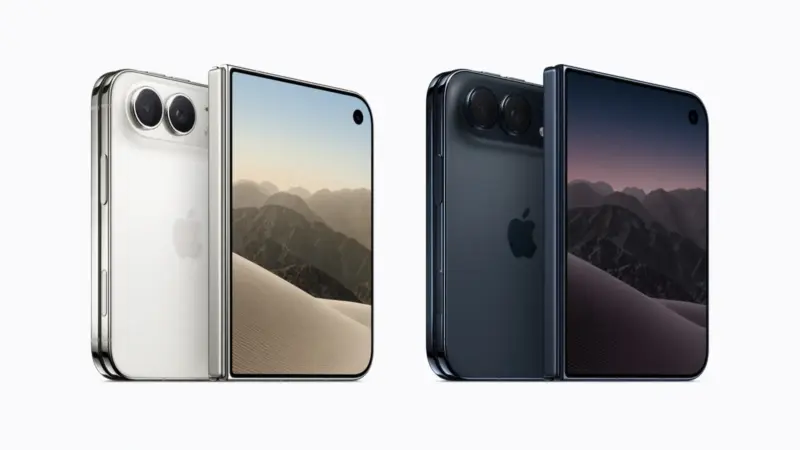
With the introduction of iPhone 18 Pro, iPhone 18 Pro Max and the first foldable iPhone Duo, Apple has created three premium devices that could earn a place in a creator’s kit for entirely different reasons. The two Pro models focus on delivering the company’s most complete photography and filmmaking system, while Duo puts more emphasis on its large foldable display, multitasking and new approaches to self-recording.
This makes the comparison much more interesting than simply lining up technical specifications. iPhone 18 Pro Max does not have a better camera than the smaller Pro despite costing more, while the even more expensive Duo does not have Apple’s most complete camera system. For creators, the important question is therefore what they do most often: photography, professional video, working in front of the camera themselves, or editing and publishing primarily from the phone.
Three devices, but two very different philosophies
Before comparing individual cameras, an important distinction needs to be made.
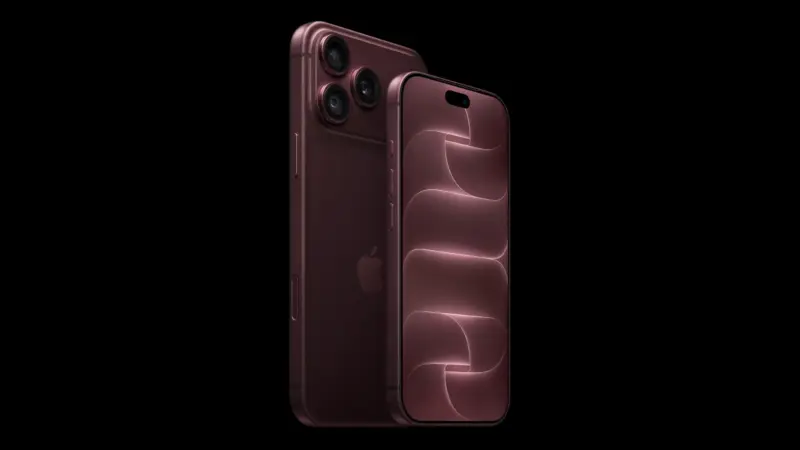
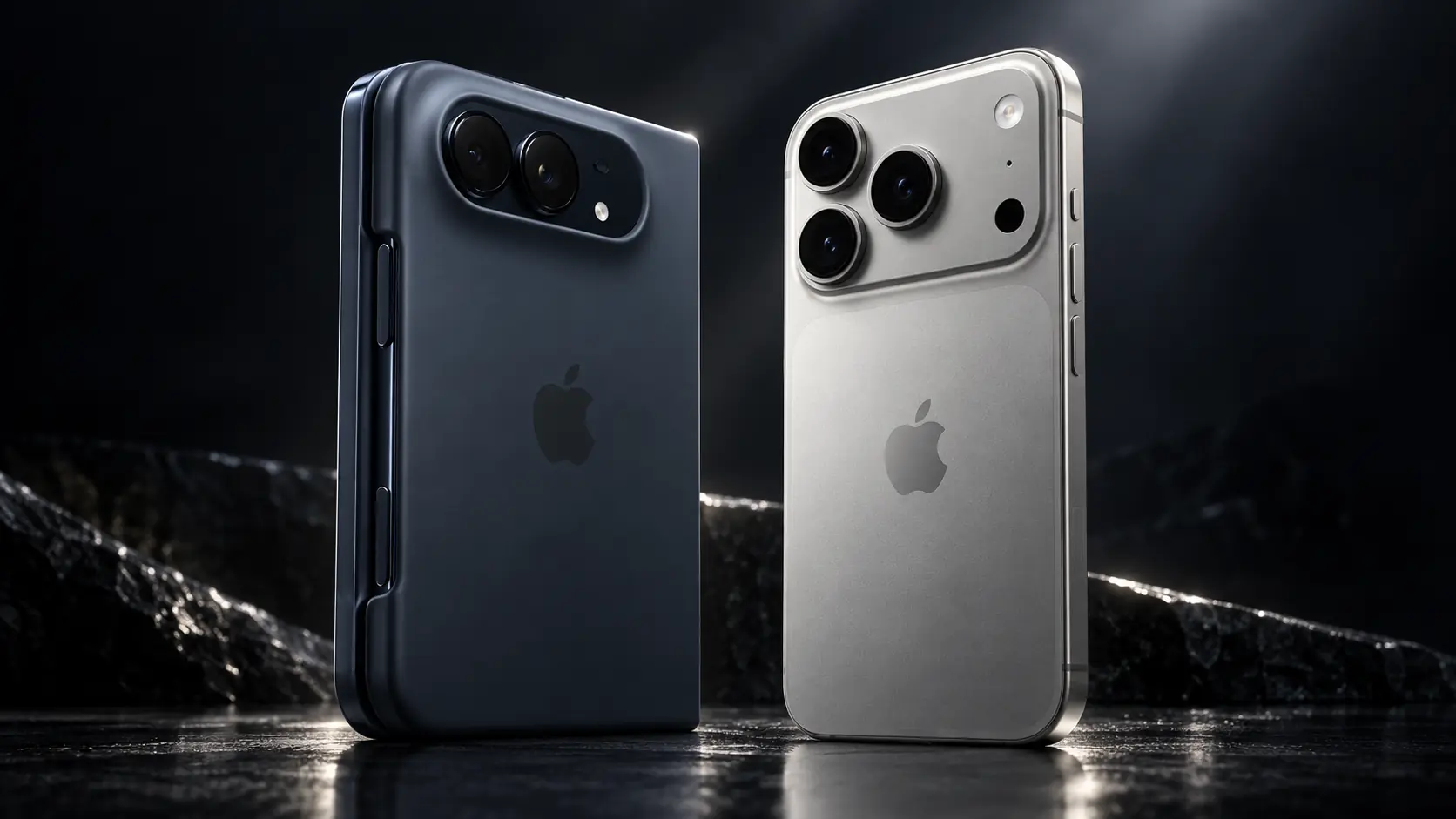
iPhone 18 Pro and Pro Max are essentially two sizes of the same Pro platform. They use the same A20 Pro, the same triple 48MP camera system, the same focal lengths and the same ProRAW, ProRes RAW, Apple Log 2 and Genlock tools. Pro Max adds screen area and battery capacity — not a better camera.
iPhone Duo is a different proposition. It also uses A20 Pro and has two highly capable 48MP rear cameras, but it has no dedicated Telephoto and no variable aperture. Instead, it provides a 7.6-inch inner display, a 5.4-inch outer display, Duo Preview and multitasking capabilities unavailable on conventional iPhones.
The table below provides the big picture before examining what these differences actually mean:
| iPhone 18 Pro | iPhone 18 Pro Max | iPhone Duo | |
|---|---|---|---|
| Rear cameras | 3 x 48MP | Same as Pro | 2 x 48MP |
| Main | 24mm, f/1.48–f/4 | Same | 26mm, f/1.6 |
| Dedicated Telephoto | 48MP, 100mm, 4x | Same | No |
| 8x | 200mm optical-quality | Same | No |
| ProRAW | Yes | Yes | Not listed |
| ProRes RAW / Log 2 | Yes | Yes | Not listed |
| Main display | 6.3 inches | 6.9 inches | 7.6-inch foldable |
| Second display | No | No | 5.4 inches |
| Weight | 211g | 249g | 254g |
| Key advantage | Pro camera in compact body | Pro camera + larger display/battery | Duo Preview + mobile workspace |
iPhone 18 Pro and Pro Max: the same camera, a different tool in the hand
This is perhaps the most important fact in the entire comparison: iPhone 18 Pro Max does not have a better camera system than iPhone 18 Pro.
Apple lists one shared 48MP Pro Fusion camera system for both models: a 48MP Fusion Main, 48MP Fusion Ultra Wide and 48MP Fusion Telephoto. They also share the same 18MP Center Stage front camera and the same core professional photography and video capabilities.
A photographer choosing the smaller Pro therefore does not lose the Telephoto, variable aperture, 8x optical-quality mode or ProRAW.
Likewise, a videographer does not need the Max to get ProRes RAW, Apple Log 2, ACES or Genlock. Those capabilities are available on both models.
The real difference is ergonomics.
iPhone 18 Pro has a 6.3-inch display and weighs 211 grams. Pro Max increases to 6.9 inches and 249 grams. The 38-gram difference may sound minor in everyday use, but it changes once the phone is mounted in a gimbal or inside a cage with an SSD, microphone, receiver and filters.
For handheld work or a compact rig, the Pro therefore has an important advantage: it provides the entire Max camera system in a smaller and lighter body.
Pro Max responds with better on-device monitoring. A 6.9-inch screen gives creators more room to inspect focus, framing, histograms and playback, particularly during longer shoots.
It also provides longer battery life. Apple rates the Pro for up to 36 hours of video playback and Pro Max for up to 45 hours in its international specifications. These figures are not continuous-recording times, but they confirm the larger power reserve available on the Max.
The Main camera is where Pro meaningfully separates itself from Duo
All three phones have a 48MP Main camera, but megapixels alone hide a major difference.
On the Pro models, the Fusion Main is equivalent to 24mm and uses a real six-blade mechanical variable aperture. The lens can operate at f/1.48, f/1.8, f/2.8 and f/4.0. Apple also provides manual aperture control through the new Pro controls.
On Duo, the 48MP Fusion Main is equivalent to 26mm and has a fixed f/1.6 aperture. It includes sensor-shift optical stabilization and provides a 12MP optical-quality 2x mode at 52mm using a crop of the Main sensor, but its physical aperture does not change.
The 24mm versus 26mm difference means that the Pro models provide a slightly wider Main-camera field of view. In a large landscape that may not matter much, but it can become useful in interiors, architecture, confined spaces and handheld vlogging.
The much more important distinction is aperture.
What variable aperture means in practice
Until now, the idea of changing an “aperture” value in iPhone Portrait Mode primarily changed a computational depth effect. The physical lens opening remained fixed.
On iPhone 18 Pro, the change is real. Six blades alter the physical opening through which light passes before reaching the sensor.
At f/1.48, the Main camera uses its largest opening. More light can reach the sensor, which is particularly useful at night and indoors. It also gives the camera more flexibility to maintain a lower ISO or faster shutter speed depending on the scene.
At f/1.8, the system occupies a more intermediate position between light gathering and depth of field.
At f/2.8 and f/4, the physical opening becomes smaller. Less light reaches the sensor, but genuine depth of field increases. This can be especially useful for group portraits, product photography, macro and landscapes when more planes within the scene need to remain acceptably sharp.
The theoretical difference between f/1.48 and f/4 is roughly 2.9 stops. Looking only at aperture, f/1.48 can therefore allow about 7.3 times as much light through as f/4.
This does not mean the iPhone suddenly gains the depth-of-field characteristics of a full-frame camera with a large lens. Sensor size and actual focal length remain major factors.
It does mean something photographically meaningful: for the first time, iPhone can physically change one of the fundamental optical variables of the image before computational photography takes over.
PTTL had already examined what variable aperture could really change for natural bokeh and depth of field before the announcement. At that point, the final range was unknown. Apple has now confirmed that the system opens as wide as f/1.48 and stops down to f/4.
Variable aperture has another purpose for videographers
Variable aperture is not only a photography feature.
In filmmaking, videographers generally want to preserve a particular relationship between frame rate and shutter speed to produce natural-looking motion. At 25 fps, for example, a shutter speed around 1/50 sec is commonly used.
In bright conditions, a small camera with a permanently wide-open lens may have to use a much faster shutter speed to avoid overexposure. That changes motion blur and can make movement look harsher.
That is why filmmakers use ND filters.
iPhone 18 Pro does not eliminate the need for ND filters. f/4 is not enough to handle every intense daylight situation. It can, however, reduce incoming light by almost three stops compared with f/1.48, giving videographers another physical exposure control.
Another meaningful difference from Duo appears here: the Pro models provide manual aperture, shutter speed and white balance controls together with a histogram.
Duo includes basic Camera Control functions for exposure, depth, zoom, cameras, styles and tone, but Apple does not list the same professional manual aperture, shutter, white-balance and histogram controls in its specifications.
Telephoto is Duo’s biggest photographic loss
For photographers, the most important difference may ultimately not even be variable aperture. It is the complete lack of a dedicated Telephoto camera on Duo.
iPhone 18 Pro and Pro Max have a dedicated 48MP Fusion Telephoto at 100mm, or 4x, with an f/2.8 aperture, autofocus, tetraprism design and 3D sensor-shift optical stabilization. The same sensor also provides a 12MP 200mm/8x mode that Apple describes as optical-quality.
The 8x mode needs to be interpreted correctly: there is no fourth physical 200mm lens. The actual Telephoto is the 100mm/4x camera, while the 200mm mode uses the central portion of the 48MP sensor to create a 12MP result.
iPhone Duo has no dedicated Telephoto. Its 52mm 2x option is also a 12MP optical-quality crop, in this case from the 48MP Main camera.
| Focal option | iPhone 18 Pro / Pro Max | iPhone Duo |
|---|---|---|
| Ultra Wide | 13mm / 0.5x | 13mm / 0.5x |
| Main | 24mm / 1x | 26mm / 1x |
| 2x | 48mm / 12MP optical-quality | 52mm / 12MP optical-quality |
| Dedicated Telephoto | 100mm / 4x / 48MP | None |
| Long Tele | 200mm / 8x / 12MP optical-quality | None |
| Maximum photo digital zoom | 40x | 10x |
| Maximum video digital zoom | 24x | 6x |
For wedding, event, concert, sports, wildlife and travel photographers, this is a major difference. In many situations, simply “moving closer” is not an option.
For social creators who primarily film themselves at 0.5x or 1x, Telephoto reach may be almost irrelevant.
Duo does not lose on Ultra Wide
The comparison should not create the mistaken impression that every Duo camera is inferior.
Apple explicitly says that Duo’s 48MP Fusion Ultra Wide is the same camera used on iPhone 18 Pro models. It is a 13mm f/2.2 unit with a 120-degree field of view and macro capability.
For ultra-wide landscapes, architecture, interiors, macro and creative close-range perspectives, Duo therefore has the same underlying Ultra Wide hardware as the Pro models.
The meaningful gap comes from the variable-aperture Main and the complete absence of a dedicated Telephoto.
ProRAW and DNG matter more to photographers than they may appear
The difference continues into file formats.
Apple lists Apple ProRAW and DNG support on iPhone 18 Pro and Pro Max. Duo’s official photo formats are HEIF and JPEG, with no ProRAW or DNG listed.
For someone who captures an image and immediately publishes it to Instagram, that difference may not matter much.
For a photographer working in Lightroom, Capture One or another RAW workflow, it does.
ProRAW leaves significantly more room for later adjustments to white balance, highlights, shadows and color than a final JPEG or HEIF file. It does not turn a smartphone into a full-frame RAW camera, but it provides much greater post-production flexibility.
The Pro models also add Apple Reference Image. Apple says the Fusion Main can generate signed sensor data and a reference image that can be compared against a later edited version. The company specifically highlights the feature for photographers and photojournalists.
In news photography and documentary workflows, that could become one of the most interesting features of this generation.
In video, 4K/120 does not tell the whole story
If someone looks only at maximum resolution and frame rate, Duo appears almost tied with the Pro models.
All three can record Dolby Vision at up to 4K/120 fps from the Main camera. Duo also supports Cinematic Mode up to 4K/60, Dual Capture up to 4K/30 and 4K Dolby Vision time-lapse.
For creators shooting TikTok, Instagram Reels, family video or straightforward YouTube vlogs, that is already an extremely powerful video specification.
Professional videographers, however, do not only look at resolution and frame rate. They also care about what kind of file enters post-production.
That is where the Pro models move ahead:
| Video workflow | iPhone 18 Pro / Pro Max | iPhone Duo |
|---|---|---|
| Dolby Vision 4K/120 | Yes | Yes |
| ProRes up to 4K/120 with external recording | Yes | Not listed |
| ProRes RAW | Yes | Not listed |
| Apple Log 2 | Yes | Not listed |
| ACES | Yes | Not listed |
| Genlock | Yes | Not listed |
| Recorded formats | HEVC, H.264, ProRes, ProRes RAW | HEVC, H.264 |
| USB 3 | up to 10Gb/s | up to 10Gb/s |
Apple’s specifications explicitly list all of these Pro tools for iPhone 18 Pro and Pro Max, while Duo lists HEVC and H.264 as recording formats.
What ProRes RAW, Apple Log 2 and Genlock mean in a real production
ProRes RAW is not something an average user needs. For filmmakers, however, it can preserve more image information and provide greater latitude in post than a heavily processed recording format.
Apple Log 2 becomes important when creators want serious color grading or need to match iPhone footage with other cameras in the same project. A flatter gamma profile allows the final look to be built later rather than committed to during capture.
ACES is relevant to even more structured color-management pipelines, particularly when multiple camera systems must be combined.
Genlock goes further still, enabling precise synchronization between video sources — valuable in multicamera production, virtual production and other professional environments.
Creators publishing fast vertical content may never use any of these features.
For professional videographers or filmmakers, they are exactly the features that make the Pro models more suitable for a conventional production pipeline.
Pro wins on the front camera — but Duo changes the rules
iPhone 18 Pro and Pro Max use an 18MP f/1.9 Center Stage front camera with autofocus. It supports 4K Dolby Vision up to 60 fps, ProRAW and even ProRes RAW and Apple Log 2 for video.
On Duo, the outer display has a 12MP f/2.2 Center Stage camera capable of up to 4K/60 Dolby Vision. Beneath the foldable inner display is a second FaceTime camera capable of up to 1080p/60.
In a straightforward front-camera comparison, the Pro models win.
For creators working alone, however, Duo has a much more interesting trick: it can effectively bypass the front camera and use the superior rear Main camera for self-recording.
Duo Preview is where Duo becomes genuinely compelling for content creators
Duo Preview uses the outer display as a live monitor while the rear cameras are active.
A YouTuber, vlogger, presenter or social creator can therefore stand in front of the iPhone, record with the 48MP Main camera and still see their actual framing on the outer display.
That is more important than it may initially sound.
On a conventional iPhone, someone who wants to self-record using the rear Main camera cannot see the framing without an external monitor, mirror, remote setup or test clips.
Duo builds the solution into the phone.
The outer display can also show framing to the person being photographed, allowing them to adjust their pose and composition, while Smart Take can detect when people are posing and automatically capture the image.
For a wildlife photographer this may be largely irrelevant.
For a solo creator who appears on camera every day, it may be one of the most useful features in the entire new iPhone range.
The 7.6-inch folding display improves workflow rather than capture
Duo’s inner display measures 7.6 inches and uses a nano-texture finish. Apple says it provides 50 percent more screen area than the iPhone 18 Pro Max display, supports ProMotion and reaches up to 3,000 nits of peak outdoor brightness.
That does not make it a calibrated reference monitor for final color grading. Apple does not position it that way, and it should not be treated as one without appropriate color management and verification.
For everyday mobile workflows, however, the difference is substantial.
At 7.6 inches it becomes easier to cull photographs, inspect focus, choose takes, make quick video edits, create captions and thumbnails or manage multiple apps.
iOS 27 introduces Split View on Duo, allowing two apps side by side and even two windows of the same application.
For content creators who shoot, edit and publish most of their work without opening a laptop, that may provide more day-to-day value than ProRes RAW.
The folding body also helps when shooting without a tripod
Duo can remain open at different angles, creating another useful shooting method.
Creators can place it on a surface for static shots, FaceTime, time-lapse or self-recording without using a conventional phone stand.
This does not replace a real tripod when proper camera height, positioning or stable framing is required. For fast content creation, however, it can eliminate another accessory from the kit.
Weight and battery: Pro is lighter, Max is more balanced, Duo pays for the larger screen
Duo’s large display and hinge carry a weight penalty.
iPhone 18 Pro weighs 211 grams, Pro Max 249 grams and Duo 254 grams. The foldable phone is therefore heavier even than Pro Max and 43 grams heavier than the smaller Pro.
For a creator holding the phone for a few minutes, this may not determine the purchase.
For videographers using a gimbal or handheld rig for hours, it matters more.
Battery figures also demonstrate the foldable display’s trade-off. Duo reaches up to 44 hours of video playback using the outer screen, but up to 31 hours when the large inner display is used.
Pro Max reaches up to 45 hours of video playback and the regular Pro up to 36 hours in Apple’s international technical specifications.
These are not continuous-recording tests and cannot be translated directly into shooting time. They do show that Pro Max combines a large screen, the complete Pro camera system and strong battery life without the additional power requirements of a 7.6-inch folding display.
Which one makes more sense for photographers
For photographers, Duo is difficult to justify over the Pro models if capture itself is the main criterion.
The Pro models offer a real 4x Telephoto, an 8x optical-quality mode, variable aperture, ProRAW/DNG and Apple Reference Image. Those capabilities genuinely expand photographic versatility.
Between Pro and Pro Max there is no image-quality decision. The smaller Pro is the more logical choice for photographers prioritizing lower weight and size. Pro Max makes more sense when a larger display for reviewing work and additional battery life are daily requirements.
For street, travel or use as a second compact camera, the iPhone 18 Pro may be the best balance of the three.
Which one makes more sense for videographers or filmmakers
For professional video, the Pro models have a clear advantage.
ProRes RAW, Apple Log 2, ACES, Genlock, manual aperture, shutter speed, white balance and histograms place them in a substantially different production workflow from Duo.
There is no capture-capability difference between the two Pro models.
The iPhone 18 Pro may be preferable on a gimbal or small rig because of its lower weight.
The iPhone 18 Pro Max is probably the more complete option for long productions, combining the same full camera system with a larger monitor and larger battery.
Which one makes more sense for content creators
Here, the answer changes significantly.
A YouTuber, vlogger, streamer or social creator may care less about a 4x Telephoto, ProRAW or Genlock and more about how easily they can create content alone.
Duo Preview, rear-camera self-recording with a live display, the foldable stand-like form factor and the large editing screen create an extremely practical all-in-one workflow.
For creators who mainly work in front of the camera and edit directly on the phone, Duo could therefore be more practical than a Pro even though it objectively has a less complete camera system.
Choosing by workflow
The decision becomes much clearer when it starts with the creator rather than the phone:
| Profile | Most logical choice | Main reason |
|---|---|---|
| Photographer wanting maximum versatility | iPhone 18 Pro / Max | Variable aperture, Telephoto, ProRAW |
| Photographer wanting a compact device | iPhone 18 Pro | Same cameras as Max, lower weight |
| Videographer using a gimbal or rig | iPhone 18 Pro | Same Pro tools, 38g lighter |
| Filmmaker shooting for long periods | iPhone 18 Pro Max | Full Pro workflow, display and battery |
| Multicamera / serious post-production | Pro / Pro Max | Log 2, ProRes RAW, ACES, Genlock |
| Solo YouTuber or vlogger | iPhone Duo | Rear-camera live preview |
| Social creator editing on the phone | iPhone Duo | 7.6-inch foldable display, Split View |
| Creator doing photography, video and social | iPhone 18 Pro Max | Fewest overall compromises |
Availability and pricing in Europe and Greece
iPhone 18 Pro and iPhone 18 Pro Max are available in 256GB, 512GB, 1TB and 2TB configurations. Pre-orders begin September 12 and availability starts September 18.
iPhone Duo is also available from 256GB through 2TB, but launches later, with pre-orders starting October 16 and first availability on October 23 in initial markets.
Apple’s French Store has already published official euro pricing:
| 256GB model | Official Apple France price |
|---|---|
| iPhone 18 Pro | €1,479 |
| iPhone 18 Pro Max | €1,629 |
| iPhone Duo | €2,339 |
Apple France confirms a €1,479 starting price for Pro, €1,629 for Pro Max and €2,339 for Duo.
That puts Pro Max €150 above Pro, while Duo costs €710 more than Pro Max and €860 more than Pro in the same market.
Official final Greek retail pricing had not yet been confirmed by a major authorized reseller at the latest check, so estimates are not being presented as official Greek prices.
Apple’s official iPhone 18 Pro and Pro Max product page and official iPhone Duo page contain the complete manufacturer information.
What we think
These three iPhones do not form a simple “good, better, best and most expensive” hierarchy. They represent different priorities.
The iPhone 18 Pro and Pro Max are essentially the same camera in two different device sizes. Max does not add a better sensor, better Telephoto or better image quality. The extra money primarily buys a larger display and battery.
That makes the smaller iPhone 18 Pro particularly attractive for photographers and videographers who want Apple’s complete camera system without the weight of the Max.
Pro Max is, in PTTL’s assessment, the most complete all-round tool for someone professionally combining photography, filmmaking and content creation. It does not win because its camera is better; it wins because it pairs the same flagship camera system with a larger monitor and greater battery life.
Duo is more difficult to judge using traditional camera criteria. As a stills camera it is less complete than the Pro models. As a professional video camera it also lacks several Pro formats and controls.
As a solo-creator tool, however, it may be extremely interesting. Duo Preview, rear-camera self-recording and the 7.6-inch display solve genuine problems that currently require additional equipment.
For pure photography, iPhone 18 Pro may offer the most sensible balance.
For professional photography and video with larger monitoring and battery capacity, iPhone 18 Pro Max is the most complete.
For creators who mainly work alone, appear in front of the camera and edit directly on the phone, iPhone Duo may prove more practical even though it does not have the best camera system.
Frequently asked questions
Does iPhone 18 Pro Max have a better camera than iPhone 18 Pro?
No. Apple lists exactly the same 48MP Pro Fusion camera system, focal lengths, front camera and professional photo and video features on both devices.
What is the biggest loss on iPhone Duo for photographers?
The absence of a dedicated 48MP 100mm/4x Telephoto significantly reduces flexibility for distant subjects. Duo also lacks the Pro models’ variable aperture, and Apple does not list ProRAW/DNG among its official photo formats.
Why could Duo be better for a YouTuber?
Duo Preview allows the rear cameras to be used while the outer display shows a live preview. Creators can therefore stand in front of the best camera and still see their framing.
Which is better for professional video?
iPhone 18 Pro and Pro Max because they support ProRes RAW, Apple Log 2, ACES, Genlock, Pro controls and external ProRes recording. Pro Max adds a larger display and battery but not a better camera.
Which is best overall for someone who does everything?
iPhone 18 Pro Max has the fewest overall compromises for creators combining photography, demanding video and content creation. The smaller Pro offers the same capture capability with better portability, while Duo is more compelling when solo workflows and mobile editing are the priorities.