

Summary
A real-estate photographer in Athens, Alabama, says his drone was shot down during a paid assignment, while the person responsible has yet to be identified.
What the photographer reported
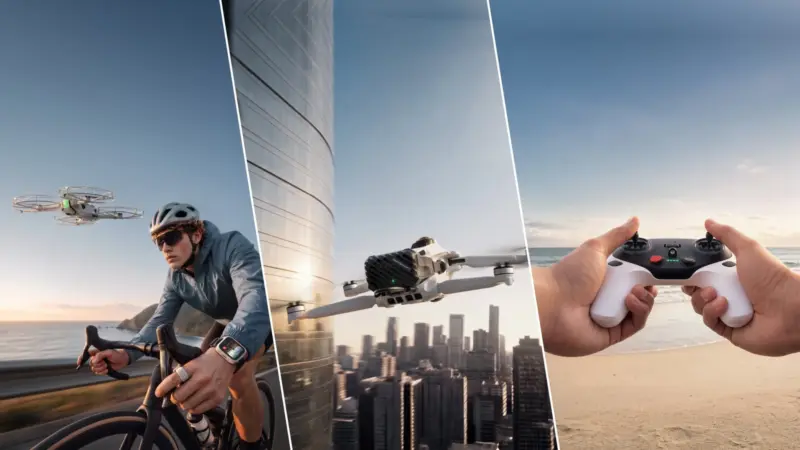
Michael Gardner told local station WAFF that he was flying a DJI Mavic 4 Pro to photograph a client’s home near Lindsay Lane when he heard a gunshot. Immediately afterward, the live feed on his controller became unstable and he saw the drone fall.
Gardner could not locate the aircraft immediately. Someone else found it two days later. He valued the equipment at about $5,000 and said he was contacting the FAA office in Birmingham and working on a police report.
What has and has not been confirmed
The primary public report is WAFF’s coverage, which relies on the photographer’s account and the damaged equipment he showed. As of 4 September, no public announcement from the Athens Police Department was found naming a suspect, announcing an arrest or forensically confirming the cause of the crash.
The incident should therefore be presented as an allegation under investigation. The damage and Gardner’s account are public, but the shooter’s identity and the exact legal outcome remain unknown.
What the FAA officially says
The FAA states explicitly that a private citizen may not shoot at an aircraft, including an unmanned aircraft. According to the agency’s official guidance, doing so violates US federal law and creates a significant safety hazard.
The FAA notes that a struck drone may crash into a person or property or collide with another object in the air. The act may lead to an FAA civil penalty and federal, state or local criminal charges. The final assessment belongs to the relevant authorities, not to the drone owner or third parties.
The risk from the fall and the battery
A Mavic 4 Pro is heavy enough for an uncontrolled fall to injure someone or damage property. A punctured or severely deformed lithium battery may also enter thermal runaway and catch fire.
Shooting down a drone is therefore not merely a dispute between a property owner and a pilot. It turns a controlled aircraft into an uncontrolled falling object, with no way to predict the impact point.
What it means for a professional photographer
A professional operator needs records of the assignment, client and location details, flight logs, Remote ID data where applicable, photographs of the damage and a clear timeline. These can help police, aviation authorities and insurers examine the incident.
It is also useful to brief those directly involved before the flight and avoid escalation with third parties. If someone believes a drone is flying dangerously or invading privacy, the FAA directs them to local authorities rather than self-help.
What applies in Europe and Greece
The US federal framework does not automatically apply in Greece. In the European Union, EASA’s Open category rules generally require visual line of sight and a maximum height of 120 metres, with additional restrictions depending on the drone class, subcategory and distance from uninvolved people.
In Greece, operators must check HCAA geographical zones, registration and training requirements, along with privacy, personal-data and image-use law. The pilot’s obligations do not give private citizens a right to destroy an aircraft; suspected violations should be reported to the authorities.
What we think
The most dangerous misconception is that owning the ground means having unrestricted authority over the airspace. Flight rules, privacy and protection of property are separate legal issues and must be handled institutionally.
For professionals, the incident is a reminder that job safety does not end with the flight. It includes communication, documentation, insurance, a recovery plan and calm cooperation with authorities when something goes wrong.
Frequently asked questions
Where did the incident happen?
Near Lindsay Lane in Athens, Alabama, during a residential-property shoot.
Was the person who shot the drone found?
As of 4 September 2026, local police had not publicly identified or arrested anyone.
Is it legal in the US to shoot a drone over one’s home?
The FAA says no: shooting at an aircraft, including a drone, violates federal law and is dangerous.
Do the same rules apply in Greece?
Not automatically. Greece applies the European and national framework for UAS, flight safety, geographical zones and privacy.