

Summary
- Alexandre Bagdassarian spent eight months photographing young detainees in France.
- The series combines access, consent and first-hand testimony.
Alexandre Bagdassarian spent eight months inside one of France’s six juvenile prisons, using photography to document the daily lives of young detainees.
His series “Sixteen and a Half: Eight Months in a Juvenile Prison” placed third in the Documentary Projects category of the Professional Competition at the 2026 Sony World Photography Awards. On 28 September 2026, the Guardian published an extensive photo essay on the work, bringing renewed attention to one of the least visible parts of the French prison system.
A photographic approach built around consent
In the World Photography Organisation’s official presentation of the series, Bagdassarian explains that he did not want to approach prison through legal texts or institutional discourse. Instead, he focused on the paths, voices and bodies of the young people living this reality.
A central part of his method was the detainees’ acceptance of his presence. Administrative access was not enough: for the photographer, the young person in front of the lens needed to genuinely consent to both his presence and the camera.
The cell as both personal and impersonal space
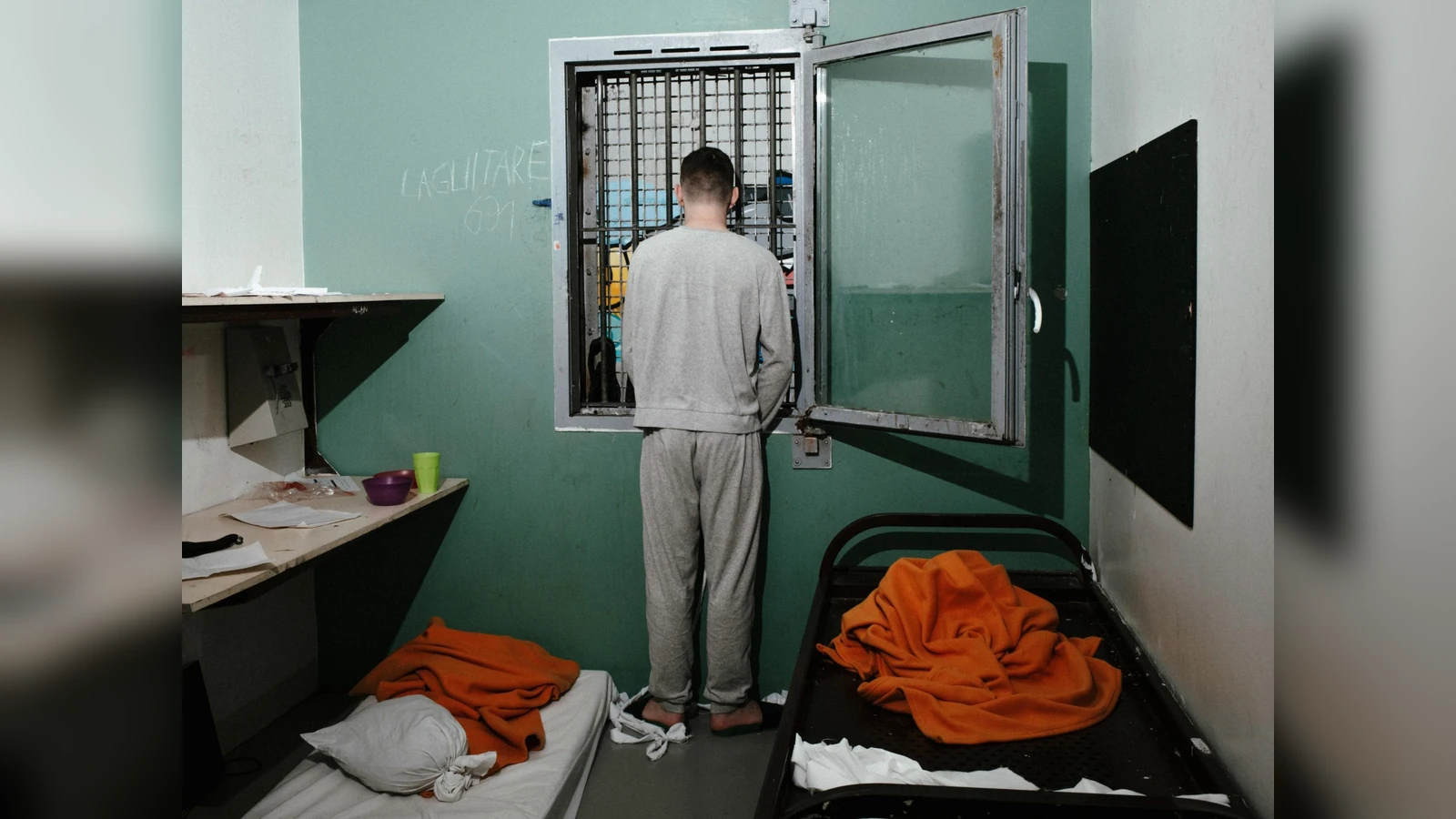
Bagdassarian describes the cells as difficult places to photograph because they are simultaneously impersonal and intimate. A window, bars, a simple bed, a makeshift desk, a book or a few drawings become the main visual elements inside an extremely restricted space.
The Guardian photo essay reports that, in some cases and because of staff shortages, a young person may spend up to 23 hours a day in a cell. It also notes that limited access to education and sports activities has been criticised by the European Committee for the Prevention of Torture.
Small details that measure time
The series is not built only around portraits. Objects and small gestures become part of the narrative: food cups kept to count days in detention, a fragment of broken mirror used to see the yard through the bars, a haircut in a shared space, or time spent in the prison’s educational garden.
In one of the stories accompanying the photographs, Bagdassarian meets an unaccompanied minor playing football in the gym. In another, a young detainee poses among flowers in the educational garden. These scenes complicate the visual language of confinement beyond cells and bars alone.
From the Sony World Photography Awards to the Guardian
“Sixteen and a Half” had already received international recognition before the new publication. At the 2026 Sony World Photography Awards, Alexandre Bagdassarian placed third in Documentary Projects in the Professional Competition.
The Guardian returned to the series on 28 September 2026 with an extended photo essay narrated by Bagdassarian himself. The result is documentary photography that combines observation of the environment with the voices of the people living inside it.
What we think
The strength of the series lies in its restraint: the photographer allows the limited space, ordinary objects and the detainees’ own voices to build the narrative. For documentary photographers, the important lesson is that access alone is not enough; consent, the relationship with the subject and the way the story is presented shape the credibility of the image.
Frequently asked questions
How long did Alexandre Bagdassarian work inside the prison?
The series was created over eight months, during which he documented the daily lives of young detainees.
Where was Sixteen and a Half photographed?
The project was made inside one of France’s six juvenile prisons.
What recognition did the series receive?
It placed third in the Documentary Projects category of the Professional Competition at the 2026 Sony World Photography Awards.
When was the new Guardian photo essay published?
The Guardian published the feature on 28 September 2026.
Who is Alexandre Bagdassarian?
He is a French documentary photographer, born in 1992 and educated at ENSAD Paris. His work has increasingly focused on youth and the links between intimate experience and forms of political or social coercion.