

Summary
- Cinobo and the creators of “Bearcave” have responded after the cancellation of the screening in Paraskeyi, Aigialeia.
- They condemn the homophobic reactions and every form of racist behaviour.
- The filmmakers point out that a film about social pressure in rural Greece encountered the very condition it seeks to illuminate.
- They reject the use of faith and the celebration of the Virgin Mary as justification for silencing artistic expression.
- They support the Aigio Film Club and its intention to reschedule the free screening.
- pttl had already reported the cancellation and the Film Club’s initial statement on August 14.
- The continuation of the story we reported yesterday
- The filmmakers’ full statement
- The irony highlighted by the filmmakers
- A clear position on faith and the celebration of the Virgin Mary
- Support for the Aigio Film Club
- The international recognition of “Bearcave”
- Why this case matters to all creators
- What we think
- Frequently asked questions
Cinobo and the creative team behind the award-winning “Bearcave” have responded to the reactions that led to the cancellation of the screening in Paraskeyi, Aigialeia, condemning homophobia, racism and the silencing of artistic expression.
Filmmakers Stergios Dinopoulos and Chrysianna Papadaki issued a public statement after the cancellation of the free screening scheduled for Sunday, August 16, 2026, in Paraskeyi, Aigialeia, arguing that the reactions demonstrate in practice precisely the kind of social pressure their film seeks to illuminate.
Their response is particularly significant because the discussion is no longer limited to one screening that did not take place. It now concerns freedom of artistic expression, homophobia and whether pressure from a minority can determine which works ultimately reach an audience.
The continuation of the story we reported yesterday
In pttl’s report on the cancellation of the “Bearcave” screening published the previous day, we covered the statement by the Aigio Film Club, which attributed the cancellation to extreme homophobic reactions from a small minority while making clear that this attitude did not represent the village and its residents as a whole. The Film Club also said it would seek a new date and a different location for the screening.
The new development is the public response from the filmmakers themselves and Cinobo. Stergios Dinopoulos and Chrysianna Papadaki go beyond condemning the cancellation and directly connect what happened with the central subject of the film.
The filmmakers’ full statement
The creators of “Bearcave” state:
“As the creators of ‘Bearcave,’ we are deeply saddened by the homophobic reactions that led to the cancellation of the scheduled screening of our award-winning film in Paraskeyi, Aigialeia, on Sunday, August 16.
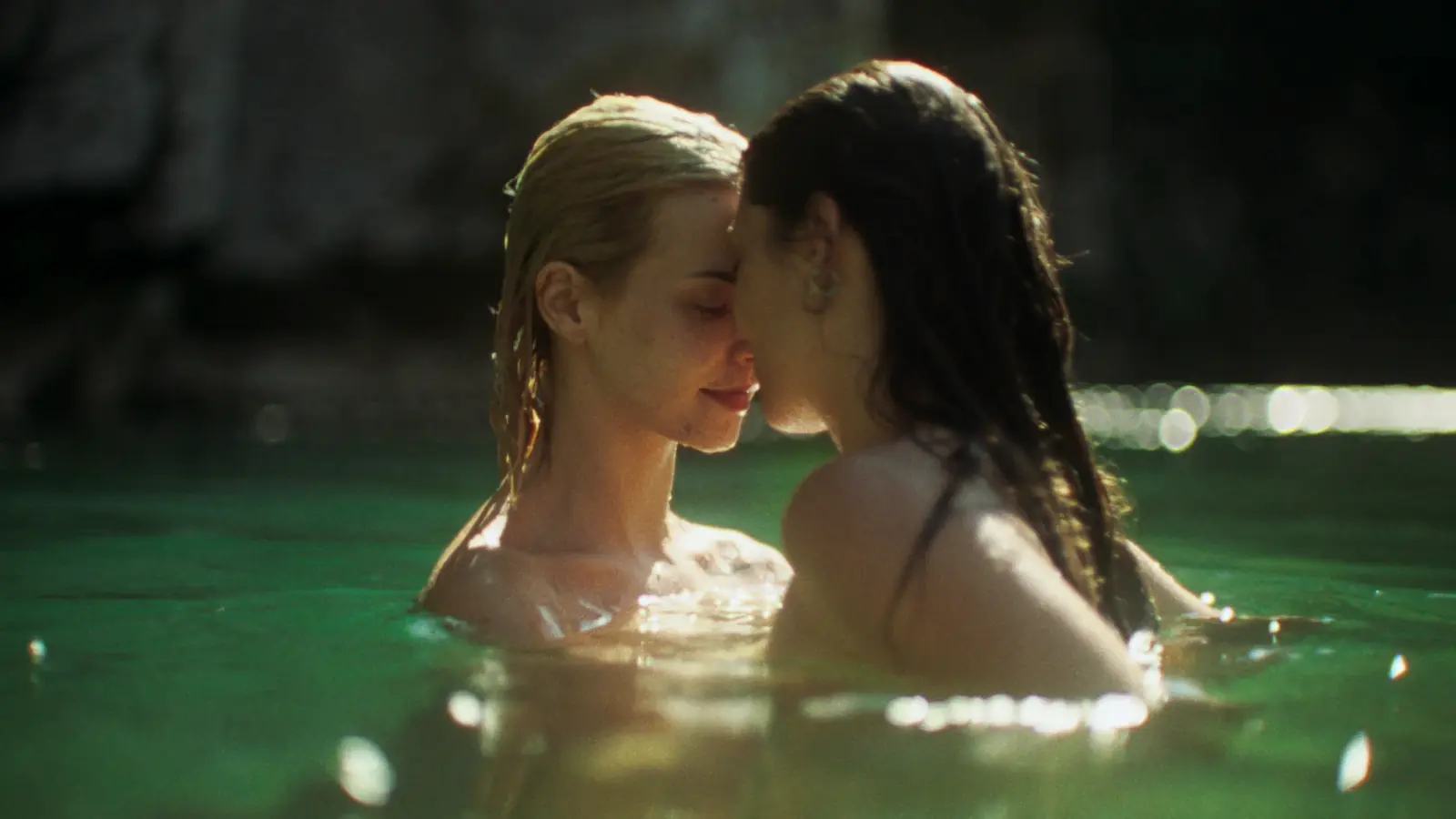
‘Bearcave’ is a story about love, coming of age and individual freedom, filmed entirely in the Pindus mountains with the participation and support of the local community. Through the relationship of two young women living in Elati, Trikala, it speaks about friendship and love, but also about the suffocating social pressure that continues to shape the lives of many people, particularly in the small communities of rural Greece. Our story deals with deeply human and entirely familiar issues, both for people living in cities and those living in the regions.
The irony of the reactions provoked by our film is sad: a film that talks about oppression in rural Greece ends up being silenced by the exact same condition it seeks to illuminate. Those who oppose the screening may believe that they are ‘protecting’ their community. In reality, however, they merely confirm how necessary it is for ‘Bearcave’ to be heard in every corner of Greece. In every city and every village where young people grow up and live with the fear of being criticised by an extreme minority if they dare to love or be loved.
Invoking faith and the celebration of the Virgin Mary cannot serve as an excuse for silencing artistic creation, nor as a pretext for legitimising homophobia and racism. Cancelling the FREE screening does not constitute respect for the Orthodox faith. It constitutes a retreat in the face of prejudices that continue to poison Greek society from one end of the country to the other.
No religious celebration is threatened by a cinematic love story. What is threatened, when we allow fear and intolerance to determine what we are allowed to see, is freedom of artistic expression and, ultimately, our democratic values themselves.
We stand alongside every person who does not recognise themselves in these reactions, as well as alongside the Aigio Film Club, which, according to its statement, intends to reschedule the free screening of the film — as originally planned — as a response to the fear that a sad minority is attempting to impose.”
The irony highlighted by the filmmakers
The central point of the statement is the connection between the subject of “Bearcave” and what happened around its screening.
The film deals with friendship, love, individual freedom and social pressure in rural Greece. Cinobo presents the story around Argyro and Anneta, two close friends in a mountain village whose relationship is tested as events unfold.
For the filmmakers, therefore, cancelling the screening because of reactions to the film’s content is not merely an external incident. It is a real-world manifestation of the pressure the work itself attempts to explore.
A clear position on faith and the celebration of the Virgin Mary
One of the strongest parts of the statement is the response to the invocation of Orthodox faith and the celebration of the Virgin Mary.
The filmmakers categorically reject the idea that a religious celebration can justify cancelling a film screening and argue that faith cannot serve as an excuse for silencing a work or legitimising homophobic and racist behaviour.
With the phrase “No religious celebration is threatened by a cinematic love story,” they shift the focus from the content of this particular film to a broader issue: who gets to decide what the rest of the public is allowed to watch.
Support for the Aigio Film Club
The filmmakers also make clear that they do not identify the reactions with the entire local community.
They say they stand alongside residents who do not recognise themselves in those reactions and alongside the Aigio Film Club, which had already announced its intention to seek a new date and different venue for the free screening.
The prospect of rescheduling now carries additional symbolism: it would not simply be the completion of a postponed event, but a response to the attempt to prevent the film from being shown.
The international recognition of “Bearcave”
“Bearcave,” by Stergios Dinopoulos and Chrysianna Papadaki, has already built a significant international profile. At the 2025 Giornate degli Autori, it received the Europa Cinemas Label, with the organisation officially confirming the distinction.
That recognition makes the contrast even more striking: a work recognised in an international film environment became the focus of opposition surrounding a free screening in a local Greek community.
Why this case matters to all creators
This development does not concern only the creators of “Bearcave.”
For filmmakers, photographers, documentary makers and artists working with social subjects, the fundamental question is whether a work can reach an audience even when its content provokes opposition.
Criticism and disagreement are an integral part of art. It is a different matter, however, when opposition results in other viewers losing the opportunity to see a work and form their own opinion.
What we think
The filmmakers’ response matters precisely because it does not simply attempt to defend one particular film screening.
The crucial issue is that a small group of people should not effectively acquire veto power over what an entire community is allowed to see. Every viewer has the right to reject, criticise or choose not to watch a film. Preventing its screening, however, removes that choice from everyone else.
In the case of “Bearcave,” there is also an unavoidable irony: a work dealing with social pressure and freedom in rural Greece has itself become the focus of exactly such a conflict.
Frequently asked questions
What did the creators of “Bearcave” say?
Stergios Dinopoulos and Chrysianna Papadaki condemned the homophobic reactions and argued that the cancellation demonstrates how necessary it is for the film’s story to reach every corner of Greece.
What did they say about the celebration of the Virgin Mary?
The filmmakers state that faith and a religious celebration cannot serve as an excuse for silencing artistic creation and stress that no religious celebration is threatened by a cinematic love story.
Will “Bearcave” eventually be screened in the area?
The Aigio Film Club has said it intends to seek a new date and a different location for the free screening.
What happened before the filmmakers responded?
On August 14, 2026, the Aigio Film Club announced the cancellation of the screening in Paraskeyi, Aigialeia, attributing it to extreme homophobic reactions from a small minority.