Summary
- Adam Newport-Berra explains why «Club Kid» was filmed on 35mm instead of 16mm.
- The night scenes used Kodak 5219 pushed one stop.
- Selected shots were captured at 6–10 fps for unusual movement.
- Real parties, available light and carefully selected lenses shaped the production.
For «Club Kid», Adam Newport-Berra photographed New York nightlife on 35mm film and used footage captured at just 6–10 frames per second to change how movement and time feel inside its clubs.
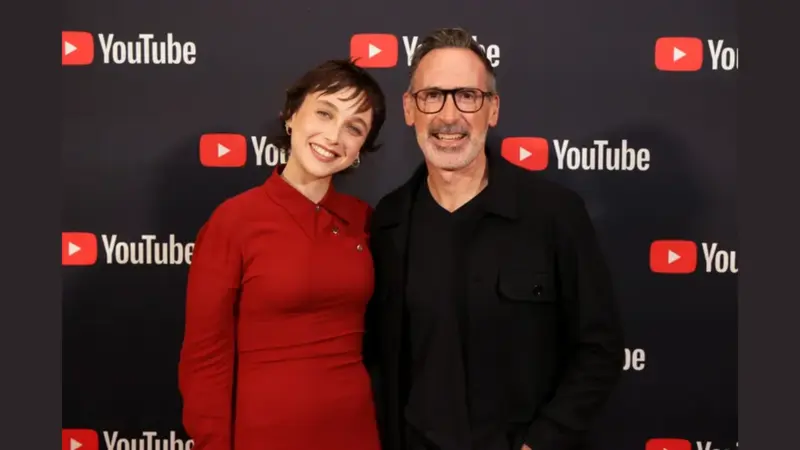
In an American Society of Cinematographers (ASC) Clubhouse Conversations episode, the cinematographer joins Christian Sprenger, ASC, to unpack the choices behind Jordan Firstman’s feature directorial debut. The film premiered at the 2026 Cannes Film Festival, where it was nominated for the Caméra d’Or and Queer Palm.
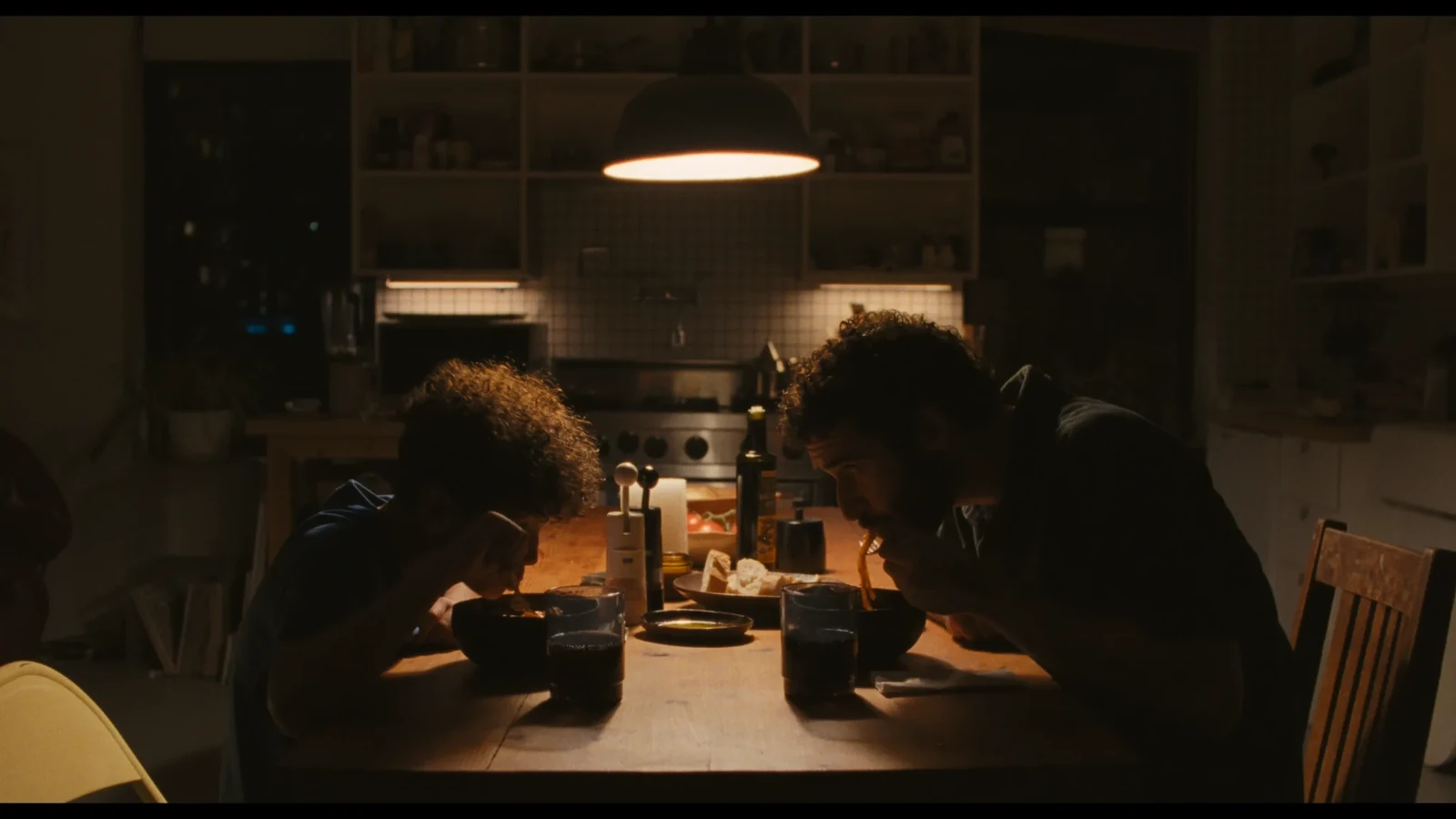
Firstman writes, directs and stars as Peter, a nightlife promoter who discovers he has a 10-year-old son, Arlo (Reggie Absolom). The story moves from the intensity of parties to quieter, more personal moments, asking the photography to bring two contrasting worlds together.
The full video conversation is available on the official ASC page.
Why 35mm instead of 16mm
The production considered 16mm for budget reasons. Firstman was committed to shooting on real film, while Newport-Berra argued for 35mm to preserve the dimensionality of New York, the depth of its people, and the expressive potential of close-ups. They settled on a 1.85:1 frame after testing.
That decision came at a cost: more expensive stock, less depth of field under their working conditions, and less money for lighting. In a separate Panavision interview, the cinematographer describes days using just two or three LED fixtures, substantial available light, and lenses wide open. The resulting portraits isolated the characters beautifully but put additional pressure on the focus puller.
Newport-Berra also shot Olivia Wilde’s «The Invite» on 35mm, a production that helps illustrate the physical lab workflow of motion-picture film, from exposed negative through processing and scanning.
Kodak 5219, a one-stop push, and 6–10 fps
For the club and night scenes, the team used Kodak VISION3 500T 5219 pushed one stop in processing. In practical terms, the negative was treated as material exposed for a higher working speed and given intensified development. This can affect grain, contrast and shadow reproduction; it does not magically create photons that never reached the negative.
Newport-Berra discusses shooting at 6–10 fps, drawing on the nocturnal images associated with Wong Kar-wai and Christopher Doyle. At a comparable shutter angle, fewer frames per second allow more exposure time per frame. When footage is step-printed for playback, the result can produce smeared motion, a staccato cadence and a dreamlike feel rather than ordinary smooth 24 fps movement.
The combination matters: photochemical texture, actual colored party lighting, and unusual temporal sampling. This is a deliberate storytelling choice, not a universal exposure recipe for difficult nighttime scenes.
Real 4 a.m. parties and four lens families
Rather than reconstructing every nightlife scene on a conventional set, the filmmakers shot at real parties, including events at 4 a.m. They worked alongside the venues’ own lighting designers, adjusting colors and pulses to suit the camera. That preserved the energy of the locations instead of making every scene feel like an artificially staged music video.
Blind lens tests led to a combination of four different lens series. Speaking to Panavision, Newport-Berra describes a package centered on Zeiss Ultra Speeds, including close-focus 29mm, 35mm and 50mm lenses, plus a Primo zoom tuned to complement the older optics.
Locked-off shots, handheld work and precisely planned moves coexist in the film. A skyline sequence required a dolly pullback to be coordinated with a zoom out within a narrow window around dusk. On an independent production with a tight schedule, coordinating two cameras mattered more than having time for unlimited takes.
Making the visuals follow the characters
Firstman was both a first-time feature director and the lead actor, so their collaboration relied on film references, music, focal lengths and depth-of-field choices. The visual approach needed to evolve with Peter, moving from the extroversion of nightlife to the intimacy of his relationship with his son.
A different solution to difficult lighting can be found in Phedon Papamichael’s cinematography on «A Complete Unknown», which combined high-sensitivity digital acquisition with recording the image onto film. Both approaches show how the final look emerges from a connected set of decisions rather than a single format choice.
What we think
The most useful lesson from «Club Kid» is not that everyone should return to 35mm. It is how choosing a format forces a crew to establish priorities. Newport-Berra selected the negative he felt the story needed, then accepted fewer lights and more demanding focus work. That is a genuine cinematography decision with real consequences.
The same goes for 6–10 fps. Lowering your frame rate without considering motion and exposure just produces an odd-looking image. Here the technique responds to the speed, rhythm and subjective experience of club life. It has a dramatic purpose.
One more idea worth bringing to smaller productions: instead of trying to replace a party’s real lighting, the filmmakers worked with the people already designing it. That can deliver authenticity, save time and let a cinematographer respond to the environment rather than fight it.
Frequently asked questions
Was the entire «Club Kid» shot at 6–10 fps?
No. The ASC highlights selected material captured in very low light, not the film’s overall shooting frame rate.
What does pushing Kodak 5219 one stop mean?
It means giving the exposed negative stronger laboratory development after rating it for a higher working speed. This can change contrast, grain and shadow rendition, but it cannot add light that was never captured.