Summary
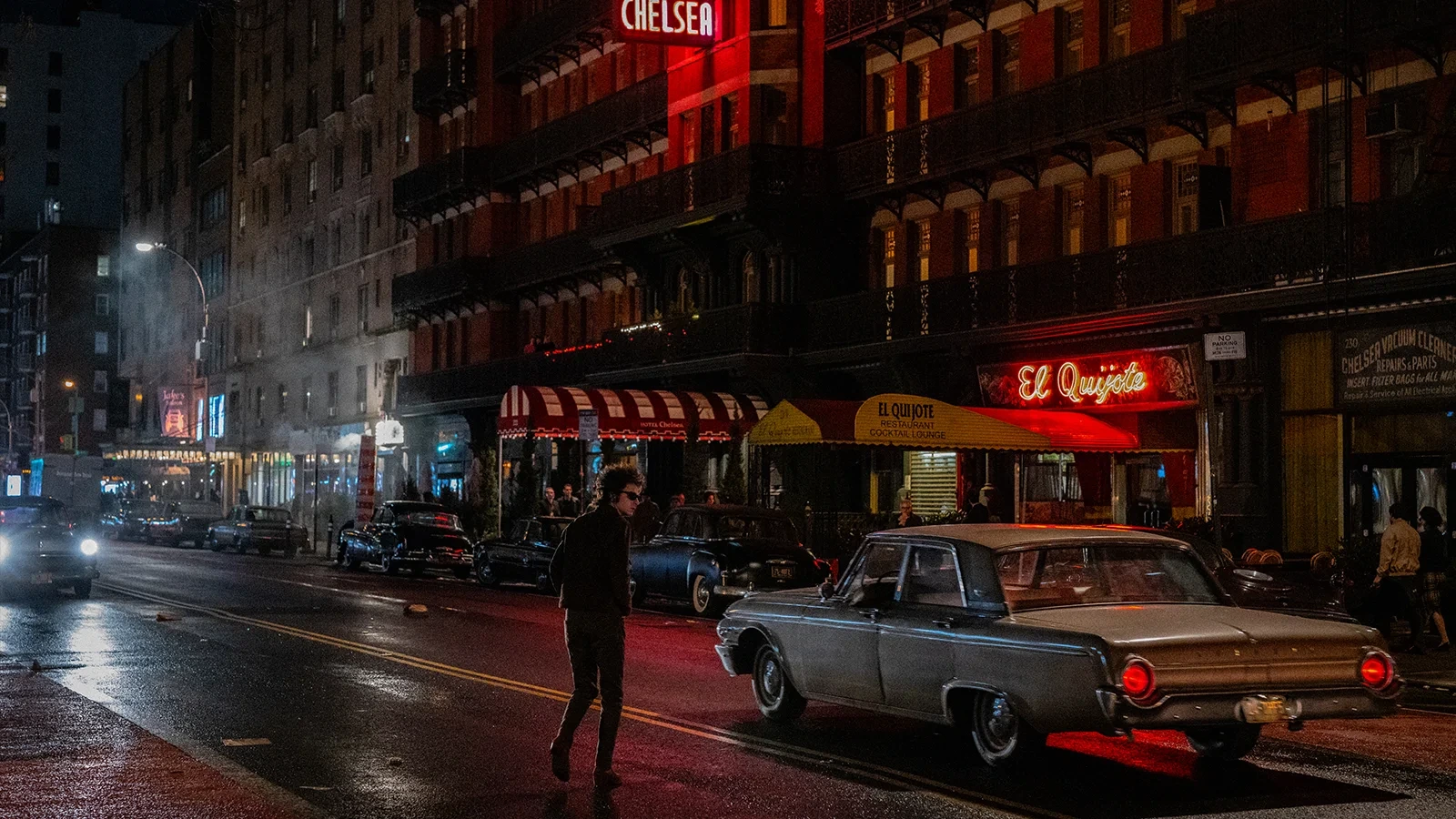
- Phedon Papamichael used ISO 6,400 and 12,800 for night exteriors.
- Smaller apertures preserved depth and detail in the city.
- Custom Panavision anamorphics and minimal lighting supported the visual approach.
- Digital images were recorded onto Kodak 35mm negative and scanned back.
Phedon Papamichael pushed sensitivity to ISO 12,800, stopped down his lenses and returned digitally captured images to real film negative to evoke 1960s New York in “A Complete Unknown”.
James Mangold’s 2024 Bob Dylan biopic, starring Timothée Chalamet, shows how higher digital sensitivity can serve depth of field and storytelling rather than simply compensate for low light.
High ISO in the service of deeper focus
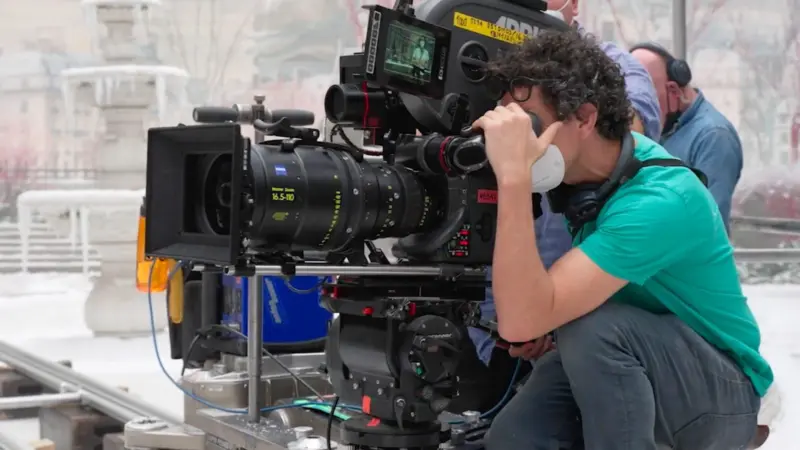
On the Sony VENICE 2, Papamichael tested its native ISO 3,200 and ratings of 6,400 and 12,800. For night exteriors he worked at ISO 6,400 or 12,800, allowing him to shoot around T8 to T11. These were selected settings, not one fixed exposure for the whole film.
A large-format digital camera shot wide open can beautifully isolate a face while reducing city lights to abstract bokeh. Papamichael wanted façades, fire escapes, period cars and background pedestrians to remain recognizable. A deeper stop made the New York streets part of the drama.
Before production he projected camera tests on a large screen. The clean results at ISO 12,800, together with a carefully prepared color pipeline, convinced him that he could rely more heavily on available light.
Real streets and very small fixtures
The night sequences did not always require large elevated lighting rigs. Streetlights, storefronts, neon signs, vehicle lamps and interior lights provided much of the illumination. Wet pavement created reflections, while steam carried the changing colors of the city.
That does not mean every frame was completely unlit. Small Rosco DMG DASH units and, on some occasions, Astera Titan Tubes subtly lifted actors’ faces. Their compact reflections were especially useful when Dylan wore his signature glasses, keeping film lights from becoming distracting.
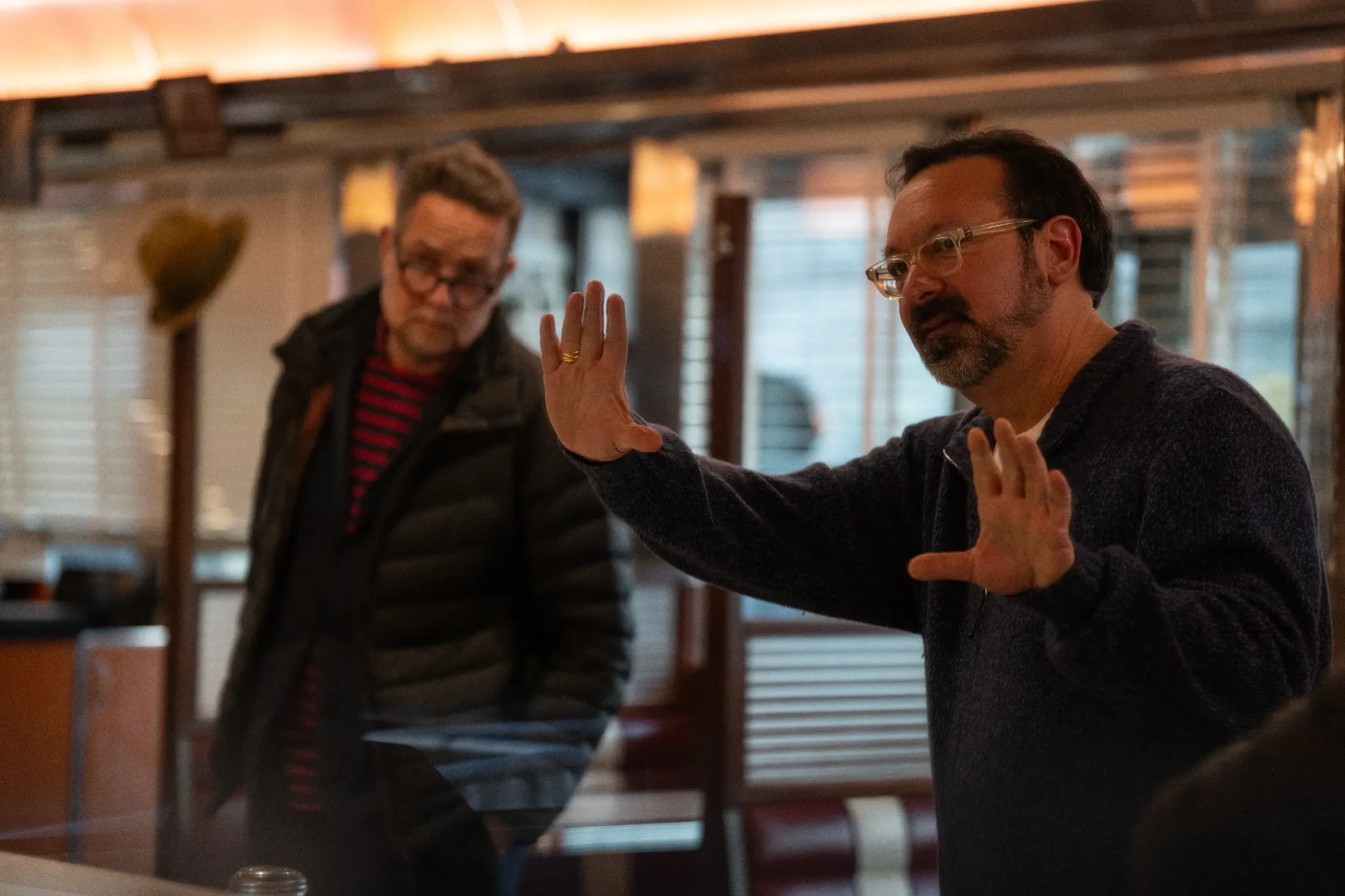
Lightweight fixtures gave camera and Steadicam operator P. Scott Sakamoto room to follow actors with fewer cables and fewer resets. Papamichael described a demanding shoot covering approximately 100 locations over 60 days.
Custom Panavision anamorphics
Working with Panavision optical engineer Dan Sasaki, Papamichael used custom anamorphic lenses combining older B- and C-series front elements with newer T-series components. They retained vintage flare and vignetting while enabling close focus and coverage for the large sensor.
In his interview he estimated that roughly 90 percent of the film was photographed with a 40mm anamorphic lens. That relatively wide perspective let the camera move close to actors without stripping away their surroundings.
Digital images, real 35mm negative
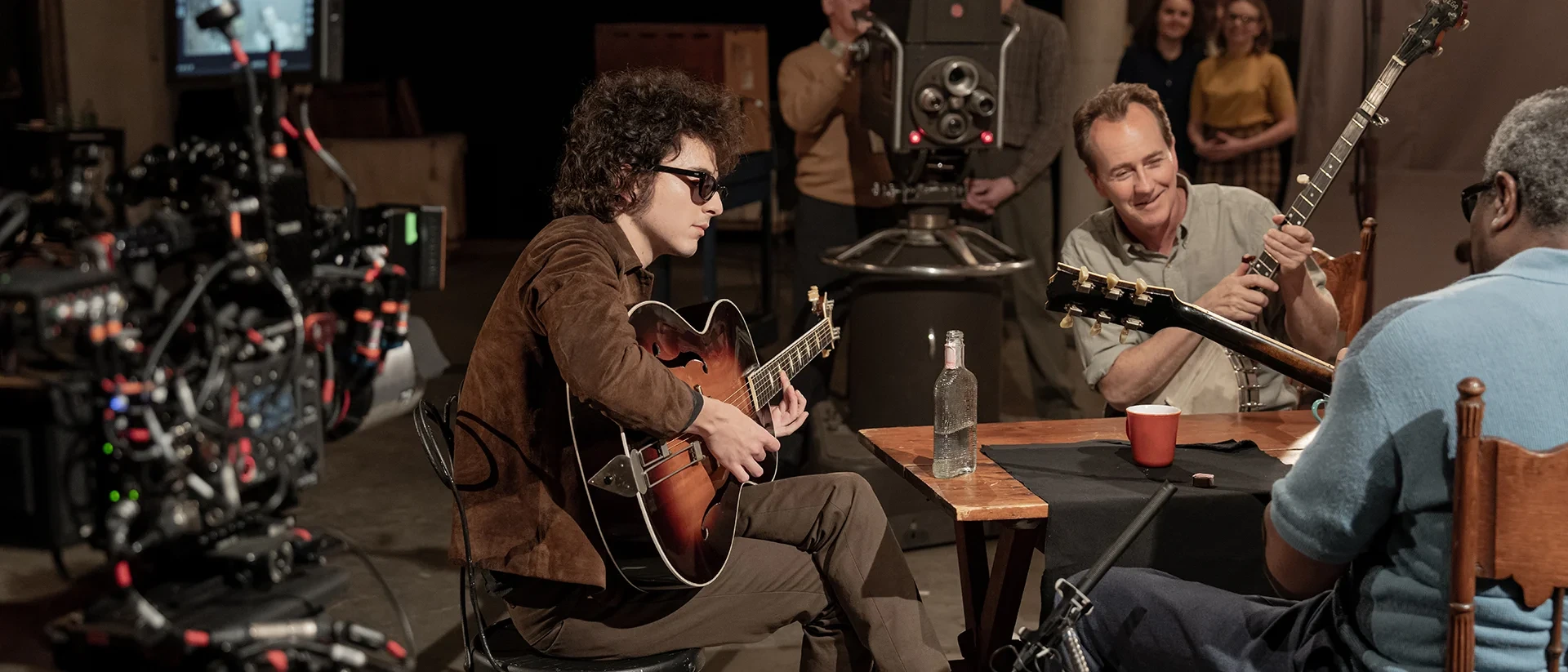
The Sony VENICE 2 captured digital images using its 8.6K sensor, but the finished appearance was not created with LUTs alone. FotoKem colorist David Cole developed the look using Kodachrome photography and period New York cinema, including “The French Connection”, as references.
Through FotoKem’s SHIFTai process, graded digital images were recorded by ARRILASER onto actual Kodak Vision3 50D 5203 color negative and scanned back to digital. The film-out introduced natural grain, subtle instability, texture and film’s distinctive color response. It was not merely a digital grain overlay.
The process combined the flexibility of sensitive digital capture with qualities of photochemical film. Having shot dozens of features on film, Papamichael built the look across the whole production and finishing pipeline rather than relying on one vintage effect.
Phedon Papamichael and his Greek recognition
Born in Athens, the cinematographer previously collaborated with James Mangold on “Walk the Line” and “Ford v Ferrari”. His credits also include “Nebraska” and “The Trial of the Chicago 7”, both of which earned him Academy Award nominations for Best Cinematography.
In 2026 he received the GSC Award for Best Cinematography in a Feature Film for “A Complete Unknown”. The film was also presented at a special Greek Society of Cinematographers screening at the Greek Film Archive.
What we think
There is a practical lesson here for anyone shooting at night: high ISO does not have to be an emergency setting. It can be a deliberate creative decision. When the environment matters as much as a face, that extra sensitivity gives us room to stop down and transform the depth of a shot.
What stands out is that Papamichael did not chase a flashy image simply by opening the lens. He worked around real streets, actor movement and a demanding production schedule. The little lights and wet-road reflections were not compromises; they were part of the visual language.
The film-out is a reminder that a look is made across the entire workflow. Lens character, exposure, grading and negative stock all contributed something. We do not need that film’s budget to apply the same joined-up thinking to our own projects.