

Summary
- GoPro signed a definitive merger agreement with Starman Optical on 1 September 2026
- Shareholders are expected to receive $1.14 per share and roughly 10% of the combined company
- Markiplier had disclosed 13.5 million Class A shares, equal to 8.5% of that specific class
- His holding is passive and does not give him control or a management role
- GoPro cameras, MISSION 1, subscriptions and cloud services will continue
The definitive GoPro–Starman Optical agreement does more than change GoPro’s corporate direction; it also places Markiplier’s major holding in a new context after he disclosed 13.5 million Class A shares and publicly backed MISSION 1 PRO ILS.
The agreement was officially announced on 1 September 2026 and has been approved by both companies’ boards. GoPro shareholders are expected to receive an aggregate $285 million in cash, equal to $1.14 per share before a possible adjustment, and retain roughly 10% of the combined publicly traded company.
The relevance to Mark Edward Fischbach, better known as Markiplier, is direct but requires careful wording. The official Schedule 13G reports an 8.5% holding in the specific Class A share class, not 8.5% of GoPro’s total voting power, and describes a passive investment without the purpose of changing or influencing control.
What the GoPro–Starman agreement provides
Starman Optical will merge with GoPro and the combined company will remain listed on Nasdaq. About $92 million of GoPro debt is expected to be repaid at closing, leaving the new structure substantially debt-free.
Completion is targeted by the end of 2026, but the transaction is not yet final. It still requires GoPro shareholder approval, regulatory clearances and satisfaction of customary closing conditions. The final corporate name and full management structure had not been disclosed by 2 September.
Using the European Central Bank reference rate for 1 September 2026, €1 to $1.1590, $285 million converts to approximately €245.90 million, $1.14 to €0.98 per share and $92 million to €79.38 million. These are arithmetic conversions, not official euro-denominated transaction terms.
Markiplier and the 8.5% Class A holding
The Schedule 13G filed with the SEC on 20 August 2026 lists Fischbach as the beneficial owner of 13,500,000 Class A shares, with sole voting and dispositive power. It identifies 13 July 2026 as the date of the event that triggered disclosure.
The filing covers a passive holding and certifies that the shares were not acquired to change or influence control of GoPro. It does not announce a board seat, operating role or activist investment.
If Markiplier still owns all 13.5 million shares when the transaction closes and the announced $1.14-per-share term applies without adjustment, simple arithmetic produces roughly $15.39 million, or €13.28 million at the same reference rate. That is not a confirmed personal payment: it depends on his holding at closing, the final terms and completion of the deal. Existing shareholders would also share roughly 10% of the combined company.
Why MISSION 1 PRO ILS remains part of the story
Markiplier’s investment became public while GoPro was trying to expand beyond traditional action cameras. He had used GoPro equipment in film production and on 27 August published an official-channel review that treats MISSION 1 PRO ILS as a compact filmmaking camera.
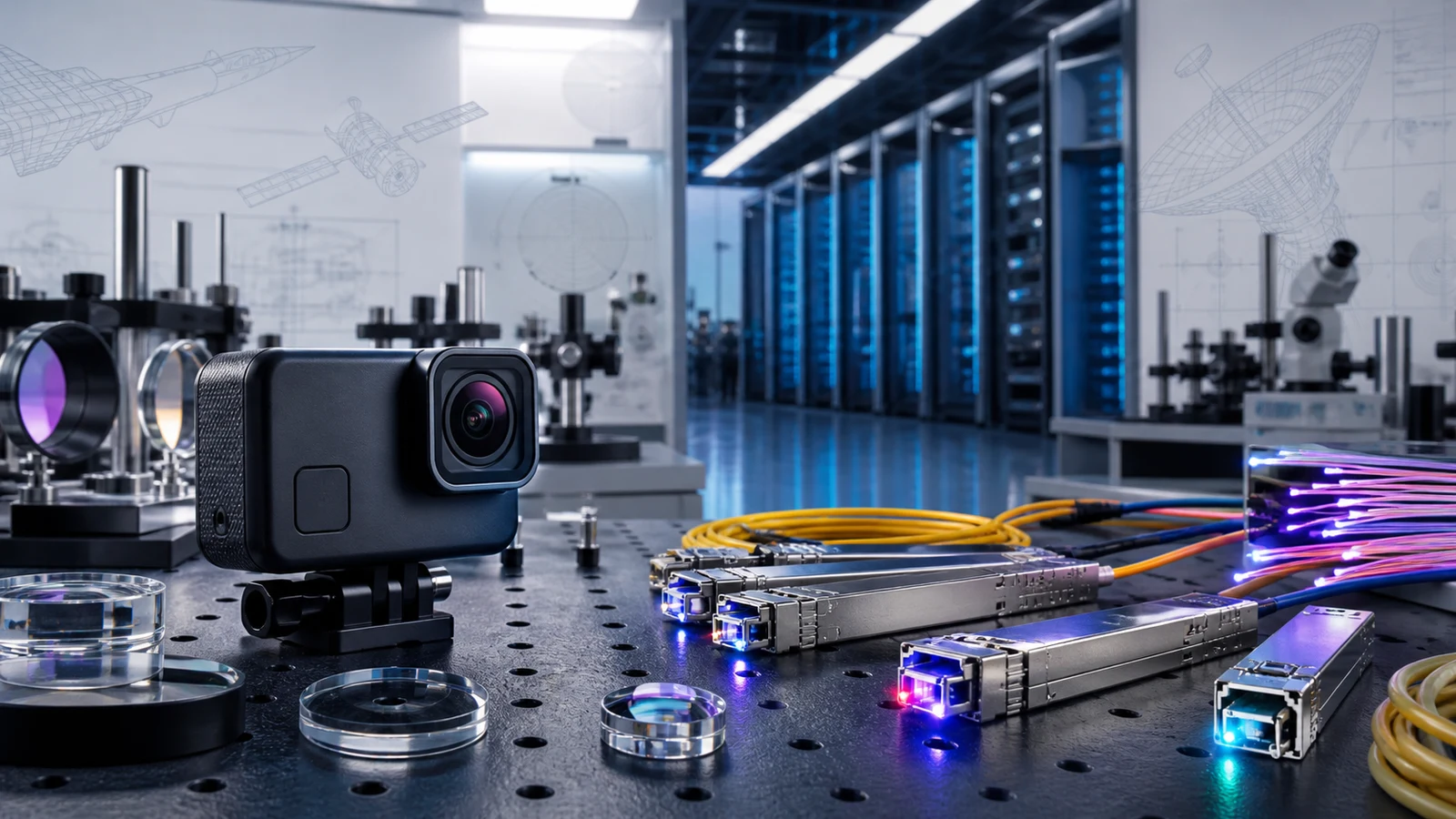
MISSION 1 PRO ILS is available to pre-order with a 50 MP 1-inch sensor, GP3 processor, video up to 8K60 and a Micro Four Thirds mount. The body has no electronic lens contacts and requires compatible manual-focus lenses with manual or suitable fixed-aperture control. More information is available on GoPro’s official product page.
What Starman brings and what remains of GoPro
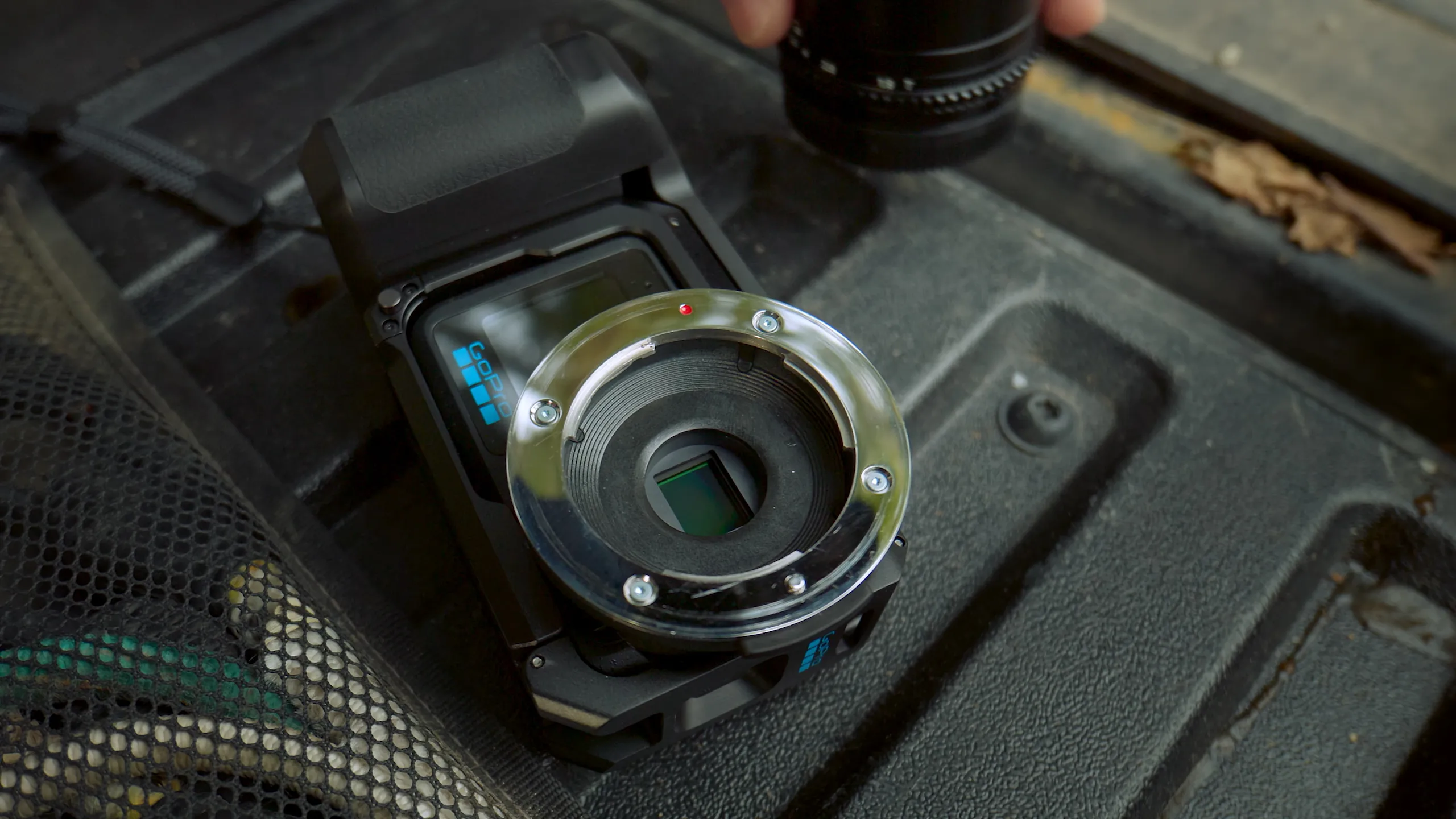
Through New Photonics, Starman works on optical transceivers and interconnects that move data with light inside high-performance systems. The agreement targets AI data centres as well as government, defence, robotics and aerospace markets, with an emphasis on US manufacturing.
GoPro explicitly says its consumer cameras, subscriptions and cloud services will continue. That includes the new MISSION 1 direction: the merger is not an announcement that MISSION, HERO or MAX products are being cancelled. GoPro’s portfolio of more than 2,500 US patents also moves into the new corporate structure.
From financial pressure to a strategic agreement
GoPro had already said it was evaluating strategic alternatives, including a sale or merger. PTTL covered the search for a strategic transaction, while second-quarter results showed $105 million in revenue, falling camera sales and a $51 million GAAP net loss.
In that environment, Markiplier’s holding acted as a public vote of confidence in MISSION 1. The Starman agreement now changes the investment framework: future value will depend not only on cameras, but also on whether the combined company can turn optical-photonics capabilities into real products and customers.
What we think
Combining the two developments shows GoPro’s turning point more clearly. Markiplier made a passive investment and presented MISSION 1 PRO ILS as a creator tool, but only weeks later the company chose a much broader route into AI infrastructure, defence and aerospace. The camera business and consumer brand remain, while the success of the deal will depend on closing, management and commercial execution.
Frequently asked questions
How many GoPro shares does Markiplier own?
The Schedule 13G lists 13,500,000 Class A shares, equal to 8.5% of that specific share class.
Will he receive $15.39 million from the merger?
That figure comes only from multiplying 13.5 million shares by $1.14. It is not a confirmed personal payment and assumes his holding and the transaction terms remain unchanged through closing.
Does he control GoPro?
Not under this disclosure. The Schedule 13G describes a passive holding rather than an attempt to change or influence control.
Are GoPro cameras and MISSION 1 being discontinued?
No. GoPro says its consumer products, subscriptions and cloud services will continue. It has not announced the cancellation of HERO, MAX or MISSION 1.
When is the merger expected to close?
GoPro targets the end of 2026, subject to shareholder and regulatory approvals and satisfaction of the closing conditions.